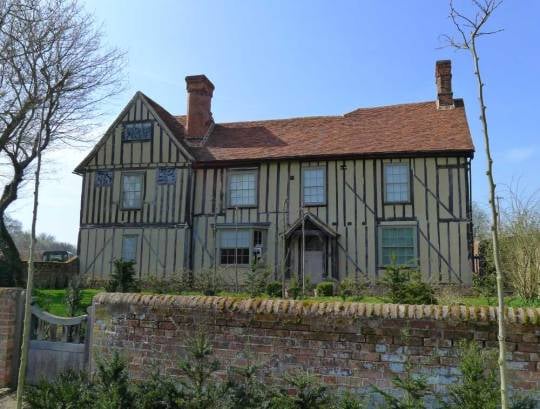
In 1941 Eric and Tirzah Ravilious moved from Bank House, Castle Hedingham, at very short notice, to a run-down Ironbridge Farm, Shalford, Essex. Anne had been born a week or so earlier on the 1st April. Castle Hedingham close friend Ariel Crittall, a regular visitor to the family at Bank House had been appalled when three frogs jumped out of a cupboard under the stairs.
At Bank House Eric commented: “The electric light has failed as it is Good Friday and I am writing by candle. The fire is poor and the room is like a cave”.
Ariel engineered the move from Bank House to Ironbridge Farm owned by her friends John and Celia Strachey. John (1901–1963) was the eminent Labour politician and writer while Celia (1900-1979), the daughter of a clergyman, had been sacked from The Spectator for being too left-wing, having joined the Communist Party of Great Britain. The Strachey’s bought the 16th Century timber-framed house as an investment using it as a country retreat. When WW2 broke out and an invasion seemed imminent Celia and their two children were evacuated to Canada, John’s outspoken criticism of Fascism might have endangered them.
An arrangement was made between Eric and John that half of the £70 annual rent be paid in cash and half in paintings !
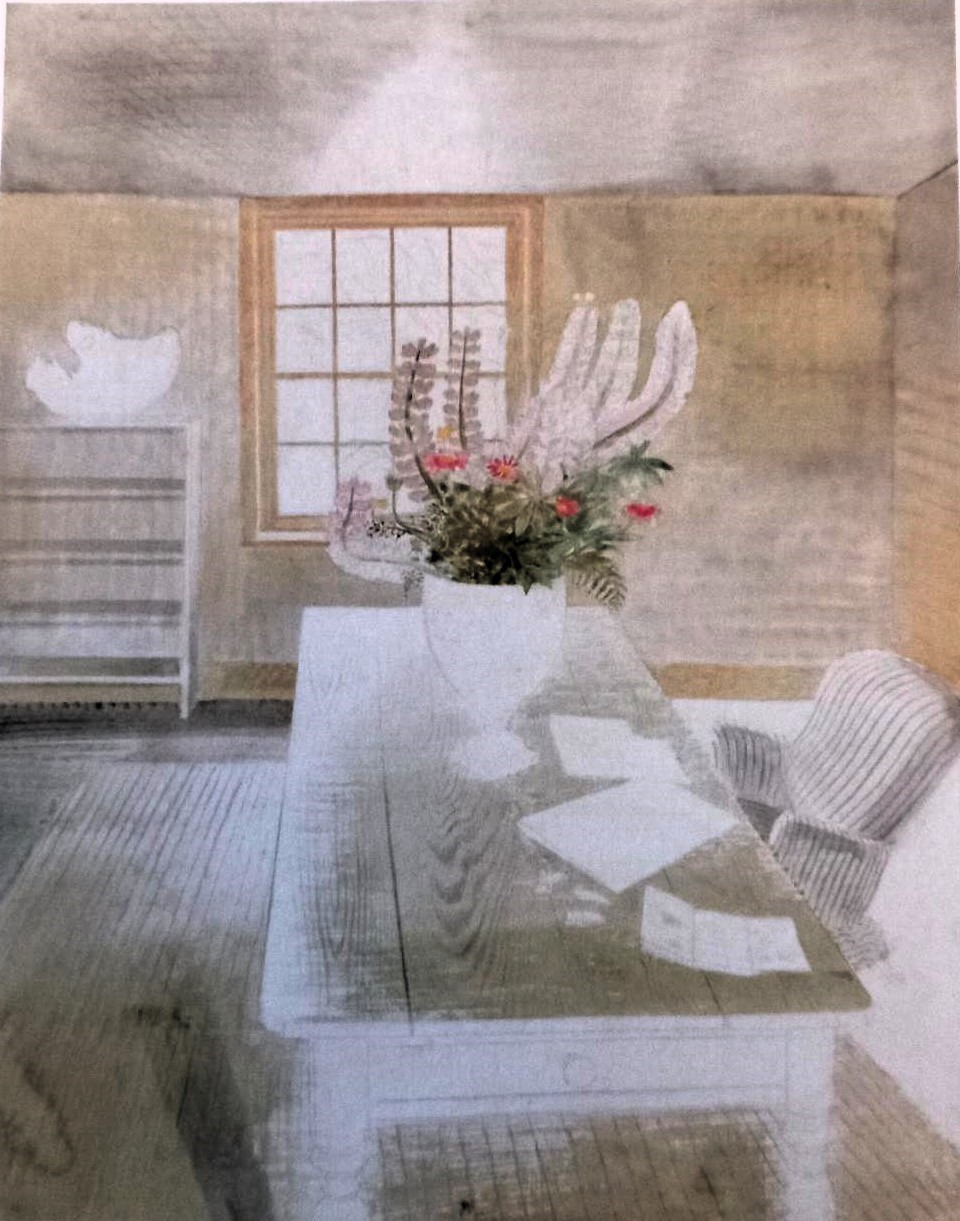
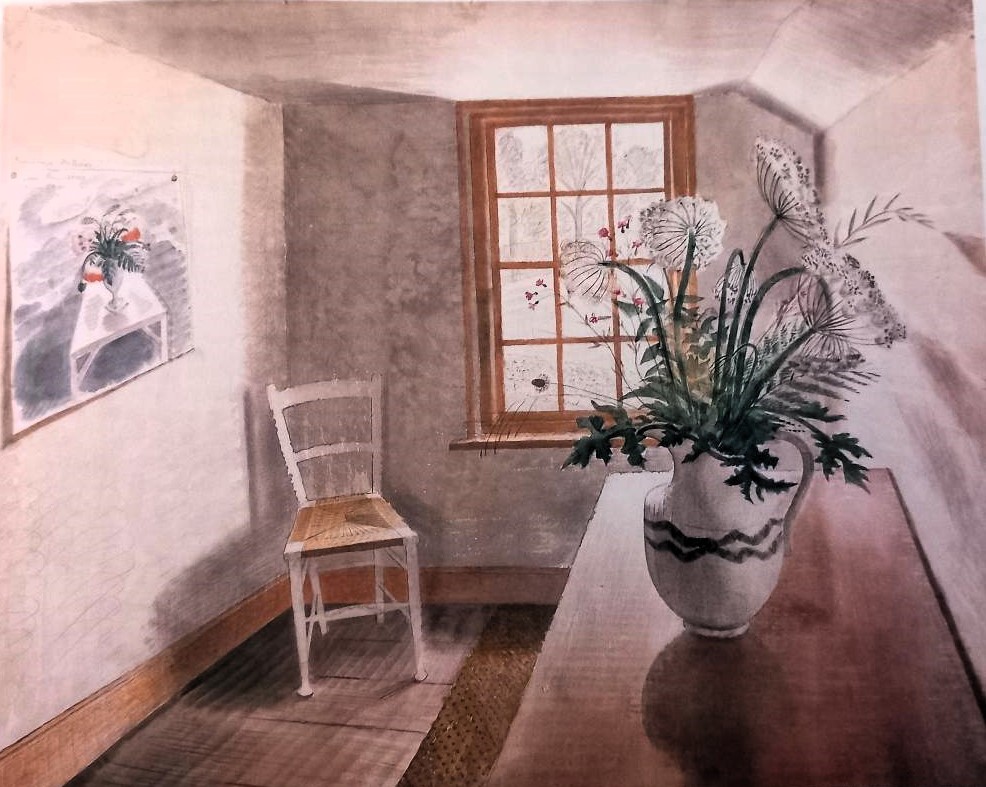
1941. Garden Flowers on a Cottage Table. Flowers on a Table, unfinished. Ironbridge Interior., June 1941.
Life at Ironbridge was to prove as difficult as it had been at Bank House, but Ariel was a constant support.
Tirzah commented when her mother arrived to help out: ‘There is a great quiet in the house broken only by cries and quacks of different birds…..these birds, they come into the passage much to mummy’s indignation, I can hear them there now. Bats will get into mummy’s room at nights. What is it about mummy that attracts these minor troubles, it’s very strange isn’t it. She has gone to church and Daddy has taken both boys for a walk, that is why it is so peaceful.’
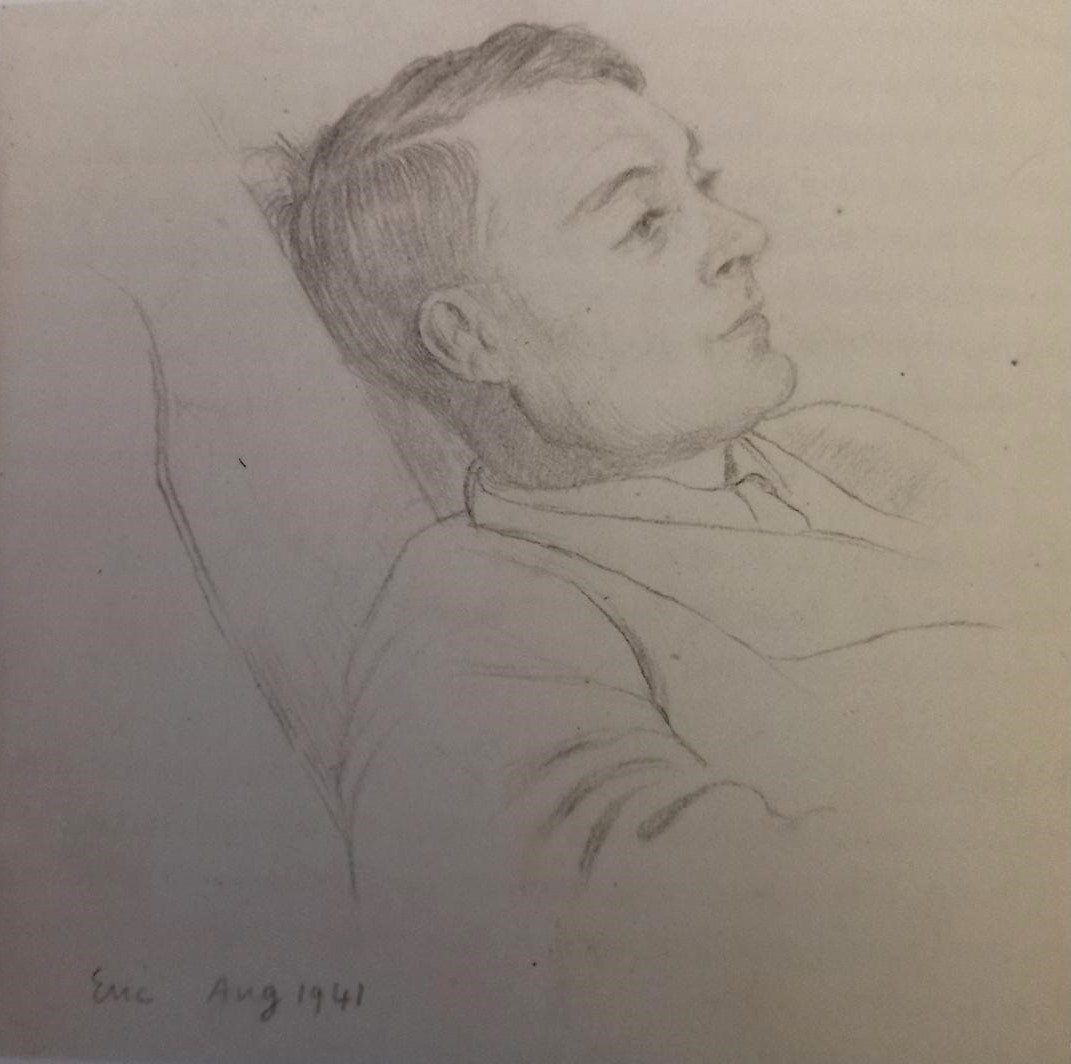
Tirzah Garwood: pencil sketch of Eric August 1941. The Potato Field 1941. Ironbridge at Ewenbridge, The bridge as painted by ER no longer exists, this photo is from 2019.
1941 The unfinished work of boating on the River Pant was one of the paintings undertaken as part rent paid to owner of Ironbridge Farm, John Strachey. May Holmes, who helped with the children, and Diana Wortley posed on several occasions for this painting.
Eric’s war artist work for the Admiralty was soon to start but he managed to execute a few paints at Ironbridge before his stint in Dover late July. By October 1941 Eric was at Rosyth staying with John and Christine Nash, then later in Dundee. Eric returned home before Christmas to find all the children John, James and Anne with whooping cough. Luckily, in what was a very cold winter, Tirzah was able to get the help of a nurse. John and Myfanwy Piper had been due to visit for Christmas, but this had to be abandoned.
Worse was to come as Tirzah’s earlier minor operation to remove a lump from her breast soon necessitated a full mastectomy performed on the 11th March. Eric obtained leave from his posting at York and managed to continue his work at nearby Debden Airfield, handy for visits home. Then James went down with measles, Tirzah’s mother hurried to Ironbridge to help. May Holmes, who lived in a cottage down the lane took in baby Anne, Of Tirzah’s mother Eric wrote: ‘I’m ashamed I used to dislike her so much at Eastbourne. Now I get on with her perfectly well – in any case we are both too busy to think about anything but food and fires and measles, doctors and blackouts and ducks and hens.’
Following her three weeks at Braintree Hospital Tirzah decided to write an autobiography (using an exercise book) which would be passed down to her grandchildren. ‘I want to write my life while I am happy.’
Eric was at Ironbridge, on and off during the summer of 1942. In June he commented, ‘The river here looks lovely, and I bathed today. The old man Brown who keeps the boats wears a battered old Panama and stinging vermillion football jersey in these grey-green willows.’
The Pant Valley, Shalford, February 1942. Tree Trunk & Wheelbarrow, February 1942.
Within three months of her mastectomy Tirzah was back at Braintree Hospital having fallen pregnant. The doctors considered that her health would not stand another pregnancy, so an abortion was carried out in August.
‘I was allowed to leave the hospital about a week before Eric was due to go to Iceland and he arrived on a lovely morning to fetch me away…… The morning before he was due to leave, he got up early to make the breakfast and standing in front of the mirror putting on his tie, he said “Shall I go to Iceland?” I knew that he desperately wanted to go so I said: No, I shall be alright.’
Tirzah watched Eric depart down the lane, stopping at May’s cottage where James was being looked after. ‘I knew he might never come back but there was nothing I could do but just watch him and remember what he looked like and, with an effort’ I lifted Anne up to wave a final goodbye.’
Ironbridge was to be Eric’s last home.
Vase of Flowers in a Garden, unfinished 1941
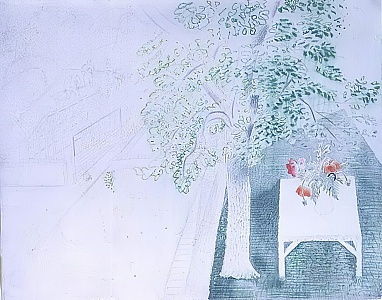
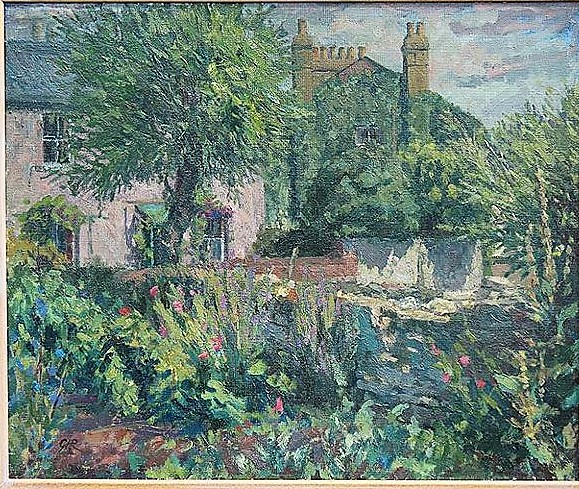
Vase of Poppies Under a Tree. This could have been painted at Ironbridge, I’ve no date for it. Any help appreciated.
On the 18th of September 1940 Eric Ravilious passed through his hometown of Eastbourne on his way to Newhaven. Eastbourne had suffered extensive bombing…’Eastbourne is like the ruins of Pompeii here and there and almost no one left in the town. I went to see my family to find them gone off to my sister (in Oldham) and Tirzah’s family away too, so I stayed the night and came away as quickly as I could.’
Eric arrived at Royal Navy Headquarters, Newhaven on the 19th of September. Admiral Sir William James, the nephew of John Everett Millais and the child model for ‘Bubbles,’ had suggested that Eric go to Newhaven to paint the coastal defences there.
Sir William Milbourne James wearing the mantle of the Order of the Bath. The five-year-old James in Bubbles.During the Second World War, James served as Commander-in-Chief, Portsmouth, from 1939. In 1940 he commanded Operation Aerial, the evacuation of British troops from Brittany and Normandy, a parallel operation to the Dunkirk evacuation.
Ravilious climbed up to the fort, built between 1859 and 1871 against possible invasion by Napoleon lll, and painted its ditches and retaining walls perched on the cliffs and overlooking the harbour, where he and Edward Bawden had worked four years earlier. From ‘Eric Ravilious Artist and Designer,’ by Alan Powers 2013.
Coastal Defences 1. ER’s title for this was ‘Britannia needs no Bulwarks. Imperial War Museum.
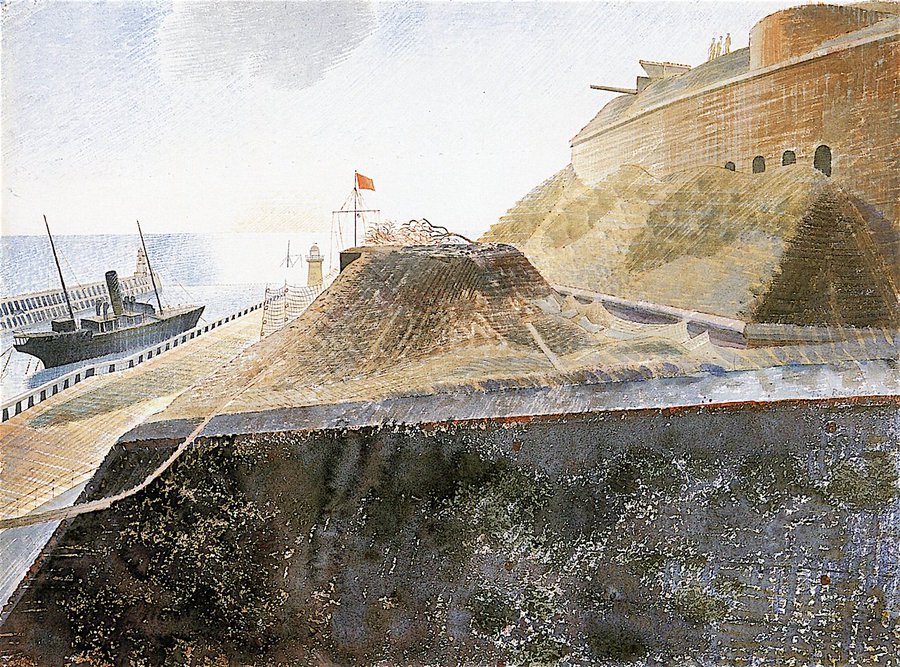
Coastal Defences 2, 1940, is a view of Newhaven Fort with lookouts, flagstaff, searchlight and gun emplacement. Ravilious wrote: ‘It is marvellous on the cliffs in this weather, though the wind blows a bit, and bombs fall every afternoon, and sometimes planes. One doesn’t have to run for shelter as at Portsmouth, so there are less interruptions.’ Now in the collection of the Museum of New Zealand Te Papa Tongarewa. The work was a Gift of the New Zealand Government to the Museum in 1949.
On the 21st September Eric wrote to Tirzah:
My darling Tush,
Here is a short letter because I’ve had a long day’s work: not that much is done but a lot of exploring, and twice I’ve been hauled into the fort for enquiry. Now if the weather improves, I may do something. The scene is every bit as good as it used to be with some modifications. There are raids, but what of it, and on the whole things are very quiet. I saw a man yesterday drop a can of tar on the head of his mate blow from a ladder. It was a perfect aim.
It is nice to be away from London and Eastbourne and working again, though how to draw I’m not sure. They will be much the same as before probably.
How are you and the children? I wish the post would come, but it now takes a week or so and I don’t even look out for the letters yet. Will you send me some cash and if you are hard up write a polite note to Dickey*. I must write to him too – perhaps you had better leave it to me. I will write tomorrow, I’m in bed.
All my love, Eric.
*Secretary of the War Artists’ Advisory Committee.
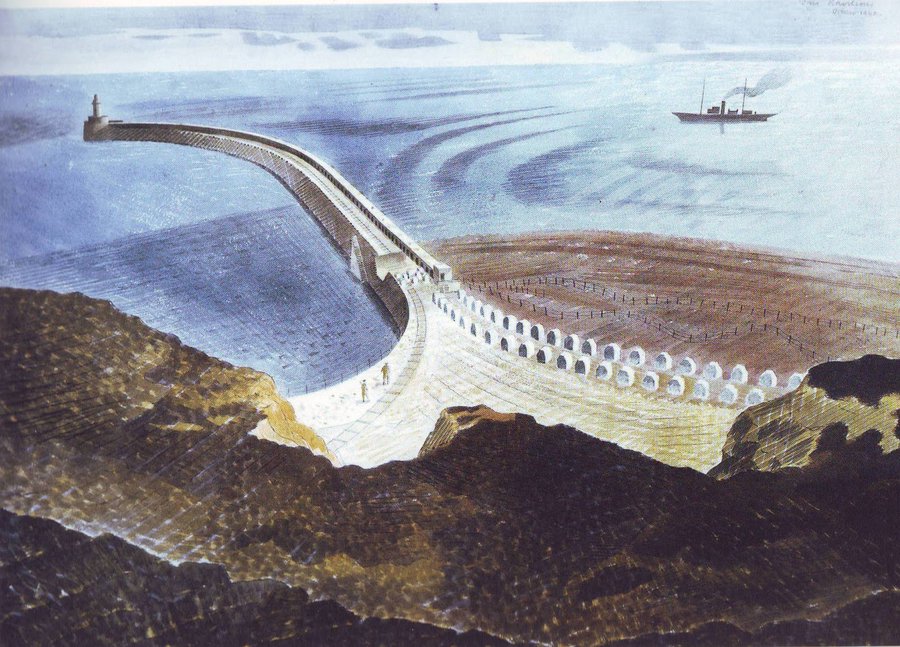
Coastal Defences 3, Newhaven. Aberdeen Art Gallery, presented in 1947 by the War Artists’ Advisory Committee.
Sometime around the 24th or 25th September Eric left his berth in Naval Headquarters and moved to Grays House a half mile north of Newhaven Fort, so much closer to work. The house on Western Road, was the home of Dr Donald a’ Brook and his wife Violet Ann.
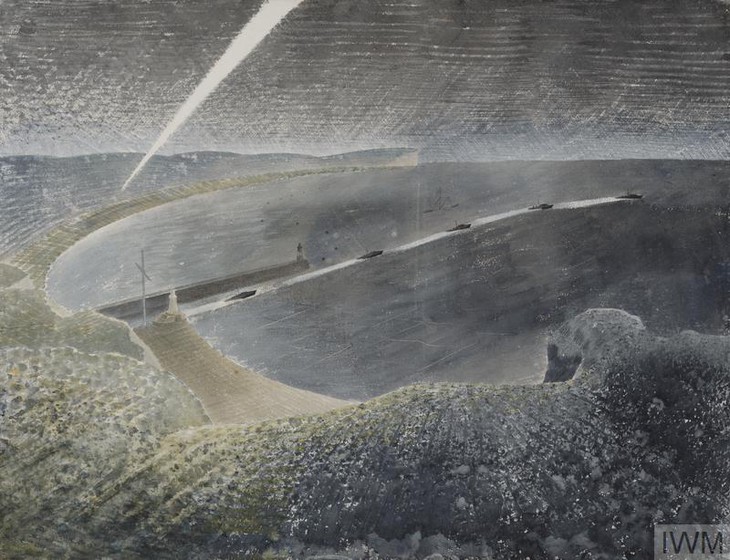
Coastal Defences, Convoy leaving Harbour, Newhaven. In this scene, Ravilious depicts the semi-circular curve of the coastline in dark greens and blues, colours which are repeated in the sea and sky. Imperial War Museum, London.
Writing to Jim Richards* on the 29th of September:
……..I still paint these pictures and feel as keen about it as I ever did though who is to see them I don’t know. Newhaven is such a nice place. I always liked it and before had never tried to paint the fort. It is a bit like that Delhi? Observatory from the extreme West Side.
The wind blows hard on these cliffs, though it is exhilarating up there in this weather, and bombs only fall at tea-time every day. So one puts on a tin hat and hopes for the best……….Give my love to Peggy.
*Jim Richards was a close friend of Eric’s, married to Peggy Angus. Richards wrote the text for High Street (ER’s lithographs).
Coastal Defences, Newhaven Fort. Imperial War Museum, London.
By mid-October Eric was back at home with the family in Castle Hedingham. Six finished paintings were produced during the Newhaven visit although one of them was lost at sea by enemy action.
Coastal Defences 4. Lost by Enemy Action.
And here’s one you won’t have seen before. Eric painted a scene ‘night piece’. ‘A night piece which is a failure, I might spend Sunday doing it again.’ After the end of the war Tirzah collaged Eric’s watercolour.
James McNeill Whistler: Whistler’s Mother or Portrait of the Artist’s Mother, named by Whistler as Arrangement in Grey and Black No. 1 is a painting in oils on canvas created by the American-born painter in 1871. The subject of the painting is Whistler’s mother, Anna McNeill Whistler. It is held by the Musee d’Orsay in Paris, having been bought by the French state in 1891.
In 1999 I was gardening for a couple of people in our old village of Ceres, Fife. Walking around the village one day my sister-in-law was chatting to an elderly resident, Frances (Mary) Reid.
” Did she know of anyone who could do her garden at Shell Cottage, fortnightly through the summer ?”
So, I was installed as Mary’s gardener. Mary had moved to Shell Cottage from a larger Georgian house (St Anne’s) in the village following the death of her husband the retired Rev. Harold Glover Reid. I would work away for two hours in the garden followed by tea and biscuits on the kitchen table. Mary, in her 80’s was always keen to talk about art and one day we were discussing the French Impressionists. I remarked: ‘Yes, Mary I quite like the small fluid paintings of Whistler that greatly influenced the impressionists.’
Mary looked down at the table and said: ‘Yes, my uncle.’
‘What Mary ?’
‘Beatrix Whistler was my aunt.’
Gobsmacked, I enquired for more information from Mary and out it flowed. Mary was born Frances Philip the daughter of Ronald Murray Philip, 1871-1940. He was the ninth of ten children. His older sister Beatrix married the Aesthetic Movement architect and designer E. W. Godwin in 1876 and then married Whistler in 1888, Whistler died in 1903 preceded by Beatrix who died in 1896.
St Anne’s, Ceres, the home of the Reids. Shell Cottage, Ceres. The garden at the side of the cottage long gone.
Mary, however, enjoyed many years knowing her aunt Rosalind Birnie Philip 1873 – 1958, the sister-in-law of Whistler. After the death of Beatrix in 1896 Rosalind acted as secretary to Whistler and was appointed Whistler’s sole beneficiary and the executrix in his will.
Whistler treated Ronald like a favourite nephew. He painted his portrait in oils around 1898-1900, Portrait of Ronald Murray Philip.
Whistler: Ronald Philip. Pencil drawing
In 1877 Whistler sued the art critic John Ruskin, the trial was the talk of Victorian society.
Ruskin: ‘I have seen, and heard, much of Cockney impudence before now; but never expected to hear a coxcomb ask two hundred guineas for flinging a pot of paint in the public’s face.’
Whistler hoped to recover his £1,000 trial expenses, the jury reached a verdict in favour of Whistler but awarded a mere farthing in nominal damages, in 1879 he was declared bankrupt. After the trial, Whistler received a commission to do twelve etchings in Venice He eagerly accepted the assignment, and arrived in the city with girlfriend Maud Franklin and Ronald.
As a thank you on returning home Whistler presented Ronald with a silver cigarette case engraved with his butterfly monogram. Ronald later worked as a civil engineer for many years in Newfoundland, developing roads, dams and general infrastructure in remote and isolated areas. Unfortunately his wife died there, and he returned with his young daughter Frances to Britain. He died suddenly at his home, The Manor, Stirling, in 1940.
I had neglected my own art for over 30 years. Having enrolled at Elmwood College in Cupar I was determined to resurrect my own art and a ND in art (later HNC and HND) was just the ticket to set me on my way. Having to choose a subject for the portrait project was easy……….’Whistler’s Niece!’ The portrait project was led by talented artist Morag Muir, do have a look at her fabulous work https://www.moragmuir.com/
Graham Bennison: ‘Whistler’s Niece.’
On the wall is a self portrait by Beatrix Whistler kneeling on the grass with a sewing machine. On the table by Mary’s left arm is the silver cigarette case with Whistler’s butterfly monogram a gift to Mary’s father, also a history book written by Mary’s uncle, an Oxford Don.
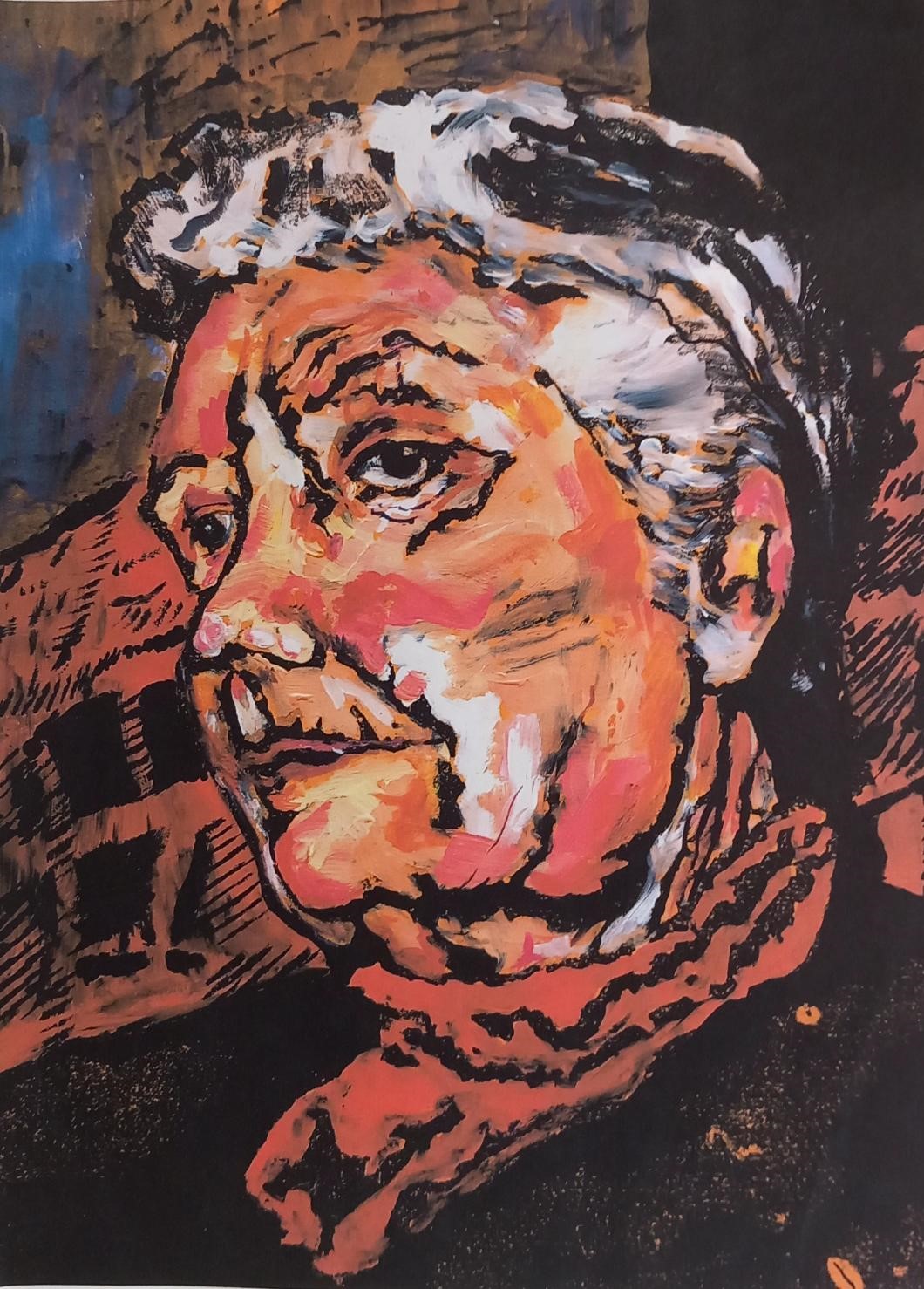
We were required to experiment with our portrait sketches and produce work in a variety of media.
Graham Bennison: Mary, expressionist mode! Ink transfer for a linocut. Linocut 1. Linocut 5. Linocut 8 two colour.
That year (2002) Mary was my guest at the Elmwood College annual art show and later I gave the painting to Mary. In 2003, however she had a much more exciting appointment as a guest at the Glasgow University Hunterian Art Museum. To celebrate the 100 years since Whistler’s death the Musee d’Orsay loaned Whistler’s Mother to the Hunterian. Mary, as a remaining relative of Whistler was a guest of honour.
James McNeill Whistler: Miss Rosalind Birnie Philip Standing, c. 1897. Oil on wood. Hunterian Museum and Art Gallery, Glasgow.
In 1938 Rosalind Birnie Philip made the first gift to the Hunterian of major paintings of Whistler as well as prints, pastels and drawings. In 1955 she gifted the University a collection of Whistler’s correspondence and books. Following Rosalind’s death in 1958 the balance of her collection of Whistler’s paintings, works on paper and manuscripts and books went to the University.
In 2006 I moved away from the village of Ceres, a frailer Mary was already in the care of her family, she died at St Andrews on 13th July 2014.
Geoffrey Hamilton Rhoades self-portrait woodcut 1941
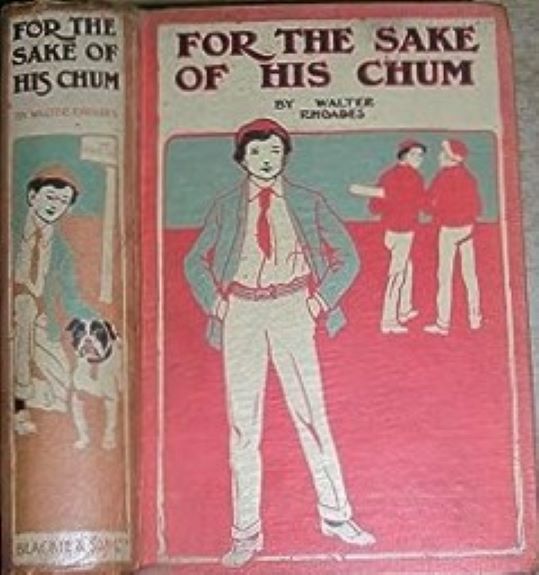
GEOFFREY HAMILTON RHOADES was born in 1898 in Balham, London, to a middle-class family. His father, Walter, was a senior civil servant and author, mainly of boys’ adventure stories. As a youth, Walter was quite an athlete, both as a runner and a cricketer.
Walter Rhoades: For the Sake of his Chum Quills A Tale of School days at Bedinghurst
Geoffrey attended Dulwich College where his education involved the Latin language and Roman and Greek culture which included drawing from classical casts. After Dulwich he spent two years at Clapham Art School 1915-17 under the direction of Leonard Charles Nightingale 1851-1941 before serving in the Mercantile Marine from 1917 to 1919 as a naval wireless operator.
Rhoades: Venice 1919. Etching.
On completing his war service he took a portfolio of drawings to show Professor Tonks at the then, most prestigious Slade School, University of London, who accepted him onto the course immediately. His landscapes, figure studies and flower paintings reflect his love of natural history and interest in the classical world.
Later, at the conclusion of his time at the School, Tonks remarked: “You have something which I have not – imagination.”
During the Slade years between 1919 and 1924 he socialized with both fellow students and a number of established artists at Barnett Freedman’s studio off the Tottenham Court Road, among whom were Albert Houthueson, Percy Horton, Charles Mahoney and James Laver who was just beginning his work at the Victoria and Albert Museum (Keeper of Prints, Drawings and Paintings for the Victoria and Albert Museum between 1938 and 1959). During this Slade period Geoffrey met fellow artist Charles Mahoney, they met at the bedside of Barnett Freedman’s during one of Barnett’s serious illnesses.
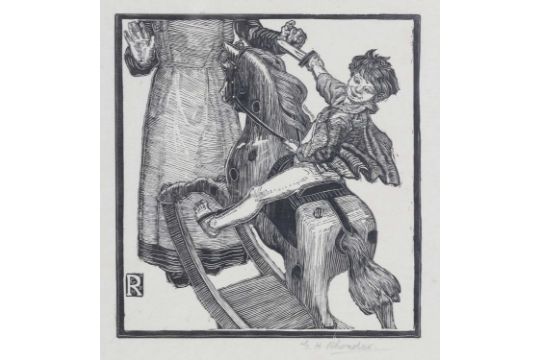
Rhoades: Hobby Horse, wood engraving 1921.
A fellow student of Geoffrey’s at the Slade was John Mansbridge through whom he met author and architect Christopher Turnor ( MP, JP, DL 1809 – 1886)) and his wife Sarah who were in the process of opening their large country house, Stoke Rochford in Lincolnshire, for summer schools. Geoffrey was invited to go there and make paintings for an indefinite length of time. He stayed for two years (1925-27) painting family portraits, some murals, landscapes and making many drawings. The Turnor’s were very kind to him and he became very much part of the household.
Rhoades: Miss Turnor
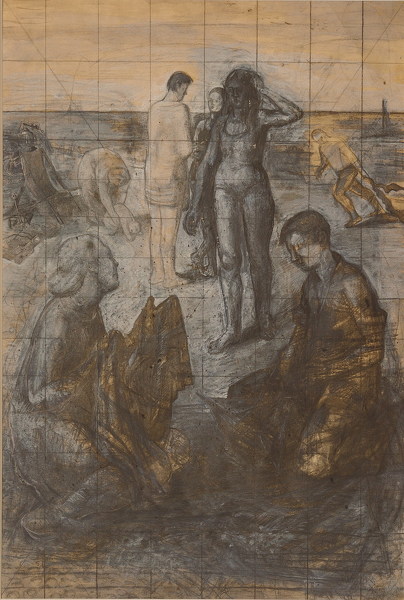
Rhoades: Study for The Bathers 1925.
Geoffrey moved back to London in 1928 and was invited to undertake some teaching at the Working Man’s College in Crowndale Road. Founded in 1854 the college was amongst the earliest adult education institutions established in the United Kingdom. Geoffrey and Charles Mahoney were now living in Kensington Crescent, W14, a charming Regency crescent, now demolished. In 1930 they went on holiday with Percy Horton to Blackmore Farm near Marden in Kent where Mahoney made studies of the orchard for the Morley College murals.
Rhoades: The Offering 1929
Charles Mahoney: Study for the Morley College Murals. *
In 1928 Eric Ravilious, Edward Bawden and Charles Mahoney were commissioned to provide murals for Morley College, Mahoney worked in the Concert Hall, and Bawden and Ravilious in the student Refreshment Room. By 1930 the murals were due to be unveiled by the Prime Minister Stanley Baldwin, Geoffrey was called in to help with the murals to meet the deadline. The murals became some of the most influential British murals of the time but were unfortunately destroyed by bombing in the 1940 Blitz.
Charles Mahoney: Portrait of Geoffrey Hamilton Rhoades
Geoffrey was not initially confident about his suitability for teaching but became much admired and loved as a teacher of studio studies. In 1929 Geoffrey followed Percy Horton as the art master at Bishop’s Stortford College, remaining in this post for fifteen years. A distinguished colleague and friend on the College staff was Walter Strachan 1903-1994, poet, translator and champion of the arts, Head of Modern Languages at Bishop Stortford College for over 40 years.
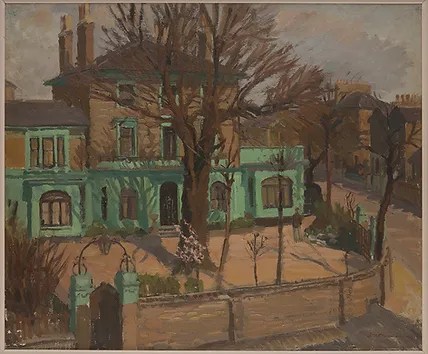
Rhoades: Brick House, Great Bardfield. painted on a later visit in 1940.
During the winter of 1932/33 Geoffrey was at Brick House, Great Bardfield, the newly acquired home of Edward and Charlotte Bawden, with part of the house let to Eric Ravilious and Tirzah Garwood.
In her autobiography ‘Long Live Great Bardfield’ Tirzah recalled:
‘Charlie Mahoney, with Geoffrey Rhoades stayed for a long time and helped Edward with the garden. During the winter the four men (Ravilious too) had cleared the yard which was feet deep in years of rubbish. They unearthed all kinds of relics from the trade of past owners: it had been a girls’ school, and a saddler’s and coffin maker’s and there were pieces of old coffin and piles of old harness which they had buried in a huge pit which they had dug in the garden. Geoffrey Rhoades made a painting of the others working in the snow.’
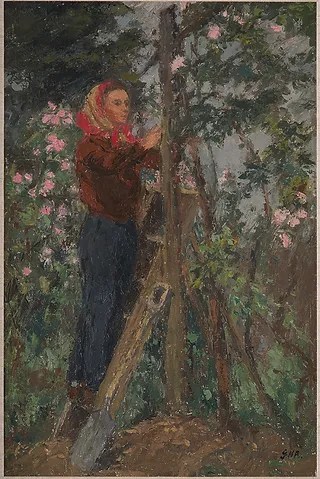
Rhoades: Joan Jenner 1935. Joan (Jenner) the Artist’s Wife, 1940’s. Joan RhoadesIn a London Garden 1941
In 1934 Geoffrey married Joan Jenner whom he is reputed to have met at a Royal College Ball, and they remained together until his death in 1980. Joan was in the Ministry of Agriculture with Mrs Horton, both were fond of doing Torquemada and The Listener crosswords and won prizes. Tirzah recalled that visiting Brick House Joan would sing songs in German pottering around the house. Their son, Peter, was born in 1938 while they were still resident in London.
Rhoades: Winter Afternoon Chalk Farm
Geoffrey’s reputation must have been high because in 1935 the Tate (Britain) bought his “Winter Afternoon, Chalk Farm” landscape, but, after Peter’s birth and the onset of the Second World War blitz, they moved house to Stebbing in Essex. It was as well they did so because their London Street, Greville Road, in Kilburn, was subsequently bombed.
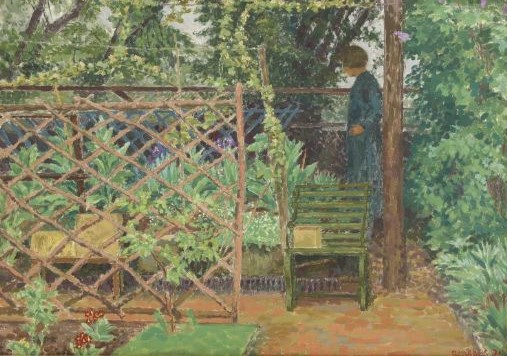
Rhoades: Greville Road Garden at Bran End, Stebbing
The move brought them close to Great Bardfield where the very prestigious artists’ group including Bawden, Ravilious, Michael Rothenstein and a number of other distinguished artists who had collected away from London. Geoffrey and Joan were intimate members of this creative community and remained so during the war.
Rhoades: The White Gate 1941 Essex Landscape 1940’s
After a short period residing near Chesham, Buckinghamshire the Rhoades family made a final move to Cuddington on the Buckinghamshire and Oxfordshire border. This change of location was stimulated by the necessity of being closer to Oxford. Percy Horton had been appointed Ruskin Master of Drawing at the Ruskin School, University of Oxford, and had invited Joan to be his secretary there. He subsequently engaged Geoffrey as a tutor at the School and this began a very long relationship with the Ruskin and Oxford for both of them, Joan continued to be secretary with Percy Horton followed by Richard Naish, and, just before her retirement in 1974, Philip Morsberger. Both Joan and Geoffrey were much admired and loved at the Ruskin which was then housed in the Ashmolean Museum.
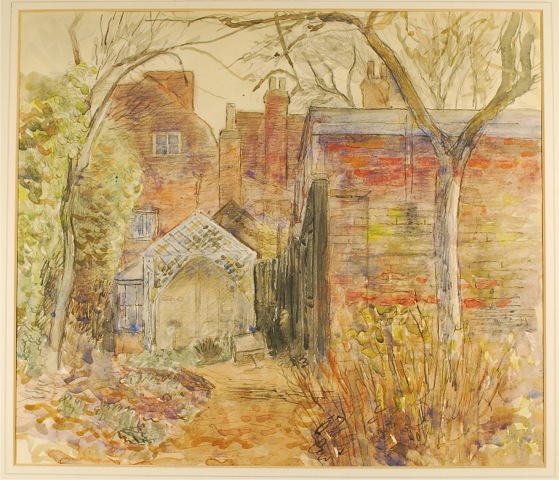
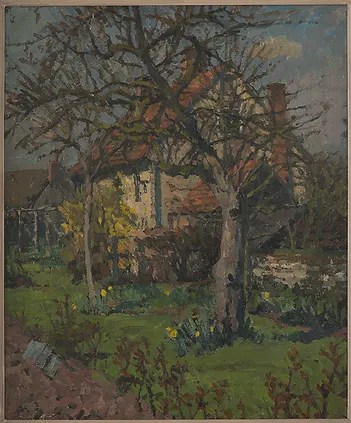
Rhoades: Apple Tree at Seven Stars, Cuddington The Yard Seven Stars The Artist’s GardenRiver Evenlode, Oxfordshire Landscape at Charlbury
Rhoades: Snow at Seven Stars, Cuddington 1970’s
The final phase of Geoffrey’s life was lived happily at Seven Stars, Cuddington with Joan and his son Peter who is also an artist. This concluding period, however, was marred by the tragic death of his sister, Esmee, in a traffic accident near the family home in Balham, which affected him very deeply.
Rhoades: In Memoriam to Esme 1966
Rhoades steadily produced landscape and mythological figure compositions in oils and in a variety of graphic media. Joan developed quite a large garden with both horticultural expertise and aesthetic judgement, a lovely foil to the artwork of her husband and son.
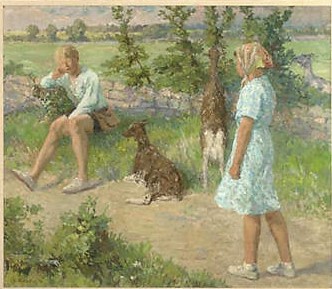
Rhoades: The Valley 1952 or before Right: Late Summer Morning, Hampstead. A Young Boy and a Girl with two goats on a path. Garden ??
Geoffrey continued to teach at the Ruskin School until his retirement in 1972 and also conducted therapeutic art classes at St John’s Hospital, Stone, through the 1960s. He died, after suffering from cancer, in 1980.
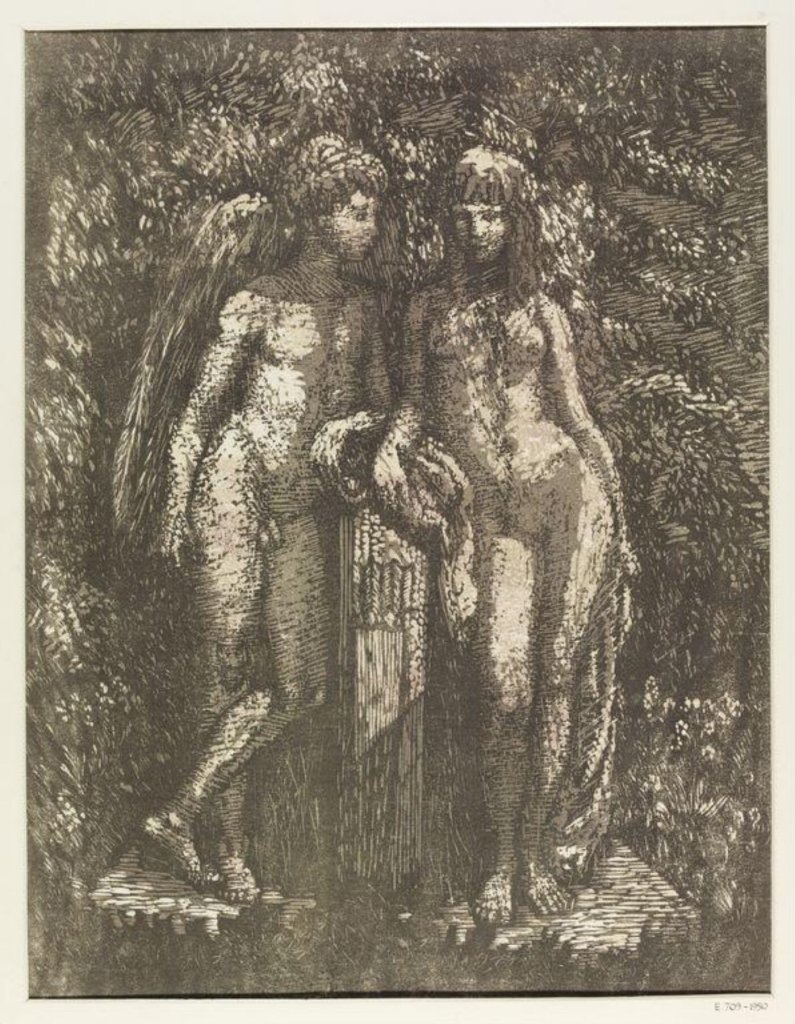
Rhoades: Anacreon’s Tomb. This linocut print won 2nd prize in the Giles Bequest competition of 1950, for colour prints from wood and lino.
Joan lived until she was ninety-seven years old at Seven Stars having helped to raise two generations of Peter’s children, her grandchildren, in the house; Lucy and Marion by Peter’s first marriage to Rosemary Bell; and Alice and Oliver by the second marriage to Jane Harrison. Marion and Oliver are both professional graphic designers. Peter, Jane and Oliver still live (in 2018) at Seven Stars.
Geoffrey exhibited at the New English Art Club, Royal Institute and Goupil Gallery and had one-man shows at Maltzahn Gallery, Ashmolean Museum, Mall Galleries and Sally Hunter Fine Art, 1987. The Tate Gallery, Ashmolean Museum, Victoria & Albert Museum and provincial galleries hold his work.
*The Morley College murals were part of a scheme for artists arranged by Mrs Eva Hubback, the Principal, with advice from Sir John Rothenstein. Funding of £1,300 was received in 1928 from Sir Joseph Duveen for the murals.
This blog would not have been possible without the help of Peter Rhoades who kindly gave me permission to use information from his own website re his father. Many thanks Peter.
Ariel in 2008 at Park Hall. Photograph: Clive Tarling.
Ariel Crittall was born at Orford House, Ugley on November 30th, 1914. Tragically a telegram had been received by Ariel’s mother Margaret on the 19th November to say that that her husband Archie Mercer had been killed in the desert fighting the Turks, only fifteen months after their marriage.
With Ariel’s mother serving in the Voluntary Aid Detachment, Ariel was raised at Orford House by her grandparents. Her grandfather, Will Tennant, or Papa, as she called him, was a huge figure in her life, a benevolent, guiding influence on her.
Ariel had a privileged but at times lonely childhood: ‘In earliest childhood the house did not seem especially large. There were quite separate parts, for example, the attics where the maids slept, (I discovered they were bitterly cold, apparently unheated, when I was exploring aged about five and told my grandmother this dismaying news, I cannot remember her reaction). The nursery had its own bathroom, and backstairs, leading to the kitchen, down which I used to creep hoping to see the young footman who seemed to me wildly good looking.’
‘Ariel on Topsy,’ painting by R A Buxton.
Ariel’s mother remarried in 1922 to brain specialist Jim Birley, with Ariel as bridesmaid. They made their home at 10 Upper Wimpole Street, London. Brother Tom was born in 1923 followed by Linnet and Jay.
At Orford House a French governess taught the children in the school room upstairs, but now in London, Ariel attended a Parents National Educational Union School near Marble Arch run by two redoubtable ladies, enjoying the walk to and from school. Ariel moved on to Queen’s College in Harley Street before going to a boarding school at Haye’s Court near Bromley, a so-called progressive school. On Wednesdays the art class was taken by Marion Richardson, who had revolutionised the methods of teaching art. “All children are gifted with the power to create and should therefore be given equal opportunity to express themselves.”
Drawing of Ariel, aged about 11 by Penny Sutton.
After leaving school, Ariel spent a year in both Paris and Munich learning the languages, studying painting and music and appreciating the culture. And that was how she came to be in Munich in 1933 with her aunt, Nancy Tennant. Nancy, on being asked at a dinner party who she would like to meet in Munich, replied, Adolf Hitler. Expecting nothing more than seeing the chancellor drive past, Ariel and Nancy were amazed to find themselves later being escorted to the heart of the growing Nazi machine, watching Sepp Dietrich, Rudolph Hess and other newly-established Nazis leaving a meeting before being introduced to Hitler. Although Ariel spoke no German, Nancy was fluent, and the 15-minute meeting left a profound impact on them both. Hitler’s most striking features were his, ‘strange, compelling eyes’, recalls Ariel who was chilled, not charmed, by the encounter.
The following turbulent year was spent in Munich, at times in the challenging company of Diana and Unity Mitford, who notoriously fell under Hitler’s spell. But for Ariel, witnessing ranks of boy soldiers training in the forests and hearing first-hand from her Russian landlady, Baronin Von Feilitsch, about conditions in the notorious Hitler youth camps, she heard the distant drums of war. Leaving the worrying affairs in Germany, Ariel returned home and in 1936 she met the handsome John Crittall.
There followed a six-month engagement, the wedding held in 1936 at Thaxted Church. The service was conducted by the Rev. Conrad Noel, known as the Red Vicar of Thaxted because when the flags of the nations were hung in the church during WW1 he insisted on including the red flag from Soviet Russia. The marriage would span half a century.
The Wedding. John and Ariel arriving at Munich Airport on honeymoon.
The couple began married life in Shalford at a house called The Firs but changed by John to ‘Pages’ after the family that had lived there the longest. Harriet was born in a London nursing home on 3rd January 1938. WW2 started and with food rationed a project keeping pigs, goats and bees helped to supply the household rations. Son Francis arrived on 7th April 1940. Ariel recalls: ‘By 1941 the nightly blitz on London was a constant threat: the steady roar of aircraft, the sky toward the city alight from the bombings and the fires. I found it impossible to sleep, coming down into the garden, where at least one other creature was awake, a friendly hornet, buzzing quietly round and round the pear tree.’
During this time Ariel and John made friends with John and Julia Strachey and with Eric and Tirzah Ravilious, then living in Castle Hedingham. Their children were all much the same age as Harriet and Francis.
Ever since on a visit to Tirzah in Castle Hedingham when she opened a door under the stairs and three frogs had jumped out, Ariel was horrified at Tirzah having to live in such a damp house with their three small children, John, James and Ann. She suggested that maybe they could rent the Strachey’s house, which they duly did.
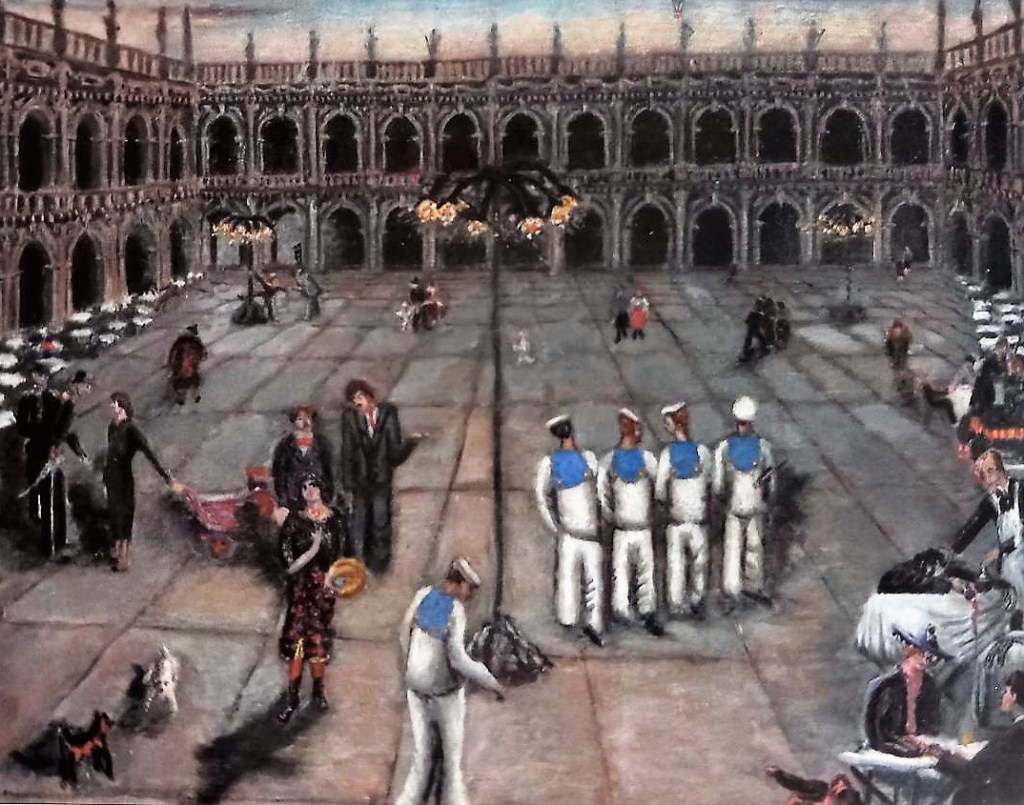
Ariel Crittall, ‘St Mark’s Square,’ c1938. ‘The very first painting I exhibited……. The two seated at table in the extreme right-hand corner are supposed to be John and myself on our honeymoon.
With the war came Ariel’s involvement in local activities, something that was to become an integral part of her life, particularly in the fields of education, health and the arts. Ariel supported many important organisations; she drove one of the first early mobile Citizens Advice Bureau vans, served for many years as a governor of the Tabor High School, was a governor of St George’s Hospital in London and a trustee of Braintree District Museum. Music too was a life-long pleasure and the setting up of the Veteran’s Choir in Finchingfield, was a proud achievement for her. John played an active role in the establishment of the University of Essex for which he was made a CBE in 1979.
By 1942 John was becoming restless working for the Crittall Company and enlisted in the Royal Engineers as a Captain. John was soon posted to Cairo and Ravilious to Iceland. ‘This was, very sadly, the last time that we saw Eric…searching for a missing aircraft…and was never seen again. Tirzah, shattered by this news, soon moved from Shalford to Boydells, near Wethersfield with her three children. We continued to share their lives much as, or more than, before.’
Family group, Crittell’s, Ravilious’s and Strachey’s with Ariel’s childhood friend Maureen Passfield (front centre). Left Ariel holding Laura. Back – James Ravilious, Tirzah, Anne Ravilious, John Ravilious.
John finally returned home from the Lebanon in 1945 and with Ariel’s mother looking after the children enjoyed a trip to Dublin. Baby Charles was born 13th September 1946 with Jim Richards, who had married Peggy Angus, as Godfather.
Feeling a little cramped in their home the family moved to Grove House in Sible Hedingham in March 1948. On the 4th November, a fourth and last baby Laura was born.
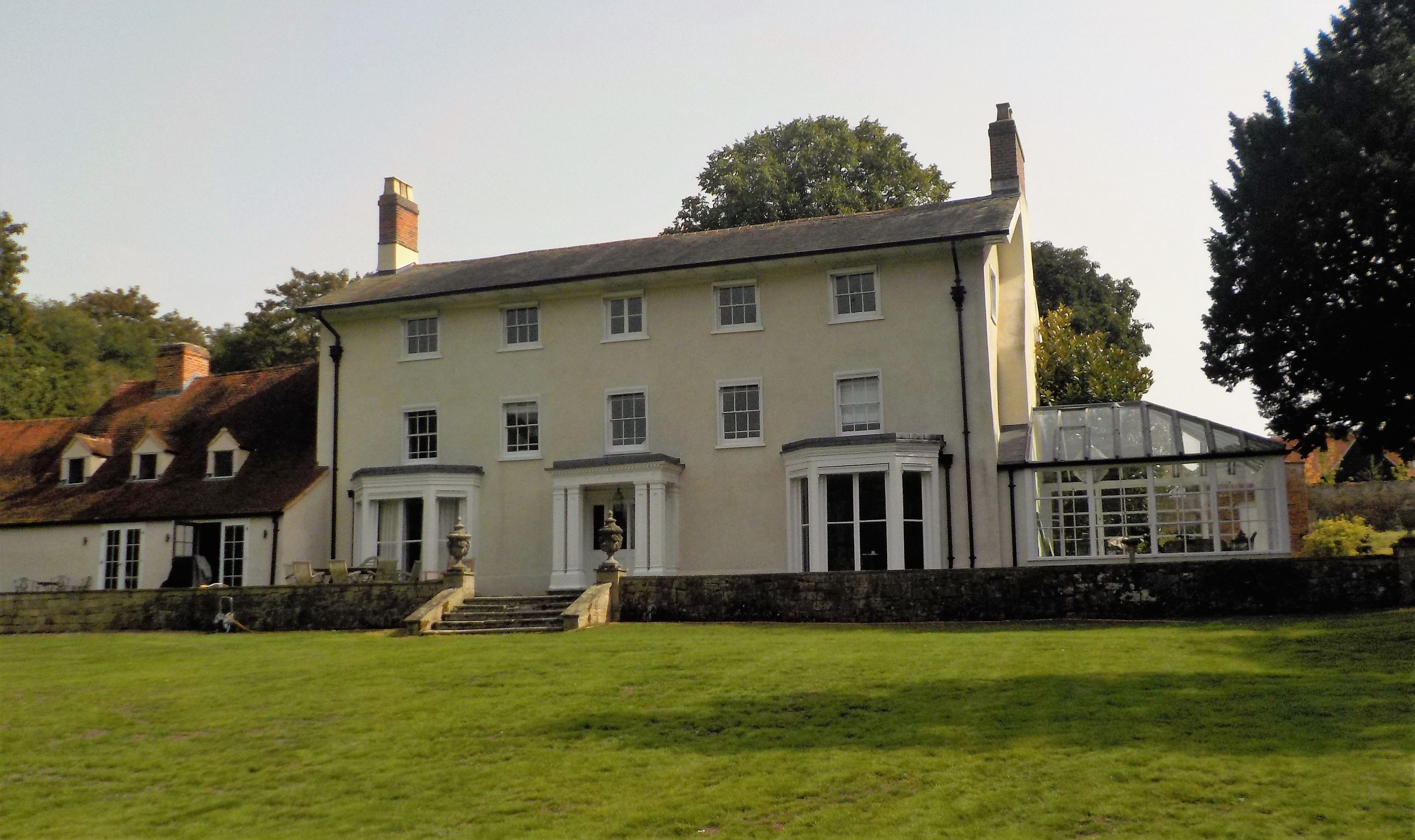
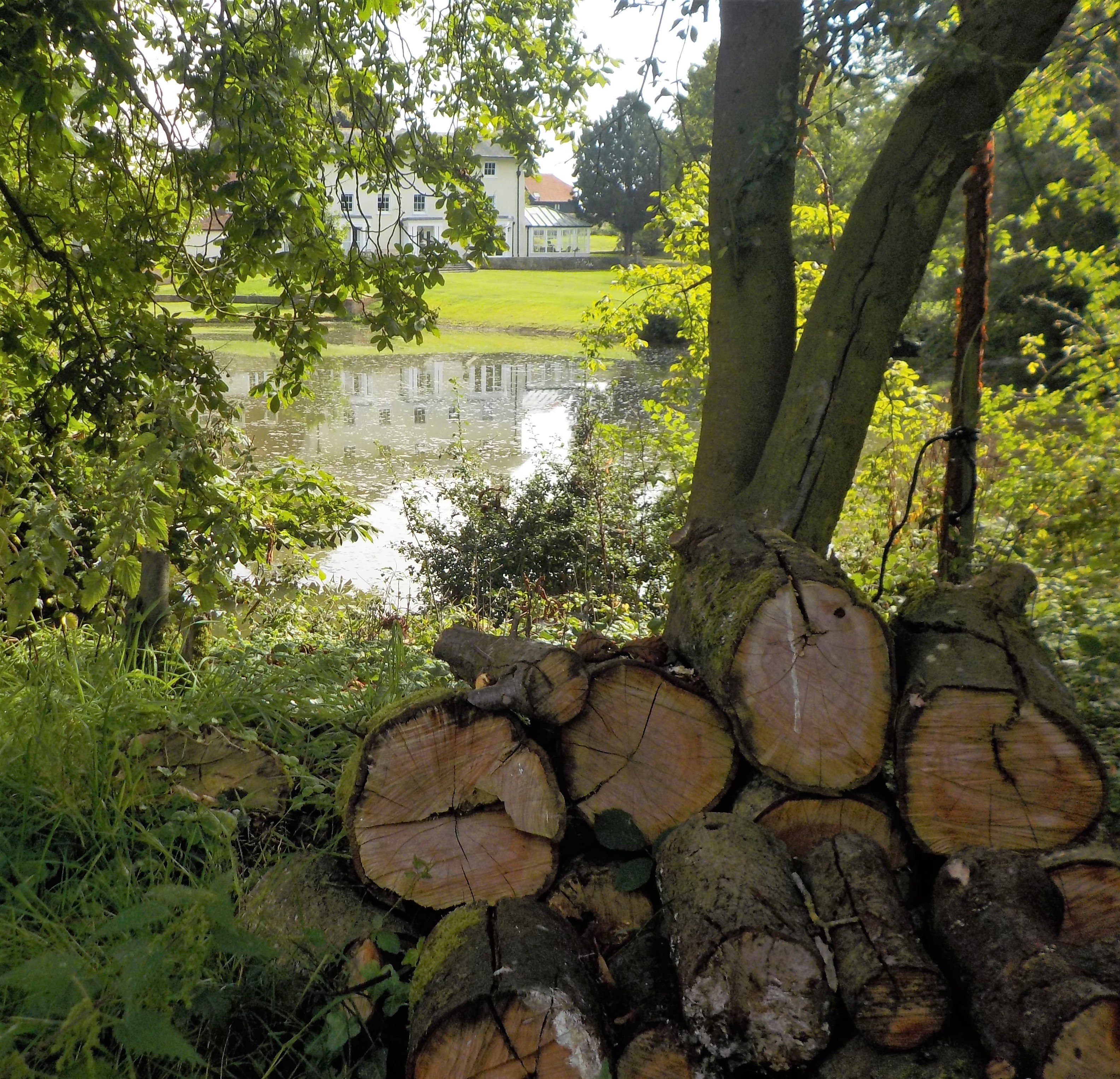
The post-war years saw many enjoyable travels and parties with an ever-widening circle of friends. However, John was becoming increasingly annoyed by the hum of cars passing the house and desired a home that was truly quiet and peaceful. Park Hall, near Great Bardfield was once again (1952) on the market and John, having missed the sale of the home four years earlier, this time snapped it up. The 33 acres of land included two cottages, a wide lawn and a small lake.
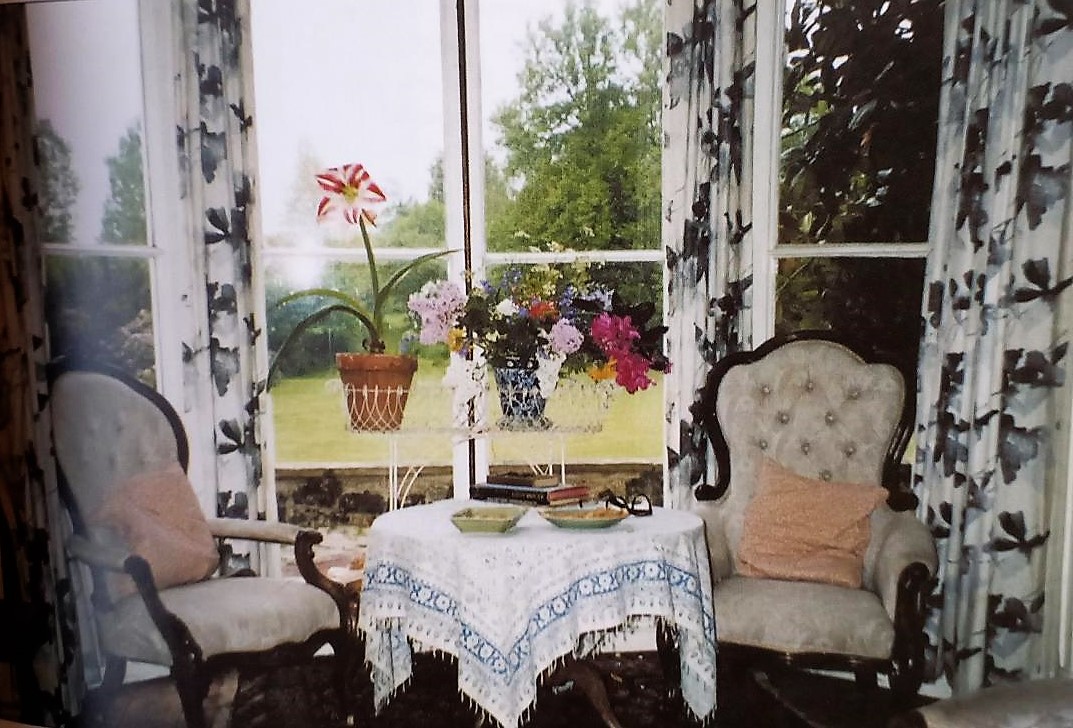
Park Hall from the lake. Park Hall sitting room.
The 1950s were exciting times for art in Great Bardfield with the Artists’ Open House Exhibitions attracting thousands of visitors to the village eager to see the artists in their own homes. Edward Bawden commenting on the increasing crowds stated: ‘If this goes on, our ceilings will soon come down!’ Ariel threw herself into the event and with the help of American friend Hal Palmer, a former restaurant owner, provided teas, countless scones and sandwiches for the visitors.
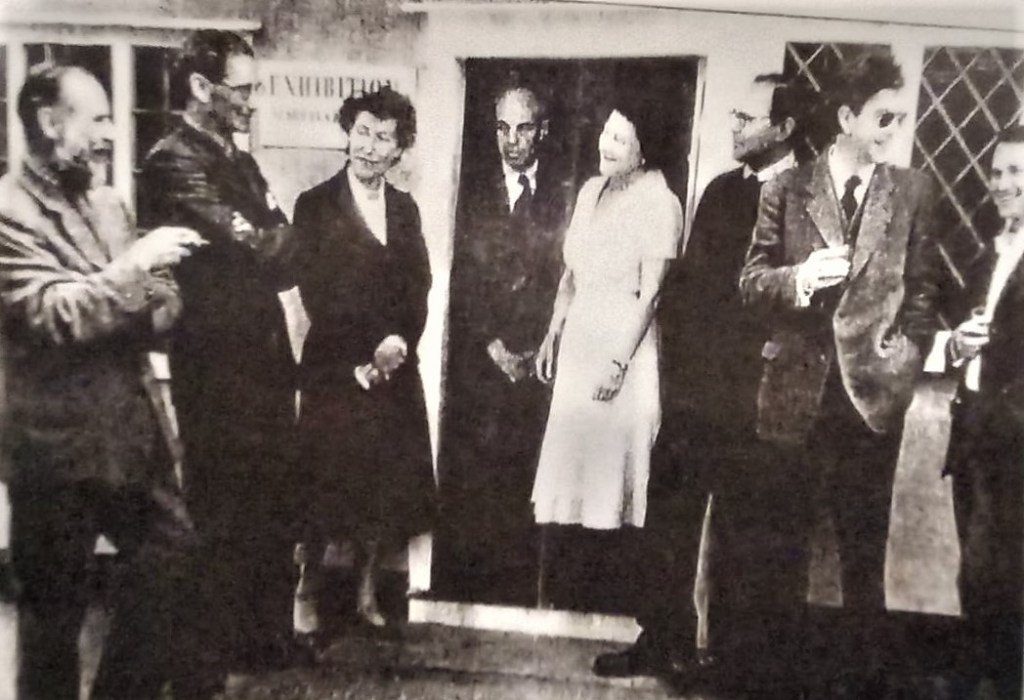
Great Bardfield Open Houses Art Exhibition, July 1955. From l to r. Stanley Clifford Smith, John Aldridge, Ariel Crittall, Edward Bawden, Marianne Straub, Michael Rothenstein, Walter Hoyle and George Chapman.
Ariel and John experienced a journey around the world in 1961 visiting Australia, India, Fiji, New Zealand and home via the USA. The Crittall Company was taken over by Slater Walker in 1968, a constant source of distress to John.
In 1975 John was diagnosed with cancer, he battled on with his many interests and appointments, sadly dying on the 1st July 1980.
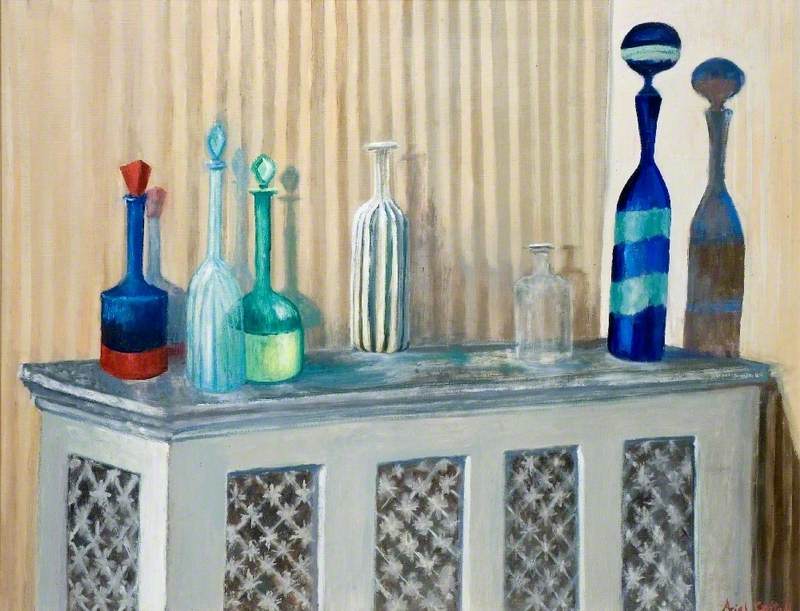
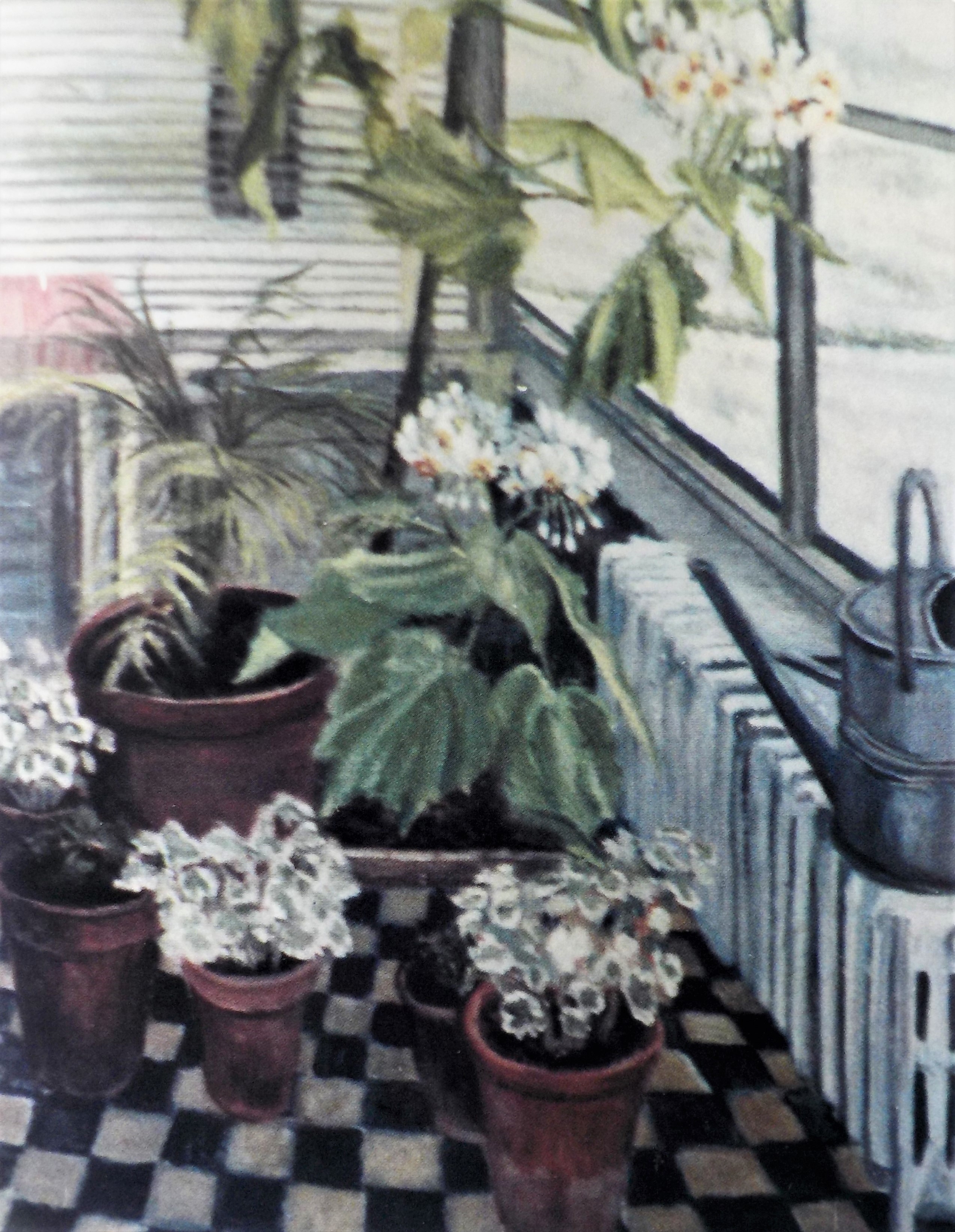
Ariel Crittall: Venetian Bottles. Conservatory in the Winter. Still Life Flowers. Summer Flowers. Magnolia. A Bowl of Flowers Beside a Window. There are no dates to these paintings, I’m guessing most are post 1980.
Ariel’s painting and drawing had been confined to her spare time until John’s death but now she concentrated on it seriously. Writer friend Patrick Anderson (died 1979) introduced Ariel to his partner Orlando Gearing. Encouraged by her new friend Orlando (another former Slade student) Ariel began to spend more time drawing and painting. The two friends discovered a mutual love of visiting galleries and concerts. In February 1985 they set off for an adventurous trip to Russia, the precursor to many years of trips sharing their love of the arts.
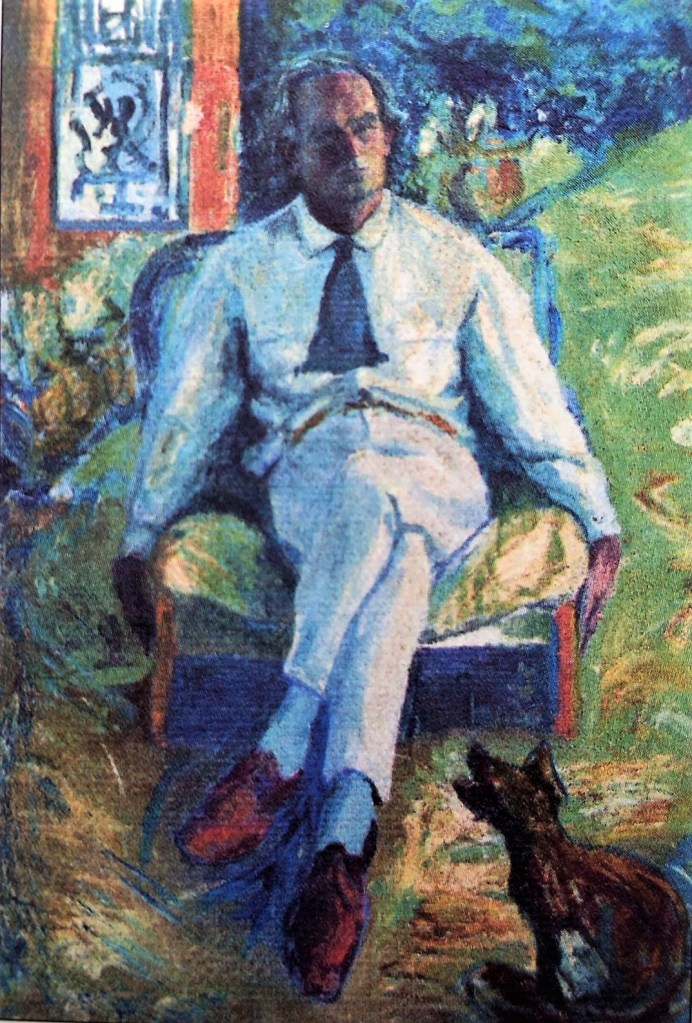
Orlando with his Fox. 1960’s Painted by his friend Rosie Peto.
Orlando’s health slowly declined and a time came when he had to be moved from Park Hall to a nursing home. Ariel cared for him up to his death, greatly missing her dear companion.
Three landscapes by Ariel: Riberac. Landscape near Riberac. Moulin de Besse near Riviere
She continued to paint long into later life. Her successful solo show at the Thaxted Guildhall in 1999 was to be one of her last but her pictures were submitted to the annual Great Bardfield Art Show for several more years. Having kept diaries all her life and re-reading several of John’s diaries Ariel decided to write an account of her full and varied life. In 2009 she published her memoir, “My Life – Smilingly Unravelled”. A further shorter account of her travels with John in India followed.
Her many friends will recall the frequent ‘salons’ held at Park Hall. Ariel would phone or write (on charmingly recycled postcards) to invite one to drinks at 6.00pm. She would think carefully about who would enjoy meeting whom and the conversation would flow freely, encompassing all aspects of international relations, politics, economics and the arts – it could be a little daunting at times. Sometimes she invited musical friends to perform and occasionally Ariel herself could be persuaded to play duets on the fine Blüthner grand piano.
Ariel knew how fortunate she was to remain at Park Hall as old age and infirmity crept up. Her family continued to delight her and she followed the progress of her grandchildren and great grandchildren with joy. Eschewing television she read voraciously believing that one should never stop learning and her afternoons were often spent reading French or German. Sadly, Ariel was diagnosed with motor neurone disease but she had constant and loving support from family, friends and neighbours and her final days spent looking out across the lawn and lake of Park Hall were tranquil and calm. She died on September 25th, 2012 with her family around her.
Ariel Crittall: Distant View Approaching Dunmow.
Mixed shows included Bury St Edmunds Art Gallery, 1983; work accepted for RA Summer Exhibition, 1985; and in 1994 both Braintree Town Hall and Fry Art Gallery, Saffron Walden. Had a solo show at Quay Gallery, Sudbury, 1986, later ones including University of Essex, 1992; Braintree Town Hall, 1994; and Guild Hall, Thaxted, 1996.
I am indebted to Great Bardfield friends Janet Dyson and Jenny Rooney for their invaluable help with this blog, writing the final four paragraphs to fill in the latter years of Ariel’s life, they were good friends of Ariel. The majority of this blog was written with the help of Ariel’s autobiography ‘My Life, Smilingly Unravelled.’ This book is a fascinating account of a life lived to the full and I would highly recommend this book to anyone wishing to know more about Ariel’s life set against the bigger picture of world events.
‘My Life, Smilingly Unravelled.’ by Ariel Crittall. Published by Braintree District Museum Trust Ltd. ISBN: 978-0-9537936-3-1. The Between the Lines Bookshop, Vine Street, Great Bardfield, Braintree, 01371 810087, booksbetweenthelines@gmail.com……. would be more than willing to help. The book originally priced £12. First published 2009.
AND a ps here of photos of Park Hall, today in September 2023, still a beautiful place !
Françoise Taylor was born in Bressoux, Liège in Belgium on January 1st, 1920 (née Wauters). She moved to Brussels in 1924 starting primary school at 5½ in 1925 – a year early – at a Sacré Coeur girls’ school in Rue de Linhout, Brussels.
In 1935 Françoise was sent to a Sacré Coeur school at Blumenthal on the Dutch-German border, mainly to learn German. Françoise was in a special class of six foreign pupils and “painted a lot” (her words). Naturally left-handed, she was made to write with her right hand (the custom of the time) but always painted and drew with her left.
In 1937 she commenced studies at the Académie Royale des Beaux-Arts in Brussels, winning the First Prize for Drawing three years in succession. She went on to study art for a further six years at La Cambre (l’École Nationale Supérieure d’Architecture et d’Arts Decoratifs) specialising in engraving, book illustration and typography, winning a Diploma with Highest Distinction and a Mastery in Book Illustration – the first in Belgium – “avec la plus grande distinction et les félicitations du Jury”.
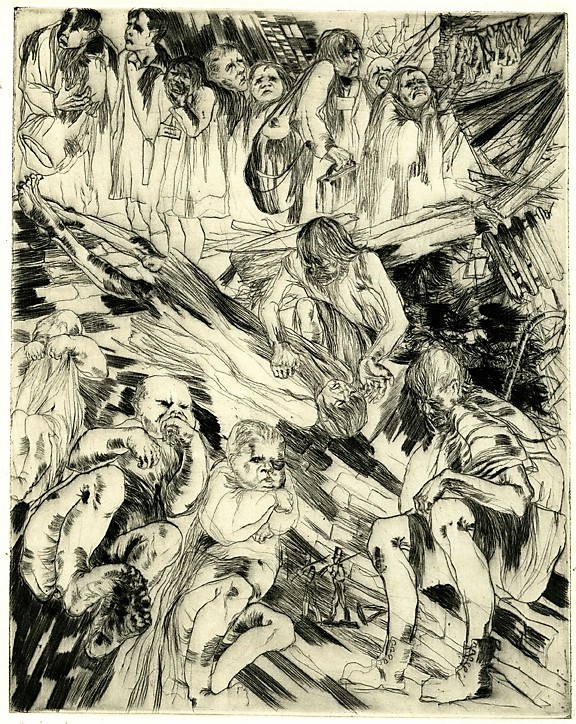
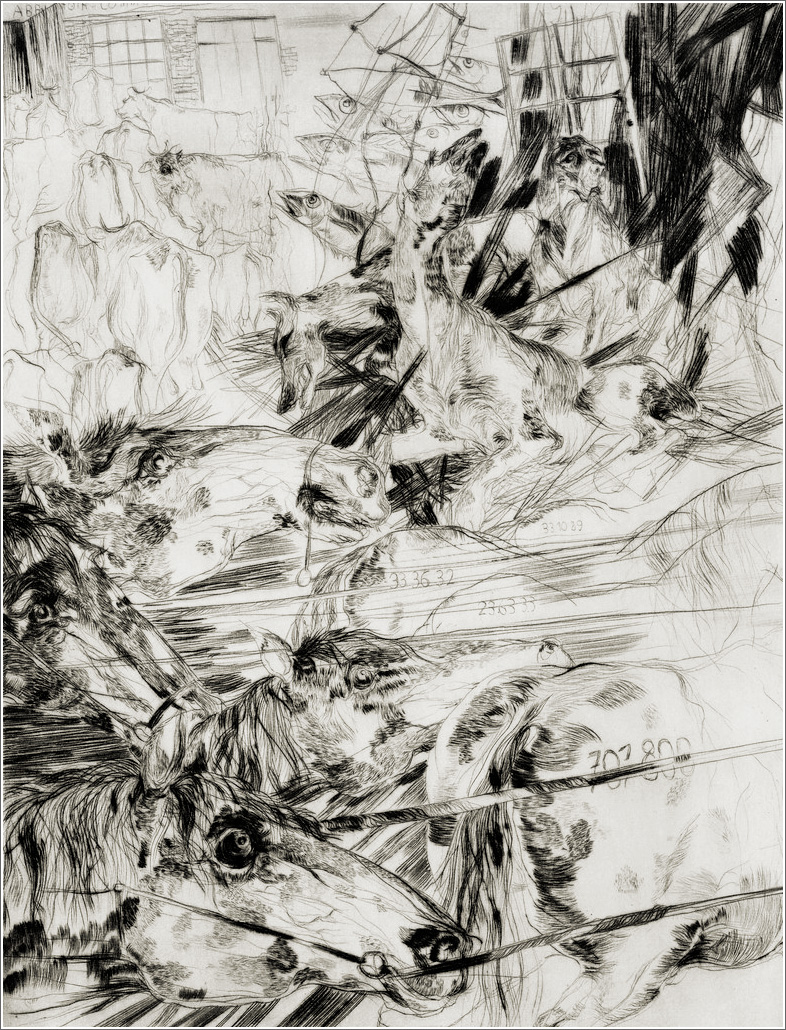
Her experience of living throughout the German Occupation was reflected in her series of engravings ‘Pointes Seches sur la Guerre’. These engravings depict the deprivations of life in Belgium during the war years, as well as the Deportations and the Allied Bombardment.
Françoise made a series of thirteen drypoint etchings titled ‘La Guerre’ which she completed in August 1945. A complete set is in the permanent collection of the Whitworth Art Gallery in Manchester.
Woodcut: ‘Christ on the Cross.’ c1944.
The photo shows Françoise in a field during an allied air raid over Belgium in 1945. An estimated 1.5 million Belgians were displaced by the German occupation.
Françoise married Kenneth Taylor in Brussels in October 1946. During the war he served as an officer in the 6th Battalion of Green Howards then was attached to the Belgian army as a liaison officer. They moved to England in 1946, first to Oxford where, speaking little English, she studied lithography at the Ruskin School of Art then to Bolton where she spent the rest of her life. They had five children, now adults — Patrick, Anthony, Martin, Michèle and Annik.
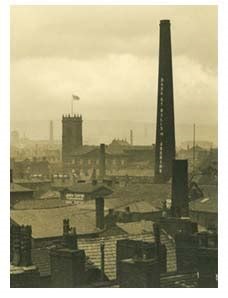
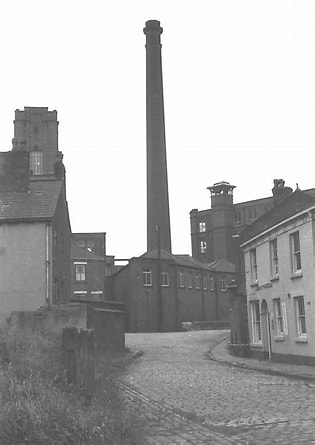
Bolton, an industrial town.
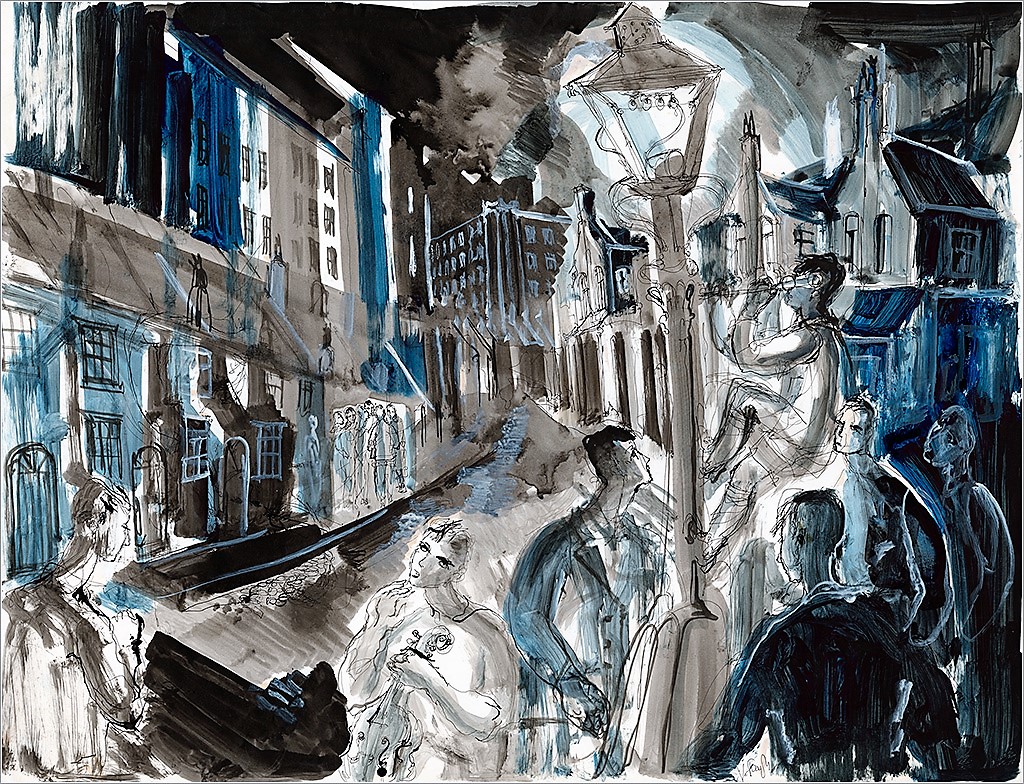
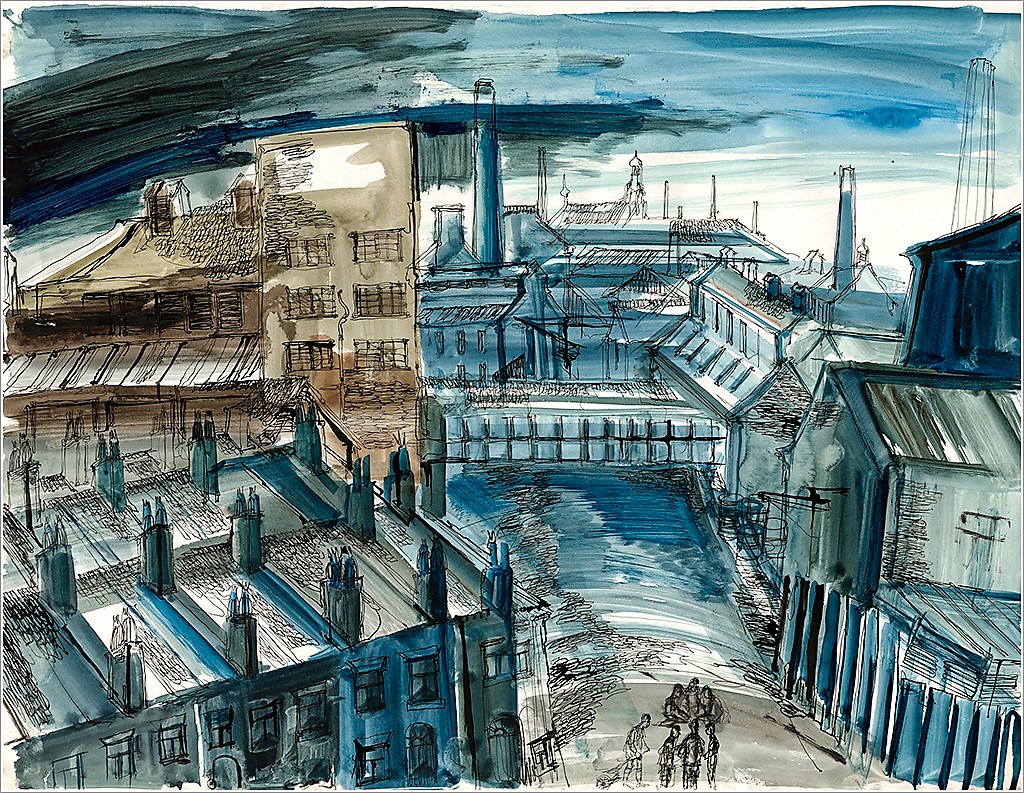
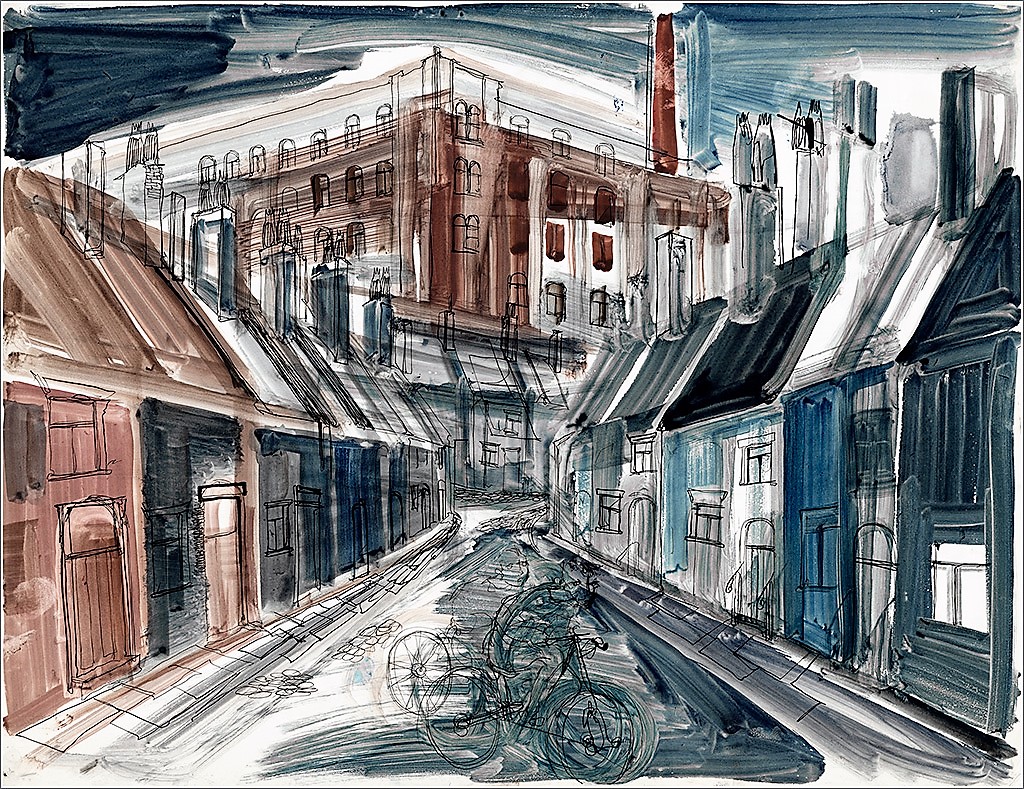
In 1949 moving to Bolton in the industrial North-West of England her inspiration came not only from a life-long interest in fables and nursery rhymes but an environment that she drew and painted with the fascinated unfamiliarity of an ‘outsider’. She would wander the streets of her adopted town Bolton sketching mills, railways, gasworks, coal mines, park bandstands, football scenes from Burnden Park (then the home of Bolton Wanderers) together with the people and their animals.
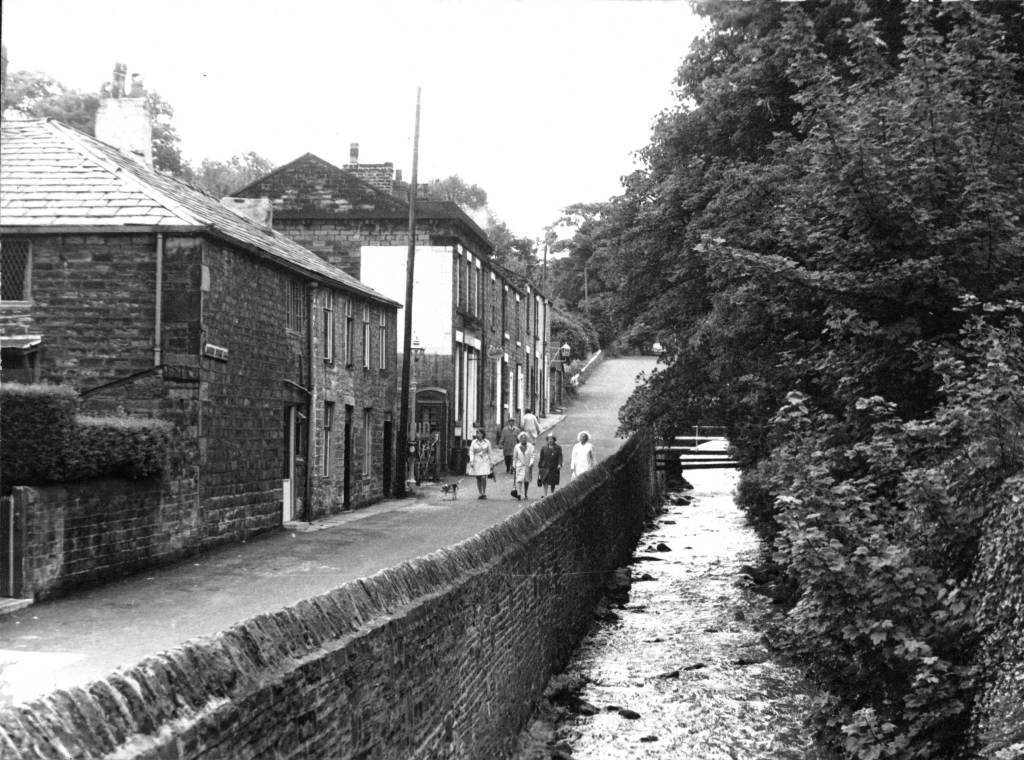
Barrow Bridge
The family initially lived at Barrow Bridge on the outskirts of Bolton town centre before moving to Heaton in 1953.
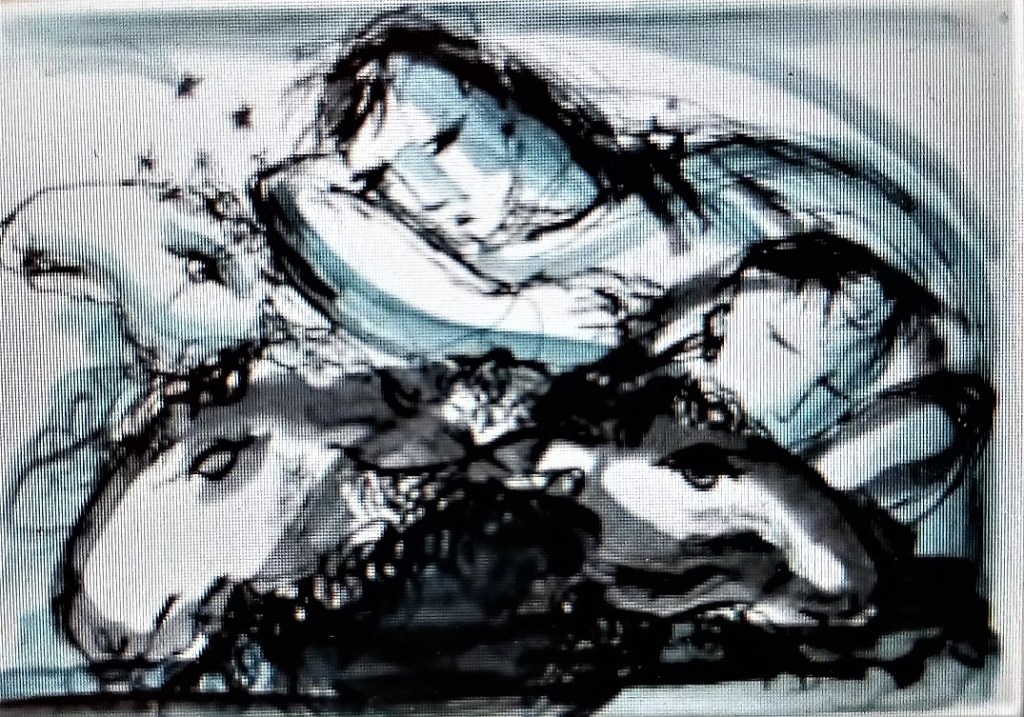
Above: Nativity Scene sent as a Christmas card to Marianne Straub. Also figures with sheep heads, sent to Marianne.
Françoise developed a life-long friendship with Great Bardfield artist Marianne Straub during Marianne’s time working for the textile firm Helios, a Bolton-based subsidiary of Barlow & Jones. Straub was the head designer of Helios from 1937 and became Managing Director in 1947.
During the 1950s she held a number of exhibitions of her Bolton scenes: Bolton, Salford City Art Gallery, Manchester and other places in the North of England. Work purchased by Manchester Corporation for the permanent collection in the City Art Gallery.
Pen and ink and wash paintings of Bolton.
A reviewer at the time wrote:
Mrs Taylor sees through the grime of industry and back streets to a kind of beauty – a pathetic, sometimes tragic beauty. There is sorrowful nobility, for example, in the eyes of the dog guarding a squalid door. The children who push perambulators or spot trains, the adults who go about their work, or sit at their doorsteps, or trail wanly by the gasworks, are thin and spectre pale and curiously detached from their surroundings. Only the footballers are well fleshed and fully extrovert. Only these match in human strength and drive the mechanical power and impetus of Mrs Taylor’s locomotives.
Engravings Bolton Wanderers: Football Match at Burnden Park. Kick-off at Burnden Park. Mid 1950’s.
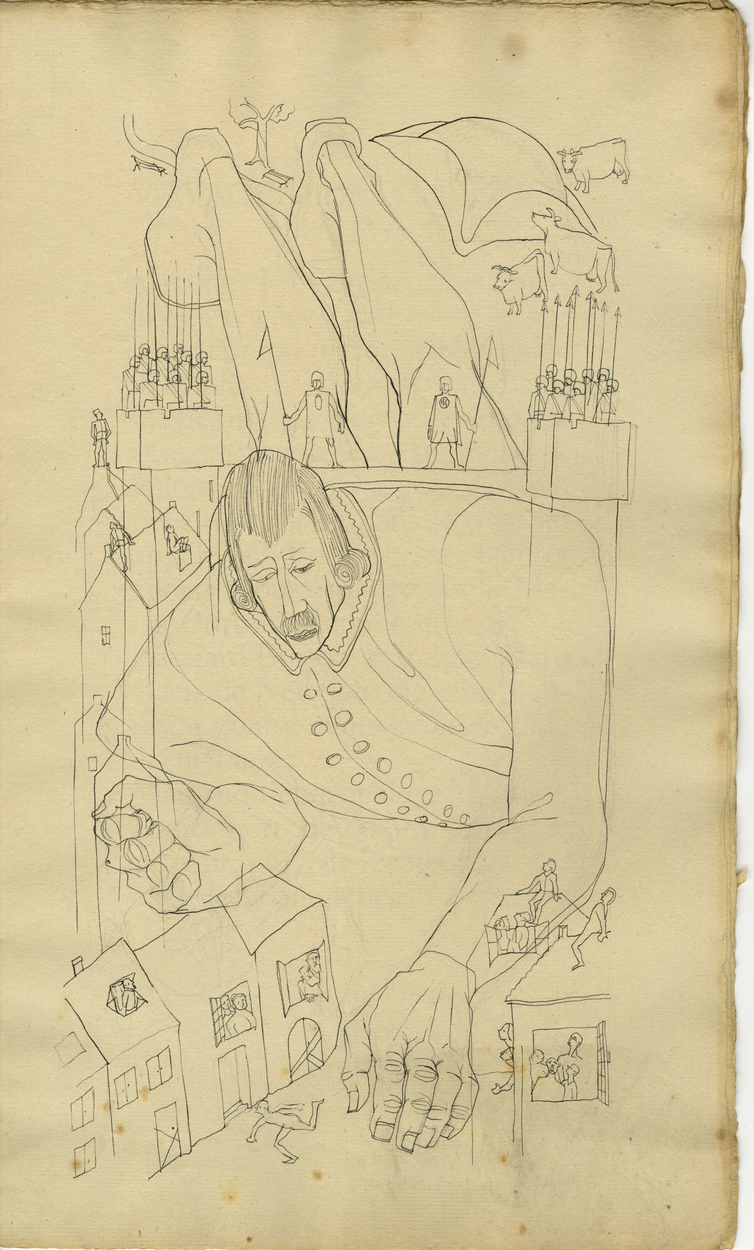
Illustrative Work: Gulliver’s Travels, Wuthering Heights, the Little Mermaid and Alice in Wonderland.
In 1969 Françoise completed a teacher training course at Chorley College and was appointed Head of Art at Mount St Joseph girls’ school in Bolton.
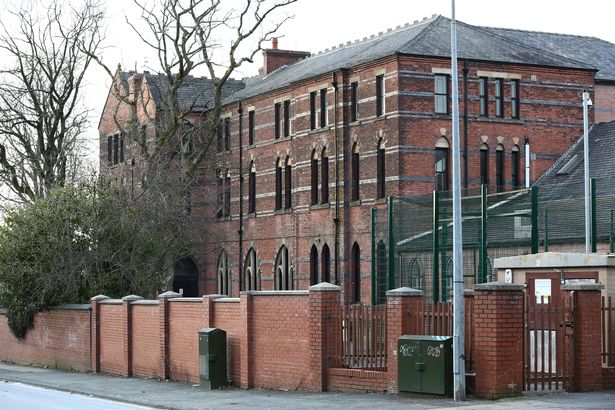
Mount St Joseph – a convent-based secondary school, founded in 1902 by the Sisters of the Cross and Passion.
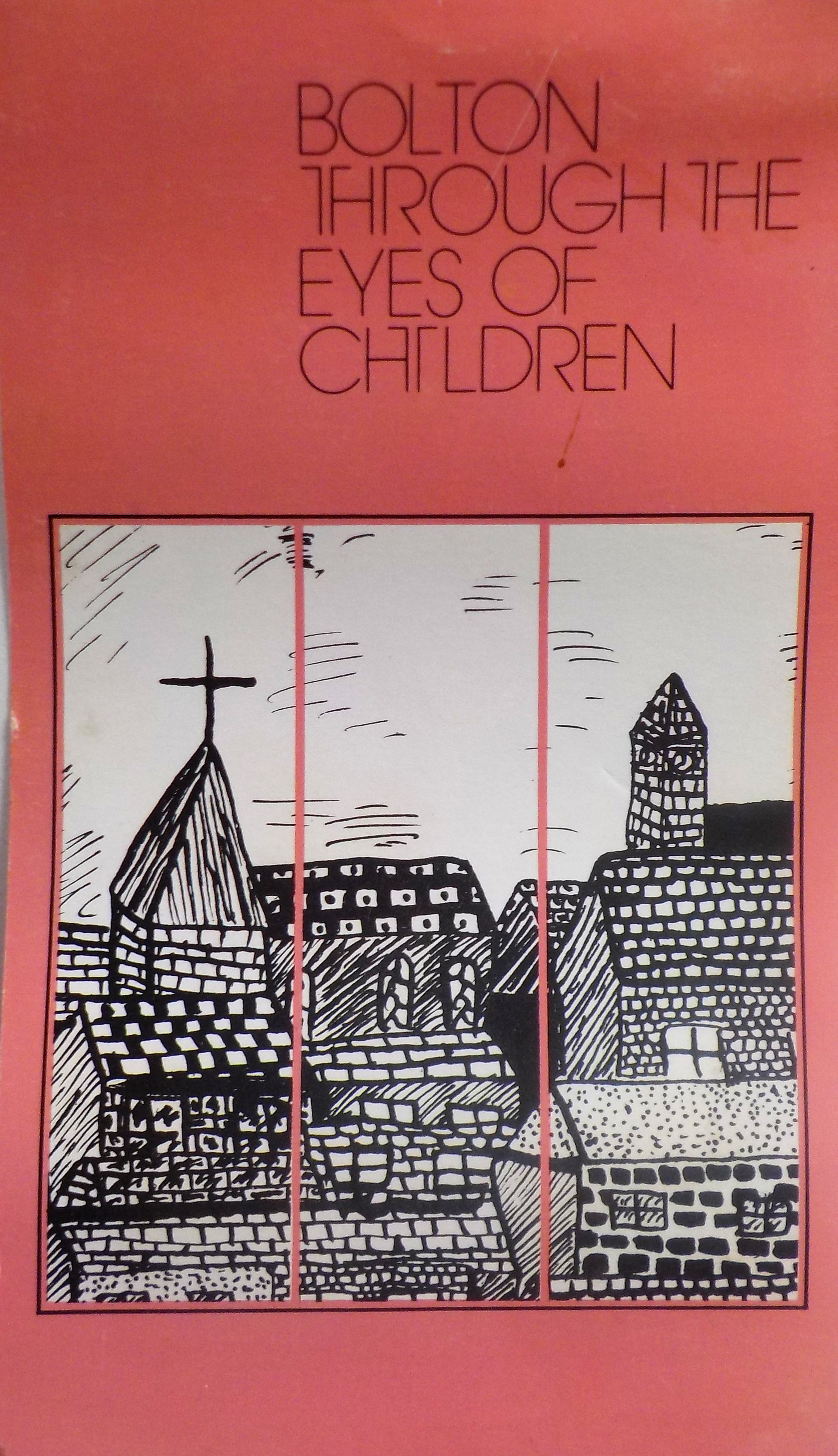
Bolton Through the Eyes of Children March 1980. Brian Barlow ‘Long Street.’ Roger Hampson ‘Nelson Mill.’ Trevor Lofthouse ‘Collagraph.’
Not as celebrated as St Ives or Great Bardfield, but Bolton was a hub of art education during the years that Françoise was teaching. Brian Barlow was an internationally acclaimed artist while Roger Hampson and Trevor Lofthouse were outstanding artists in their respective fields of painting and print-making. The 70-strong Bolton Art Education Association formed in 1979 saw exhibitions of children’s art celebrated in the Bolton Museum and Art Gallery supported by Bolton Education Authority.
Françoise retired from teaching art in 1982 but continued to draw and paint on-and-off during the 1980s and up to the mid-1990s. She became interested in pottery and ceramics, working in clay in a local pottery class and using her own kiln at home.
Françoise Taylor died from pneumonia at her home in Stapleton Avenue, Bolton on January 24th, 2007, aged 87. Kenneth died from similar causes in 2011.
“What is there?” 1994. Human children emerging in wonderment into a naturally harmonious world of animals and vegetation. One of Françoise Taylor’s last drawings at almost 75.
Françoise is fondly remembered by many of her pupils at Mount St Joseph’s.
She was one of my favourite teachers I used to spend lunchtimes in the art room tidying up for her, she was just one of those teachers that really inspired you.
She really got my interest up as I could never draw and am not a talented artist, but she showed me ways that I could express my artistic flair without detailed drawing eg pastels. I produced a lot of work in the two years around 76/77. She could have quite a bite if girls misbehaved though! I remember the house she lived in in Bolton and pass it a lot.
I loved Mrs Taylor she inspired me so much and put me through my A level art one year early. She led me to be a book illustrator a few years later.
She was a brilliant teacher. I wanted to do art O Level but it didn’t fit in with my other studies. She let me do art in my lunch breaks and she helped my put s portfolio together. I got the O level thanks to her.
Mrs Taylor taught me too … “Be brave!” was the message I remember!
Also spent many happy days walking both locally and in the Lakes with Mr and Mrs Taylor (1977- 81) for the Duke of Edinburgh Award scheme.
I remember Mrs Taylor. she and her husband used to go walking in the Lake District and sometimes take along sixth form students. Great days out!
I remember her well; I wasn’t really talented at all but she always encouraged me and once held up my efforts to the class which made me feel brilliant. My work was always described as lively. She was wonderful.
Aw she was a really lovely lady and a great teacher. Remember her so well. Her and her husband came with us on a trip to Ingleton. He took photos of the group which I’ve still got.
Aw she was a really lovely lady and a great teacher. Remember her so well. Her and her husband came with us on a trip to Ingleton. He took photos of the group which I’ve still got.
Mrs Taylor was my art teacher from 76-81. I passed my o level even though I can’t draw. She was a great teacher and I looked forward to my art lessons. She inspired us all with great enthusiasm for our work. I designed the head dresses for the school play Midsummer Night’s Dream one year with her help. Lovely lady.
Noel Carrington, portrait by Dora Carrington. c.1912. This work, produced when Dora was at the Slade, is an excellent example of the academic style of drawing that she had developed there. She often persuaded Noel to sit for her on visits home to Bedford.
Noel Lewis Carrington (1895 – 11 April 1989). Carrington was the son of railway engineer Samuel Carrington and Charlotte (née Houghton), and brother of the artist Dora Carrington, he was one of five children. Carrington was born in Hereford in 1895 but in 1903 the family settled in Bedford. He was educated at Bedford School and later at Christ Church, Oxford, sister Dora helping him cram’ for his interview. He entered Oxford in 1912 going up to read history while becoming an active, athletic student, rowing for his college.
Noel and Dora Carrington at Seaford 1912
Meanwhile Dora had won a scholarship to the Slade School of Fine Art joining a remarkable group of artists – Paul and John Nash, Mark Gertler, Stanley Spencer William Roberts and Edward Wadsworth.
‘What impressed me with her and her friends like Gertler and Paul Nash was their absolute dedication to their art as their life’s work.’
In 1914 Carrington enlisted, training at a camp near Weymouth before experiencing the horrors of the trenches at Ypres. A sniper put a bullet through his elbow and he spent a year in hospitals or at home convalescing. A further period of service in France followed, processing documents dealing with the fate of young soldiers accused of desertion. On a visit home in 1917 he and Dora discovered the village of Ham where Dora was to return with Lytton Strachey in 1924.
In the 1920s Carrington went out to India on behalf of Oxford University Press to establish a branch office there. In Bombay he was given the task of proof reading and, if needed, a bit of editing. Moving to Calcutta he was given more rewarding work, learning every aspect of the publishing business – editing, choosing pictures, paper, binding and also accounts.
Noel got Dora to illustrate his Stories Retold edition of Don Quixote for the Indian market. Their father, Charles Carrington, had been a railway engineer in India in the nineteenth century. Noel Carrington’s unpublished memoir of his six years in India is in the Oriental and India Office Collections of the British Library.
Returning home from India in 1923 Carrington secured a post at Country Life. He settled in Hampstead which was already gaining a reputation as a place for the avant-garde. Carrington had two spells with Country Life from 1923 to 1928 and also 1935 to 1940.
In 1924 Carrington was invited to a meeting of a society by neighbour Philip Alexander. The meeting was attended by about 30 men and women at Queen Square, Bloomsbury. It was at this meeting that Carrington met Alexander’s youngest daughter Catherine who had been a student at the Slade School of Fine Art. A romance bloomed. Dora wrote of Noel’s new lady, ‘Very lovely, a Perugino angel with a wide forehead and golden hair.’
The Society holding the meeting that night was the Design and Industries Association (DIA), a group that met to discuss and promote good design. Carrington soon became a member of the DIA and he soon became involved in editing and producing their publications. The DIA magazine Design for Today was launched in 1933 edited by Carrington.
Noel and Catherine married in 1925, They had three children, Paul, Joanna and Jane, and lived in Hampstead until soon after 1945 when they moved to Lambourn, Berks. to farm at Long Acre.
From left: Ralph Partridge (married Dora), Noel Carrington and Catherine Carrington.It was through Noel that Dora met Ralph Partridge.
Sadly in 1932 Dora Carrington killed herself on 11 March with a gun borrowed from a friend. This was just two months after the love of her life Lytton Strachey died of stomach cancer.
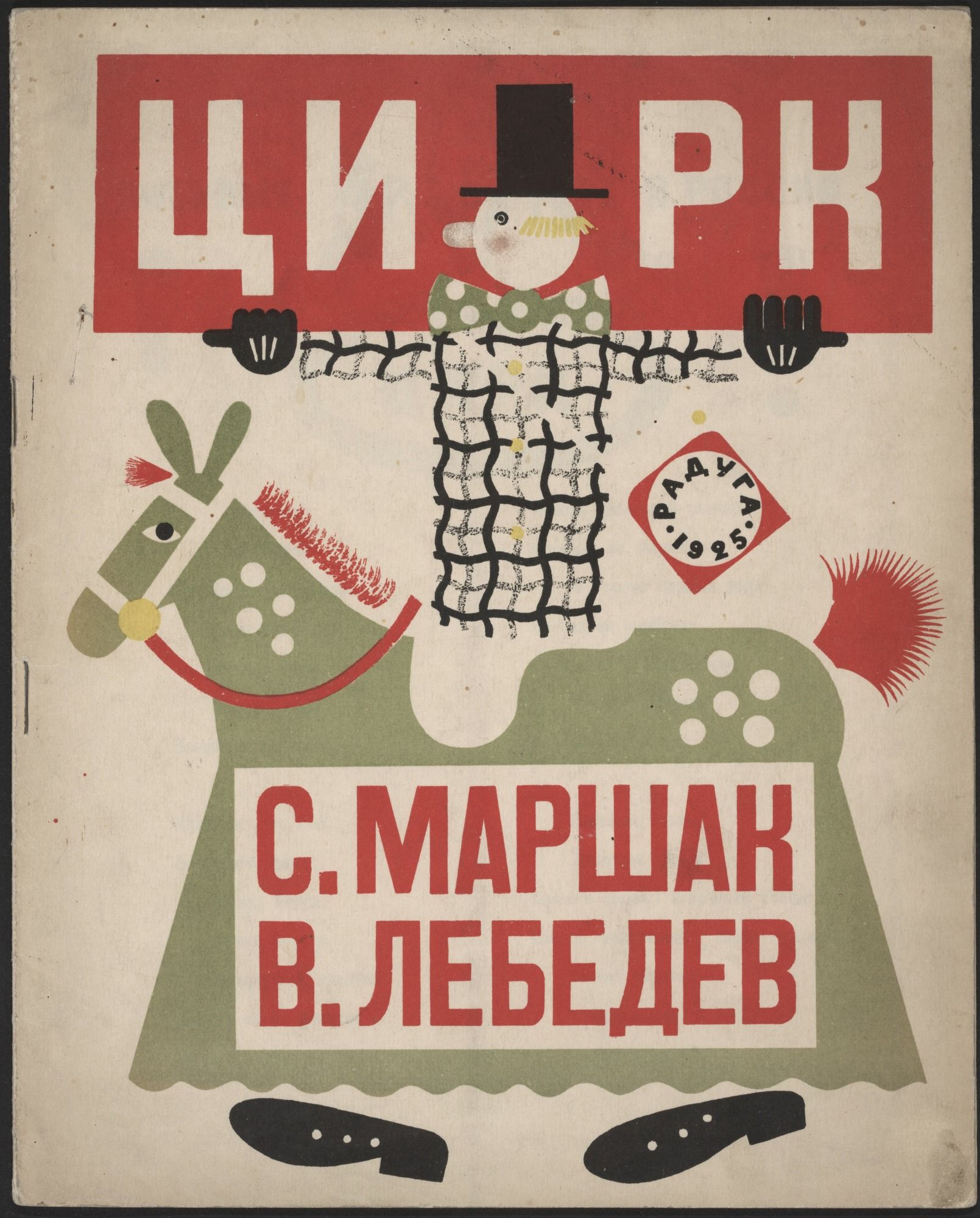
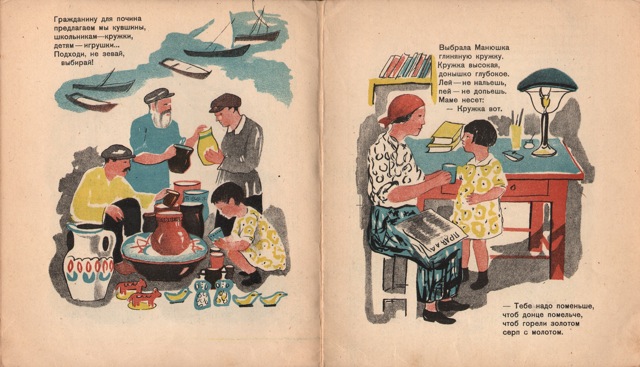
In 1933 a collection of Russian Children’s picture books landed on Carrington’s desk. Following the Russian Revolution in 1917 there was also a revolution in Children’s Books. Pravda declared in 1918 ‘The children’s book as a major weapon for education must receive the widest distribution.’ There followed an explosion of children’s picture books between 1918 and 1931, nearly 10,000 titles written by close to 500 authors were published. These picture books were attractive, colourful, with clean lines and typographical experimentation……indeed revolutionary ! Sadly by the early 1930’s the zealous, puritanical approach to socialism would sweep through Russian society and culture. Fairy stories were banned and children’s books became more propagandist and ‘heroic’.
In 1923 Carrington commenced his first of two spells at Country Life interspersed by a short time at the Kynoch Press based in Birmingham. Returning to Country Life in 1935 Carrington now had the position and influence to commission and edit some of the most remarkable children’s books of the 20th Century. Mervyn Peake’s ‘Captain Slaughterboard Drops Anchor, Kathleen Hale’s ‘Orlando the Marmalade Cat’ and Eric Ravilious’s ‘High Street’ are just three of the stand-out publications.
Eric Ravilious’s High Street published in 1939.
Before leaving Country Life Carrington commissioned Eric Ravilious to design the Beautiful Britain Calendar 1939.
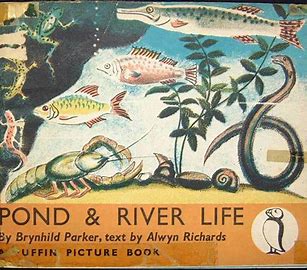
In 1939 times were changing, war beckoned and Carrington had a meeting with a new publisher Allen Lane. Inspired by the Russian children’s picture books Carrington started on a sixteen year journey as Penguin Editor of Puffin Picture Books.
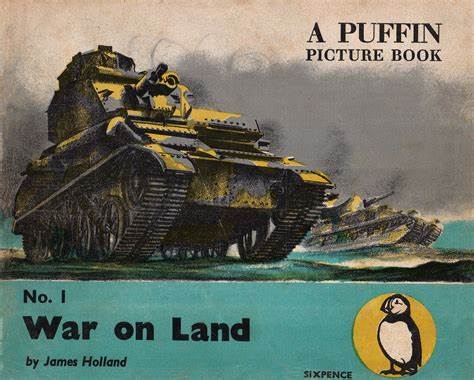
The first Puffin Picture Books appeared in December 1940 – War on Land, War at Sea, War in the Air and On the Farm. The Puffins were an instant success with both children and adults. A teacher of evacuated children stated: ‘A boy who was so recalcitrant having never admitted to being able to read, suddenly on seeing the Puffin farm book asked to be allowed to read it to the class.’
The first four Puffins.
The print run was in tens of thousands, paper was strictly rationed to publishers but Lane was fairly successful in dealing with the Paper Controller. Between August and December 1941 seven new titles appeared. The steady stream continued in 1942 with ten new titles.
Other early Puffins 1941.
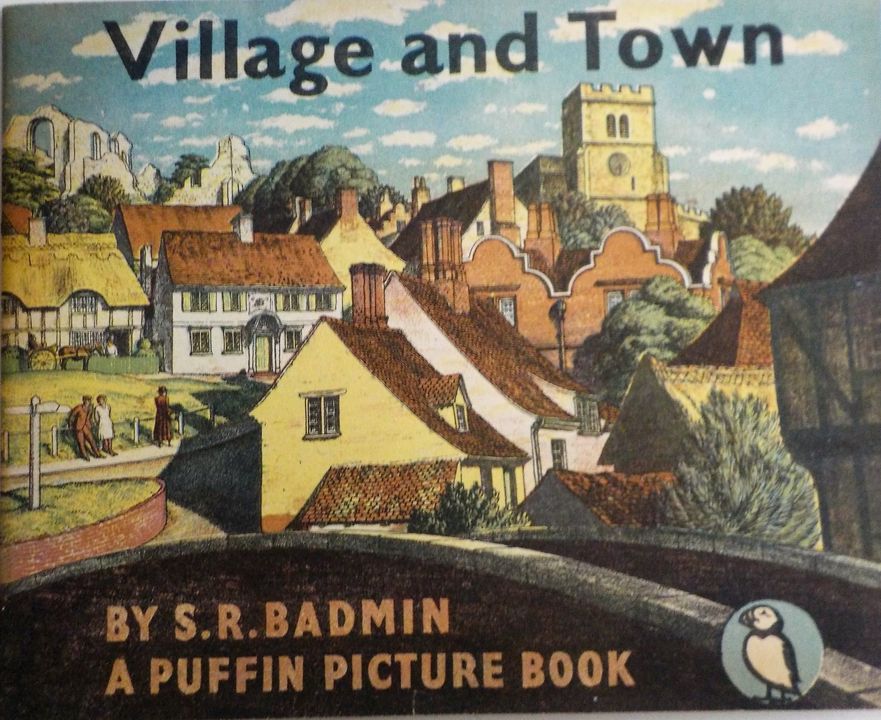
Stanley Roy Badmin was recommended to to illustrate Village and Town which was published in July 1942. Carrington commented: ‘I shall be interested to see the response to Village and town….the most ambitious and beautifully printed Puffin to date, which carries the child through centuries of English building to problems of reconstruction.’
The book remained in print for a decade running to many printings. The Puffins flourished in the post-was years. Carrington purchased Long Acre Farm at Lambourne, Berks and in 1947 he and the family moved there from Hampstead. The war side-lined a number of artists who could have been commissioned to illustrate Puffins. Edward Bawden was one such serving as an official war artist. Serving in France and evacuated from Dunkirk before being posted to Libya, Sudan, Cairo, Eritrea and Ethiopia. Later from Cairo he was transferred to the RMS Laconia in Durban on 27 August 1942, the ship was torpedoed and sunk, on 12 September 1942. Bawden spent five days in an open lifeboat before being rescued by a French ship and held prisoner in a Vichy internment camp in Casablanca for two months before the camp was liberated by American troops. he returned to Iraq in 1943 before returning home to Great Bardfield in 1944. A period hardly conducive for illustrating Puffins !
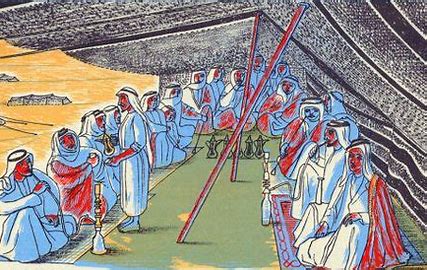
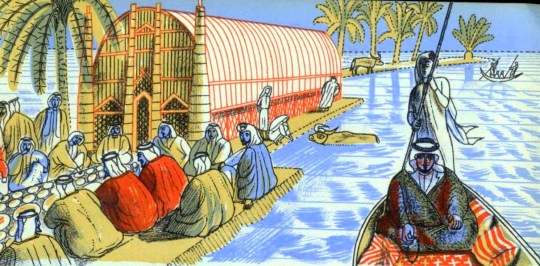
Bawden, did , however, produce a series of drawings and lithographs for ‘The Arabs’ published by Puffin in 1947. Writing to Carrington in July 1946 Bawden commented: ‘ The book is getting on slowly…. I work upon the lithographs for a few hours every day, but because of the fine detail I find the work rather a strain on the eyes. In all I have finished one-fifth of the drawings but these include some of the most elaborate ones such as the two double spread.’
Bawden illustrated the book., the text was by Robert Bertram Serjeant, nicknamed ‘Bob’. Serjeant was a Scottish scholar, traveller, and one of the leading Arabists of his generation.
The popularity of children’s post-war model making saw Triang, Hornby, Meccano and Airfix competing for the must-have Christmas and birthday presents. Carrington launched a new penguin series, the Puffin Cut-out Books. Carrington’s earlier attempts at publishing activity books for children never got off the ground. In the early years of the war Carrington and Eric Ravilious were discussing the publication of a large colouring book based on submarine interiors. Difficulties of production saw Ravilious abandon the idea and he then concentrated on self publishing his submarine lithographs. The Puffin Cut-out series was short-lived culminating with Treasure Island, 1953.
At this time Carrington also continued his work with the DIA and became a governor of the Central School and a member of the Council of Industrial Design. Carrington retired from Puffins in 1956. By the end of the 1950’s TV programmes such as Blue Peter and Crackerjack were beginning to take over children’s leisure time. The final Puffin Picture Book ‘Seashore Life’ was published in 1965. Lane and Carrington also shared an interest in farming. After Carrington retired the two corresponded re’ farming until Lane’s death in1970.
In the early sixties Carrington plied his energy into his writing handing over care of the farm to his son Paul. He also set about resurrecting the reputation of his sister Dora editing her letters and helping to organise the first major retrospective of her art work. This was such a success that the film ‘Carrington’ followed in 1995.
Carrington died aged 94 on 11 April 1989, Catherine passed away in 2004. Daughter Joanna Carrington (1931-2003) became a successful artist.
I have to acknowledge that a great deal of this information came from ‘Drawn Direct to the Plate’ by Joe Pearson published by the Penguin Collectors Society ISBN 978 0 9558395 3 6.
Joanna Carrington: Painter and teacher, daughter of the publisher Noel Carrington and niece of the artist Dora Carrington. She studied with Cedric Morris at the East Anglian School of Painting and Drawing, in Suffolk, with Fernand Léger in Paris and at Central School of Arts and Crafts. She went on to teach at Hornsey College of Art, Regent Street Polytechnic School of Art and at Byam Shaw School of Art. Her book Landscape Painting for Beginners was published in 1979. Among her many solo shows was one at New Grafton Gallery in 1982, where in 1991 she shared one with her husband Christopher Mason, later ones including Thackeray Gallery, 1997. Lived mostly in France, in the early 1990s settling in St Savin, Vienne. Gauguin, the Nabis, Bonnard and Matisse were important influences.
Bernard Cheese was born in Sydenham, south-east London in 1925 the only child of Gordon a black cab driver and his wife Rose. He initially trained at the Beckenham School of Art now known as the Ravensbourne Art School. Cheese served in the army in WW2 and after four years in the army, enrolled at the Royal College of Art in 1947. At the RCA Cheese studied under Edward Bawden, John Nash and Edwin La Dell. His work often contains the same quirky humour that is also discernible in Edward Bawden’s work.
Cheese’s enthusiasm for lithography was fired by Edwin La Dell. Together with the master printer George Devenish, La Dell had set up a lithographic workshop modelled on Parisian ateliers. La Dell encouraged Cheese to go out into the streets to record London life in the markets, pubs and parks and to mingle with the crowd, sketchbook in hand, and observe. Over eight decades, Cheese became an enthusiastic observer of British society.
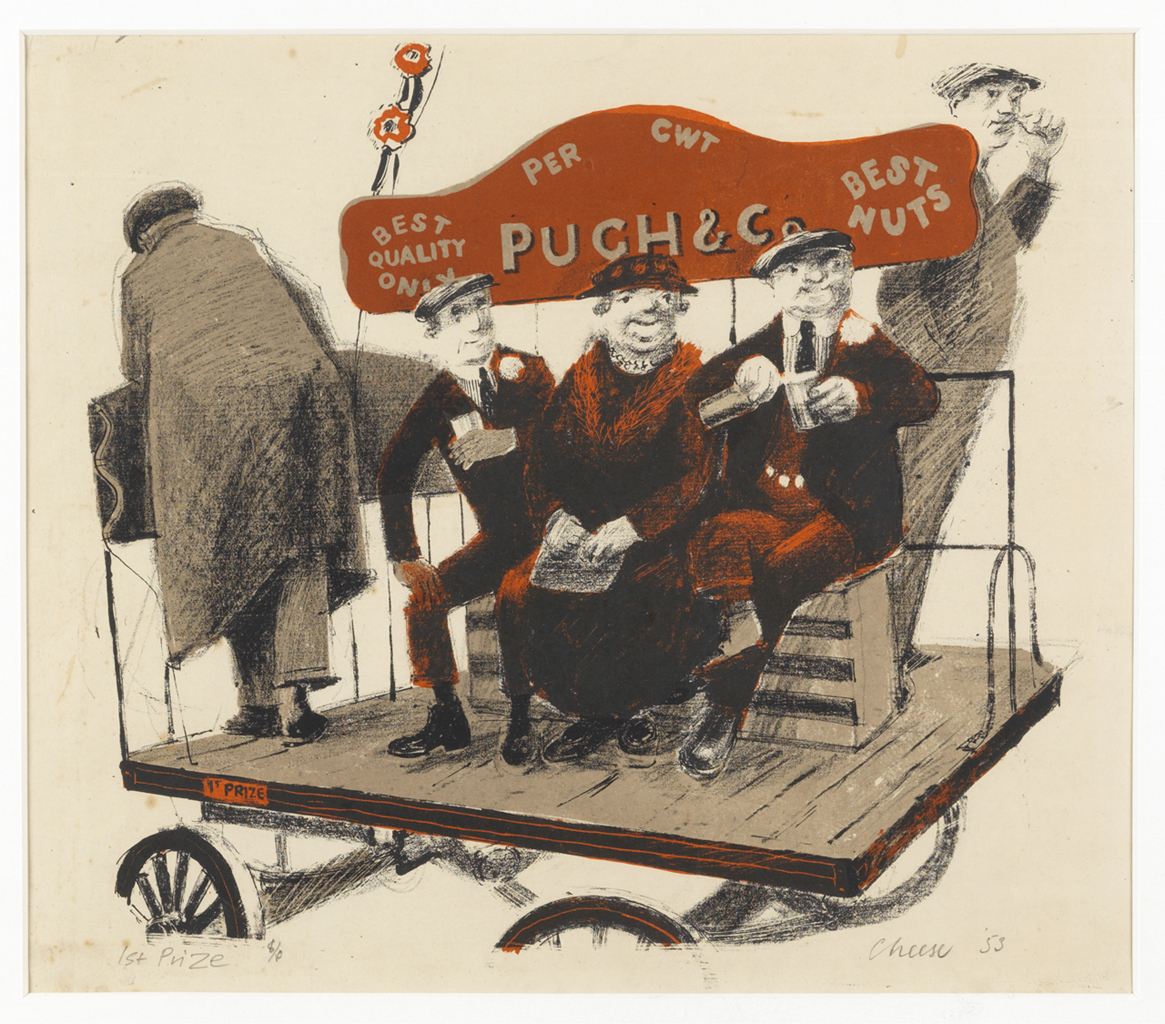
Lithographs: Coffee Stall 1951.London Pub, early 1950’s. The Woolwich Ferry 1952. Chloe Cheese comments: My mother saved this lithograph folded up in a drawer. It is one of my favourites from his early work depicting the life of ordinary Londoners. Grandstand. 1953.
At the Royal College, Cheese met a fellow student, Sheila Robinson, the Nottinghamshire-born printmaker and illustrator. Cheese left the RCA in 1950 to teach printmaking at St Martin’s School of Art, a post he held until 1968.
Cheese and Robinson married in 1951 and set up home in Beaufort Street, Chelsea. Both artists worked on Festival of Britain murals alongside their art-school tutor and close friend Edward Bawden. Their first child, Chloe, now a celebrated artist in her own right, was born in 1952.
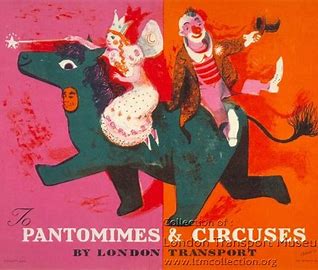
In 1951, London Transport commissioned the first of several posters, Pantomimes and Circuses.
Bawden introduced the couple to Great Bardfield and in 1953, they moved to Bardfield End Green at Thaxted, where their son, Benjamin, was born the following year. Cheese established his studio at a former fish and chip shop next to the Butcher’s in Brook Street in Great Bardfield. Cheese commented: “It was a rather smelly studio.”
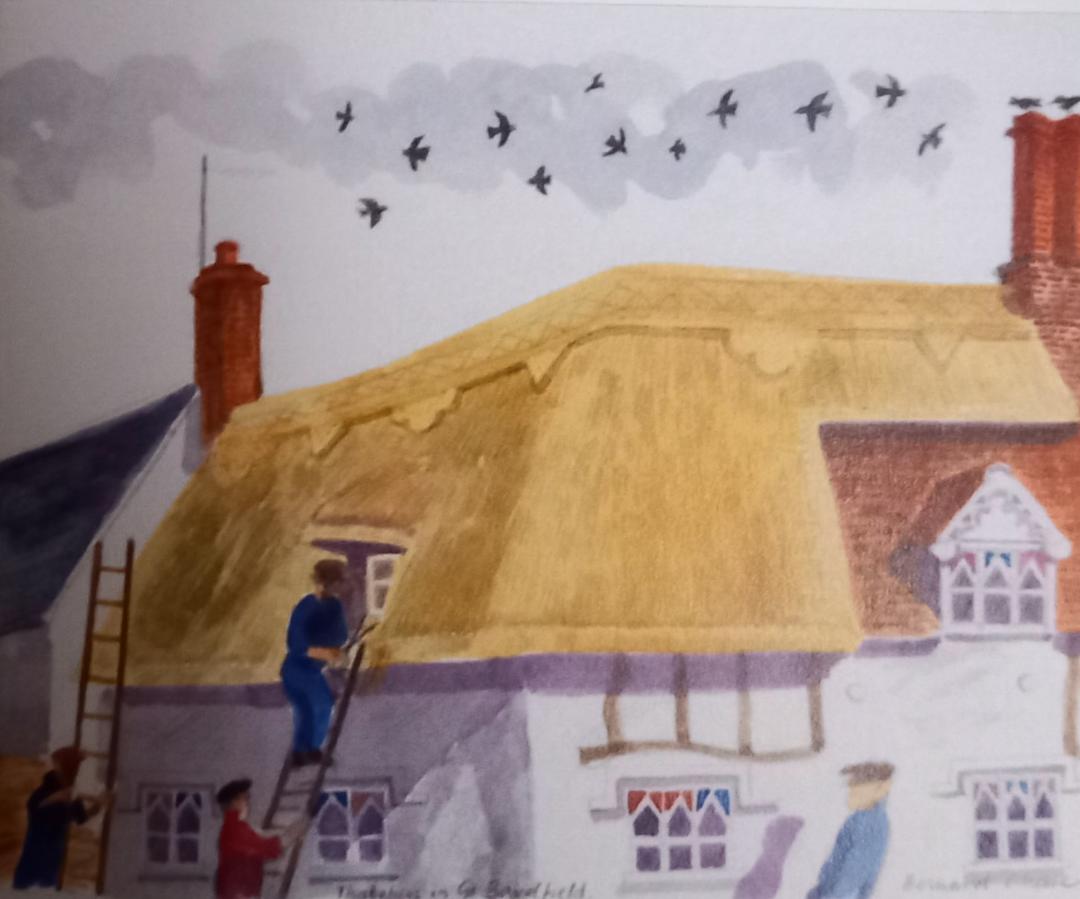
Lithographs: Thatchers in Great Bardfield. First Prize, 1953.Grapevine at Audley End, near Saffron Walden.
Cheese was often away teaching printmaking at St Martin’s, like many of the other artists teaching in the capital travelling up to London on Jennings’ bus.
Great Bardfield was a quintessentially English village – a thriving community with butcher, ironmonger, grocer and, remarkably, a close gathering of artists who, by design or happy coincidence, lived and worked in or around the village. The Cheeses would soon enjoy their friendship and support, contributing to regular “open house” exhibitions. Along with Bawden and his wife Charlotte their artistic neighbours included John Aldridge, George and Kate Chapman, Michael and Duffy Rothenstein, and the textile designer Marianne Straub.
Lithograph: Drum Major, 1953.
La Dell asked Cheese to contribute to Coronation Lithographs, a portfolio of 40 prints by staff and former students of the Royal College for a celebratory exhibition at the Redfern Gallery in 1953.
Lithograph: The Fisherman’s Tale, 1956.
The brewers Guinness – seeking to establish a market for unsigned lithographs for display in pubs – commissioned A Fisherman’s Story in 1956. Choosing his subject from the Guinness Book of Records, Cheese shows a contented fisherman on a bar stool, arms outstretched, a half-empty glass of ale in one hand, pipe in the other, boasting of his day’s catch to the barman and all in earshot. Other clients ranged from the BBC and A&C Black to P&O Cruises.
The 1950s and 60s saw great innovation and diversity in British printmaking. Lithography had become the favoured medium of the younger generation and there were more opportunities to publish and exhibit prints. Cheese was now showing as far afield as Beijing (1956), Stockholm (1960), Washington DC (1962) and New York (1968).
Sadly in 1957, Cheese and Robinson separated. Following Cheese’s departure Robinson began to teach illustration at the RCA in the early 60s, her teaching picked up when Chloe and brother Ben were both old enough to go to primary school. In 1958 they were divorced, and Cheese married his former student Brenda Latham Brown. They moved to nearby Stisted, where their daughters, Joanna and Sarah, were born. They purchased an old farmhouse in the centre of the village, it was in a bad state of repair eventually turning it into a stylish home. For a studio, Cheese rented a Sunday School room. Michael Rothenstein became a near neighbour having also left Great Bardfield to move to Stisted, living in a purposely built house and studio.
After leaving St Martin’s, Cheese was appointed senior lecturer at Goldsmiths College (1970-78) and taught part-time at the Central School of Art and Design, London (1980-89). Cheese removed his family to Gardener’s Cottage, Stisted, a large Victorian house with a large, overgrown garden circled by a high wall.
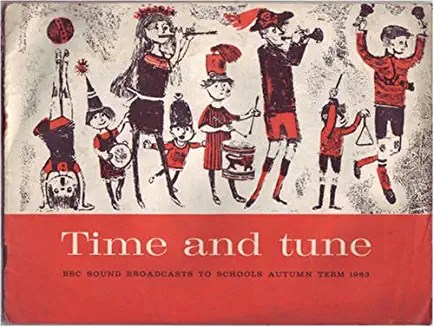
Teaching in the 60’s and early 70’s I well remember these BBC Radio Schools Programmes booklets illustrated by Bernard Cheese.
Cheese and Brenda separated in 1988 and divorced in 1992. Cheese then settled in Nayland, north of Colchester. He continued to travel in search of new subjects for watercolours that he subsequently reworked as lithographs, he turned increasingly to delightfully idiosyncratic still-life arrangements such as Trout on a Plate and Victoria Plums and English Coxs. Though Cheese’s work often comes across as whimsical, his seemingly light-hearted touch is rooted in sound draughtsmanship and a well-structured composition.
Lithograph: Trout on a Plate, 1994.
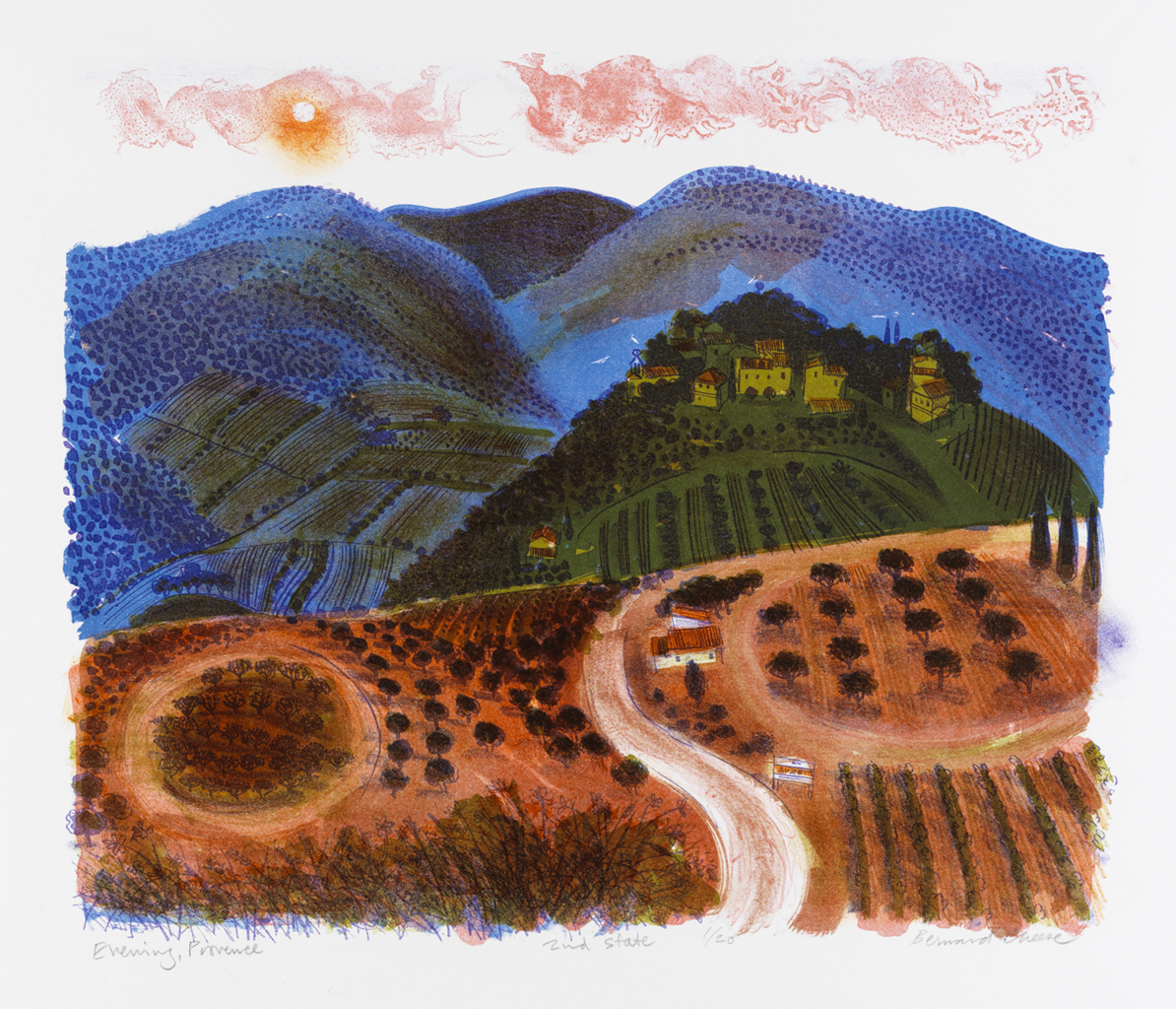
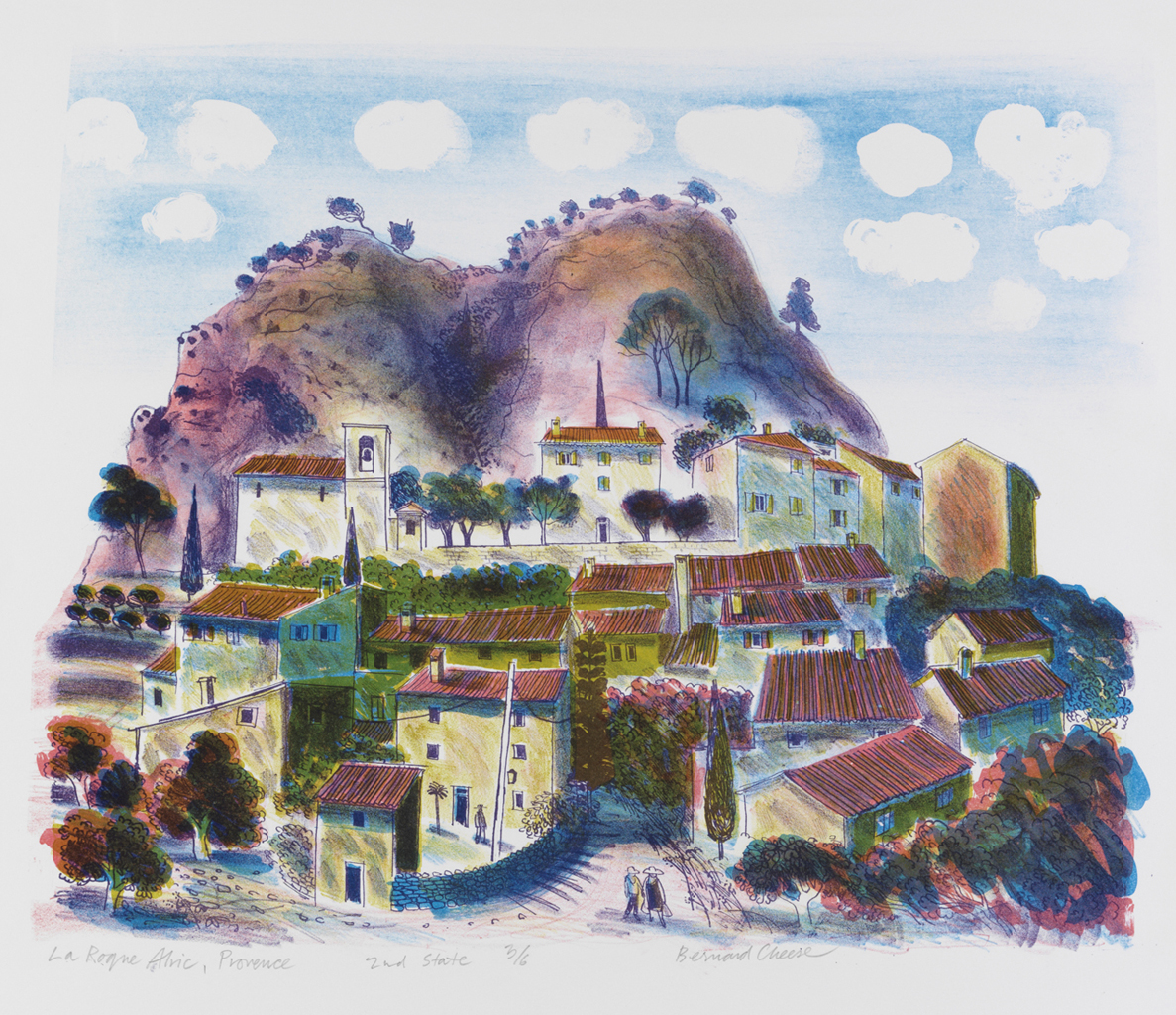
Cheese was particularly fond of Provence and the sun-baked medieval hill town of Le Barroux in particular.
Lithographs: A View Over Le Barroux. Cyclists in Provence. Evening Provence.
Middle section: Grapevines. La Roque Alric, Provence. Storm Clouds Over Suzette.
Bottom: Vineyards around Suzette 2003. Vineyards At Mirabel, Provence.Village in Provence 1998.
Cheese continued to produce watercolours well into his 80’s but suffered a series of minor strokes. He died at home in Nayland in the spring of 2013.
Cheese’s works were acquired by many important collections, from the Victoria and Albert Museum and the Royal Collection to the Museum of Modern Art in New York and New York Public Library. With more than 100 lithographs and watercolours, Aberystwyth University holds the largest public collection of his works.
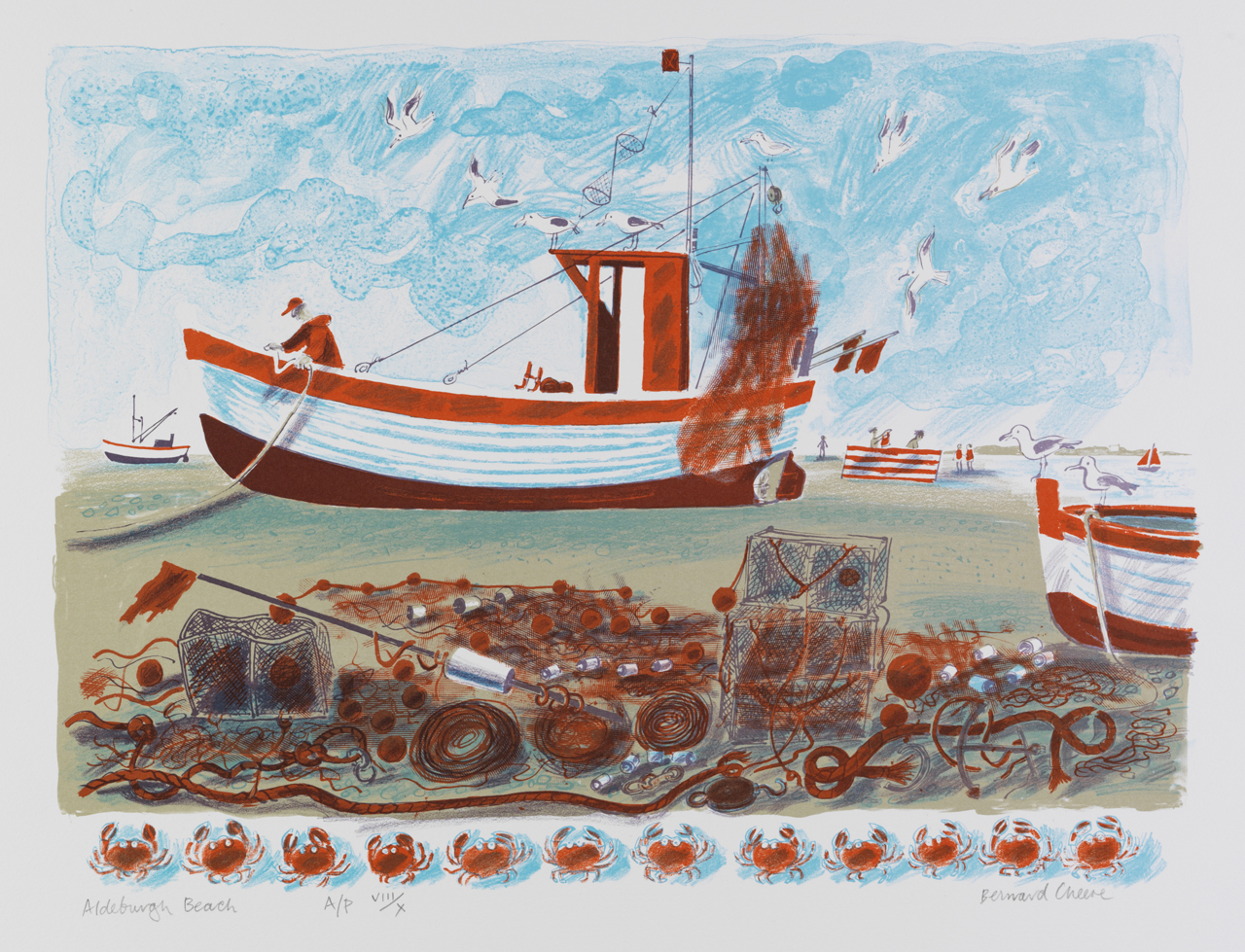
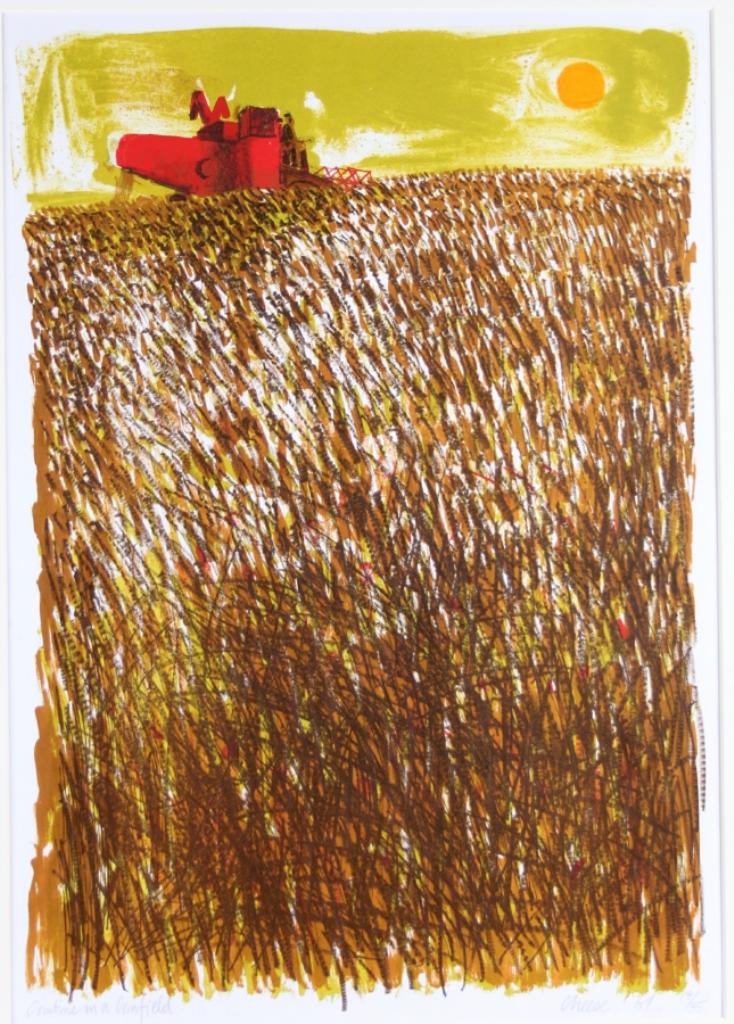
Lithographs: Aldeburgh Beach. Combine in a Cornfield. The Combine. Fun Run. Open the Gate. What’s for Lunch.
This blog has been cobbled together with help from various sources;-
Christmas Card 1938. The Theatrical Costumer Shop lithograph from the book High Street.
We were as usual terribly busy sending Christmas cards and presents. The Christmas cards of our more sophisticated friends were every year getting more and more elaborate and as pioneers of this industry among the Bowker circle, we felt that we had to keep ours up to standard. We had started this phase in Hammersmith when we had sent birds made of folded paper which flapped their wings when you pulled their tails. Geoffrey Fry had taught me to make them and he told us how he had once made money for some charity by having a stall and charging people sixpence by being shown how to fold them. When we sent them for Christmas cards we made them of paper from an old geometry book and Eric painted red on their wing tips and they had paper clip eyes and guinea fowl features for a crest. Bowker herself made some very ingenious cards and Peggy one year sent the x-ray photograph of Victoria her first baby, inside her womb.
‘Snow’ wood engraving.
Guy* bought nine large Christmas trees which he put in the church, one in the middle of each of the three arches which flanked the centre aisle and the biggest one in the chancel. Eric helped him to decorate the trees with those lovely fragile glass balls from Woolworth’s and with coloured electric lights, till he got such a bad electric shock that he came home and helped unpack a large hamper of goodies which Aunt Rose had sent from Fortnum and Mason We had never had a hamper before and felt like Porkie boy.
Guy Hepher, the Vicar. Guy and his wife Evelyn arrived at Castle Hedingham in the spring of 1935.
‘Halstead Road in Snow.’ 1935
On Christmas Day it was very cold and misty and we went for lunch to the Hephers. We told them about the Christmas in Hedingham when Eric and I decided we wouldn’t give ourselves indigestion like everyone else and, having eaten an omelette. Eric went out and did a good pretty picture of the house at the corner of the road. All day the village was quite deserted till late in the afternoon when a few respectably dressed couples with glazed eyes came out of their houses with their children. They walked along quite silently because of the snow but Eric was pleased with the pretty pattern of lines on the snowy road made by the pram wheels and he put them in and came home and had a good Christmas supper.
Guy had been given two turkeys by parishioners, so he gave one of them to us and forgot to thank the woman who had presented it. When we came to the pudding, Evelyn hadn’t got any brandy so she poured some methylated spirits on to it and lit it, but it wasn’t a good idea because she put on far too much and the pudding caught fire and it was quite difficult to put out. It tasted strongly of methylated spirits and Guy teased and groaned at her while we ate and she defended herself, by saying that her mother had done the same.
Plate of cream earthenware printed with the ‘Christmas Pudding’ motif, designed by Eric Ravilious, made by Josiah Wedgwood and Sons Ltd, Etruria, 1938.V & A.
I went with Eric to hear them sing carols in the church on the evening of Boxing Day, and it was lovely to see all the Christmas trees lit up and to hear ‘The Holly and the Ivy’ and that Czech lullaby with its repeated ‘lullays’. On the day after that, we all went to follow a meet at Halstead.
Tirzah’s Nativity Scene for St Nicholas Church, Castle Hedingham.
A later Christmas in 1938 saw young John Ravilious making a snowman with the Hepher’s eldest David. This is Tirzah’s ink and wash on paper, you can make out the Castle in the background.
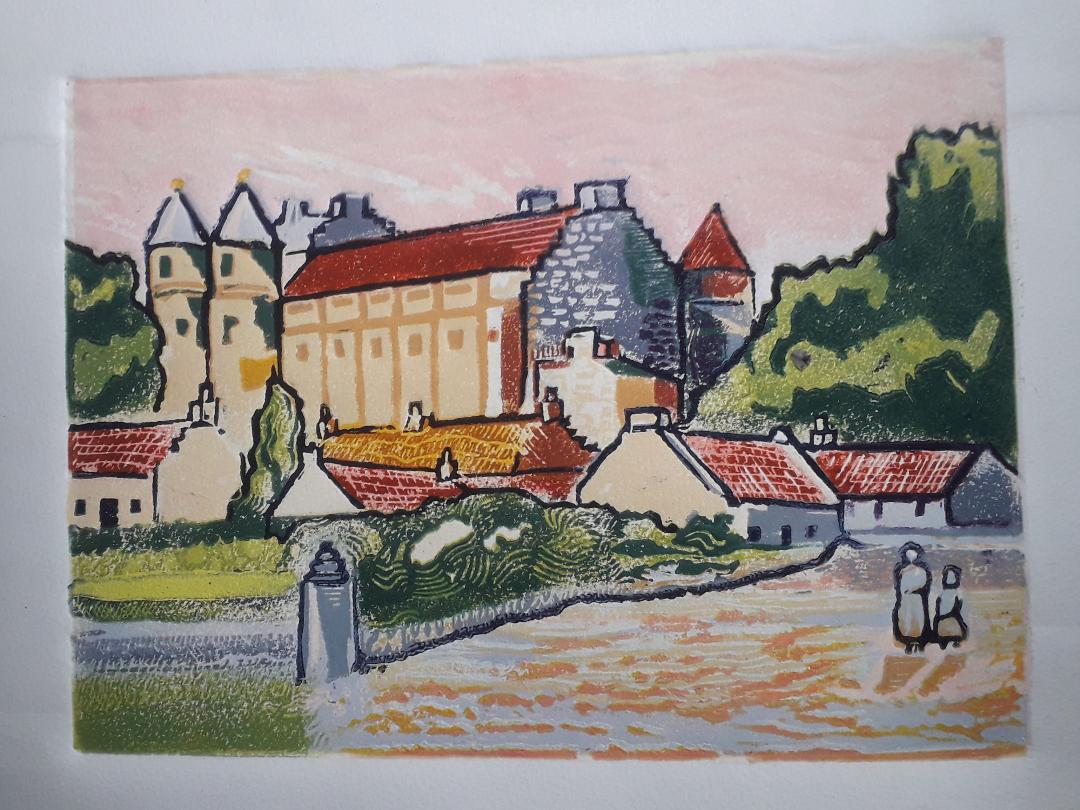
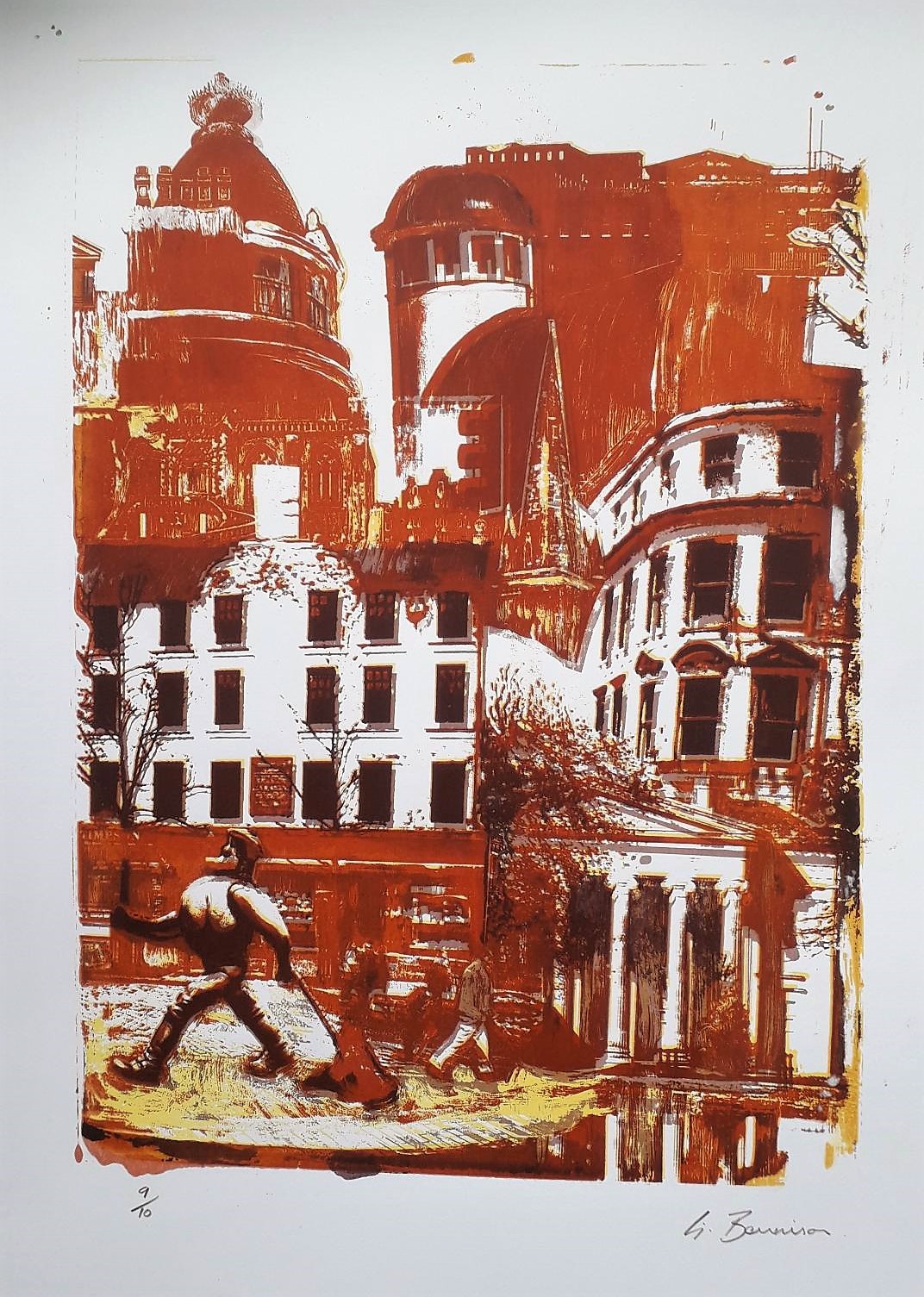
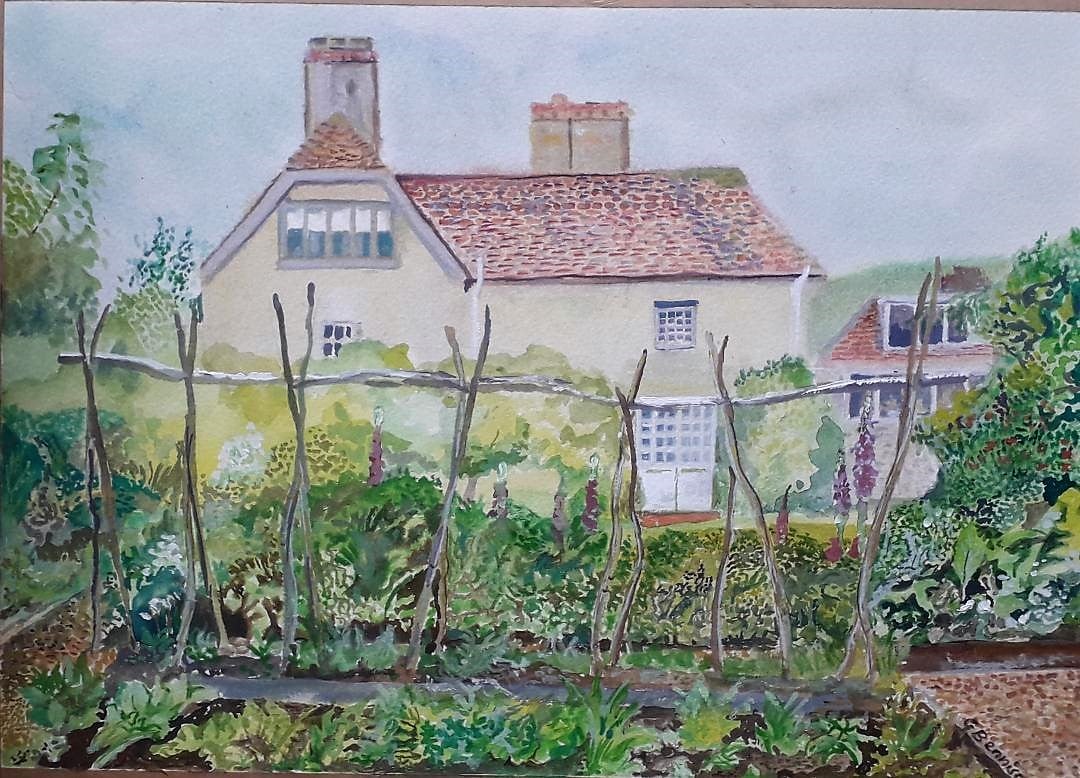
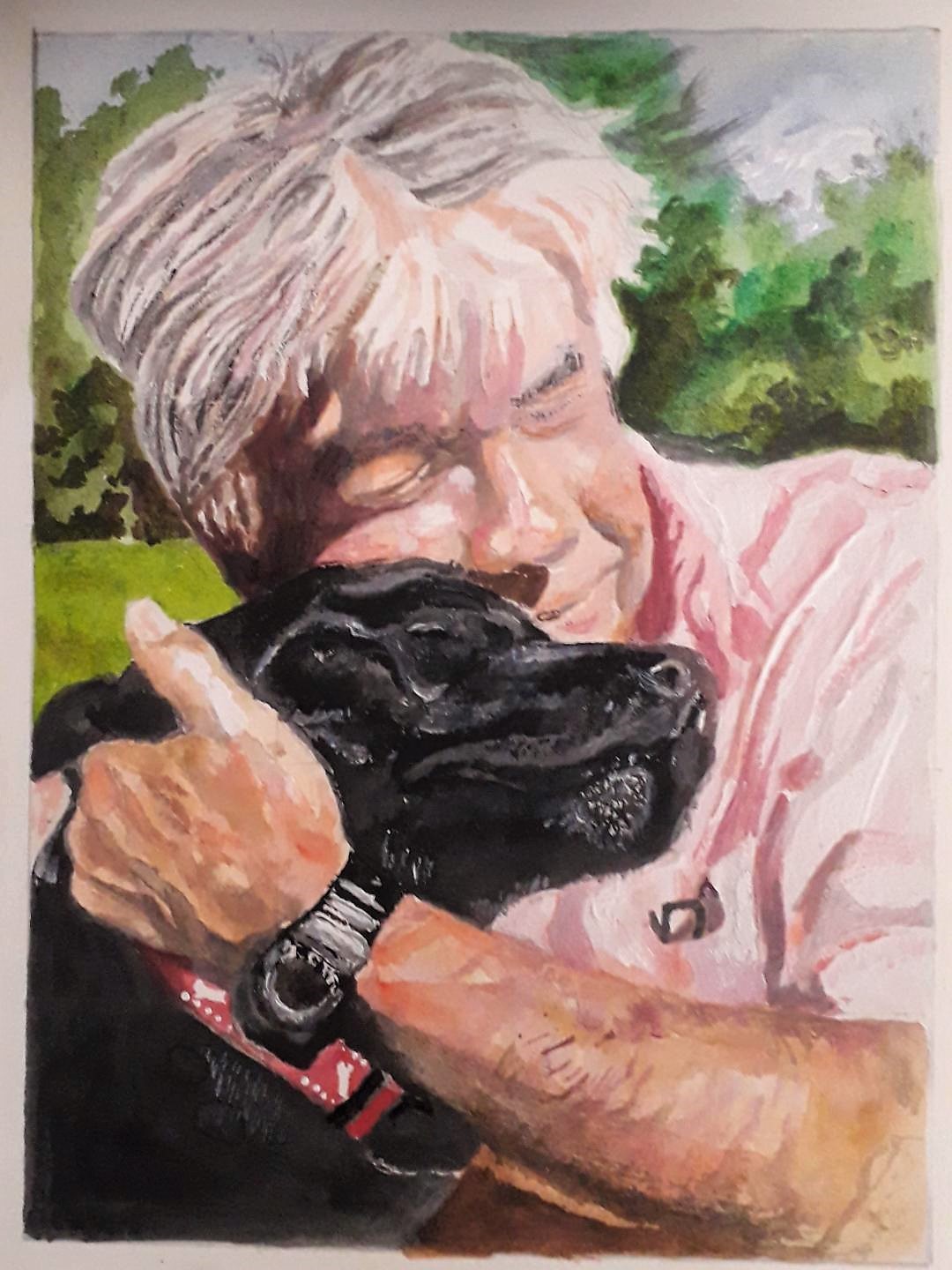
Some images of your work which showcase your skill, or a link to your website.
Brief details about what you make; where you have exhibited; commissions; etc. (any details which help show you are professional in terms of your approach to work, and that your work has previously been selected for display.)
Name: Graham Bennison.
3 Beechbank, Foodieash, near Cupar, Fife, KY15 4PW.
Studio Address: 3 Beechbank, Foodieash.
My studio is a garden house at the bottom of the garden. Visitors would be welcome to see a lino or wood engraving rolled up and printed on the roller press – even having a go themselves! The majority of work would be displayed in two rooms in the house and weather permitting the back patio.
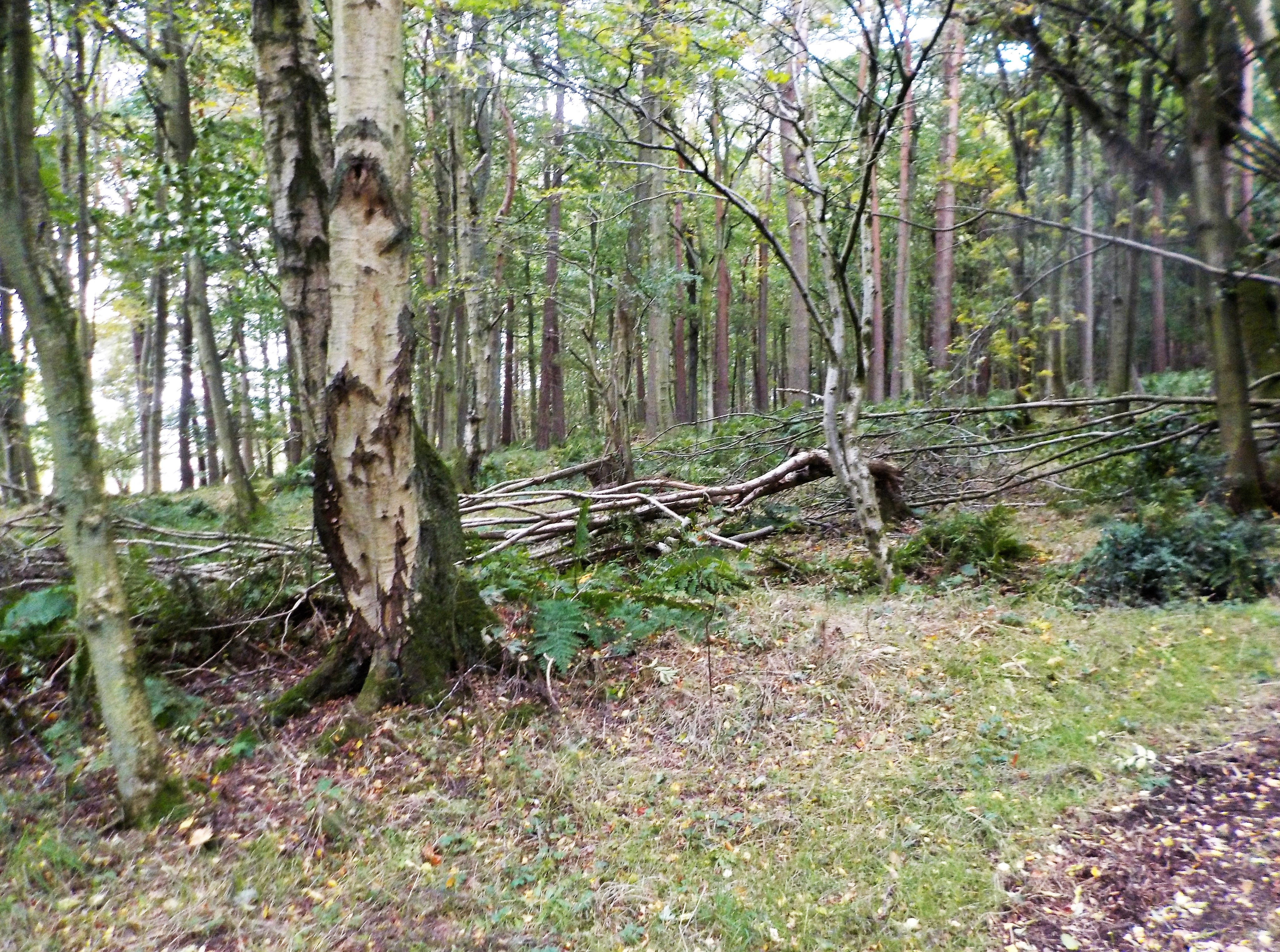
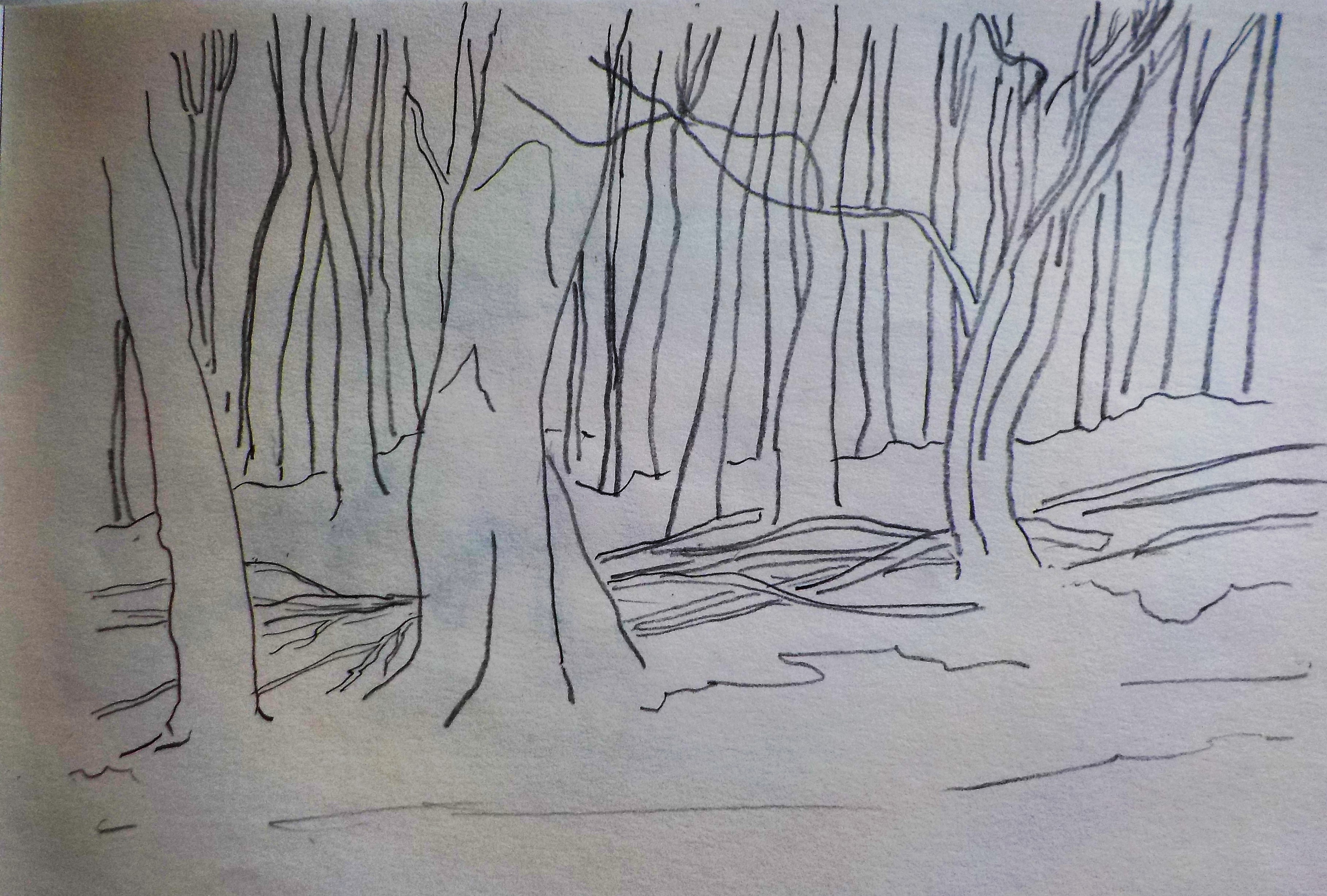
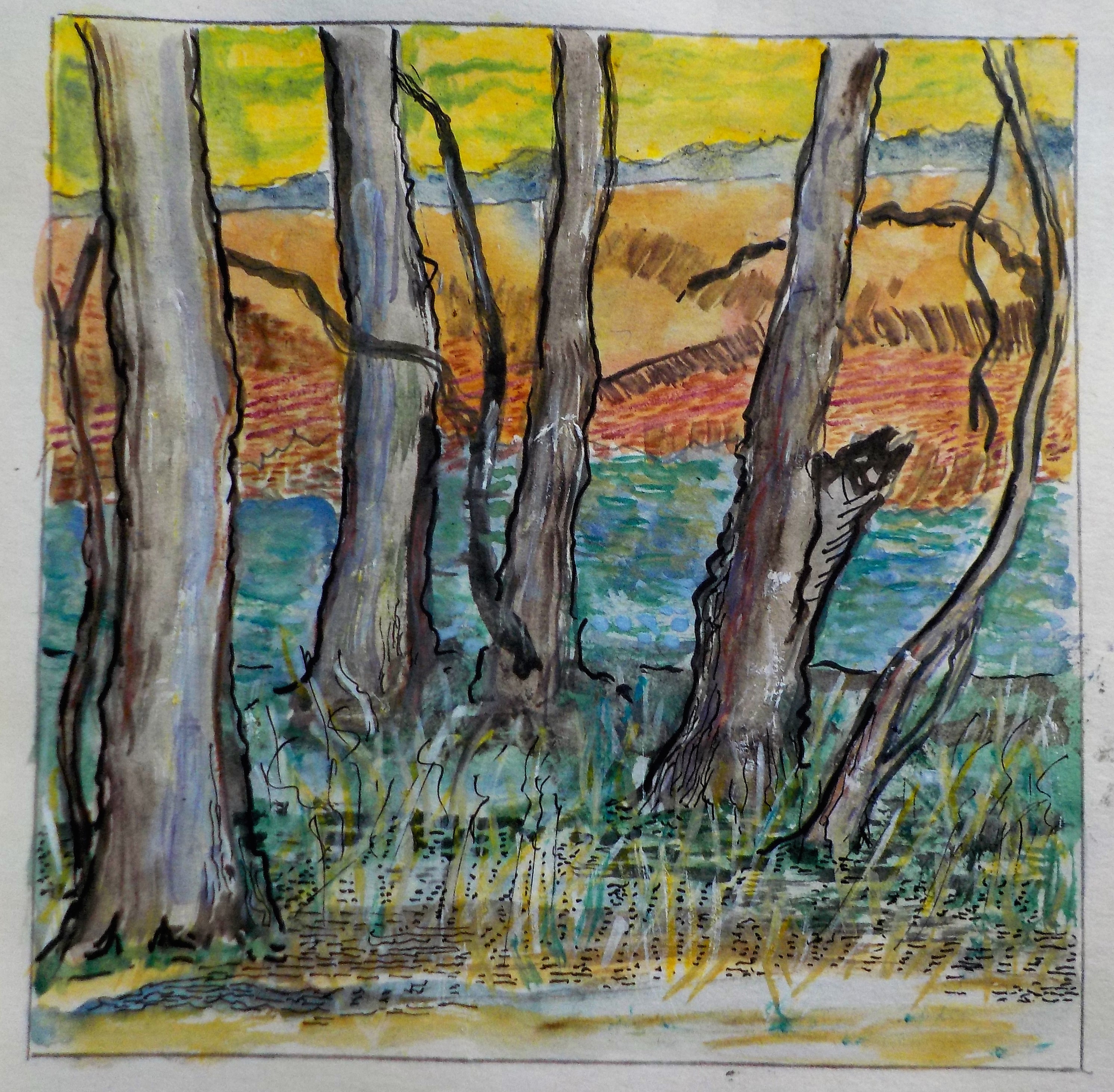
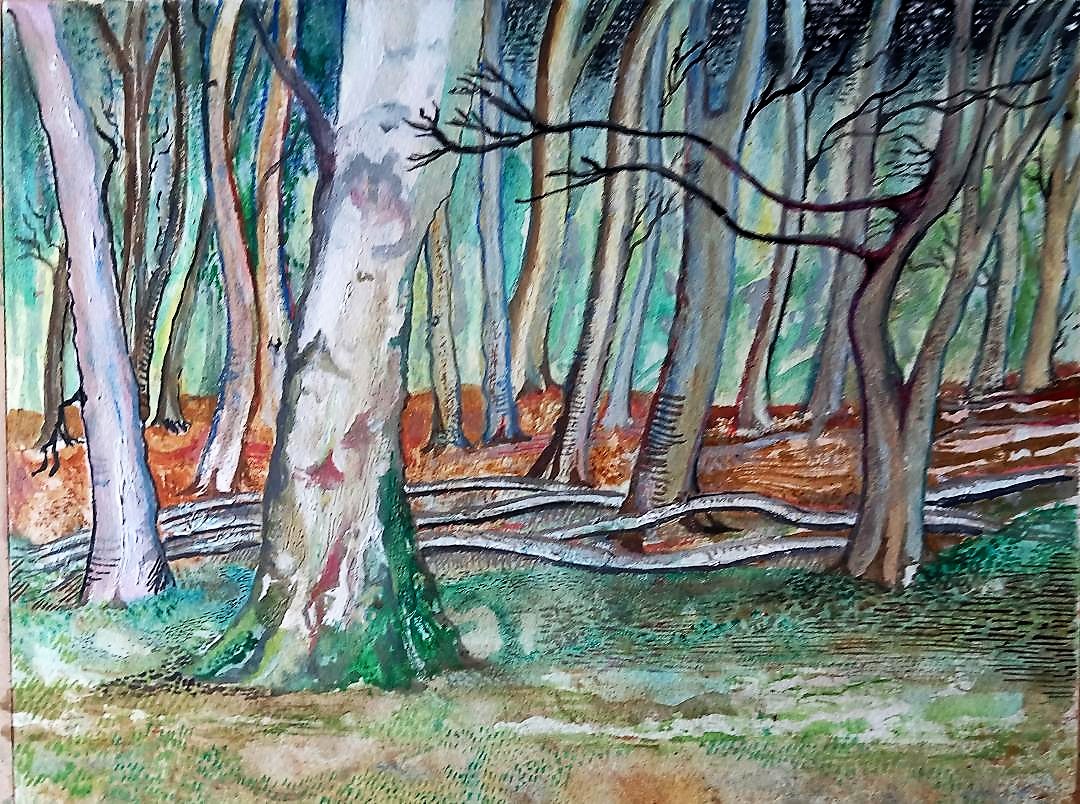
My latest watercolour painting, Kilmaron Hill Woods (two weeks ago) gives an example of approach to work and planning: –
Photo: Early October 2022. Pencil sketch. Painted sketch. Finished watercolour. Framed.
Some examples Foodieash art work:-
Foodieash oil. Hilton House watercolour. Main St Foodieash oil. Harvest stubble at Foodieash oil.
Dundee. Dundee The Unicorn. West Shore, Pittenweem.
I could go on for ever, but I hope this will suffice as examples: With 766 friends on my personal Facebook page I do not have to go far to sell my work. I do have an art Facebook page which is a mixture of artwork and art blogs. As I say my main audience is my friends. https://www.facebook.com/BennisonArtist
Work is currently displayed in the Bishop Bridge Tearoom, Ceres.
My wood-cut was adopted this summer as the logo for the tea-room.
Other recent commissions:
Foodieash Doocot oil. Greyhounds – linocut. Charleston House (home of the Bloomsbury Group) watercolour. Man with his now deceased dog – I do not actively choose to do pet portraits !
When Elmwood College had an art dept. the college purchased a number of my works. Locally an exhibition of my work took place at Cairnie a few years ago.
Friends have tried to persuade me to join up for a few years, now I am taking the plunge. If you require more info’ please do ask. 01334-656844 07731904559.










































































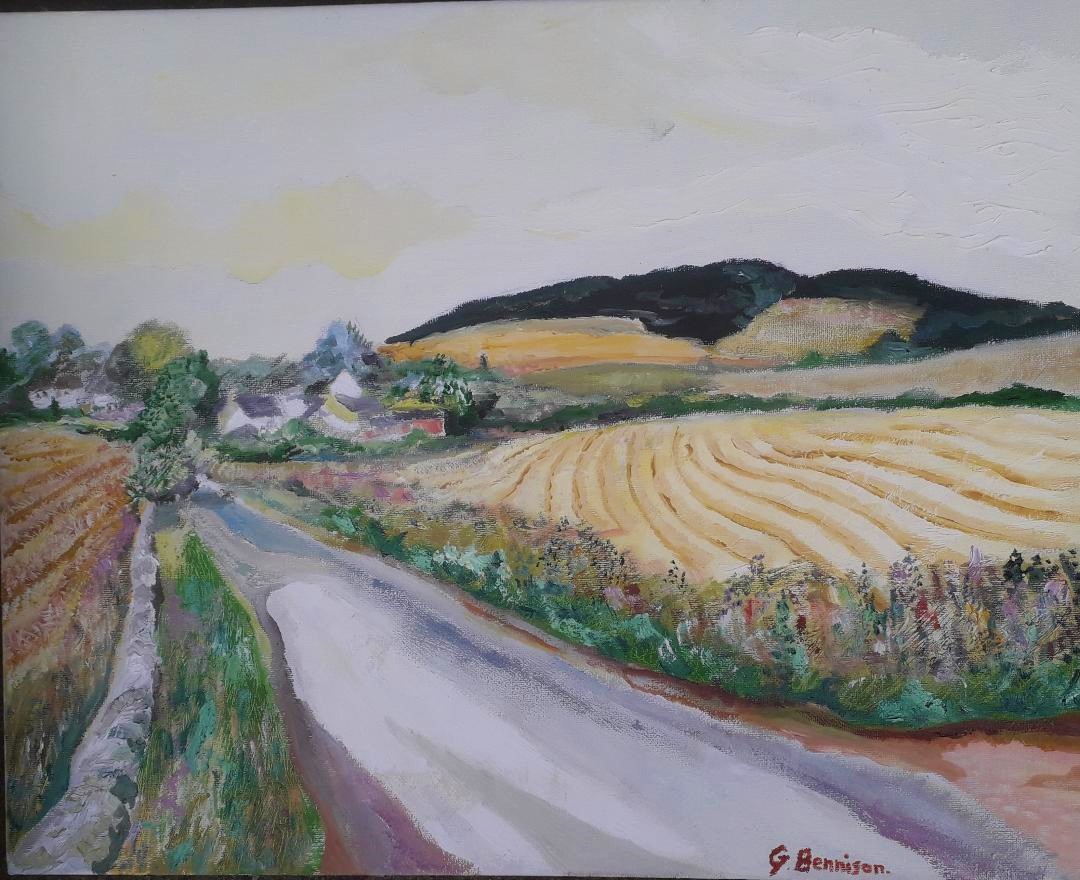


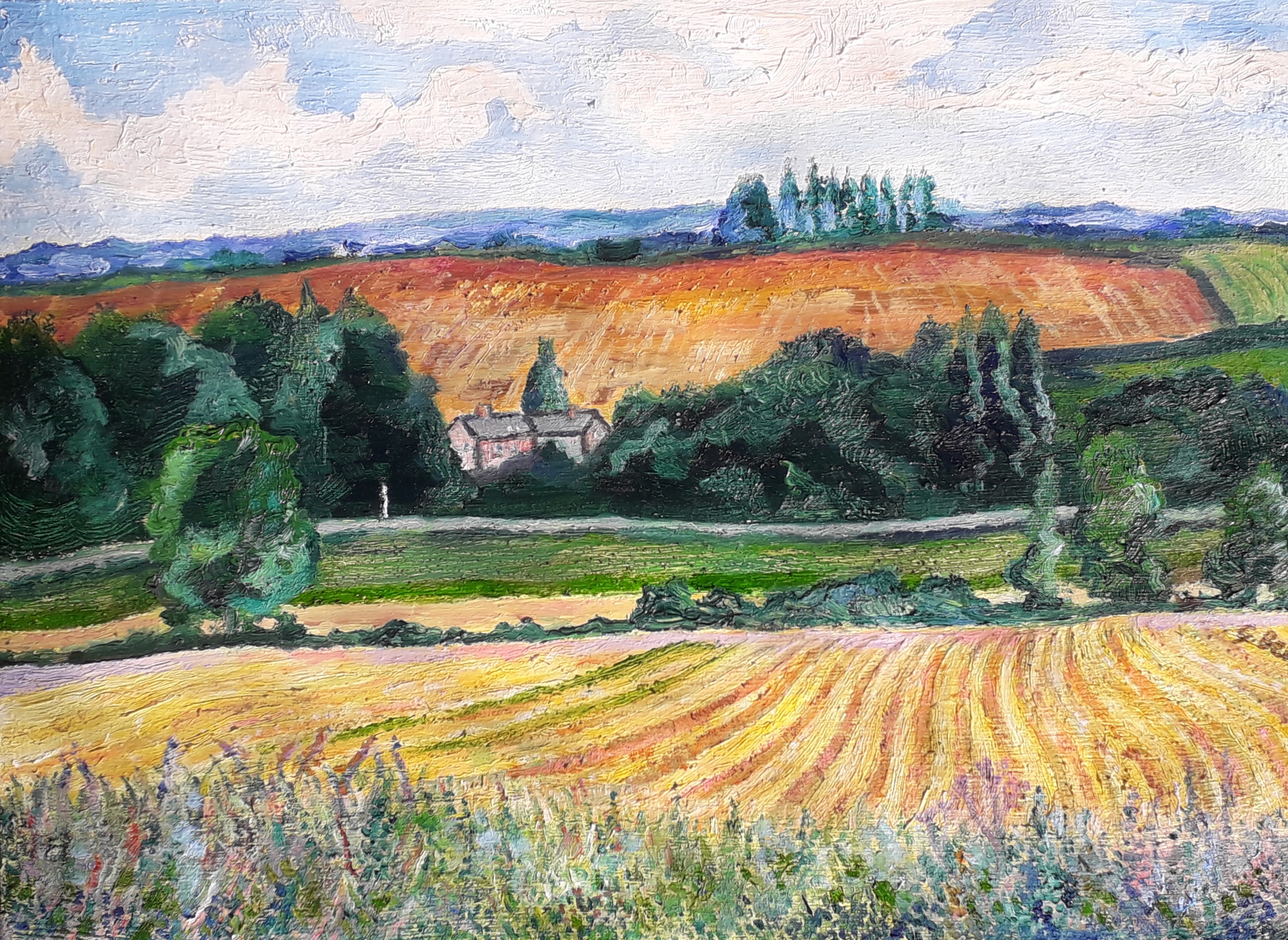
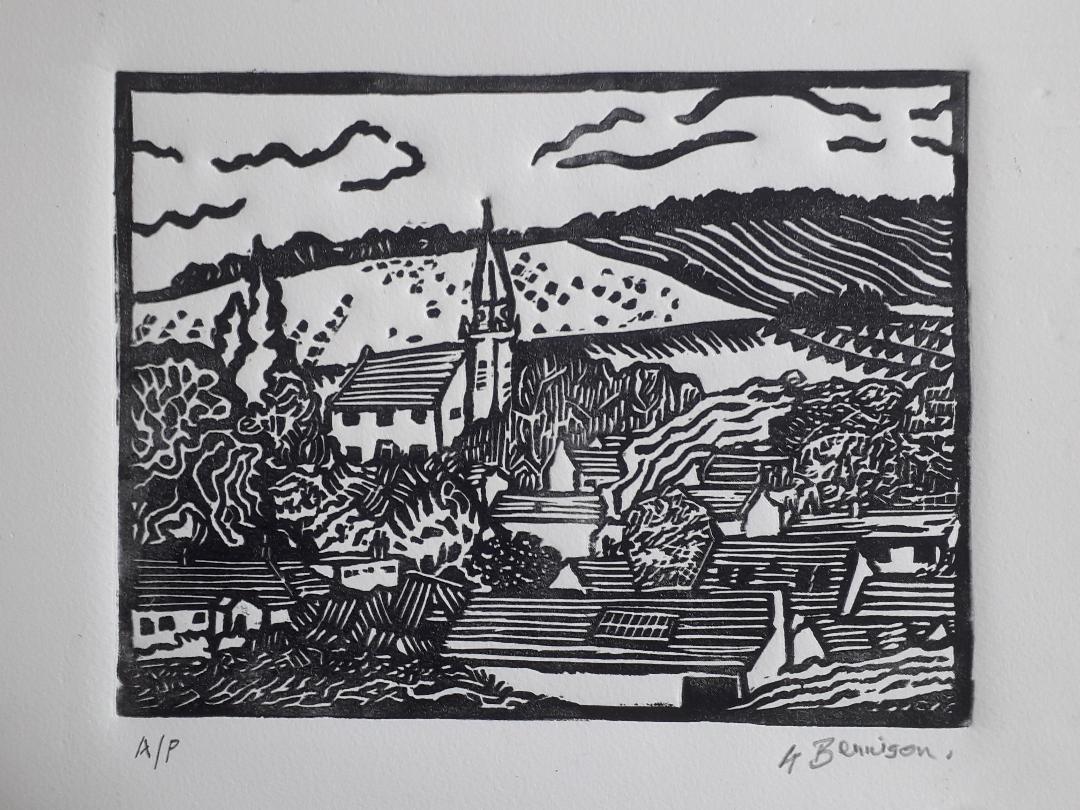

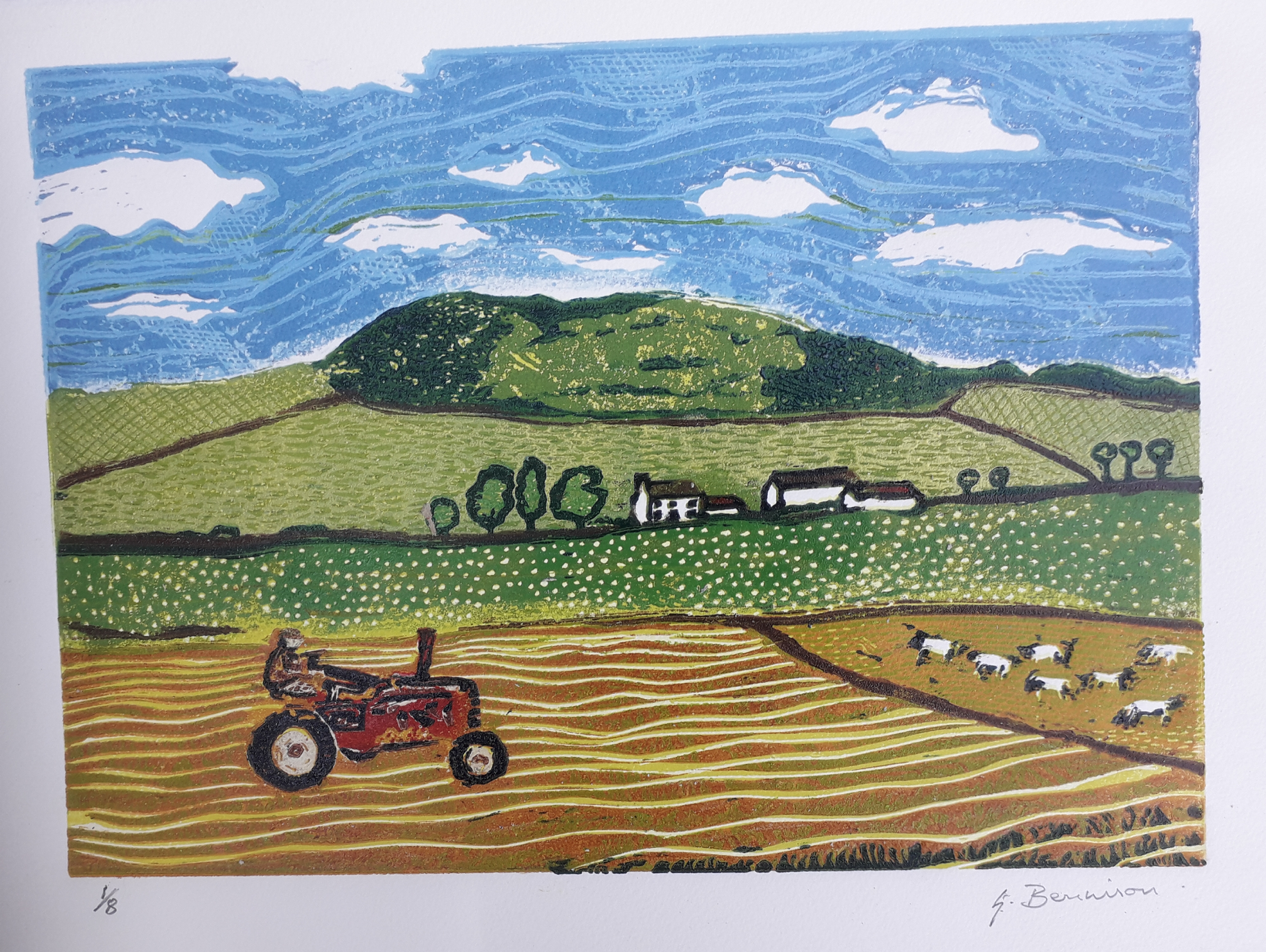



 Artistic Horizons