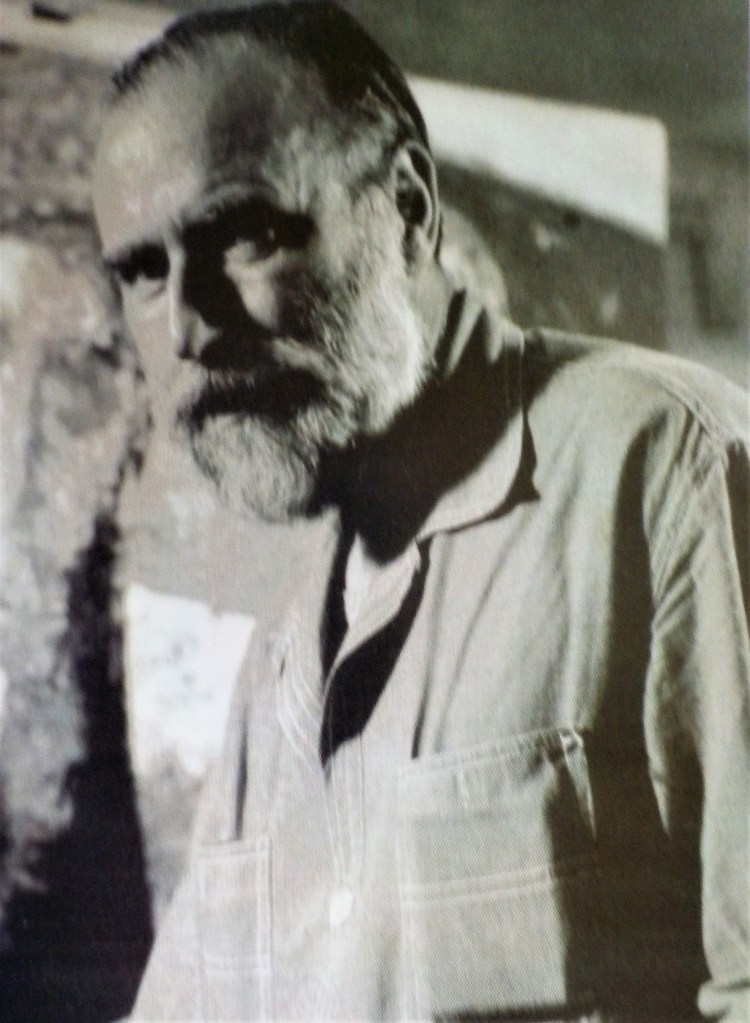
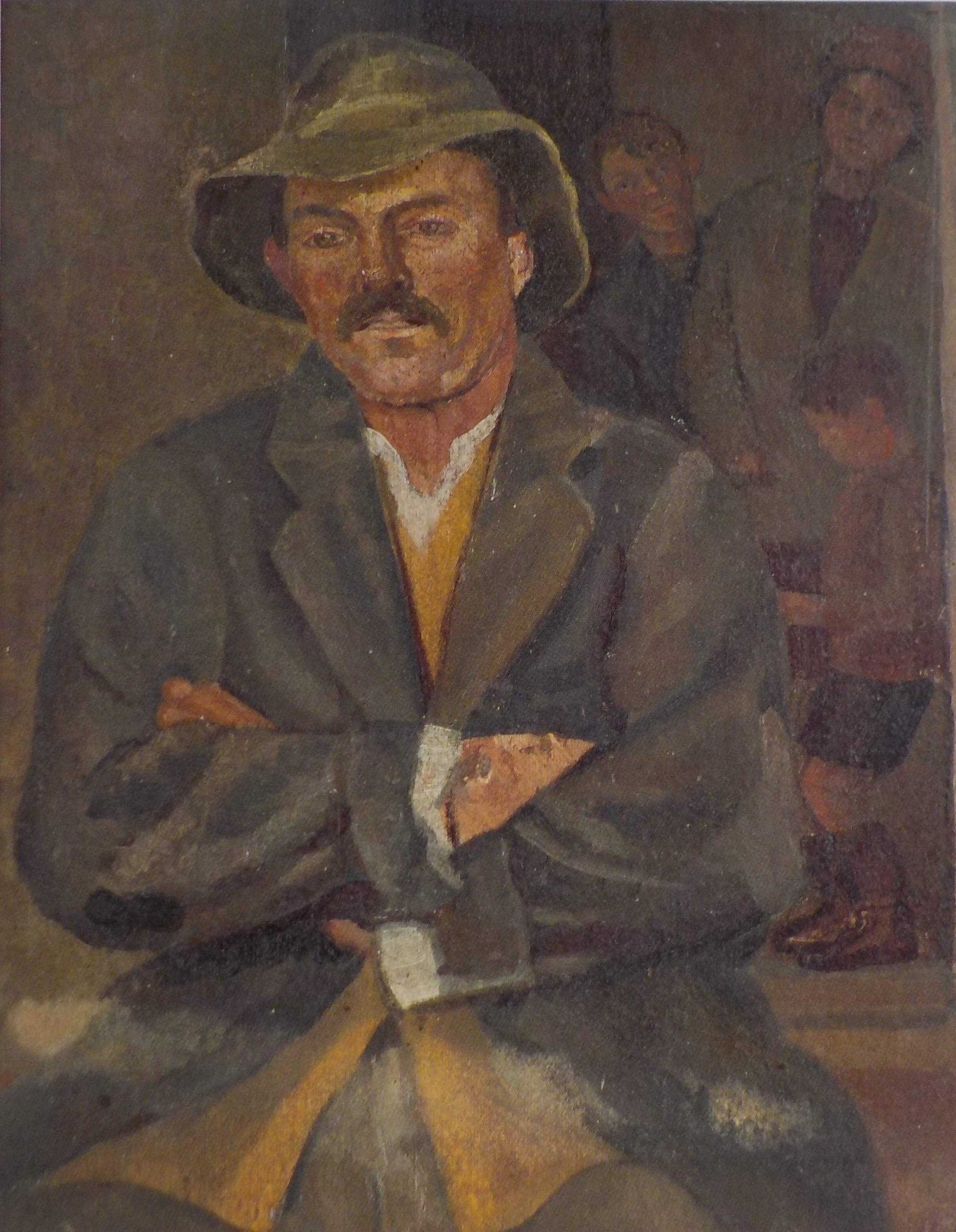
Stanley Clifford-Smith was a latecomer to the artist community in Great Bardfield, Essex moving to the village with his family in 1952.His experimental style set him apart from the other artists in the Great Bardfield community.
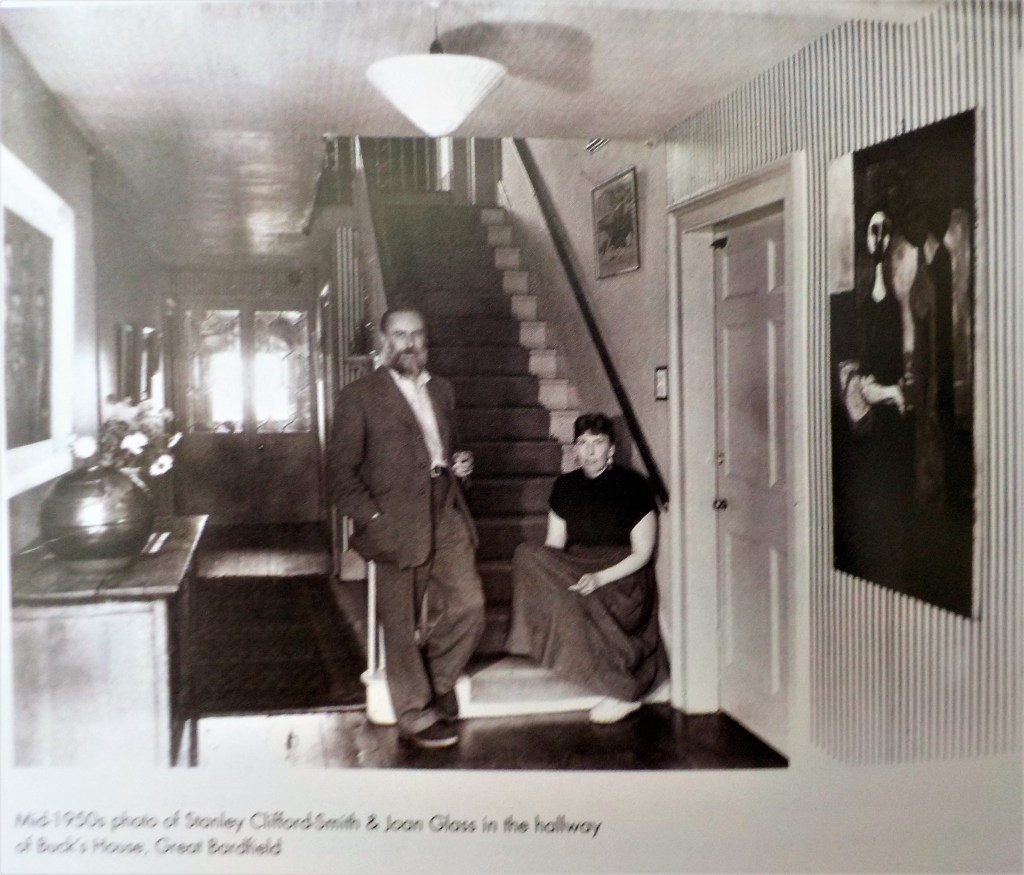
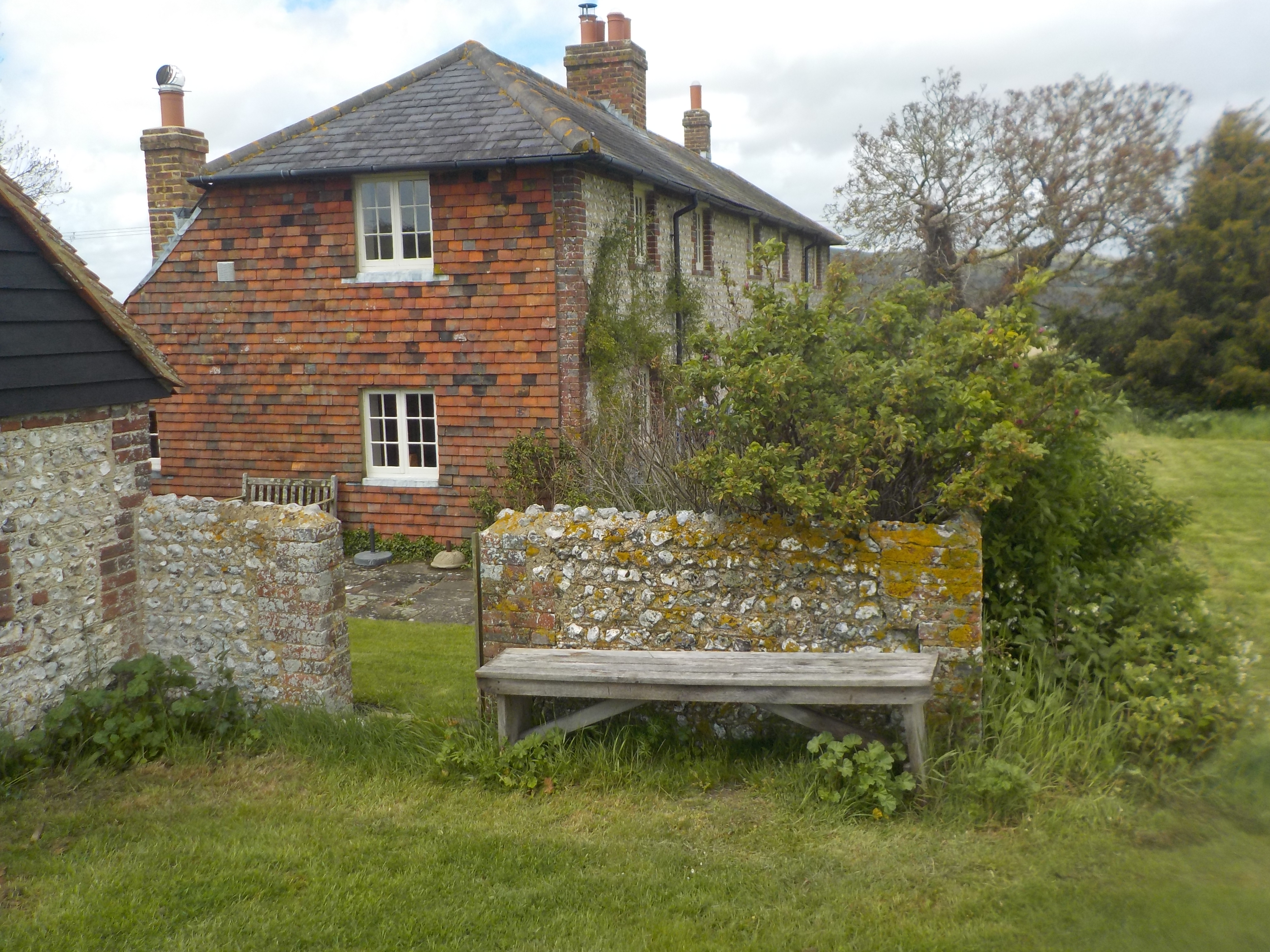
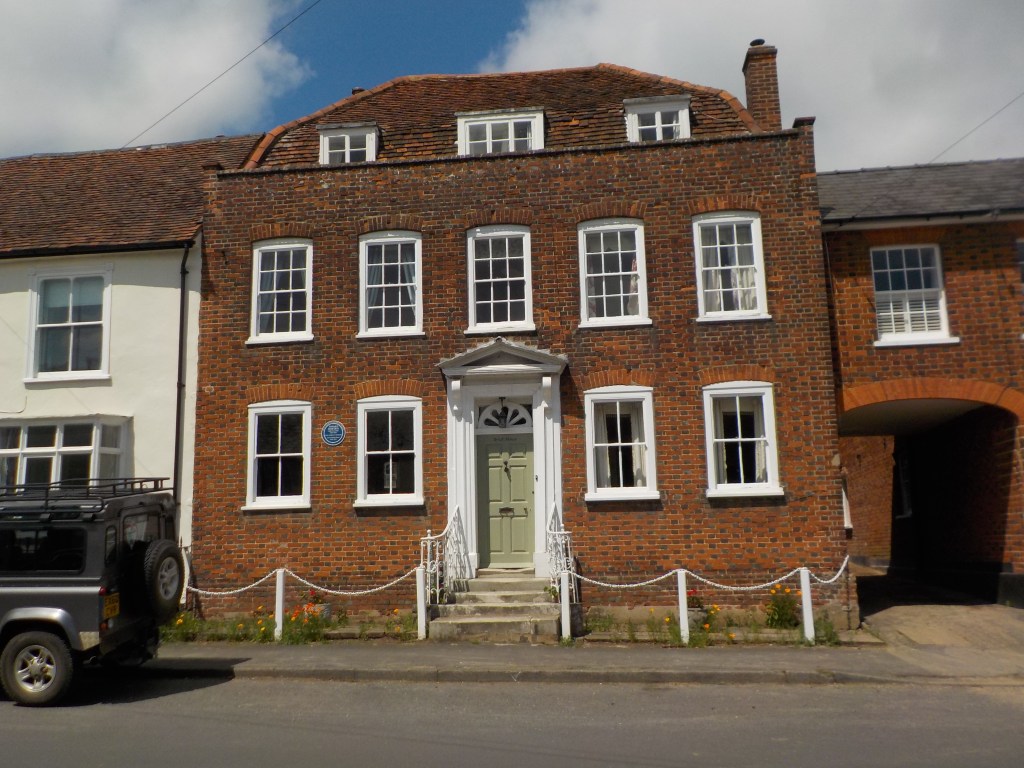
Clifford-Smith and his second wife Joan Glass set up home in Bucks House, a prominent building they rented at the centre of the village. Bucks Housewas builtCirca 1510, altered c.1600 and in the 19th Century. The ancient building is timber framed its exterior faced with red brick. Bucks House now operates as a welcoming B & B which can be accessed at www.bucks-house.com
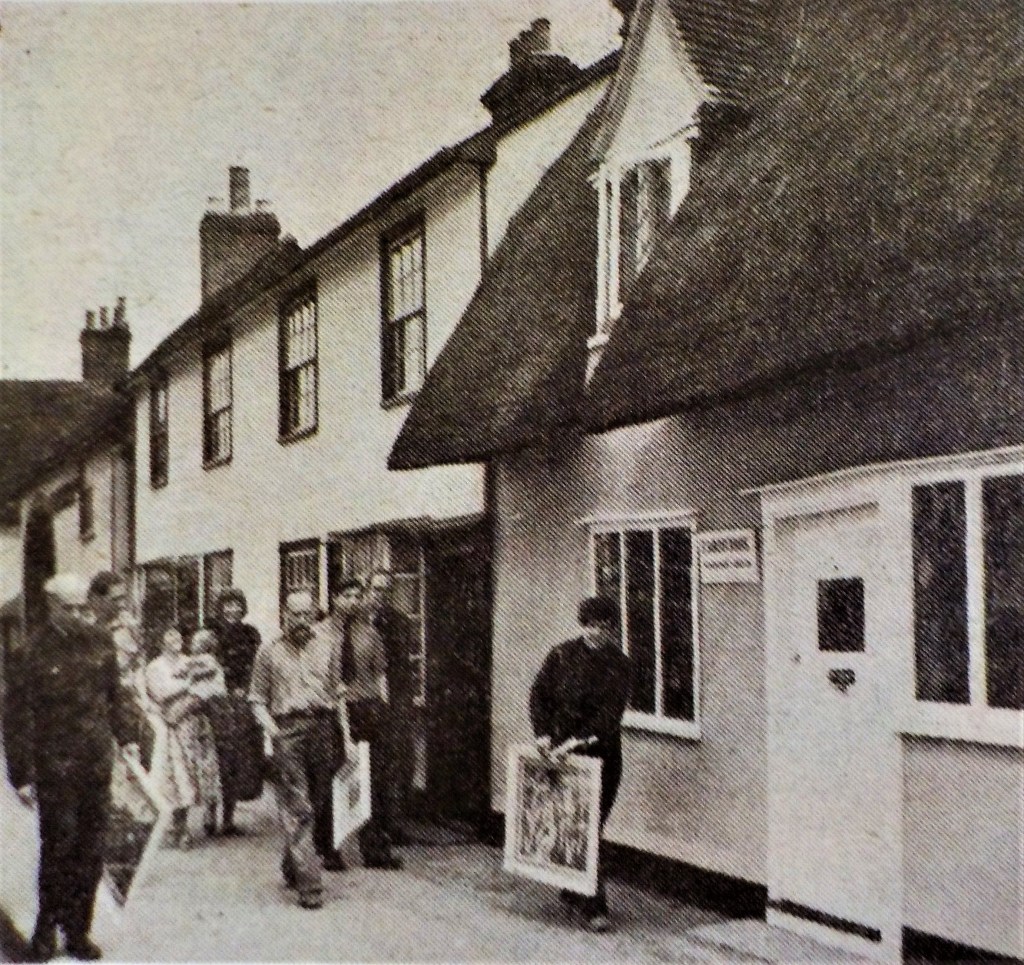
Bucks House, Great Bardfield.
Clifford-Smith, the son of a photographer, was born in Reddish, Stockport, Cheshire in 1906 and was educated in Manchester and Paris. The artist disliked his forename and signed his work under the name ‘S. Clifford-Smith’.
In the 1930s he was involved in the carpet trade working firstly as a salesman and later as a designer for James Templeton & Co in Scotland. It was at this time that he first began to paint.
During the Second World War, Clifford-Smith was a member of the Royal Naval Volunteer Reserve.
Clifford-Smith first married Susan Taylor in 1932 and the couple had a daughter. The relationship was not to last the pressures of the Great Depression and the couple soon separated.
After leaving the armed forces, he married the English artist Joan Glass (1915-2000) in 1946 having met during the war. The couple left London for Suffolk in 1947. While in East Anglia he painted mainly religious works much influenced by the French expressionist, Georges Rouault.
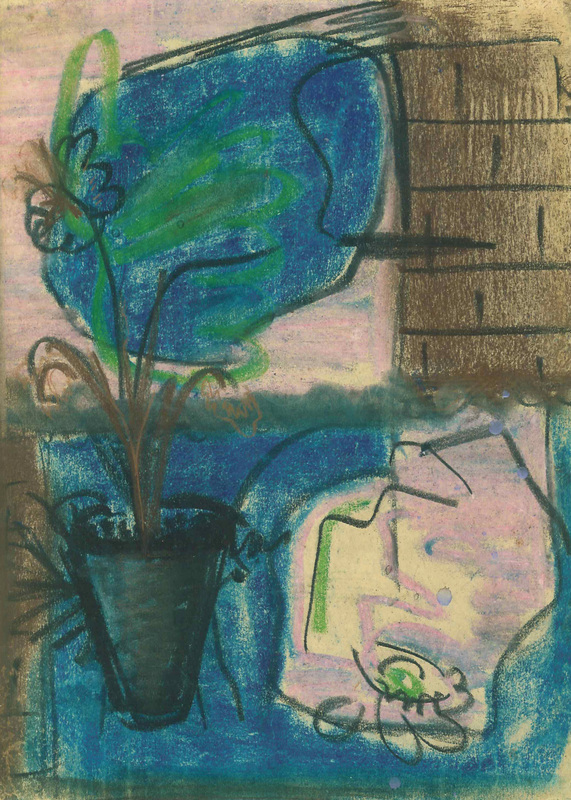
Joan Glass: ‘Reflected Gardener’ 1947 mixed media.
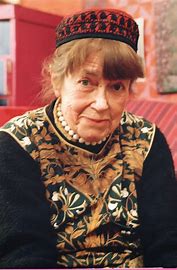
Clifford-Smith and Joan Glass pictured at Bucks House.
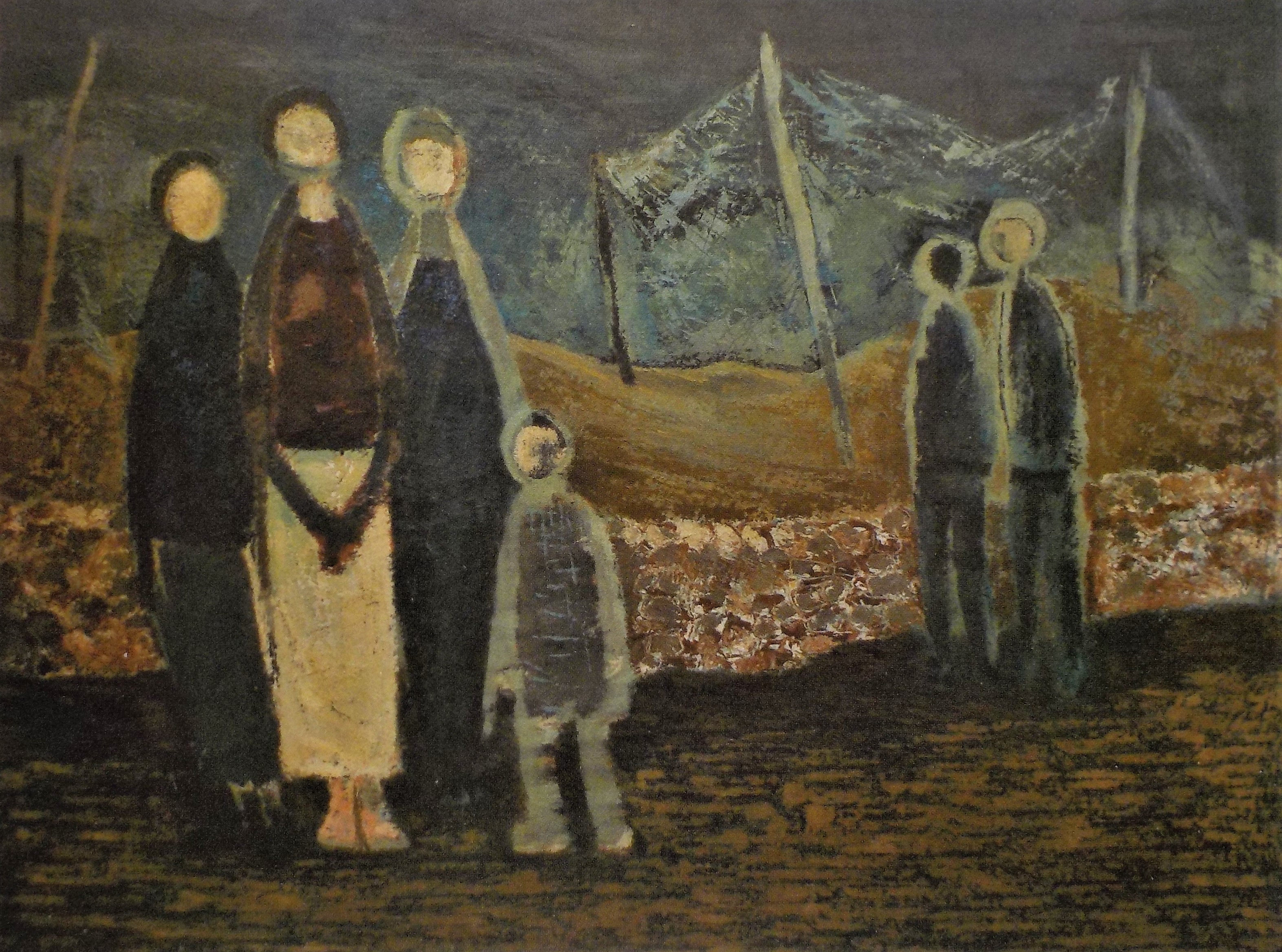
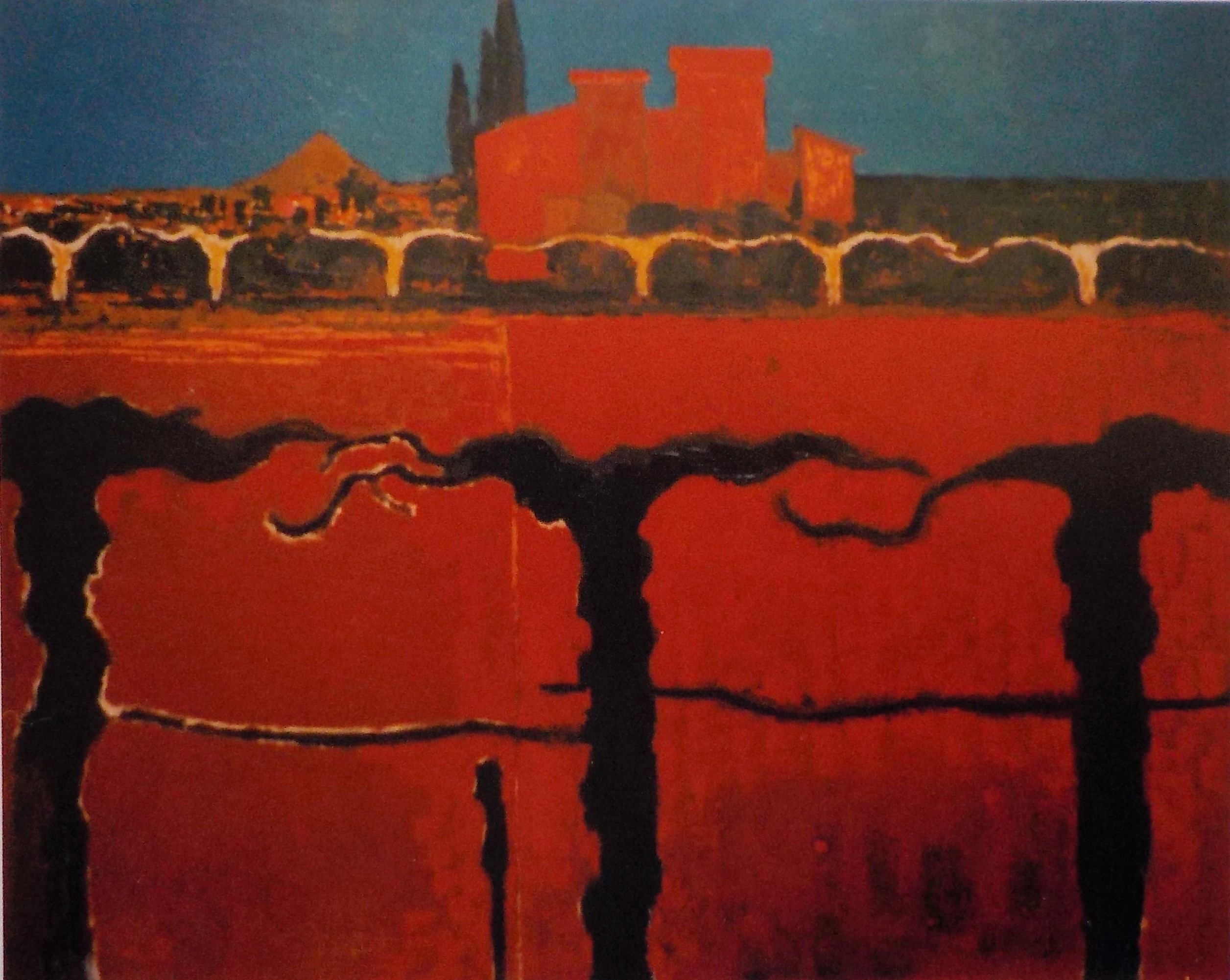
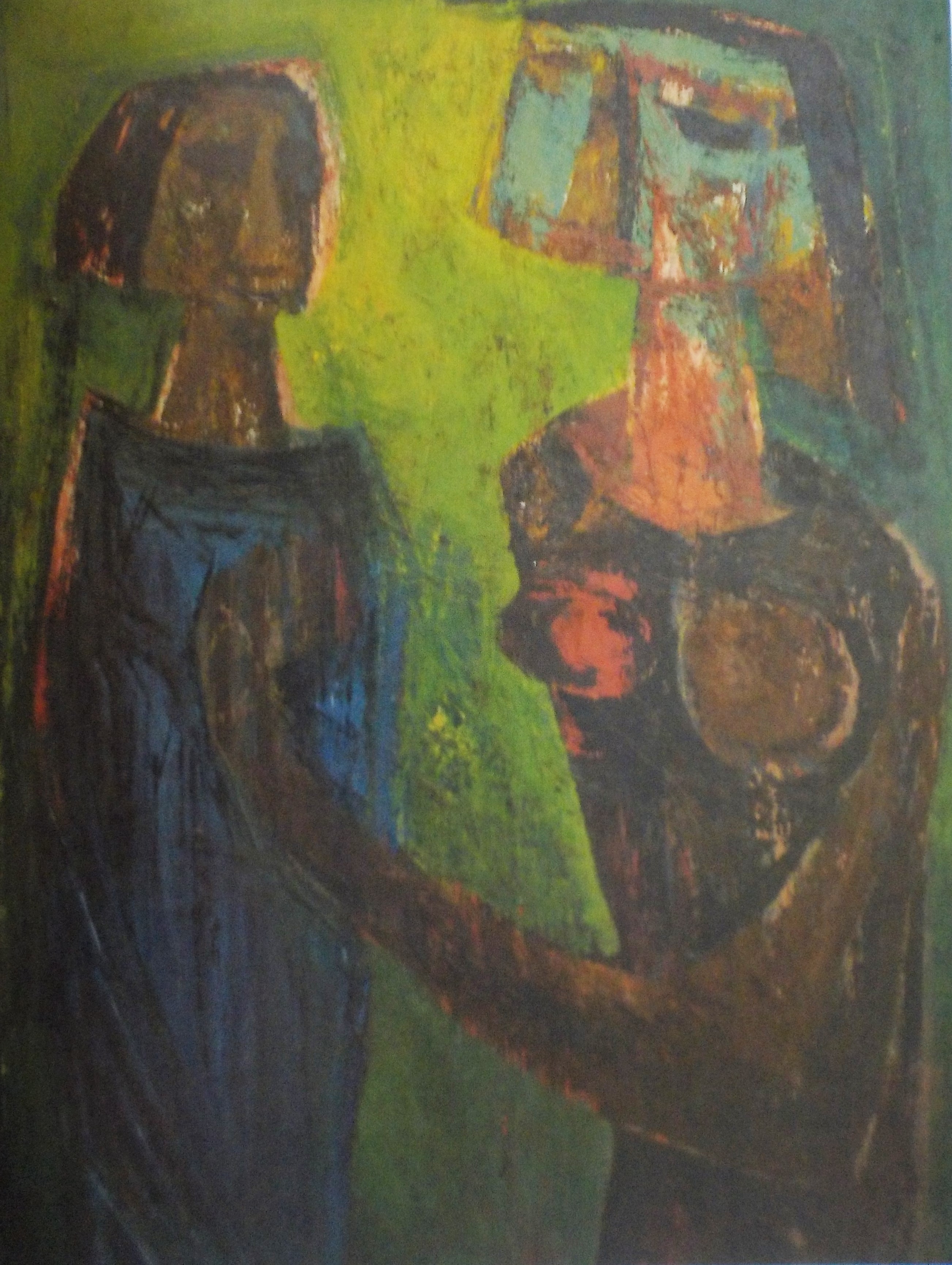
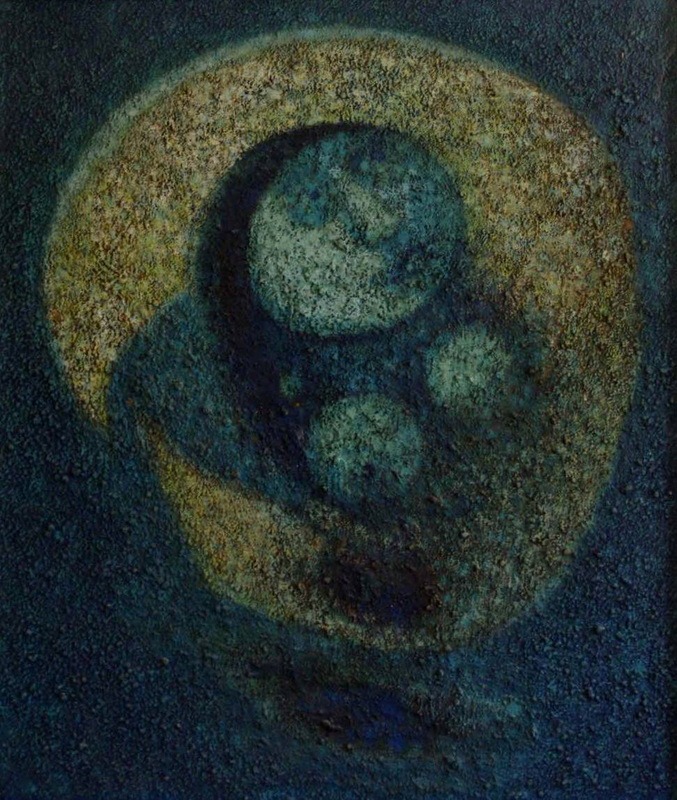
Harbour and Figures, oil, 1956. Top right: Spanish Trawlers off the Fastnet,’ oil 1959. Middle right: ‘People & Nets,’ oil 1957. Bottom right: ‘Tuscan Vines, Empoli,’ oil 1958. Bottom: ‘Mother & Child,’ oil 1958.
In his new home Clifford-Smith was an active member of the Great Bardfield art community during the mid to late 1950s and later became the Honorary Secretary of the group. It was Stanley Clifford-Smith who was a prime-mover setting up the open-house days in 1954, 1955 and 1958, exhibiting with the other artists of the village. They would turn their houses into art galleries and thousands of people came into their homes to view the work. The Bardfield artists then included: John Aldridge, Edward Bawden, George Chapman, Stanley Clifford-Smith, Audrey Cruddas, Joan Glass, Walter Hoyle, Sheila Robinson, Michael Rothenstein, textile designer Marianne Straub and cartoonist David Low. These shows attracted thousands of visitors and made the art community famous thanks to national press coverage and several one-off and touring shows in the late 1950s.
A 1955 press photo showing Clifford and Joan with Edward Bawden, John Aldridge, Michael Rothenstein and Audrey Cruddas outside Mariann Straub’s Trinity Cottage in Great Bardfield.
Clifford-Smith’s work in the 1950s was both diverse and experimental, he painted Irish and Italian landscapes, images of ships, as well as hypnotic ‘mother and child’ portraits. In 1958 Clifford-Smith and Joan bought the Old Bakehouse in Great Bardfield opposite the Bawden’s Brick House. In the early 1960s the Great Bardfield art community fragmented, John Aldridge at Place House was the only artist to stay until his death in 1983.
A then, young Richard Bawden recalls: ‘I remember going across the road from our home in Brick House to Clifford and Joan’s in the Old Bakery. Clifford had several large paintings on show with almost life size standing figures; these were in blue-grey and warm grey with a misty atmosphere and a pale yellow sun shining through the haze. I was impressed.’
Stanley Clifford-Smith: ‘Neighbours’ 1956, ‘Pembrokeshire’ 1958. ‘Two Men in a Boat’ undated. ‘Spanish Trawlers off the Fastnet’ 1959.
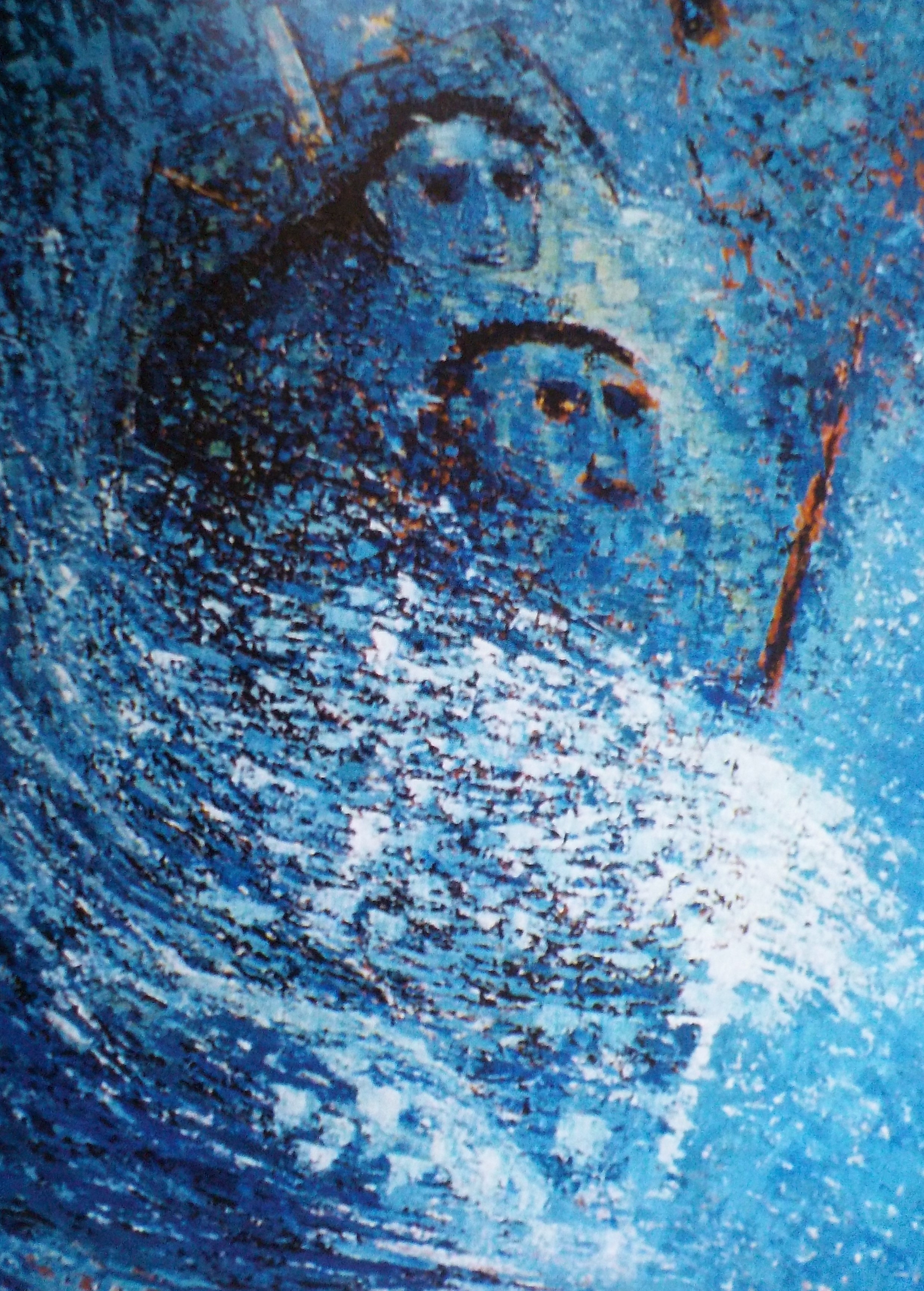
Clifford-Smith and his family left Great Bardfield in 1960 initially moving to Dulwich in SE London before moving to Little Baddow Hall near Chelmsford in 1962. During his time at Little Baddow he painted mainly thickly textured monochrome moon portraits.
‘Women Bewitched by the Moon’ c.1965.
Following his death in 1968, the artist had several important exhibitions of his work; a retrospective at The Minories, Colchester 1969, Little Baddow Hall Arts Centre 1979 and at the Fry Art Gallery, Saffron Walden 1998. He was survived by his widow and five children from his two marriages.
The Red Knight painted by Clifford in his Little Baddow Studio. Currently on display in the Between the Lines Bookshop, Great Bardfield.
Clifford-Smith and Edward Bawden stood on the steps of Brick House.
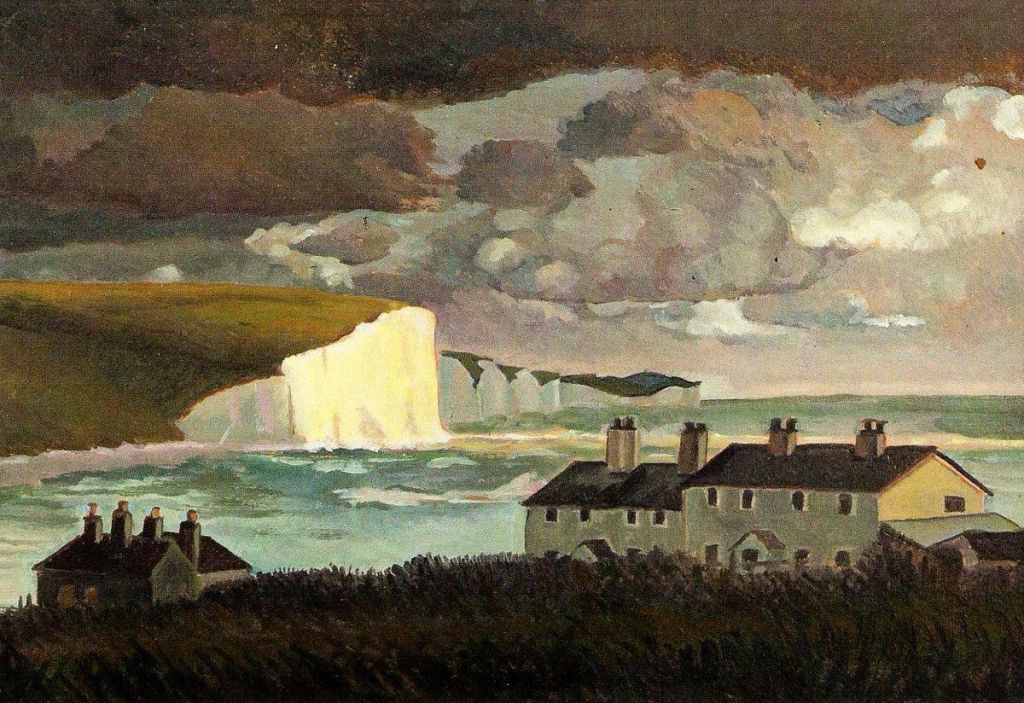
Peggy Angus struggled to cope in the aftermath of the war, which along with Eric Ravilious’ death and her divorce all combined to send her into a deep depression. Help came in the form of the Pipers who came to stay at Furlongs in 1947. John Piper took Peggy on sketching trips, and they sketched the Seven Sisters Cliffs, resulting in Peggy’s famous painting ‘Coastguard Cottages, Cuckmere’.
‘Coastguard Cottages, Cuckmere’ 1947.
Back in London and living at 122 Adelaide Road Peggy would let out the rooms above her basement flat. Henry Swanzy a producer for the General Overseas Service of the BBC became a tenant. Tirzah Garwood’s three children (Ravilious) and Peggy’s children Victoria and Angus were of the same age and for a time after Eric’s death shared Peggy’s flat to take advantage of mutual childcare. Henry was introduced to Tirzah and on the 12th of March 1946 the couple were married, moving into 169 Adelaide Road. Peggy’s neighbour Ivon Hitchens had wanted to leave his home at 169 ever since the house next door had been destroyed by a bomb.
‘Peggy Angus Sat on a Bed’. Kiran Ravilious wrote: There is a painting by my husband’s grandmother Tirzah Garwood that went “missing”. My mother-in-law didn’t know where it was, someone else said she had it etc etc. My sister-in-law finally found it. It’s a painting of Peggy Angus sitting on a bed. The funny thing is, Peggy didn’t like how Tirzah painted her face so she touched it and her hair up! It seems that’s exactly the sort of strong-minded person Peggy was. I love a painting with a story behind it!
A welcome boost to Peggy’s morale came in 1947 being when she was appointed head of art at her old school the North London Collegiate School. Angus was a part-time teacher for much of her life and believed her teaching was as important as creating her own work.
Peggy now juggled her teaching commitments with her own creative work encompassing industrial designs, tiles and wallpapers. Her significant achievements included a tile mural for the Susan Lawrence School in war ravaged Poplar, East London, a ‘live exhibit’ for the Festival of Britain, a tile mural at the British Pavilion at the 1958 Bruxelles Exhibition, and tile designs for Sir Frederick Gibberd at London Heathrow Airport Underground Station. She also designed a new form of marbling design for glass cladding for the original buildings at Gatwick Airport, which, produced by the firm TW Ide, was given the trade name ‘Anguside’.
The Susan Lawrence School was built in 1949-51, designed by Yorke, Rosenberg and Mardall, as part of the ‘Live Architecture’ exhibition of the Festival of Britain. The lobby’s interior was clad with ceramic tiles by Peggy Angus.
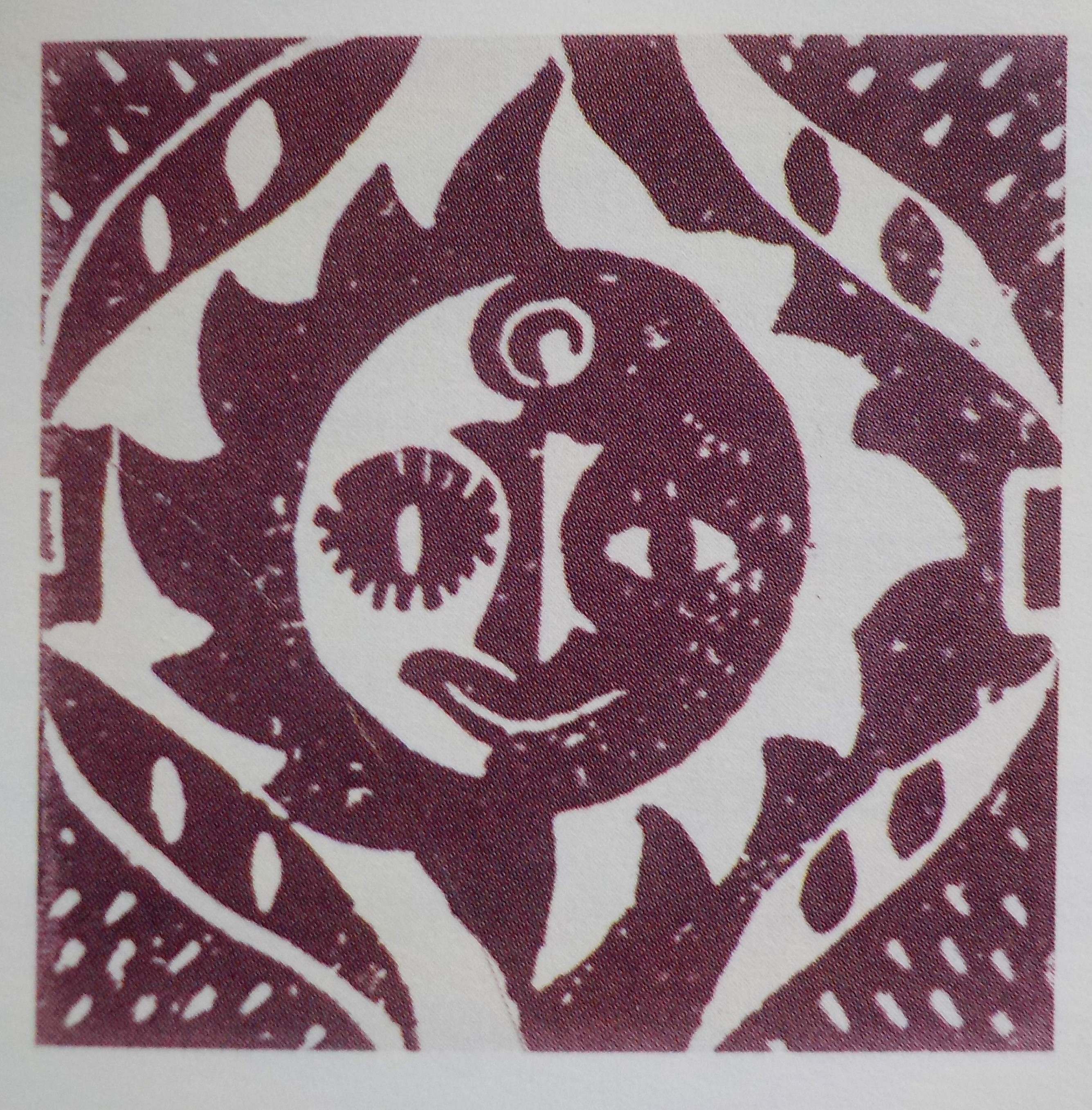
With materials in short supply Angus got her pupils to make potato- and lino-cuts, inventing a deceptively simple set of design rules. The results were startling, and the architect FRS Yorke immediately recognised her gift as a pattern designer. By 1950 she worked with Carter of Poole, designing tiles to humanise the rather cold, unadorned interiors and exteriors of Yorke, Rosenberg & Mardall’s commissions projects throughout the 1950s. This success led to a large number of orders from F.R.S. Yorke for tile designs, particularly for new schools and colleges. In 1952, she was made a member of the national Council of Industrial Design.
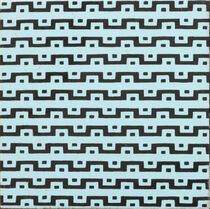
Tile designs from the early 1950’s.
At the North London Collegiate School for Girls Peggy believed in setting up communal projects where pupils’ works could be displayed to their best advantage. These projects also improved the school’s visual environment and expanded her influence beyond the art rooms. She wanted to encourage a sense of patronage and visual literacy for all, including those not thinking of following an artistic career. She remained a teacher at the school until 1971 aged sixty-five.
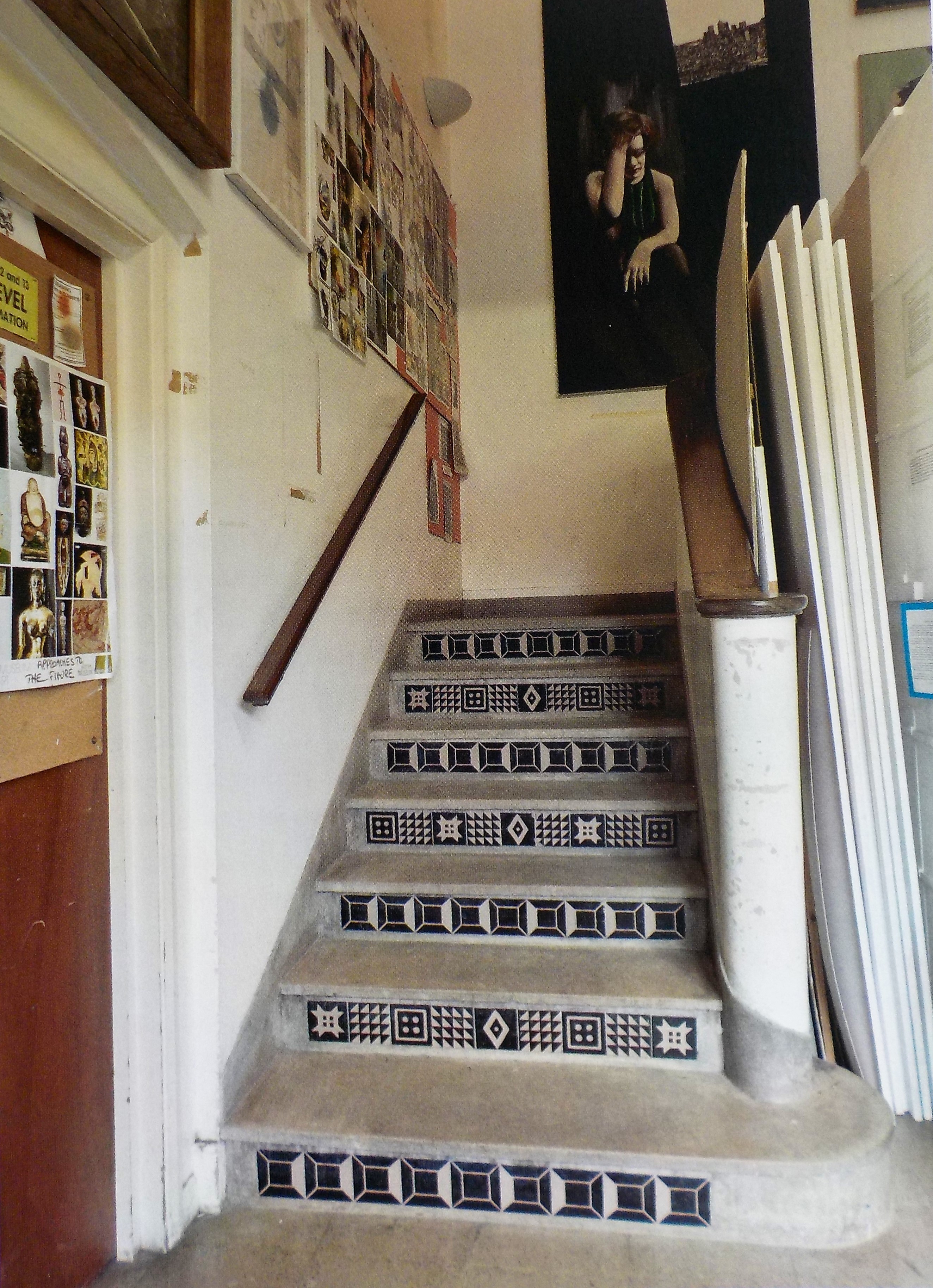
The stairs of the NLCS in the new drawing school, tiles designed by Peggy Angus. The art room 1960’s with desks designed by Peggy. Endpaper and title page for the school magazine 1958-59.
The art-department block at North London Collegiate stands as a memorial to Angus’s zeal and continues to be staffed only by practising artists. Her former pupils remember it as a separate creative encampment, an autonomous zone in the school’s highly academic environment.
Old Pupils say……
Mary Lane, Huddersfield:“Here is my memory of art lessons with Peggy Angus at NLCS. I think it will have been the first project we did in the Upper Thirds. We made a magic art folder by making a two-coloured potato print onto thick card– two pieces, a front and back cover. It was covered in clear fablon and the two sides tied together with ribbon. I have very little memory of what we put in the folder but I still have it, 52 years later! Peggy had an air of difference about her!”
Kate Clark:“In 1968, aged 11, I was fortunate to win a council scholarship to attend North London Collegiate School. The school had a large, separate art block, which over the following seven years became my place of refuge from the rigours of academia. My earliest memories of creating there are those spent in the company of wonderful, inspiring teacher Peggy Angus. In the ground floor studio, we crafted and created an assortment of colourful pieces under her watchful eye. My favourite was a painted papier-mâché bird. We made the body, stuck it on a stick and added the wings with wires attached to the stick so they could be pushed up and down to make the bird ‘fly’. What joy! Those early experiences led to Art A level, art college and an eventual lifelong career in design – and I am so grateful to Peggy and the other amazing art teachers we were lucky enough to be inspired by at NLCS. It’s only in recent years that I discovered more about Peggy Angus and the important legacy of art and design she left behind.”
Jill Hall: “As a very unworldly 11-year-old, Peggy Angus taught me at NLCS when I was a new girl and I certainly was unaware of her artist’s status – so,what a lucky little girl I was to have had her as my teacher, no less!”
Many of Peggy’s pupils visited Furlongs at the weekends and during the school holidays along with an ever-growing circle of friends.
One weekend Henry Swanzy and Tirzah visited Furlongs taking along with them artist/writer Olive Cook and photographer Edwin Smith. Olive and Peggy were to become lifelong close friends.
Another close friend was artist/potter Ursula Mommens. Peggy found a home to rent for her and sculptor husband Norman at Grange Farm, South Heighton, just over the Downs from Furlongs. Ursula had previously been married to artist Julian Trevelyan. Ursula’s mother, wood engraver and illustrator Elinor Monsell was a good friend of Virginia Woolf. Apparently, it was Elinor who encouraged Norman to take up sculpture; Leonard Woolf was an early patron, commissioning a work which still stands, though damaged, in the garden at Monk’s House.
Norman Mommens at work on a sculpture (at South Heighton) he did for Leonard Woolf – ‘Goliath’
Tragically the peace and joy of this circle of friendship was shattered in 1951 when Tirzah succumbed to the cancer which had first resulted in a mastectomy in 1942. Tirzah died suddenly and without pain on Easter Monday 27th March 1951, two weeks short of her forty-third birthday. She is buried in the Churchyard at Copford, Essex.
Tirzah Garwood (Ravilious) photographed by Edwin Smith 1951.
Peggy and Olive helped to look after Tirzah’s children, John, James and Anne, taking them along with Victoria and Angus on the train to Furlongs.
Peggy Angus: ‘Asham Cement Works’ with Peggy designed surround. Painted after the end of the war when Peggy was able to return to Furlongs.
If it had not been for Edward Bawden and Eric Ravilious working on the Morley Murals 1928-1930 I would never have heard of the artist Charles Mahoney, the third man at Morley College who fully deserves to come out of the shadows into the spotlight.
Charles Mahoney was born Cyril Mahoney in Lambeth, South London on November 18th, 1903. Charles was the eldest surviving child of a family of seven boys, three of whom died in infancy. His father was William Mahoney, a self-employed mechanical engineer who married Bessie Rich who came from Exeter.
Charles and his brothers attended Oakfield Road School, Anerley, London, where his gift for drawing and painting was encouraged by the art teacher.
Charles’s daughter Elizabeth relates that: ‘Two early events cast their shadow over the rest of my father’s life. The first was the loss of an eye in a tussle with one of his brothers over the possession of some scissors. The second was a near fatal attack of diphtheria, which left him less robust than formerly. In later life his habit of smoking did not help an already weak chest, and his life was to be disrupted by bouts of poor health, particularly chest problems.’
View from rear window at Mahoney‘s family home, Anerley, c.1922
Steely determination, however, set in, after leaving school he worked for a few months in a city advertising agency before entering Beckenham Art School, overcoming his parent’s resistance to their preferred career in banking!
In a letter Charles recalls:’ I gained a Royal Exhibition in Drawing to the Royal College of Art in 1922. In September of that year, I entered the school of painting which was then under the active professorship of Sir William Rothenstein who was also principal of the College. I took my diploma in painting in my second year and was placed second on the list. I stayed on in the School of Painting for a further two years and was given a fourth-year scholarship.’
At the RCA a life-long friendship developed between the then Cyril and the talented Barnett Freedman who renamed him Charlie. The name stuck !
William Rothenstein in his memoir ‘Since 50, Men & Memories 1922-1938’ (published 1939) lists the first two names that appear in a roll of top Royal College of Art students which are Henry Moore and Charles Mahoney – the list continues with the names of luminaries such as Eric Ravilious, Edward Bawden, Barnett Freedman Edward Le Bas, and Evelyn Dunbar.
Eric Ravilious: Cartoon sketch of Charles Mahoney at his easel
Charles left the RCA in 1926 after which he collaborated with Barnett Freedman designing theatre sets, some of his designs were bought for the print room at the V & A. An unhappy year followed as Senior Assistant at Thanet School of Art, mercenary landladies were the cause of frequent changes of lodgings while the school and its Principal were described as ‘uninspiring’. This unsettled period led to bouts of illness.
1928 brought a welcome turn of fortunes with Charles being offered the post of Visiting Painting Tutor at the RCA albeit, tempered by the news of his father’s death in the April. Charles commenced his RCA duties in the autumn.
The decorations in the Tate Gallery restaurant by Rex Whistler had been a success and Sir Joseph Duveen, later Lord Duveen, who had paid for the work was persuaded by RCA Principal Sir William Rothenstein to give money for decorations to be done at Morley College. Rothenstein recommended Charles to work on the murals assigned to the Concert Hall while Edward Bawden and Eric Ravilious worked in the Student Refreshment Room.
The Morley Murals were unveiled in 1930 by the Prime Minister of the day, Stanley Baldwin. There was a final rush to complete them and Charles was helped by friend, Slade student, Geoffrey Rhoades. The murals were such a sensation that an imperious Queen Mary commanded a private view with the three artists in attendance. Each artist and the other people involved in the project was given a presentation album, containing a beautifully lettered frontispiece, copies of images from The Studio and The Graphic and other photographs.
Tragically on 15 October 1940 a bomb hit the Georgian building, which Morley’s Elaine Andrews tells us, ‘folded like a pack of cards. 57 men, women and children who were sheltering in Morley from the Blitz perished.
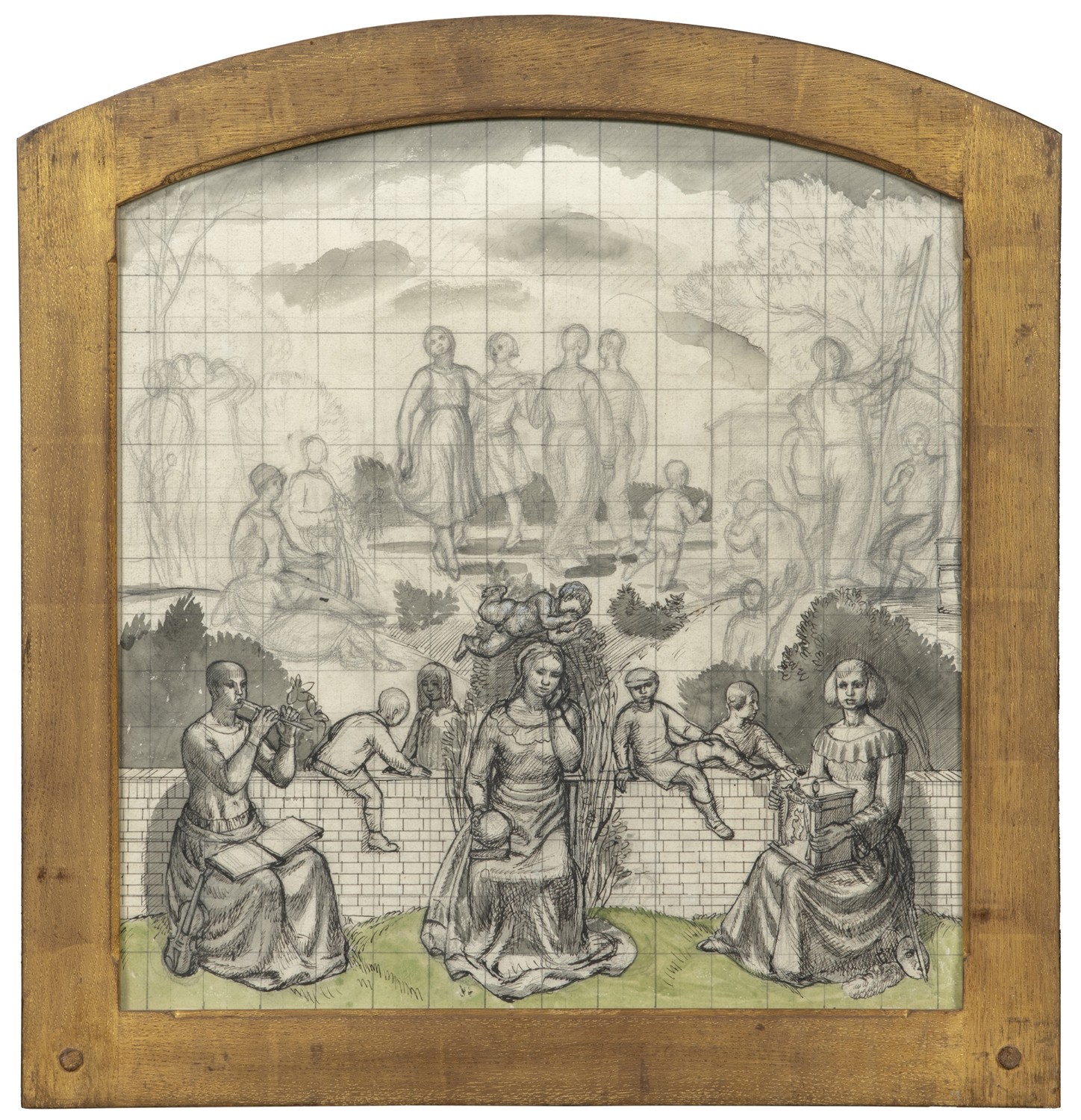
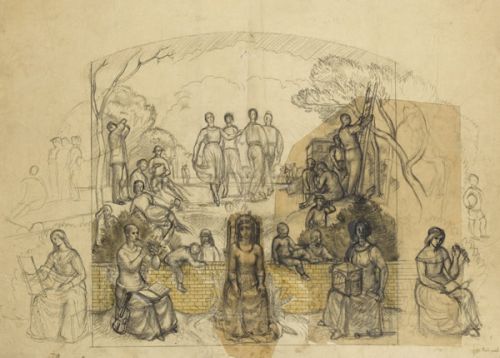
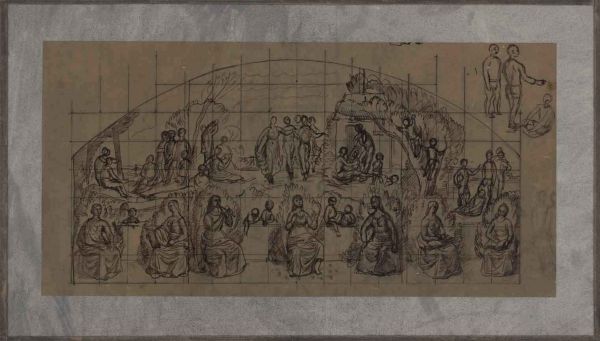
Charles sketches for the Morley Murals. ‘The Pleasures of Life in Work and Play (Scenes of London Life)’ in the Prince of Wales’ Hall, Morley College, Lambeth
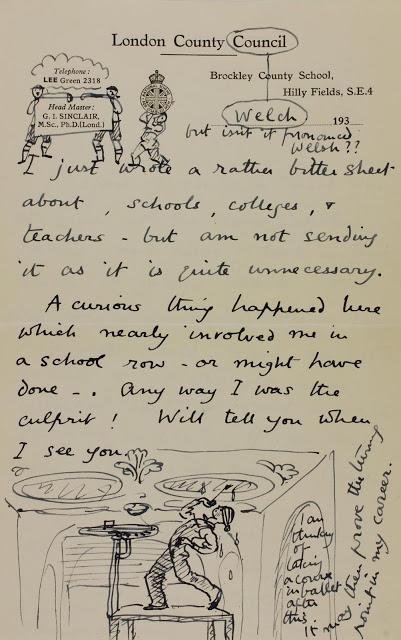
In 1932 Charles was invited to organise a mural scheme for Brockley County School for Boys, the work commencing in 1933 with the help of three of his senior students from the RCA.
In 1934-6 Charles Mahoney along with senior students Evelyn Dunbar, Mildred Eldridge and Violet Martin (all from RCA) worked on paintings in the hall of a school in Brockley, creating modern-life equivalents of Aesops Fables
During the winter of 1932/33 Charles was at Brick House, Great Bardfield. Edward Bawden’s father had purchased Brick House as a wedding present for Edward and Charlotte and Charles and Geoffrey Rhoades helped to re-decorate the building. Keen gardener Charles also helped with the garden.Tirzah Garwood (Ravilious) relates: ‘Charlie Mahoney, with Geoffrey Rhoades stayed for a long time and helped Edward with the garden. During the winter the four men (Ravilious too) had cleared the yard which was feet deep in years of rubbish. They unearthed all kinds of relics from the trade of past owners: it had been a girls’ school, and a saddler’s and coffin maker’s and there were pieces of old coffin and piles of old harness which they had buried in a huge pit which they had dug in the garden.’
Tirzah records several amusing anecdotes about Charles recounted in her autobiography ‘Long Live Great Bardfield.’
‘Charlie had a glass eye but I thought that on the whole it improved his appearance, giving an interesting and piratical look to a face that as nature intended it, might have belonged to a Sunday School superintendent or a postman’
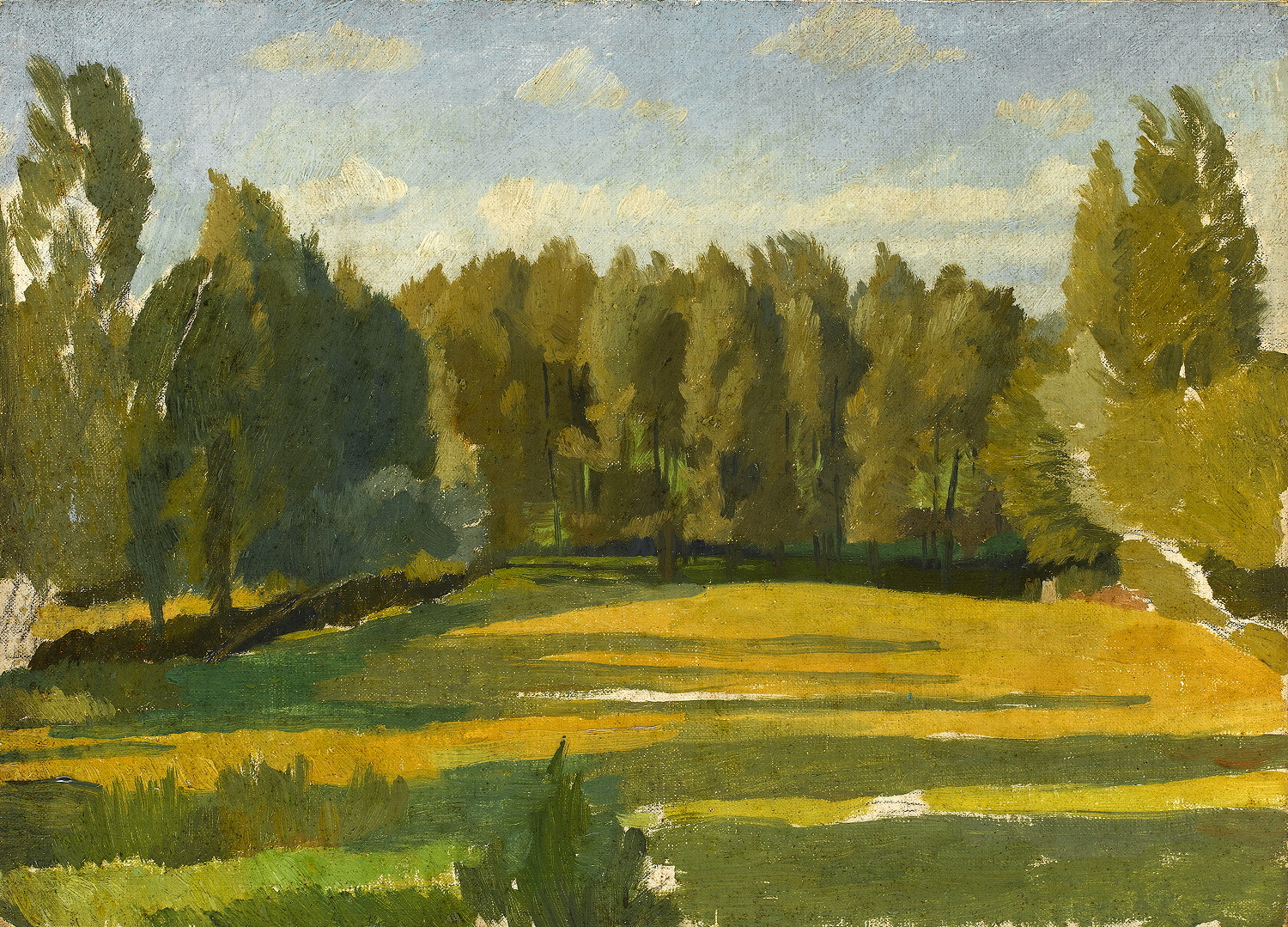
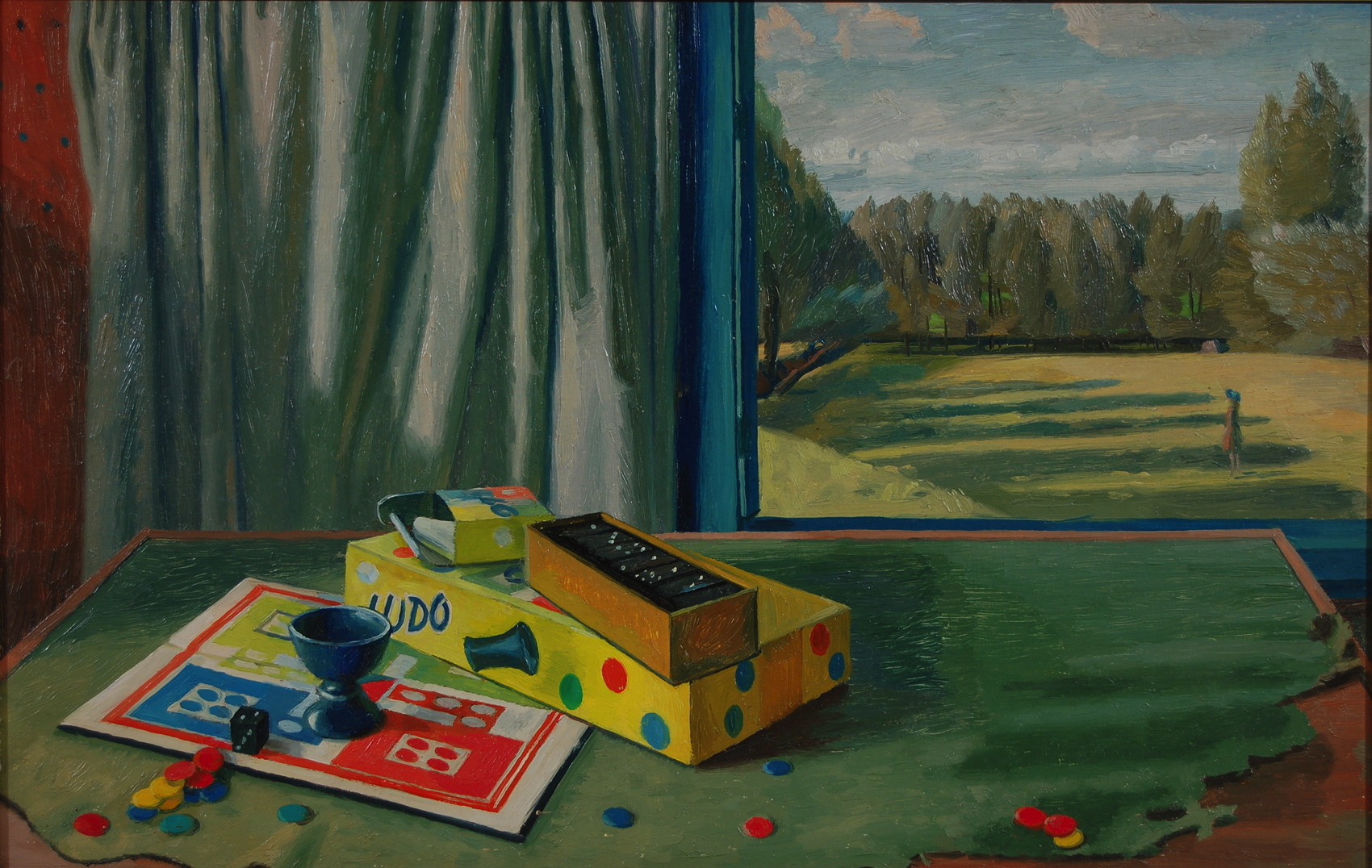
Charles Mahoney: ‘Willow Grove at Great Bardfield’ ‘Still Life With Landscape’ – the willow grove to the right. Charles Mahoney: ‘Portrait of Geoffrey Rhoades’ 1930.
The most talented pupil working alongside Charles on the Brockley Murals was Evelyn Dunbar.Evelyn and Charles spent some three years, from 1933 to 1936, completing the Brockley murals. During this time, they formed a close relationship, which eventually ended in 1937. A collection of Dunbar’s often lavishly illustrated letters to Mahoney covering their relationship between 1933 and 1937, are held in the Tate Gallery archive.
Commenting on the completion of the Brockley School Murals Rothenstein stated: ‘….through a further sum from school concerts, augmented by contributions from the governors and staff, £100 was given to Evelyn Dunbar….to enable her to study at the Royal College of Art.’
Mahoney, for his three years’ work, was given £25 and a silver cigarette case.
In 1937 Charles wrote and illustrated ‘Gardener’s Choice’ in partnership with Evelyn, published by Routledge. Charles and Evelyn made many visits to Brick House and helped to marble the hall.
Charles Mahoneyand Evelyn Dunbar. Letter from Evelyn to Charles.
In 1937 Charles bought Oak Cottage, Wrotham a 16th century cottage for himself and his mother. His relationship with Evelyn was now over but they remained friends. Charles enjoyed sketching trips around the North Downs sometimes accompanied by friend Thomas Hennell who lived nearby in Ash.
Evelyn Dunbar: ‘Charles Mahoney Sketching’.
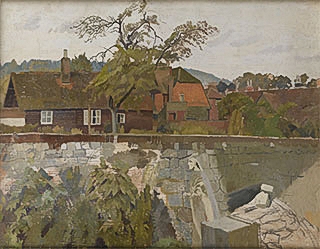
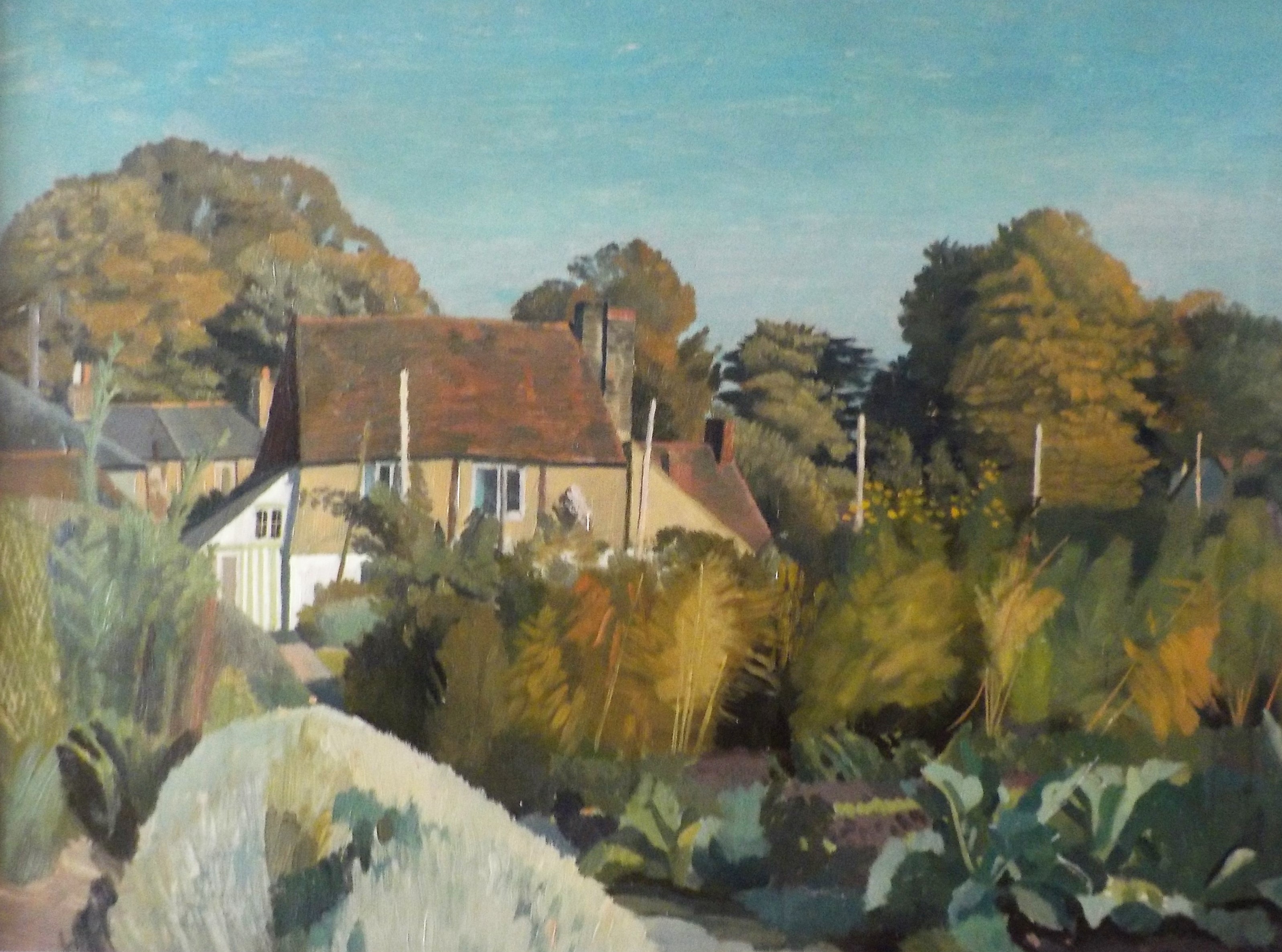
Friend Bernard Dunstan later reflected on Charles’ garden: ‘A village back garden of Eden, in which sunflowers, sheds, weeds, cabbages and brick walls were treated with love and equal respect and took their places naturally in his mural designs.’
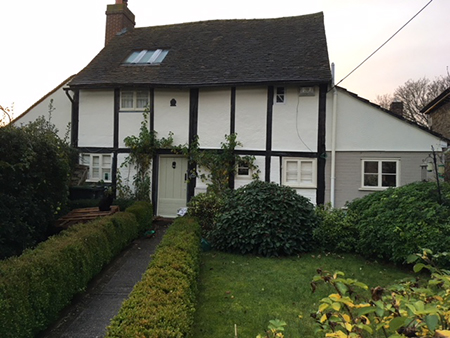
The first pic is ‘A View From the Artist’s House (Oak Cottage). The remainder are views of Oak Cottage plus two studies of the kitchen. The final pic is Oak Cottage from the front.Charles and Dorothy at Oak Cottage circa 1955.
In late 1940 the RCA was evacuated to Ambleside with Charles, deemed unfit for military service, amongst the first to teach there alongside friend Percy Horton. Charles joined the Home Guard in Ambleside. Also evacuated to the Lake District was calligraphy tutor Dorothy Bishop working in the Design School. Charles and Dorothy were married in n September 1941 and enjoyed a brief honeymoon in Edinburgh.
Two hotels were requisitioned in Ambleside: The Queens Hotel and the Salutation. The Queens Hotel was used to house male students and most of the staff, and also provided most of the classrooms; while the Salutation Hotel housed female students, a few of the staff, and teaching accommodation for engraving and dress design.
Charles Mahoney: ‘Ambleside’. ‘Rooms at the Queens Hotel’.
Dorothy had entered the RCA School of Design in 1924 with Book Illustration as her principal subject. From 1926-28 she took lettering and illumination under Edward Johnston, to whom, during this period, she became student-assistant. Her subsidiary subjects were wood engraving, pottery, bookbinding and embroidery. It is likely that fabric design dates to this period. In 1929 Dorothy was appointed Deputy Assistant to Edward Johnston, giving lectures, demonstrations, and classes in his absence
Charles Mahoney: ‘Portrait of Dorothy’. Dorothy Mahoney: ‘Design For a screen-print’. ‘Oak Cottage, Front Garden’. ‘Oak Cottage’. ‘Walled Garden’.
Charles was commissioned to produce a mural scheme for the Lady Chapel at Campion Hall, Oxford in 1941. Electing to paint directly onto canvas fixed to the walls and by daylight hours only, the project inevitably became drawn out and Mahoney could only work in situ during the Easter and summer vacations when he was not teaching. The project continued into the following decade and the physically exhausting work brought about a serious decline in the artist’s physical health. The work on the murals concluded in 1952.
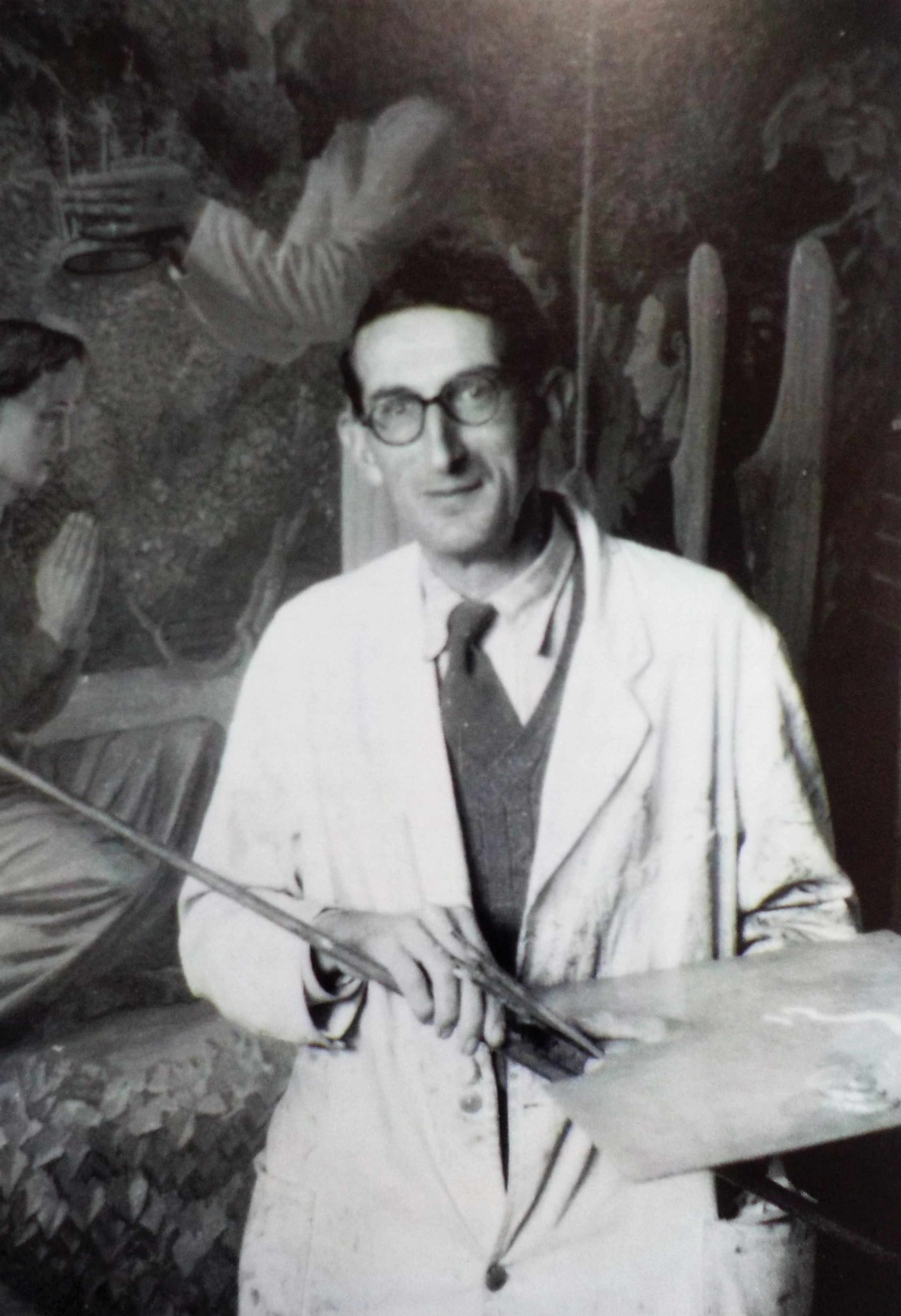
The mural scheme for the Lady Chapel at Campion Hall in 1941. The scheme was to be made up primarily of three large panels: the Nativity and Adoration of the Shepherds, the Coronation of the Virgin, and Our Lady of Mercy.Charles Mahoney pictured at work at Campion Hall.
The Royal College of Art returned to London for the Autumn term, 1945. Following the appointment of Robin Darwin as Principal of the RCA in 1948 Charles and Professor of Painting Gilbert Spencer left the college.
A memorandum from Darwin stated: ‘The Royal College of Art must be reorganised root and branch. The courses provided must be revised and recruitment for them reconsidered. Many changes of staff will be necessary.’
Darwin placed no importance on the value of crafts such as calligraphy so consequently Dorothy left the RCA too.
Rodrigo Moynihan’s ‘Portrait Group (The Teaching Staff of the Painting School at the Royal College of Art, 1949-50) 1951. From left to right: John MInton, Colin Hayes, Carel Weight, Rodney Burn, Robert Buhler, Charles Mahoney, Kenneth Rowntree, Ruskin Spear, Rodrigo Moynihan
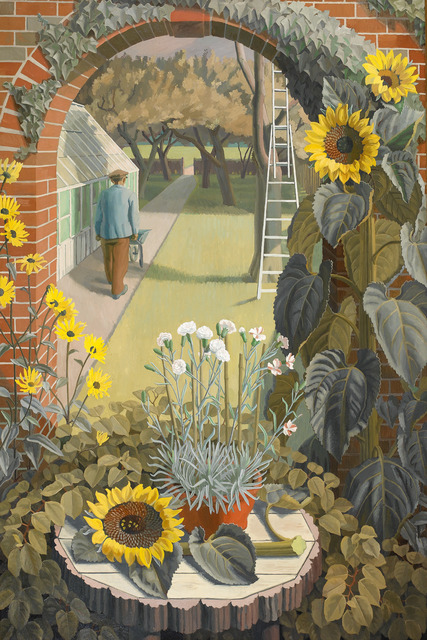
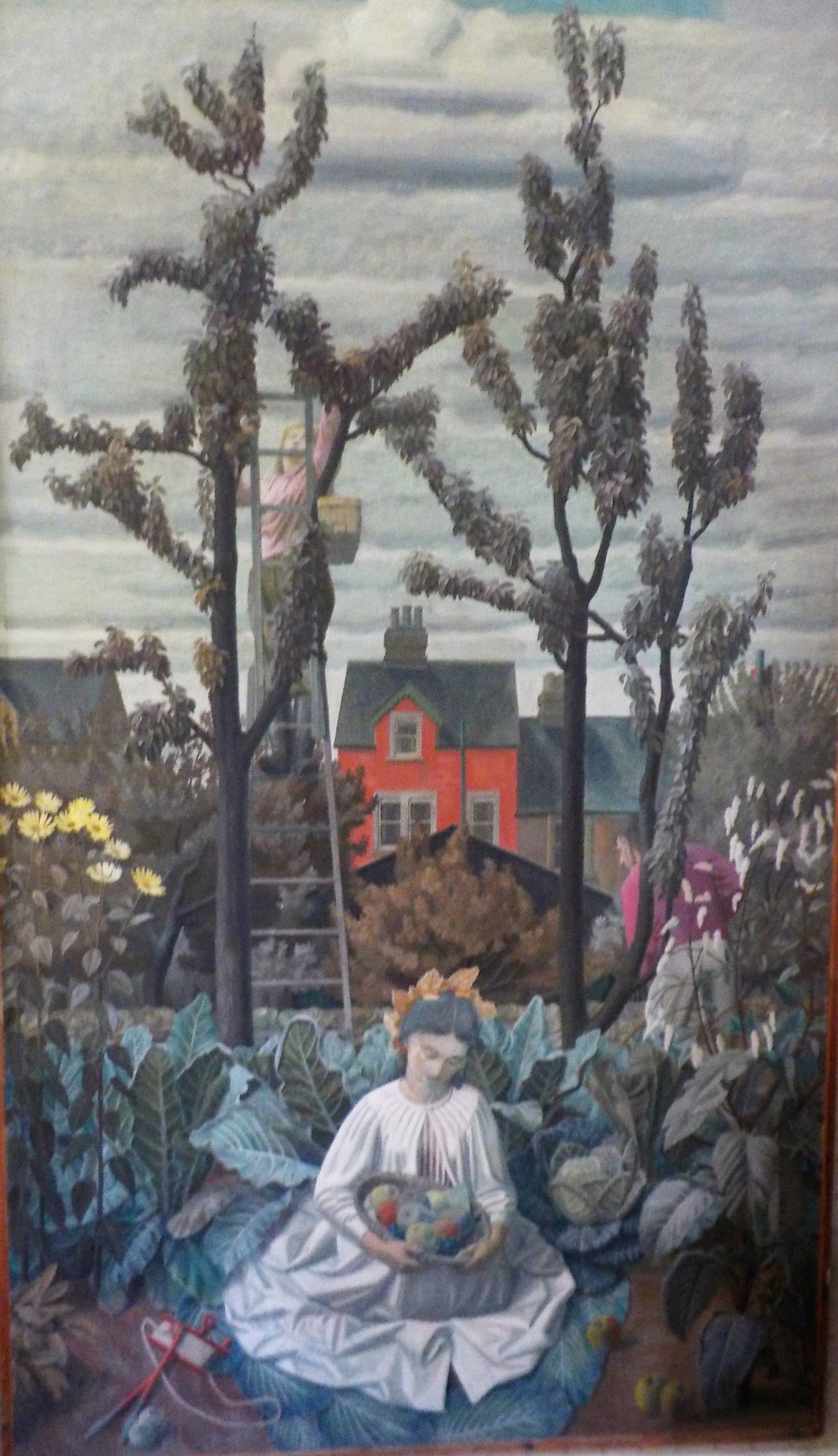
Charles was asked to contribute to the 1951 Festival of Britain. An initial shortlist of 145 artists was narrowed down to 60. Percy Jowett and John Rothenstein, members of the selection panel, undoubtedly would have recommended him. Charles contribution was entitled The Garden. Although not specifically related to the Festival of Britain commission, ‘Autumn’ was produced during the same period as The Garden and but for a slight difference in height could be described as its pair, Dorothy, posed for the main figure.
Charles Mahoney: ‘The Garden’. The setting of the Garden, seen through a red brick arch, was almost definitely inspired by the gardens at Sissinghurst where many such vistas can be found. Mahoney visited Sissinghurst many times. ‘Autumn’ photographed from the original in a private collection.
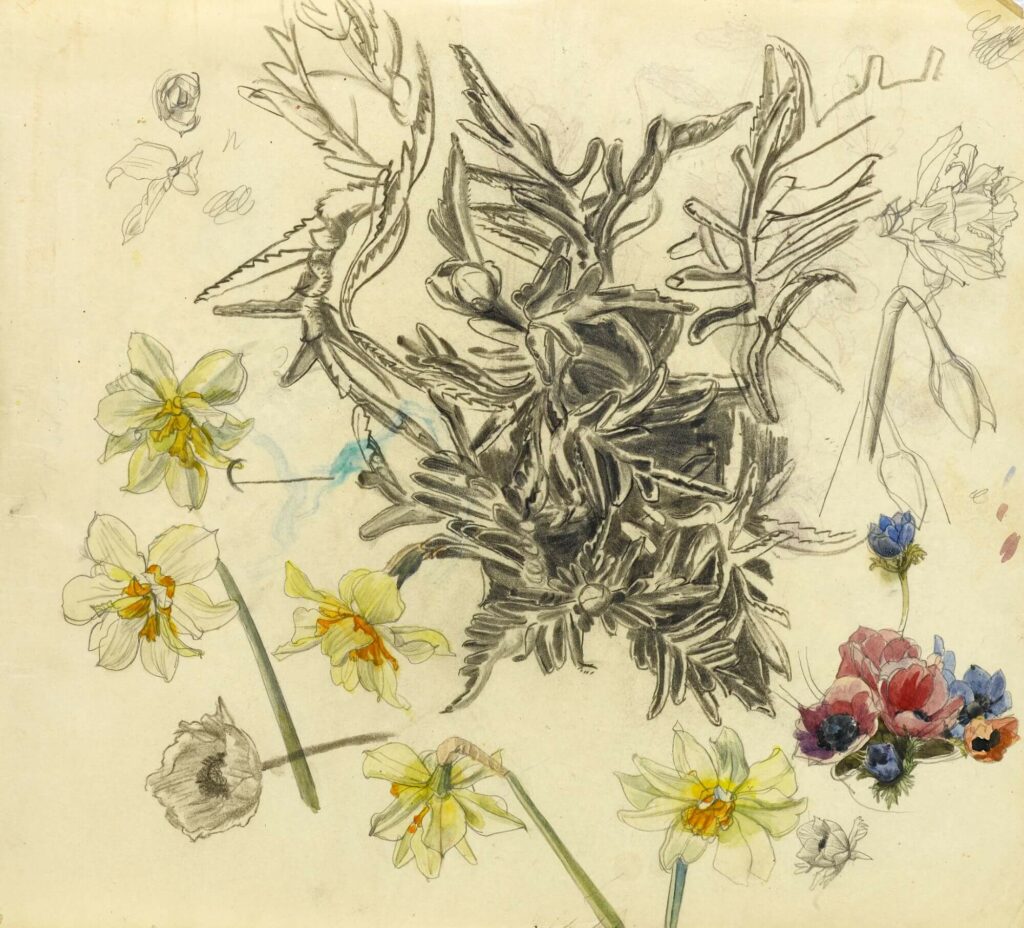
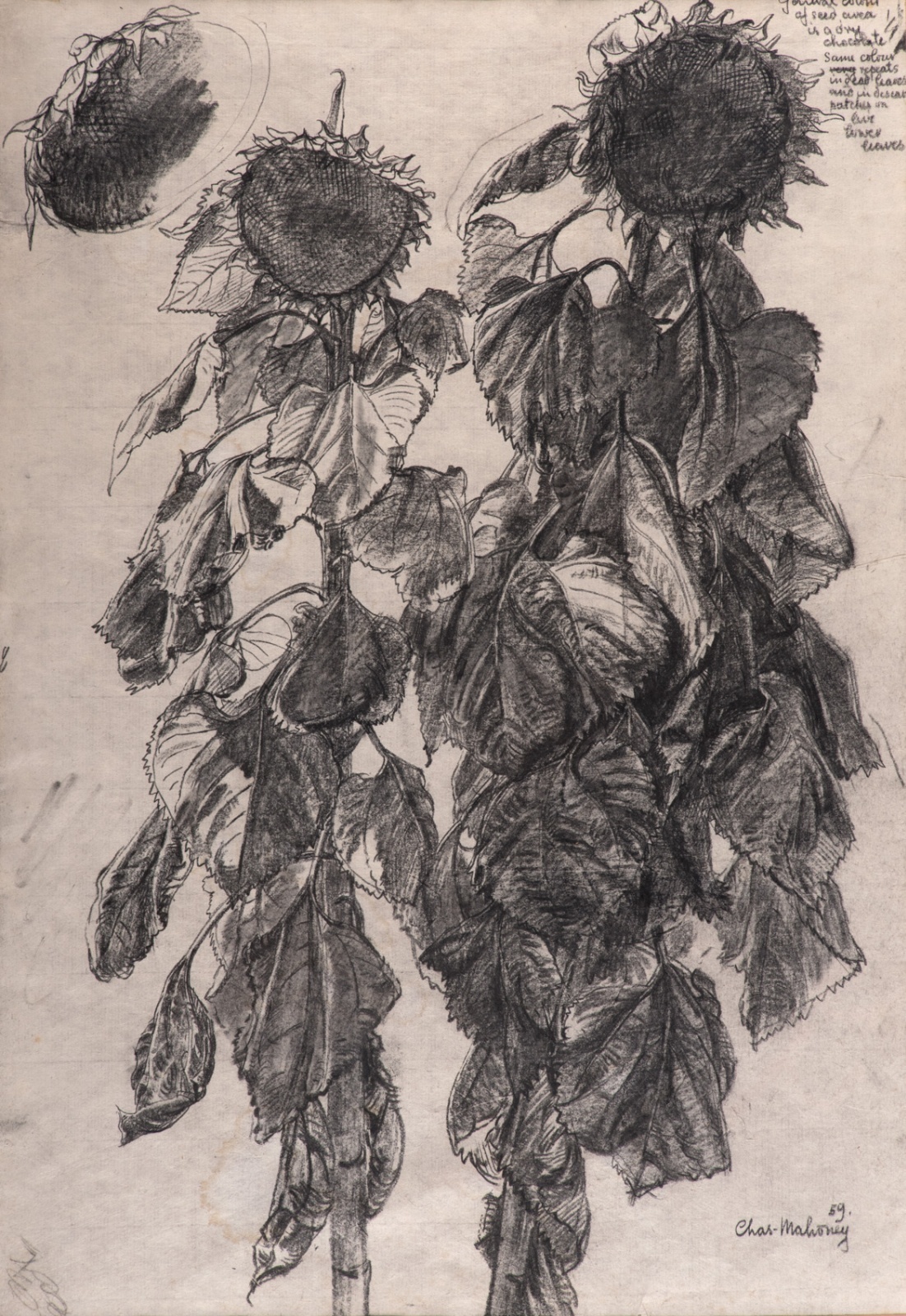
On 1953 Charles obtained a teaching post at the Bromley School of art and then in 154 at the Byam Shaw School of Painting and Drawing, an independent art school in London. During this period Charles produced a large number of large drawings of plants, including sunflowers, his mural days were behind him.
Charles Mahoney: Flower Studies.
Charles health problems worsened developing emphysema forcing him to give up smoking. In 1966 and 1968 he underwent two lung operations at the Brompton Hospital. Following the second operation cancer of the colon was discovered. Charles died following a third operation at the Royal Marsden hospital in 1968.
Charles’s daughter, Elizabeth Bulkeley, recalls that to enter his garden was to enter one of his pictures, and it ‘provided him with more subject matter than he could ever use’.
Of his teaching she states: ‘As many letters testify, his students and friends appreciated his genuine interest ad encouragement. He was a dedicated teacher, with a genuine sympathy fo the problems of young artists.
A selection of Charles’ work some of which I was privileged to see and photograph first-hand
The process of reassuring Charles’ place in 20th century British Art has had several important milestones including the 1975 Ashmolean exhibition, the Liss Fine Art/Fine Art Society touring show (2000) and Mahoney’s predominant feature in Tate Britain’s The Art of the Garden, (2005) – but the process of reassessment still has a long way to go. Charles standing as a major 20th century artist, like his flowers, deserves to bloom and grow and plant seeds in the hearts and minds of aspiring future artists!
Donald Towner: ‘Portrait of Charles Mahoney’ 1926. Mahoney and Towner were fellow students at the RCA. Towner shows the 23 year old Mahoney seated in his studio. Perhaps deliberately, perhaps by chance, Mahoney’s eye defect seems emphasised in this portrait sketch.
After leaving the Royal College of Art Dorothy taught calligraphy at the Central School of Arts and Crafts and Ravensthorpe School of Art. After ‘retirement’ at the age of 65 she taught 2 evening classes a week at the Stanhope Institute, Queen’s Square, London until she was in her late 70s. Dorothy died following a stroke in 1984.
Poster for the 2000 Exhibition. Brick Fields near Burough 1940. Greenhouse-Interior. High Street, Great Bardfield.
References: Bulkeley, Elizabeth et al. Charles Mahoney1903-1968, the Fine Art Society PLC in association with Paul Liss, London, 1999.
Campbell-Howes, Christopher. Evelyn Dunbar – A Life in Painting. Published by Romarin 2016.
Frayling, Christopher. The Royal College of Art – One Hundred and Fifty Years of Art and Design, Barrie & Jenkins 1987.
Garwood, Tirzah and Ullmann, Anne. Long Live Great Bardfield. Published by Persephone Books 2016
Rothenstein, William Since Fifty – Recollections of William Rothenstein. Faber & Faber 1939.
From 1930 to 1946, Peggy taught art at secondary schools in Sussex and London – Eastbourne High School as an art teacher for 2 years before moving on to the Henrietta Barnett School, Hampstead.
Peggy travelled to Russia in 1932 for an art teachers’ study visit and later urged her students to travel to the Soviet Union. This earned her the nickname “Red Angus.” Following her visit to Russia she became one of the founding members of the Artists’ International Association, an organisation born out of social and political conflicts of the 1930s.
Alfriston Paintings: 1 The Stuffed Duck, Mrs Cooper’s Parlour, watercolour 1931. 2 Mrs Cooper, A Farm Labourer’s Wife, oil 1933. 3 Mr Fidgett (the rat catcher), oil 1932.
Whilst teaching in Eastbourne Peggy found lodgings in a cowman’s cottage at Tile Barn, near Alfriston. Peggy was quite taken with her room at Tile Barn but had to leave when she moved to the Henrietta Barnett School. She had become so attached to the South Downs that she resolved to find an old, run-down cottage where she could spend weekends and holidays. True to her Girl Guide training (Peggy was a girl guide until 1924 aged 20) Peggy would pack her rucksack and hike over the Downs searching for her ideal cottage. In the summer of 1933 Peggy came across a cottage covered in ivy, it was actually two cottages in one, Barnes, a ploughman living at one end and the other end empty. Peggy asked the tenant farmer Dick Freeman, who rented the cottage from the Glynde Estate, if she could sub-let the empty end. He refused so Peggy set up camp and her outdoor art studio until he relented, and the cottage, Furlongs, was hers.
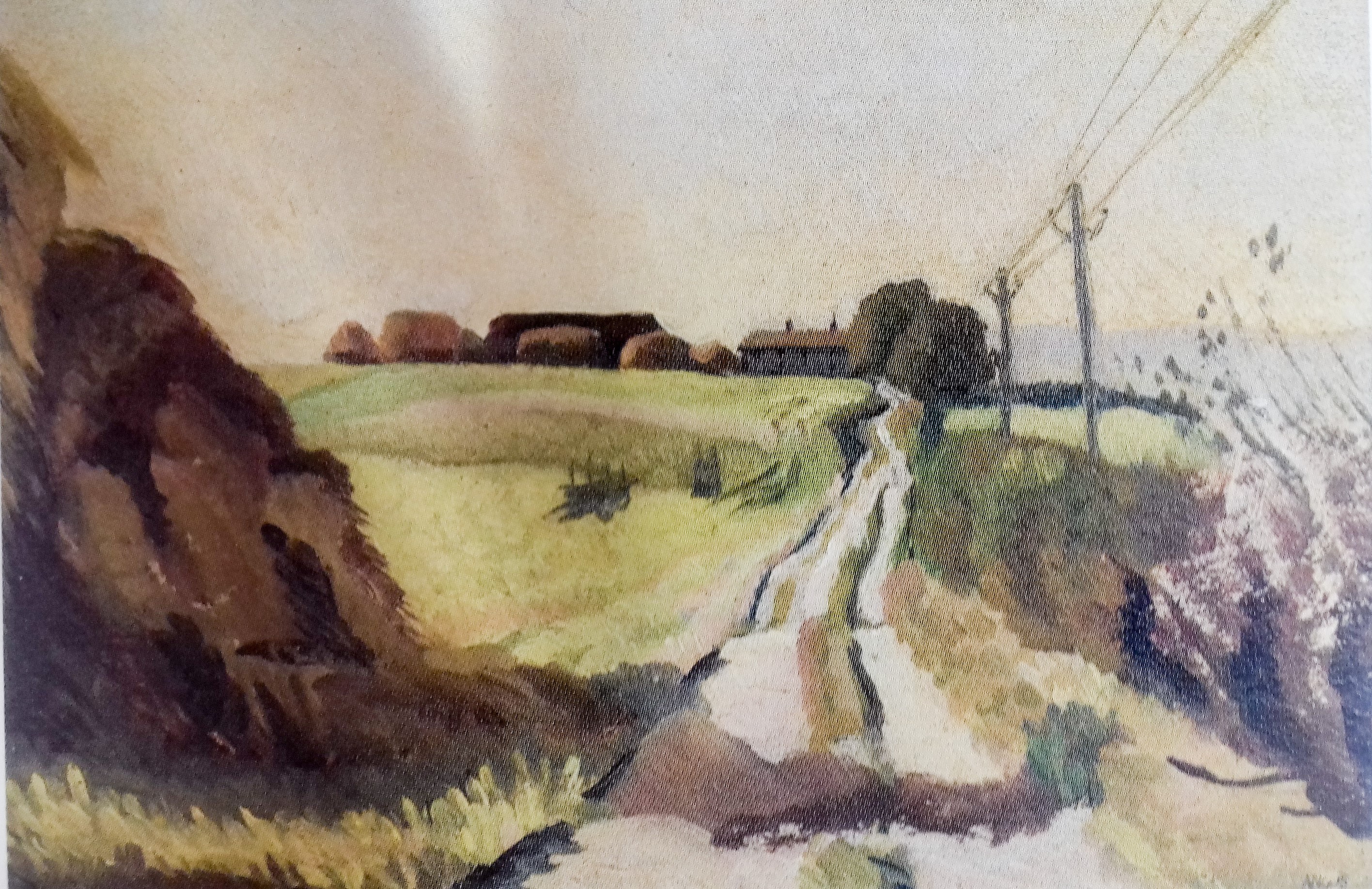
Furlongs, photo taken 24th May 2021. Cart Track to Furlongs by Peggy Angus. No date.
In the autumn of 1933 Peggy visited Zwemmer’s Gallery in London to view works by Eric Ravilious and Edward Bawden. Visiting on the last day of the exhibition Peggy longed to buy a painting but by then they had all been sold. So, Peggy wrote to former RCA fellow student Bawden offering to buy a watercolour painting if he would accept an arrangement of paying by instalments of £1 at a time. Bawden replied inviting Peggy to visit Brick House for a weekend so she could choose a watercolour. Peggy duly visited Brick House in January 1934 and bought Ferryboat Entering Newhaven Harbouralthough I understand it wasn’t framed until a couple of years later.
Peggy’s painting purchased from Edward Bawden. Ferryboat Entering Newhaven Harbour, 1935.
At Brick House Peggy was bowled over by the decorations on the wall, the ceiling and floor. Peggy was pleased to see Eric again having only bumped into him once on Westminster Bridge since leaving the Royal College of Art. She was also able to meet Tirzah, Charlotte Bawden had been a fellow student at RCA.
Brick House, Great Bardfield. Photo taken 27th May 2021.
On what was a mild weekend another visitor to Brick House was young artist Diana Low invited for a six day stay by her former teacher Charlotte along with another Cheltenham School colleague Gwyneth Lloyd Thomas, an English don at Girton College, Cambridge.
The Saturday afternoon was warm for mid-winter but misty. Enjoying a group walk an exuberant Peggy tore her clothes off and plunged into the cold waters of the River Pant, Eric and Diana followed suit while Tirzah stayed on the bank.
At the end of the weekend visit Peggy invited the whole household to visit her at Furlongs. Furlongs became the gathering-place of many artists – Eric Ravilious and his wife Tirzah, Edward and Charlotte Bawden, Percy Horton, Maurice de Saumarez, John and Myfanwy Piper, Olive Cook and Edwin Smith, as well as countless former pupils, colleagues and their children and grandchildren.
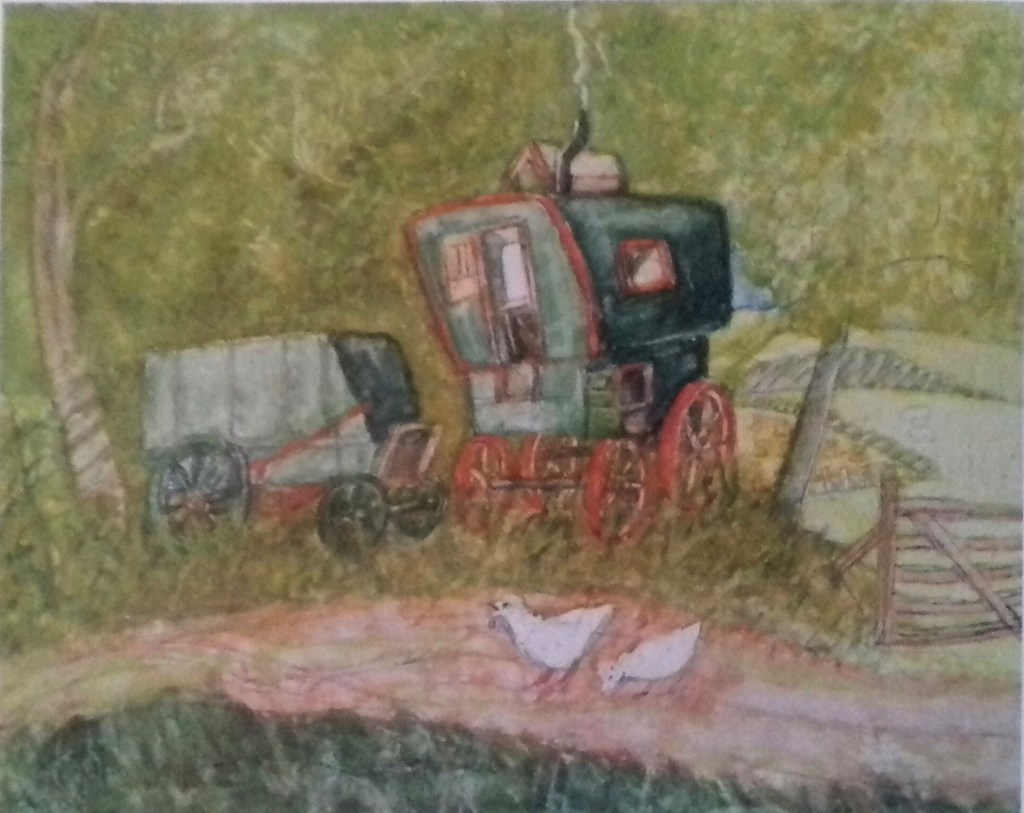
Peggy Angus: The Fever Wagons, oil, no date. The wagons used as a home and studio at Furlongs by Eric and Tirzah.
Ravilious was a regular visitor and considered that his time at Furlongs: ‘…altered my whole outlook and way of painting, I think because the colour of the landscape was so lovely and the design so beautifully obvious … that I simply had to abandon my tinted drawings.’
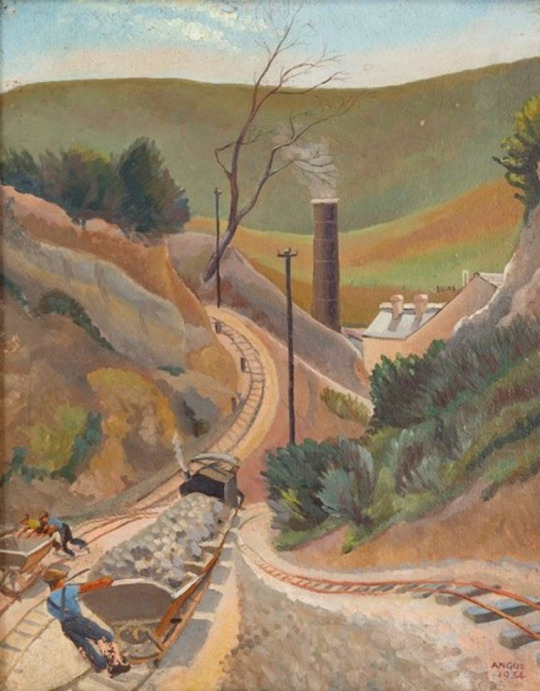
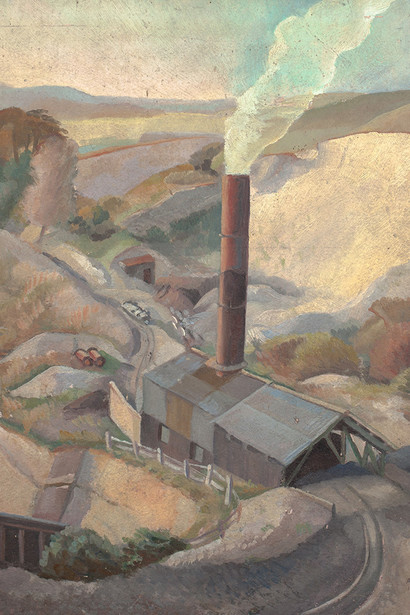
Ravilious made many drawings and paintings of the Downs around Furlongs and of the cottage inside and out. He and Peggy both made paintings together at the quarry and cement works at Asham nearby. Other visitors included Herbert Read, Olive Cook and Edwin Smith and architects Moholy-Nagy, Serge Chermayeff, Ernő Goldfinger, Frederick Gibberd, Maxwell Fry and Jane Drew.
Paintings of Asham Cement Works by Peggy Angus 1934.
Peggy had maintained contact with Percy Horton since leaving RCA and he was amongst the first visitors to Furlongs. Horton and Peggy shared a love of music as well as sharing their socialist political leanings. The sound of Percy’s violin could often be heard coming from the cottage. Songs too resounded – Peggy’s Scottish ballads and folk songs and Percy’s Elizabethan rounds particularly enjoyed by Tirzah Garwood (Ravilious).
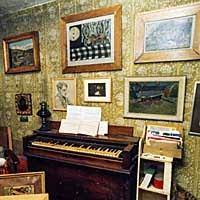
Peggy’s Harmonium
Teaching in London Peggy shared a flat in Camden with fellow RCA graduate Helen Binyon. In 1935 Helen visited Furlongs meeting Eric Ravilious. That year Helen and Ravilious became lovers meeting regularly at Furlongs, a relationship that lasted more than two years during which time Tirzah became pregnant, gave birth to John, and, also discovered the affair.
Peggy Angus: Oil painting of Eric Ravilious and Helen Binyon at Furlongs, c 1945. A posthumous portrait of Eric killed in action 1942.
So that Peggy could afford to travel from London to Furlongs at weekends she got a Saturday morning teaching job at a boys’ preparatory school in nearby Seaford.
In the summer of 1934 an RCA friend Betty Rea introduced Peggy to an Anglo-Irish architect and write Jim Richards. Richards had a family connection to Tirzah as his aunt had been engaged to Tirzah’s uncle and, on his death in WW1 the aunt had been adopted by the Garwoods as a sort of surrogate aunt.
Peggy invited him to visit Furlongs, an arrangement also encouraged by Tirzah. When he eventually turned up Peggy and Eric were away painting so he was taken care of by Sheila, Ishbel MacDonald’s sister. Further visits took place and on the 31st July 1936 Peggy and Jim married. Richards became editor of the Architectural Review and introduced her to many modernist architects. Artist friend John Piper gave the couple a wedding present of a rug made to his own abstract design. Peggy painted a portrait of Piper in 1937 reclining in a chair in front of his painting ‘Forms on Dark Blue’.
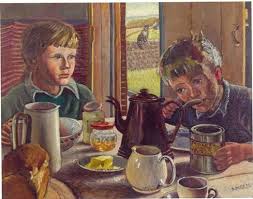
Peggy Angus: Portrait of John Piper (in front of his painting Forms on Dark Blue), pencil, crayon and wash, 1937. The Three Bears, watercolour 1945. Angus and Victoria at Breakfast in Furlongs, 1945.
Peggy, still teaching in London had to battle for her position as back in those days it was expected that women give up teaching when they married. Peggy resisted and the school accepted this, but a further battle ensued when Peggy became pregnant. London County Council had recently ruled that a woman was entitled to one term’s maternity leave and Peggy fought the school for her rights to this entitlement. However, the battle caused so much ill feeling at the school following the birth of daughter Victoria that Peggy resigned.
Shortly afterwards in 1939 Peggy was pregnant again, Eric was there to help while Tirzah was in Eastbourne herself pregnant with James. In the dead of a summer’s night Peggy felt the baby coming and dispatched Eric to bring Mrs Spikes, a mother of five camping in the nearby field. Eric then had to go to the phone box in Glynde to call the local doctor who knowing the cottage well refused to come. The doctor advised Eric to take Peggy to a nursing home in Lewes but Eric couldn’t drive and there was no car. Eric aroused Mr Lusted of the Trevor Arms, Glynde, and he agreed under protest to transport them both to the hospital in Eastbourne where Angus was born.
With Britain at war Peggy was appointed art teacher at Streatham School for Girls and was allowed to structure her teaching time around Angus’ feeds. The school was soon evacuated to Chichester and Peggy and the children went there too. Jim was working in Adelaide Road, London where he set up the office of The Architectural Review.
For the first wo years of the War Furlongs was out of bounds as part of a militarized coastal zone. Peggy was able to return for a brief visit in 1941 and in 1942 invited Eric to come and stay at Furlongs, a visit that never took place as Eric was lost in a plane over Iceland in September 1942. The loss of such a good, close friend sent Peggy into a depression that lasted on and off for several years.
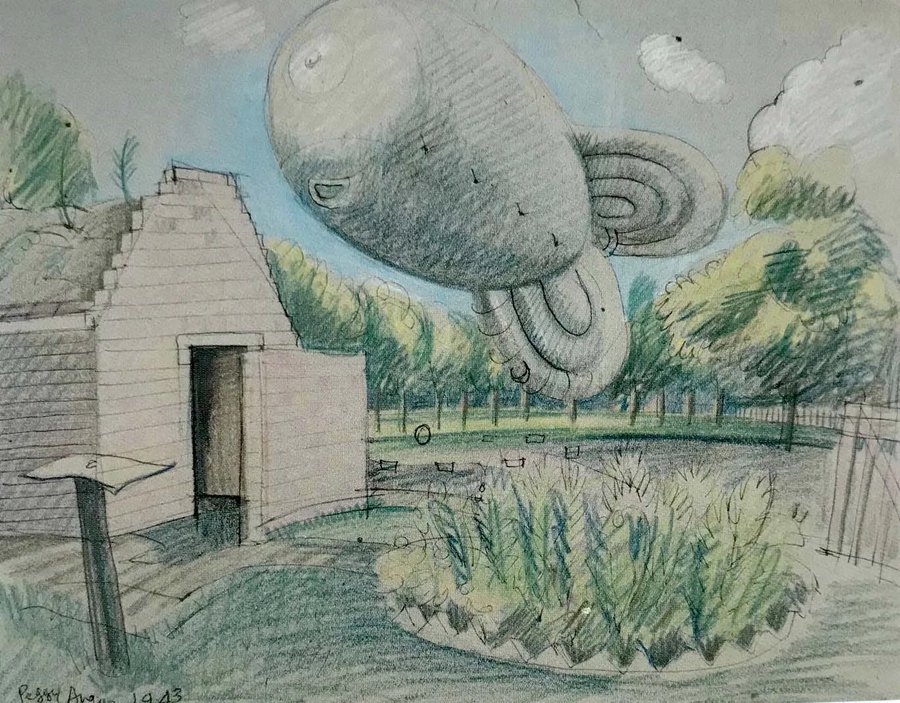
Peggy Angus: Barrage Balloon, crayon and pencil, early 1943.
Tirzah struggled on at Ironbridge until March 1944, when she and the children moved to Boydells Farm, Wetherfield. The rented house was less primitive than Ironbridge having gas lighting, but water still had to be boiled in a copper. At Boydells encouraged by Peggy, Tirzah entered a competition to illustrate a book for young children. Her works were not amongst the winning entries but triggered illustrations for a counting book, ‘One, Two, Three’.
Peggy Angus: Portrait of Jim Richards, oil, 1947.
Unfortunately, with infrequent meetings at weekends less and less Peggy’s marriage was in trouble and Jim asked Peggy for a divorce, concluded in 1948. In 1954, he married Kit Lewis, also an artist; the couple had one son. Jim became Sir James Maude Richards, a leading spokesman and theorist of the Modern Movement in architecture in Britain, he died in 1992.
Part three will take us on to Adelaide Road, London.
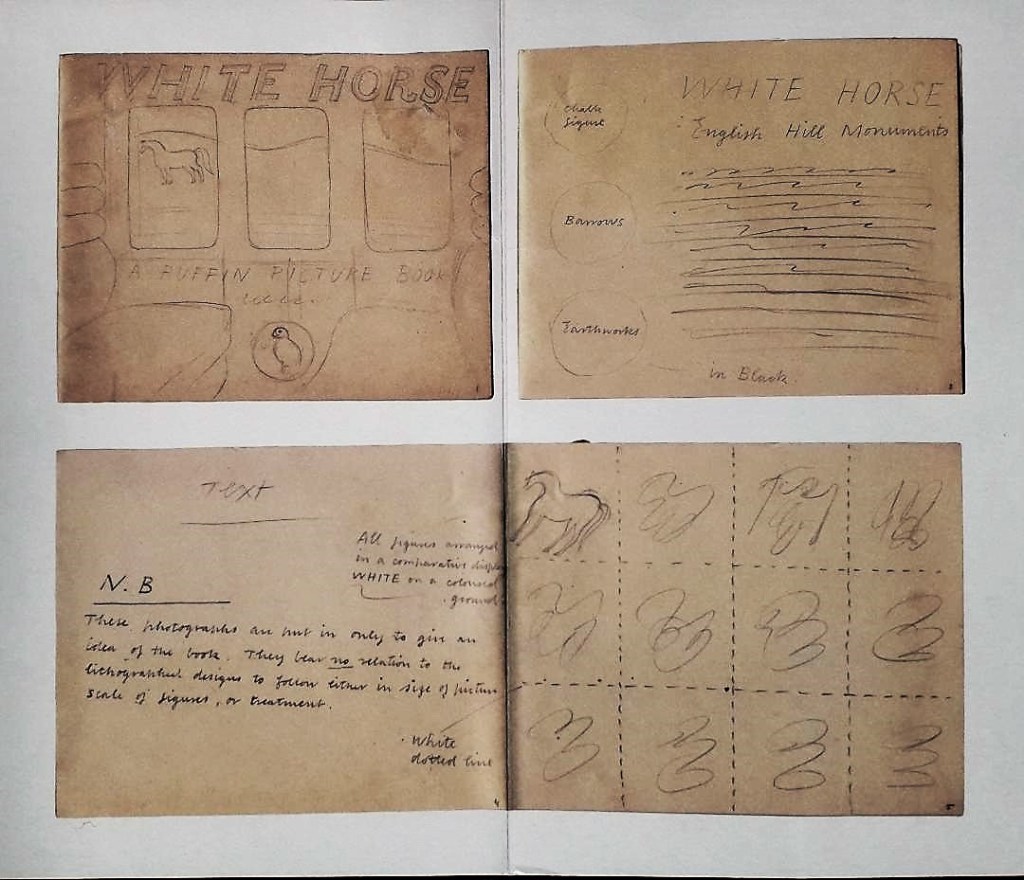
In the Autumn of 1939 Eric Ravilious was working on a ‘lost’ Puffin Picture Book which reached dummy stages but was ultimately abandoned.
Ravilious undertook a whirlwind tour of the chalk figures of the Downs and subsequently painted the watercolours that were intended for a title in the Puffin Picture Book series. Unfortunately, Ravilious’ work as a war artist together with Tirzah giving birth to Anne delayed progress on the book which was postponed, tragically never to be finished when the plane he had taken a ride in vanished over Iceland in 1942.
In December 1939 Ravilious wrote to Diana Tuely (nee Low): ‘I have just returned from Dorset, having been promised a job drawing chalk figures- horses and giants- for a book. So, I managed to hand my shifts….and with a burst of work drew four. The Weymouth George III, The Cerne giant. The horse at Westbury and the other white horse at Uffington. Some time I hope to do the others and start work on the book, but it is a complicated life and so many interruptions.’
Left: The Vale of the White Horse, Uffington. 1939. Right. The Wilmington Giant. 1939.
Left: The Osmington White Horse, Weymouth 1939. Right: The Westbury White Horse 1939.
The dummy was sent to publisher Noel Carrington but when the work was postponed Carrington stated that he would return the dummy. The dummy disappeared, believed lost until 2010 when Roland Collins, who had illustrated Carrington’s 1954 book ‘Colour and Patterns in the Home’, confessed to a friend that he himself might have the dummy. It transpired that Carrington had given the dummy to Collins in the 1950’s when clearing out his office. The dummy was tucked away by Collins and completely forgotten. So rediscovered we now have the scribbled layouts!
The rediscovered dummy pages for the book.
ER’s original watercolours of the chalk figures on the Downs are now considered amongst his finest work.
The Cerne Abbas Giant 1939
One dusky Autumn day in the late 1980’s enjoying a family break at Cerne Abbas I went on a run. I returned to the village over the hill summit and with nobody else around ran straight down the middle of the Giant.
The dummy book has been re-vamped and is available from Design for Today ISBN 978191 206661 2
Margaret MacGregor Angus was born in Chile on the 9th November 1904, in a railway station, the eleventh of thirteen children of a Scottish railway engineer. She spent her first five years in Chile.
The children’s upbringing was entrusted to nanny Nurse Graham who taught them to read and write. Peggy’s parents were, however, involved in the bringing up of the children and most nights would be spent singing to mum Mary’s accompaniment on the piano. Father David taught the children songs by Robert Burns, cementing an extensive musical repertoire and a fierce pride in Peggy’s ancestry.
Peggy’s father resigned his civil engineering post following a dispute with head office and the family returned to Britain taking up residence in Muswell Hill, London.
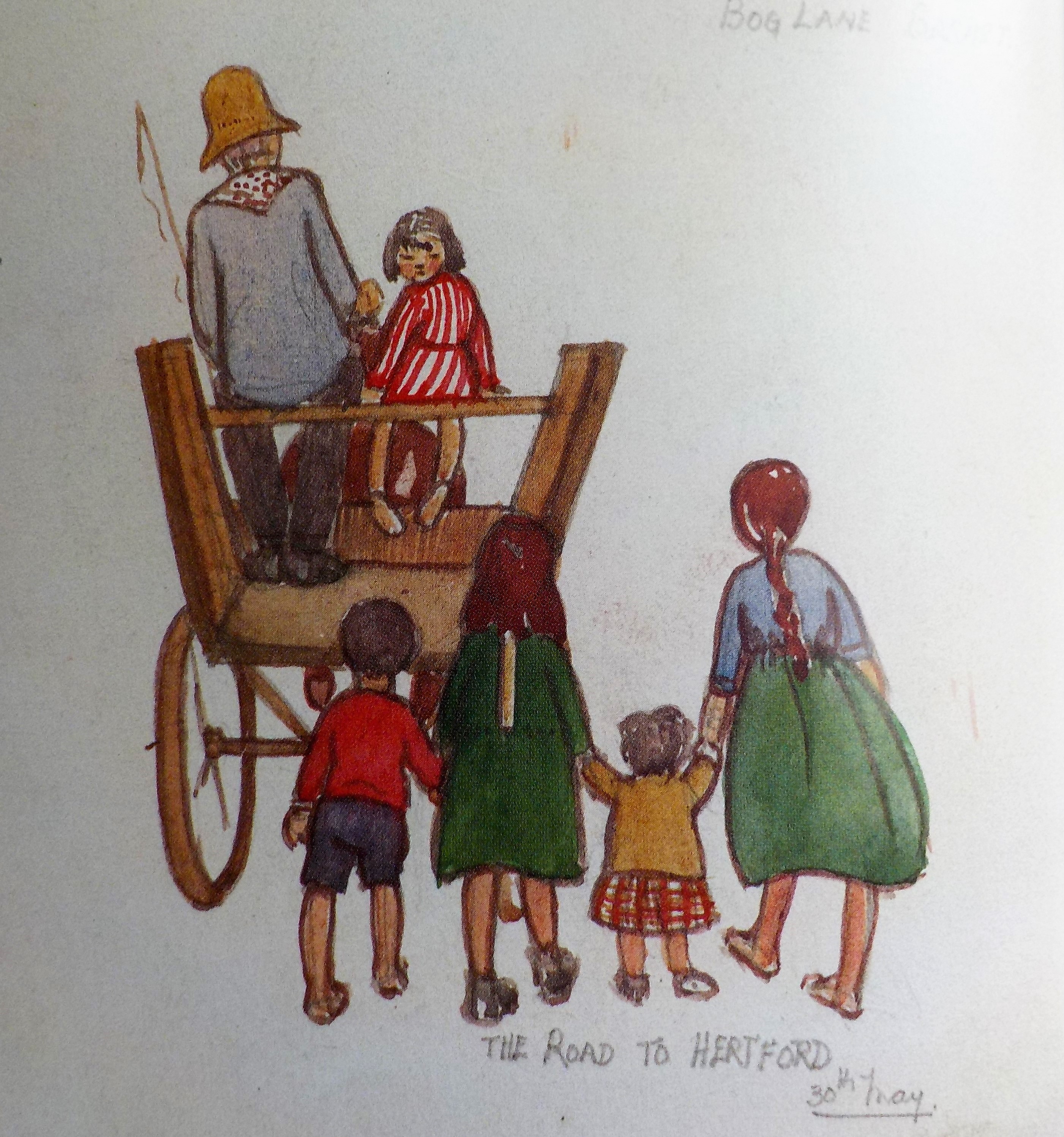
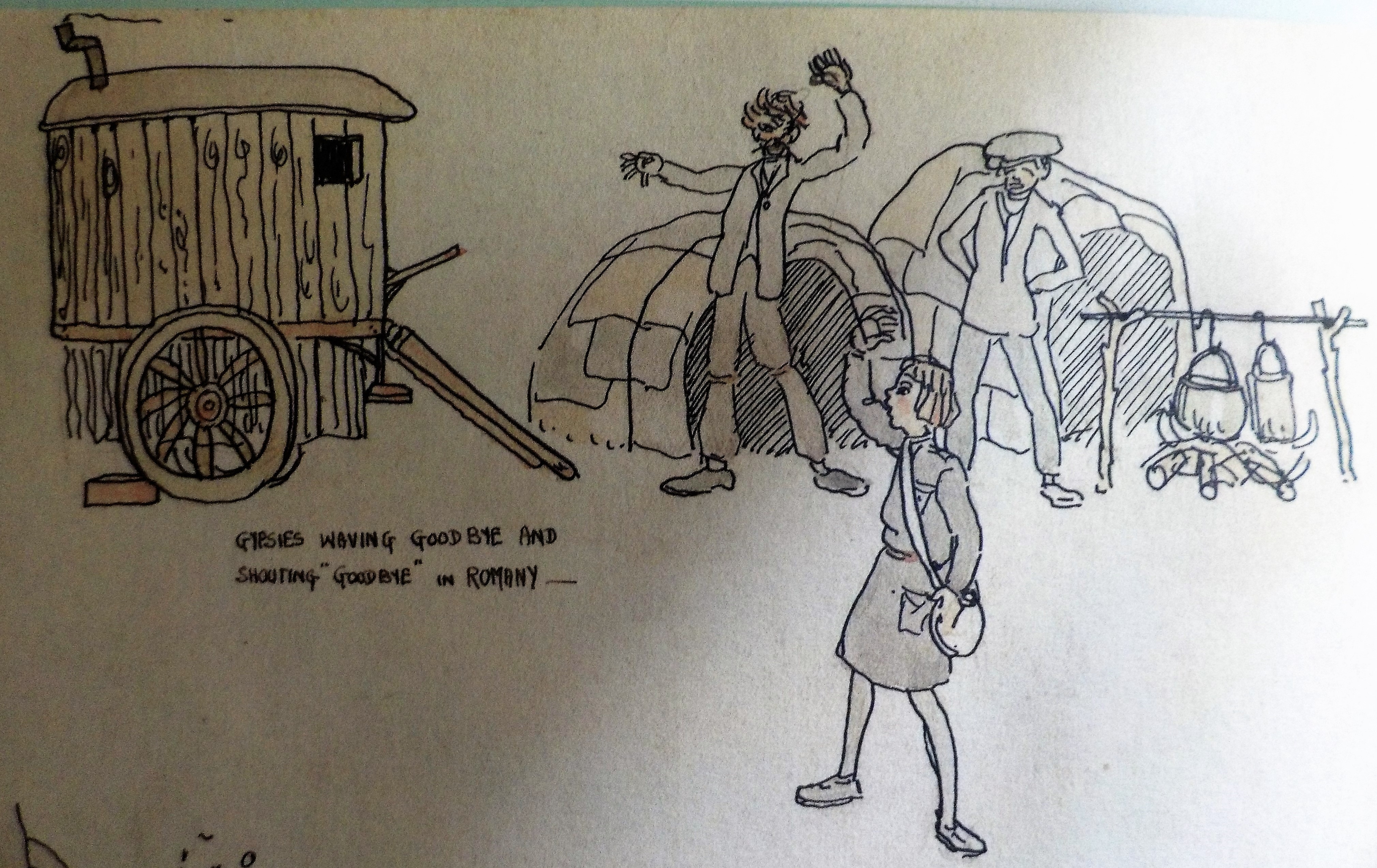
Aged fifteen Peggy visited the ancient Barnet Horse Fair and befriended a family of Romany travellers. Peggy invited the Romany family home with Nurse Graham crying: “Lor keep us ! Here’s old Peggy’s gypsies again !“
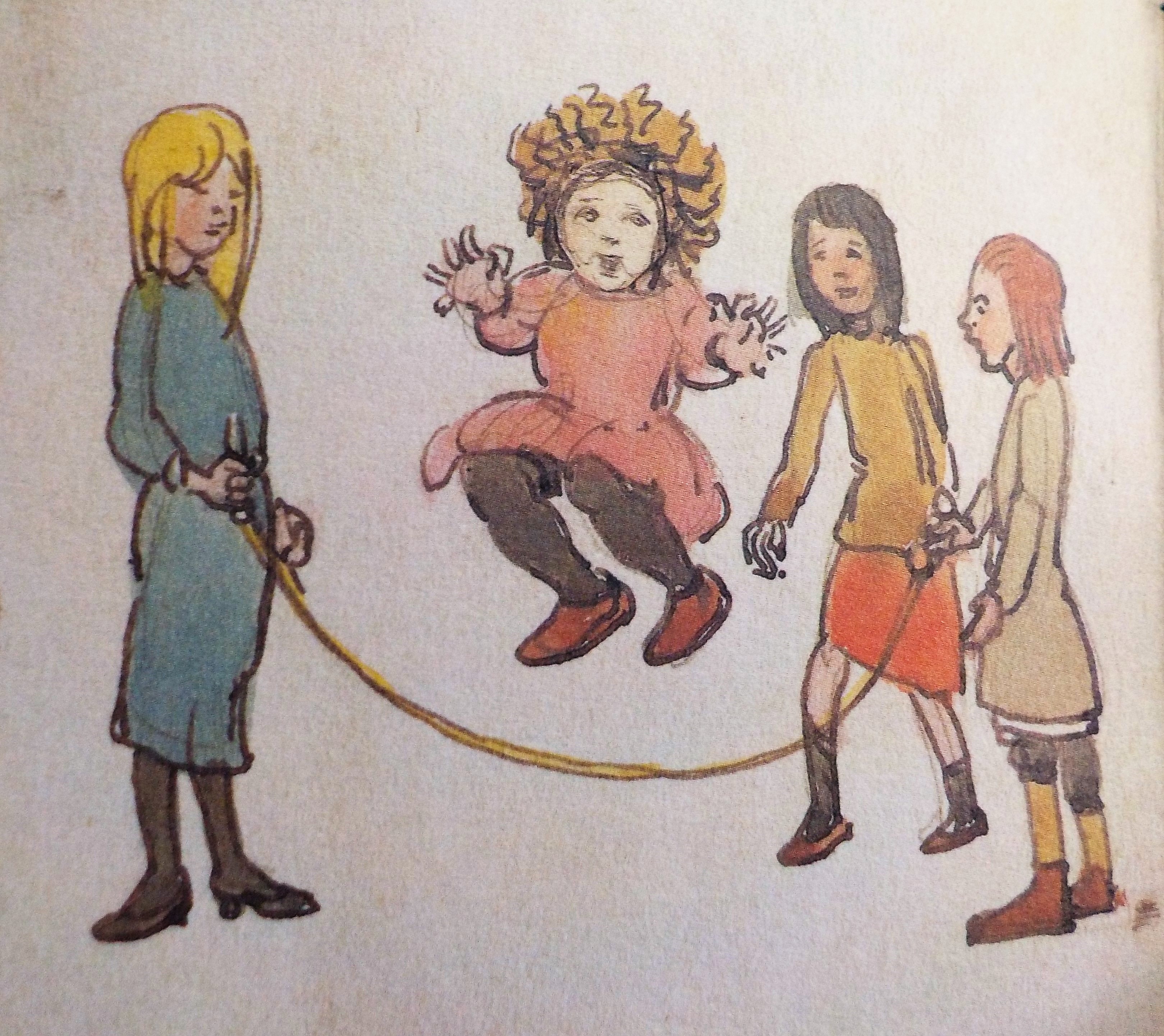
At the Royal College of Art Peggy kept ‘Memory Books’ packed with sketches. Here the Romany families of Barnet. A Portrait of the Brinkley Family in Bog lane, Barnet.
The Romany lifestyle had a great influence on Peggy, a keen Girl Guide, who had developed a love of camping, travelling and the simple outdoor life. The Great War brought family tragedy as Peggy’s brother Archie died in battle followed by elder brother Stewart.
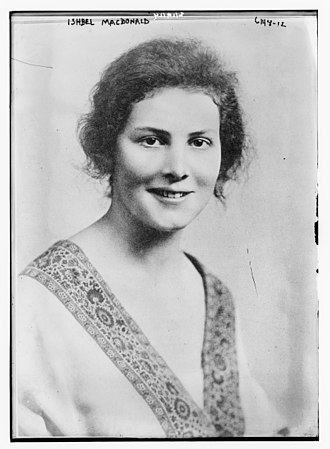
Post war, elder daughter Nancy worked for the American Graves Registration Department and with Peggy’s parents in reduced financial circumstances it was Nancy who paid for Peggy to attend North London Collegiate School in Camden Town (founded 1850). The school took pride in its organ that required to be pumped by hand in order to work. Peggy being musical was one of the blowers with her assistant Ishbel Macdonald, daughter of Ramsey Macdonald, the first Labour Prime Minister. Peggy was also a talented pupil of the school sketch club.
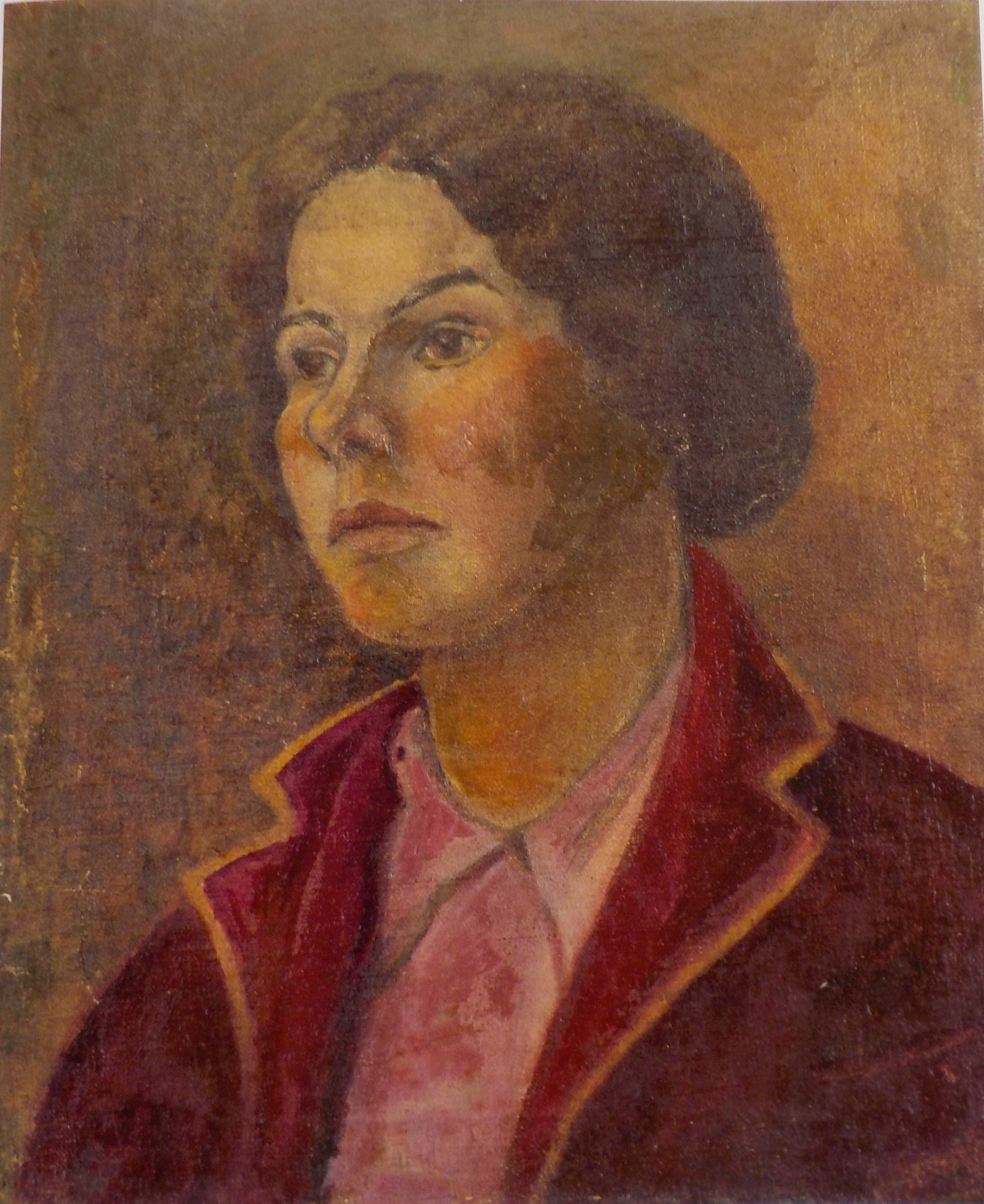
Ishbel MacDonald. Portrait of Ishbel MacDonald by Peggy Angus 1924.
At 17 she entered the Royal College of Art, subsequently winning a painting and teaching scholarship to Paris. At the RCA, her contemporaries included sculptors Henry Moore and Barbara Hepworth, painters Eric Ravilious, Edward Bawden, Percy Horton, Douglas Percy-Bliss and illustrators Barnett Freedman and Enid Marx – a group described by tutor Paul Nash as ‘an outbreak of talent’.
Peggy was one of the youngest of those 1922 Painting School entrants and having lost two brothers she would have been eligible for a charity scholarship if admitted. Principal Rothenstein was not averse to entry straight from school; he had come to see the previous year’s intake, with its high proportion of older students from provincial art colleges, as resistant to the working methods and naturalism he favoured. Nevertheless, feeling Angus was just too young, he upset her by suggesting that she would benefit from a year elsewhere before reapplying; but on learning of her straitened family circumstances and fear of losing the scholarship, he relented. Peggy had to rush home to fill her quota of work on the family knitting machine in the evenings instead of enjoying the camaraderie of the Student Common Room.
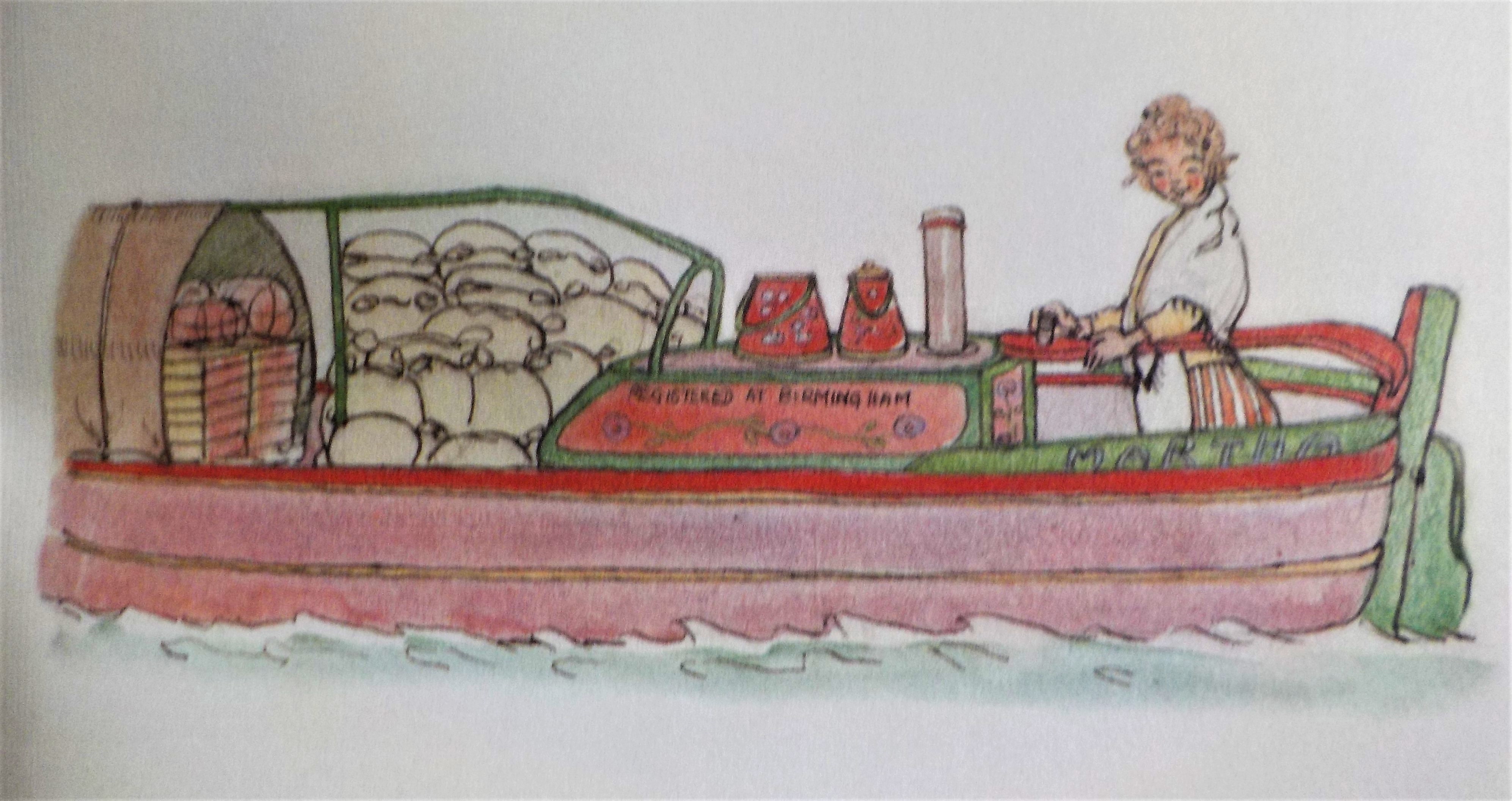
Peggy’s 1923 Memory Book recorded scenes of London Life.
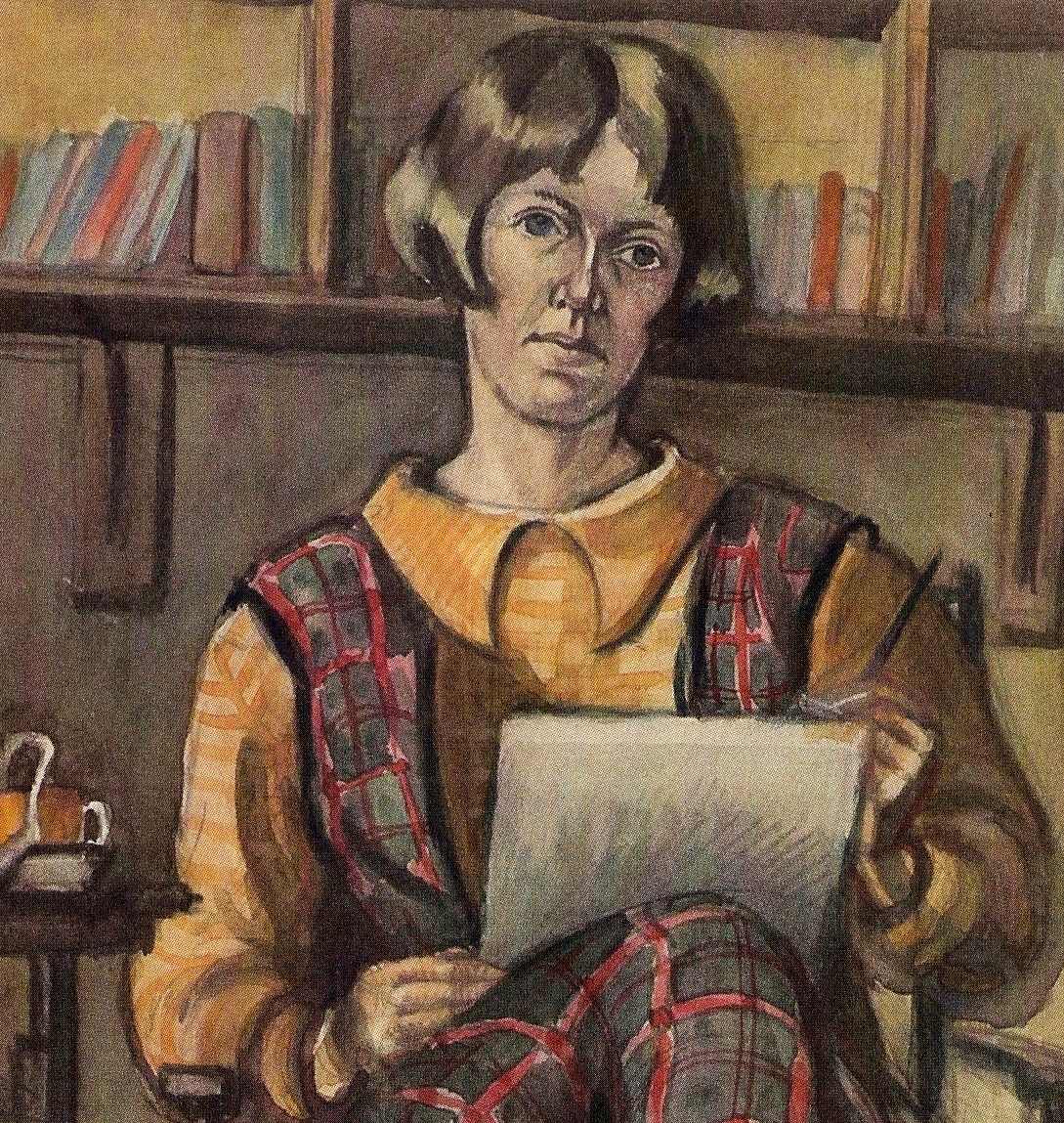
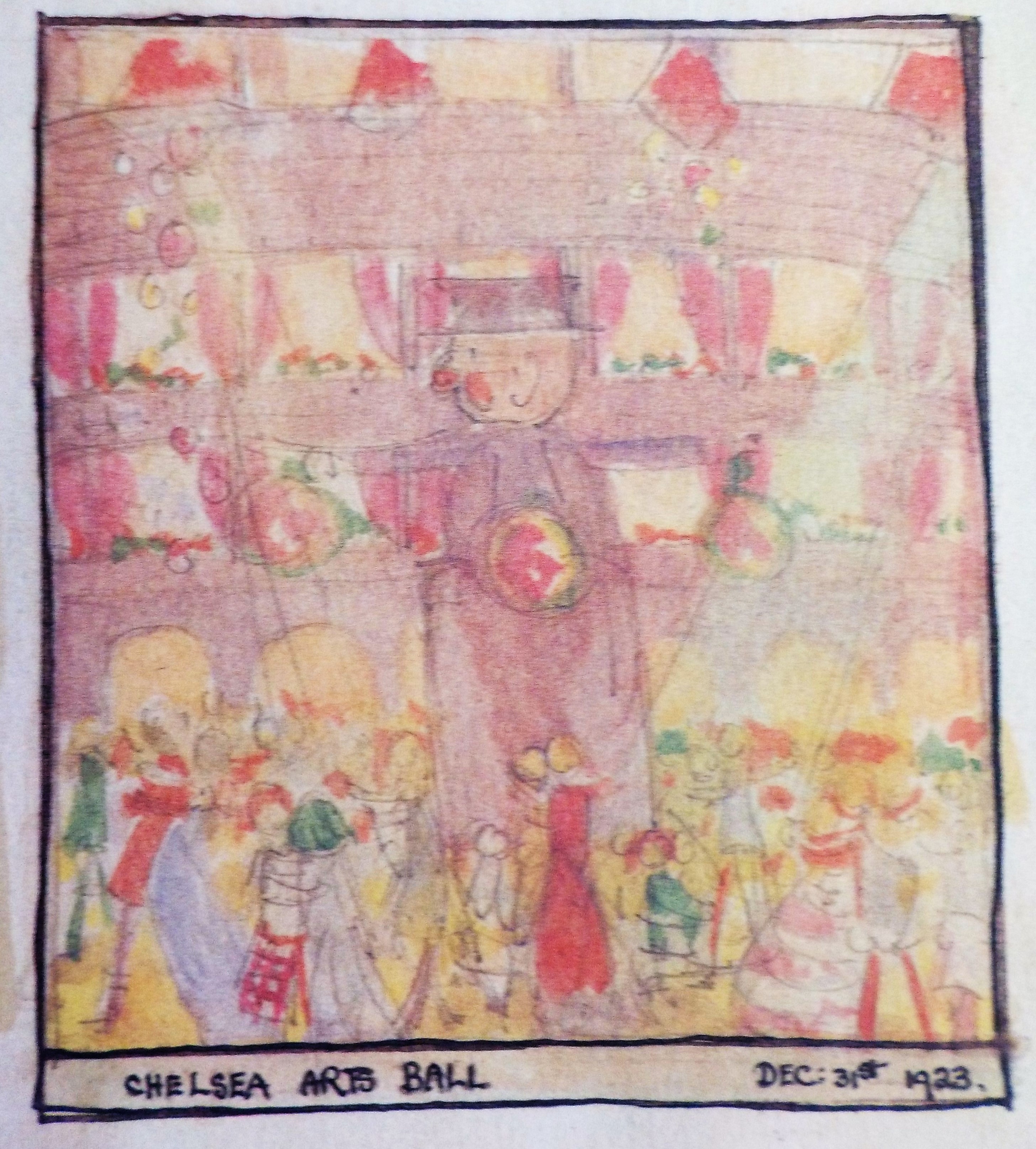
Self Portrait Peggy Angus, late 1920’s. Chelsea Arts Ball 1923.
Peggy struggled in the Painting School, where men outnumbered women by three to one, and in the third term, attracted by the possibilities of illustration, she transferred to the Design School; seen by some as a step down, it was in fact a fortunate move to classes where women predominated and where she would gain the enduring friendship of another young student, Helen Binyon, who had also arrived straight from private school.
In 1925 Peggy submitted illustrations for Treasure Island to publishers Bodley Head but sadly, these were rejected.
Eric Ravilious helped Peggy with block printing, and she eventually excelled at printed pattern design, particularly of tiles and wallpapers.
A trip to Northern France in 1925.
Peggy finished her time at the RCA in 1926, completing a teaching course, this as a matter of duty. Peggy’s father’s death obliged her to seek paid work straight away. On passing with distinction she wept, fearing that teaching would frustrate her development as an artist. She started her first teaching post that year as Head of Art at a school in Nuneaton. Peggy described it as ‘being marooned in the Midlands’, far away from the London art scene.
Later she taught art in Eastbourne but eventually came back to London to teach in Hampstead in the early 1930s.
The MacDonald Family by Peggy Angus 1929/30.
Peggy’s painting of the Ramsay MacDonald family hangs in the National Portrait Gallery in London. Ishbel MacDonald became a lifelong friend; they attended political meetings together and trips abroad. Following MacDonald’s second term as Prime Minister in 1929 Peggy was a frequent guest at Downing Street where she could enjoy having a bath! Peggy occasionally stayed at Chequers and enjoyed the subversiveness of drawing cartoons for the Daily Worker while she was there.
Percy Frederick Horton; Self-portrait; The Ashmolean Museum of Art and Archaeology;
Peggy maintained her contact with fellow student Percy Horton whose socialist ideals she shared. Horton had been a conscientious objector during WW1 and was imprisoned. Peggy had a disastrous romance with Horton’s brother Ronald but that failed to dent what was to become a lifelong friendship with Percy.
Part 2 will move on to Eastbourne.Many thanks to Nick Gray for proof reading and making welcome adjustments.
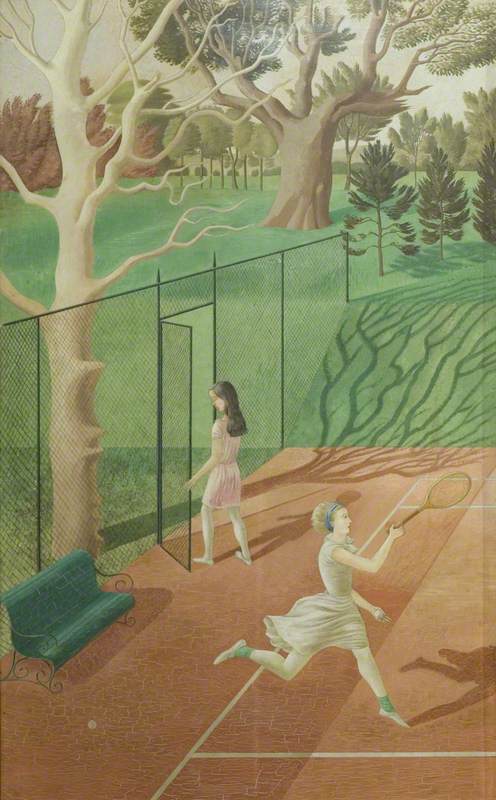
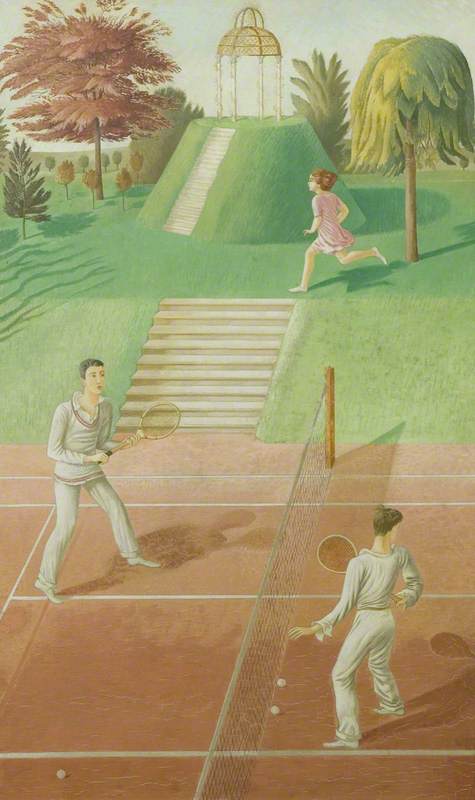
The panels of this triptych decorated the door of Sir Geoffrey Fry’s Music Room in Portman Square, London. Fry served as private secretary to Prime Minister Stanley Baldwin from 1923 until 1939. The commission followed on from the successful completion of the Morley College murals by Ravilious, Edward Baldwin and Charles Mahoney in 1928 – unveiled by Baldwin in February 1930.
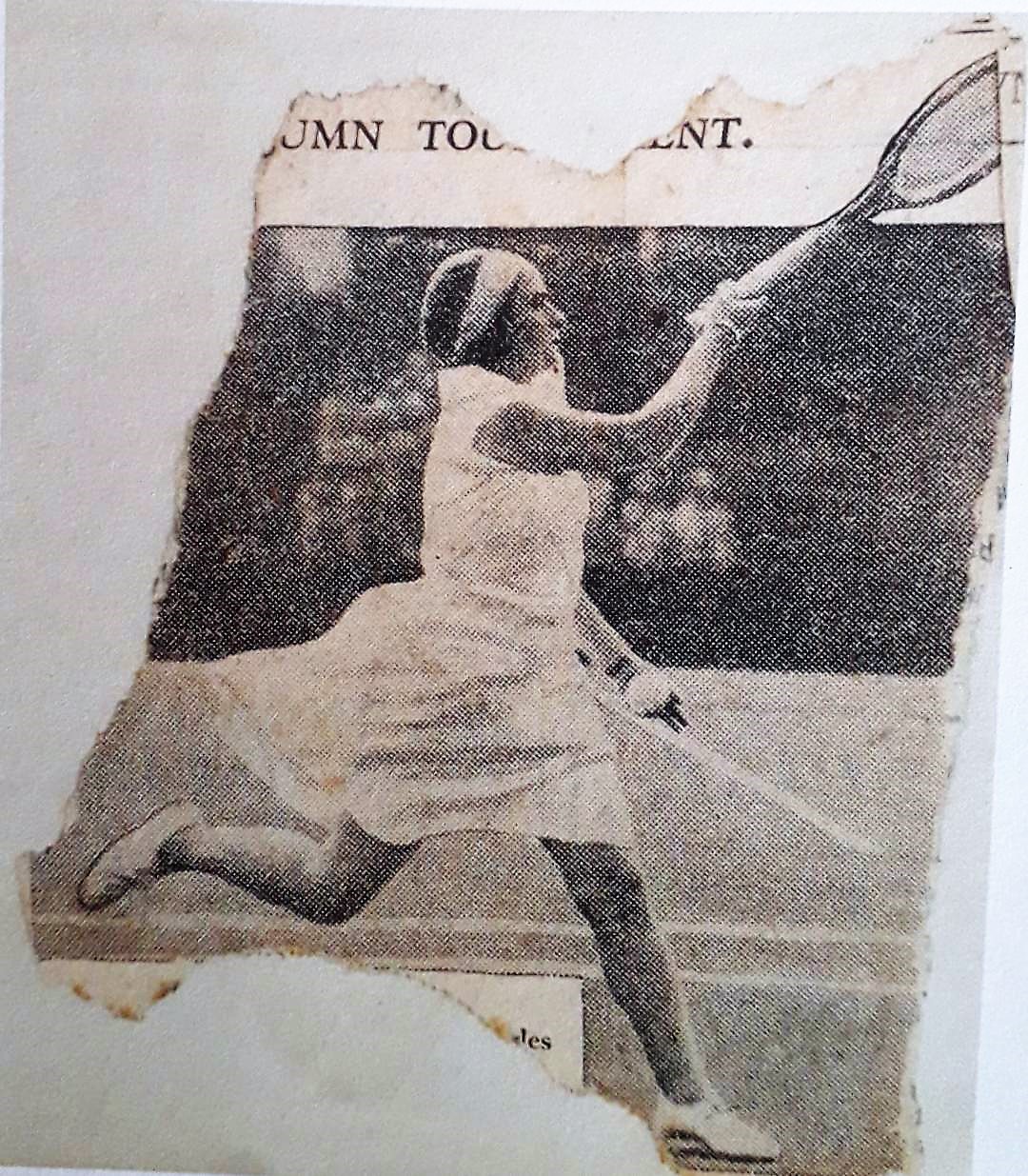
Ravilious based the tennis court on the Manor Gardens at Eastbourne and treated the panels as a continuous composition, with the game’s progress and the players’ gestures linking the three parts. Newspaper photographs of tennis players helped to create the mural figures. A Tirzah-like figure exits the left-hand panel.
Tennis player torn from a newspaper Sir Geoffrey Fry’s Music Room
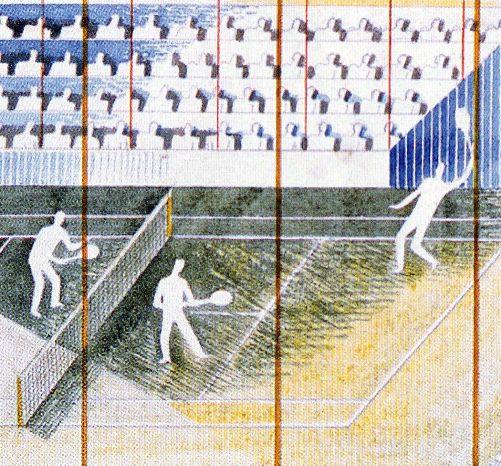
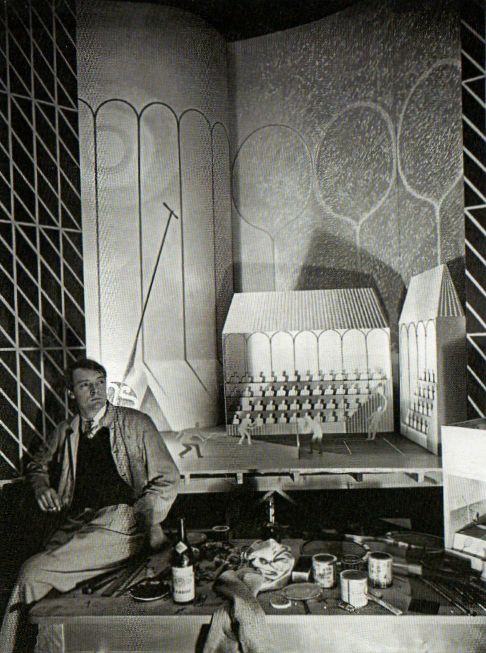
Another ‘tennis commission’ came as ER was chosen to create a mural for the Sports Section of the British Pavilion at the International Exhibition of Arts and Crafts in Modern Life, Paris 1937. Painted on large panels at Bank House, Castle Hedingham, where Tirzah and ER moved in 1934, a young RCA student John O’Connor (see below) helped to paint the panels in watercolour, the medium for the display.
Sketches for the Paris mural. A photograph by Norman Parkinson – “Eric Ravilious Preparing his Tennis Model.”
Poster for the 1937 Fair Night view of the Palais de l’air An overview of the Pavilion with the Sports section on the left of the picture
Fred Mizen was born in Great Samford, Essex in 1893.
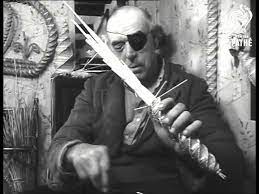
It is known that he served his country in World War One where he lost his left eye and a finger from his left hand. On his return he went gardening for people in the village and surrounding area, no doubt unable to continue with the rigours of farm labouring.
Little is known of his early life but it is known that he worked the various farms around the area of Great Bardfield, where he had moved to and lived out his days. It is said that he had been making corn dollies and other straw works since his childhood, where he had seen them made in the fields by other farm workers.
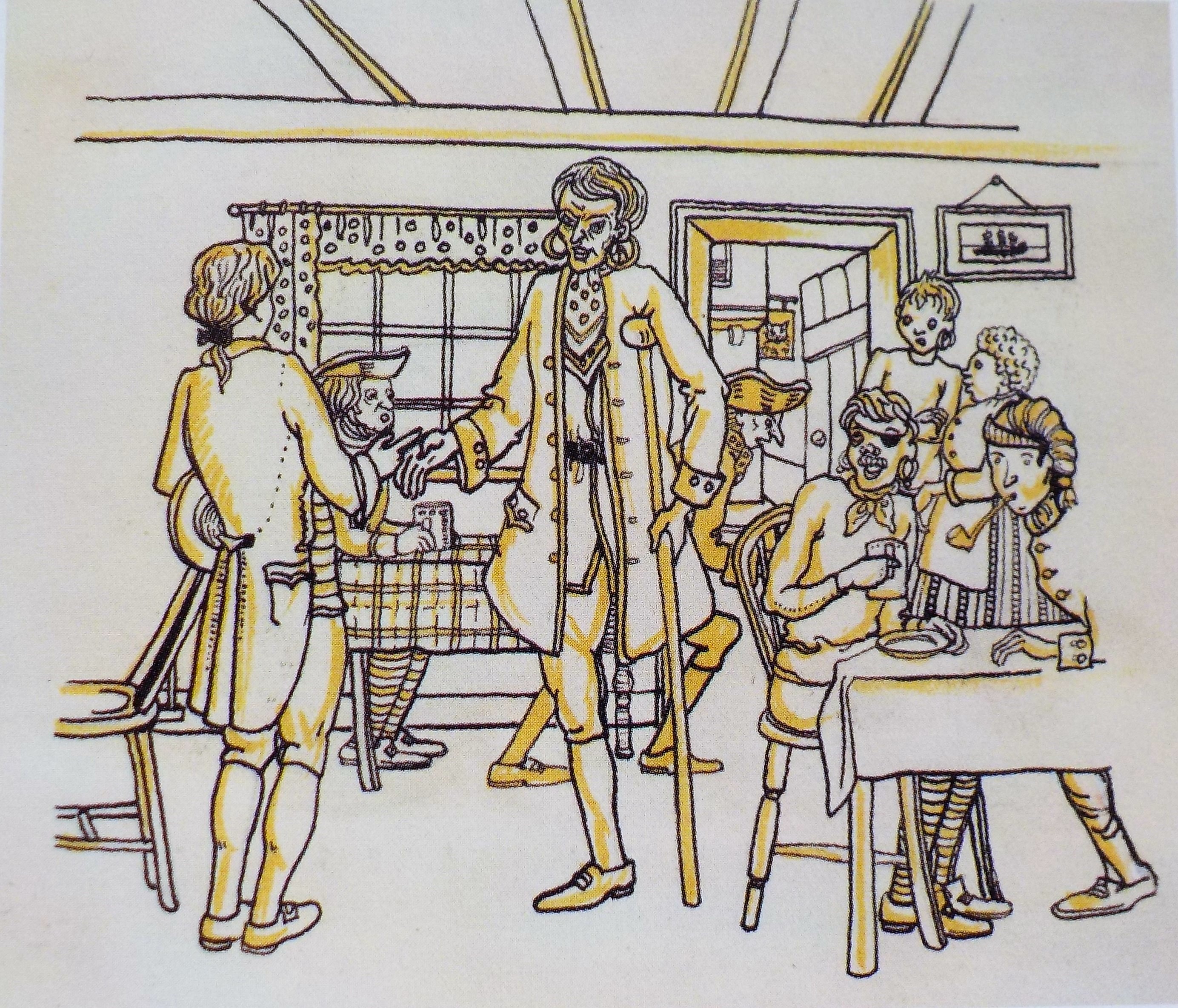
Edward Bawden. Litho for Life in an English Village, 1949. John Aldridge is on the left with Sergeant Baker, the Landlord Mr Jarrold and Fred Mizen. Fred was gardener for John Aldridge and Edward Bawden. One of Fred’s bell corn dollies hangs over the bar.
A discussion between Muriel Rose and Alex Coker (see footnote) provides valuable information:-
Muriel: My first sight of a corn dolly was when Tom Hennell cycled into Great Bardfield with a corn dolly strapped to the handlebars of his bike. Working for an exhibition after the war and wanting some corn dollies I learned that there was a sheaf of corn lying in the garden of John Aldridge’s Place House. I mentioned to the gardener Fred that I would take the corn over to a dolly maker in Debden.
Fred replied, “What do you want to go all that way for, I used to make them in the form of bicycles”.
That night I was upstairs when Lucie Aldridge called to me, you must come downstairs at once. There was Fred standing in the hall with his black patch over one eye and his injured left, hand, bent injured hand plaiting up, as neat as possible, a beautiful corn dolly plait and we were all very thrilled. He then showed us exactly how it was done by crisply turning one straw over another.
While Eric Ravilious and Tirzah were living first in Great Bardfield and then Castle Hedingham…Tirzah recalled: “Place House and Brick House both employed a gardener called Fred Mizen, a tall man, attractive because he looked like a pirate as he had a patch over one eye. He had won Edward Bawden’s heart by covering the garden at Brick House with paper windmills to scare away the birds and he was good at amusing Joanna when she sat up the garden in her pram.
Basil (Taylor) had first made his acquaintance in the pub as he was a hearty drinker and at Charlotte’s dance he got very drunk and stated a fierce argument with the communist Mr Thompson, a kindly but boring man with a beard, dressed like Gill in a one-piece smock tied at the waist with a rope and underneath, bare legs and sandals. Charlotte hustled them into the supper room at the side of the hall where they started fighting which she tried to stop, until John Aldridge arrived to assist her and pushed them both outside. Charlotte was feeling very tired and she went home and fainted and so missed the rest of the dance.”
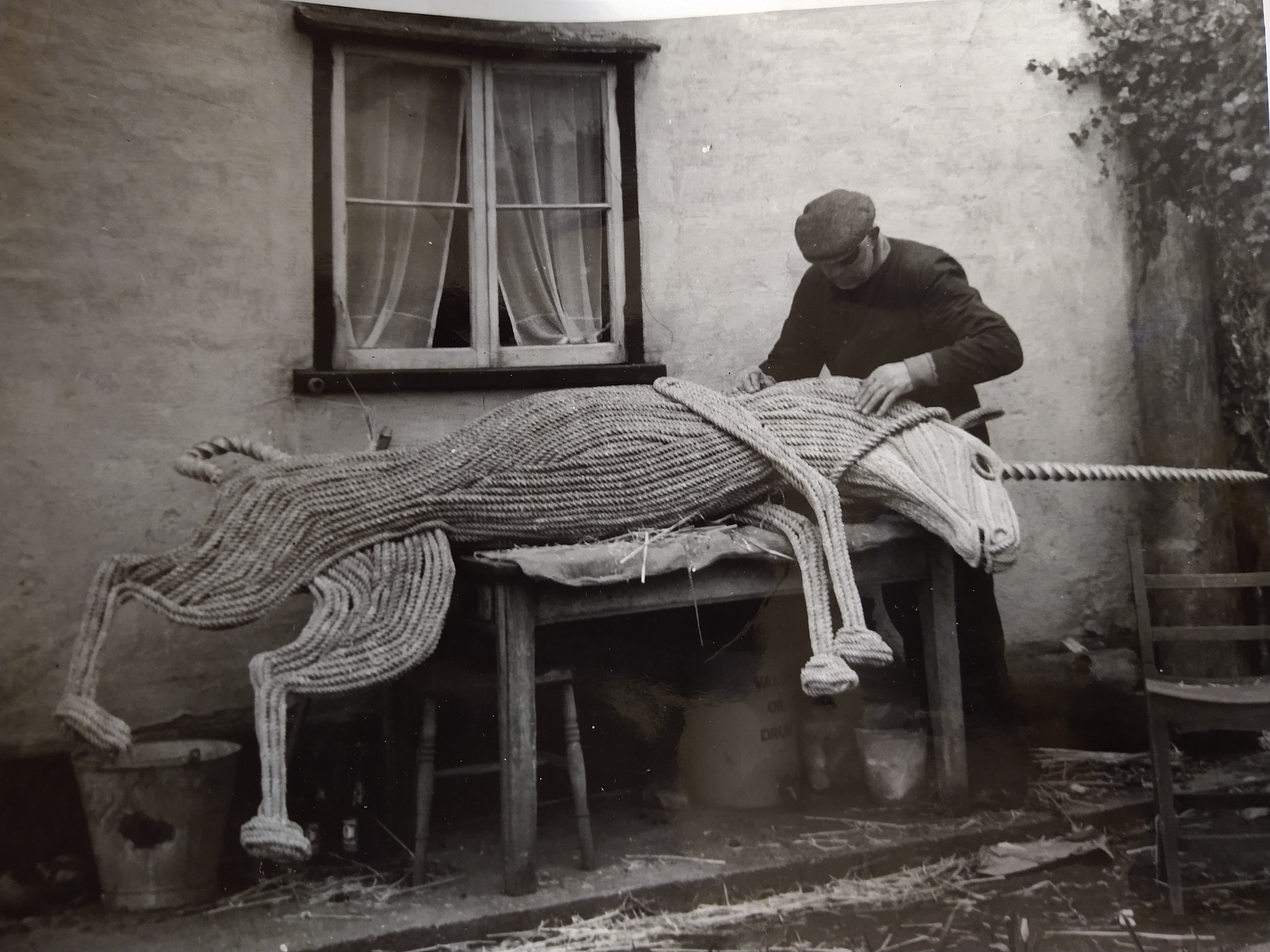
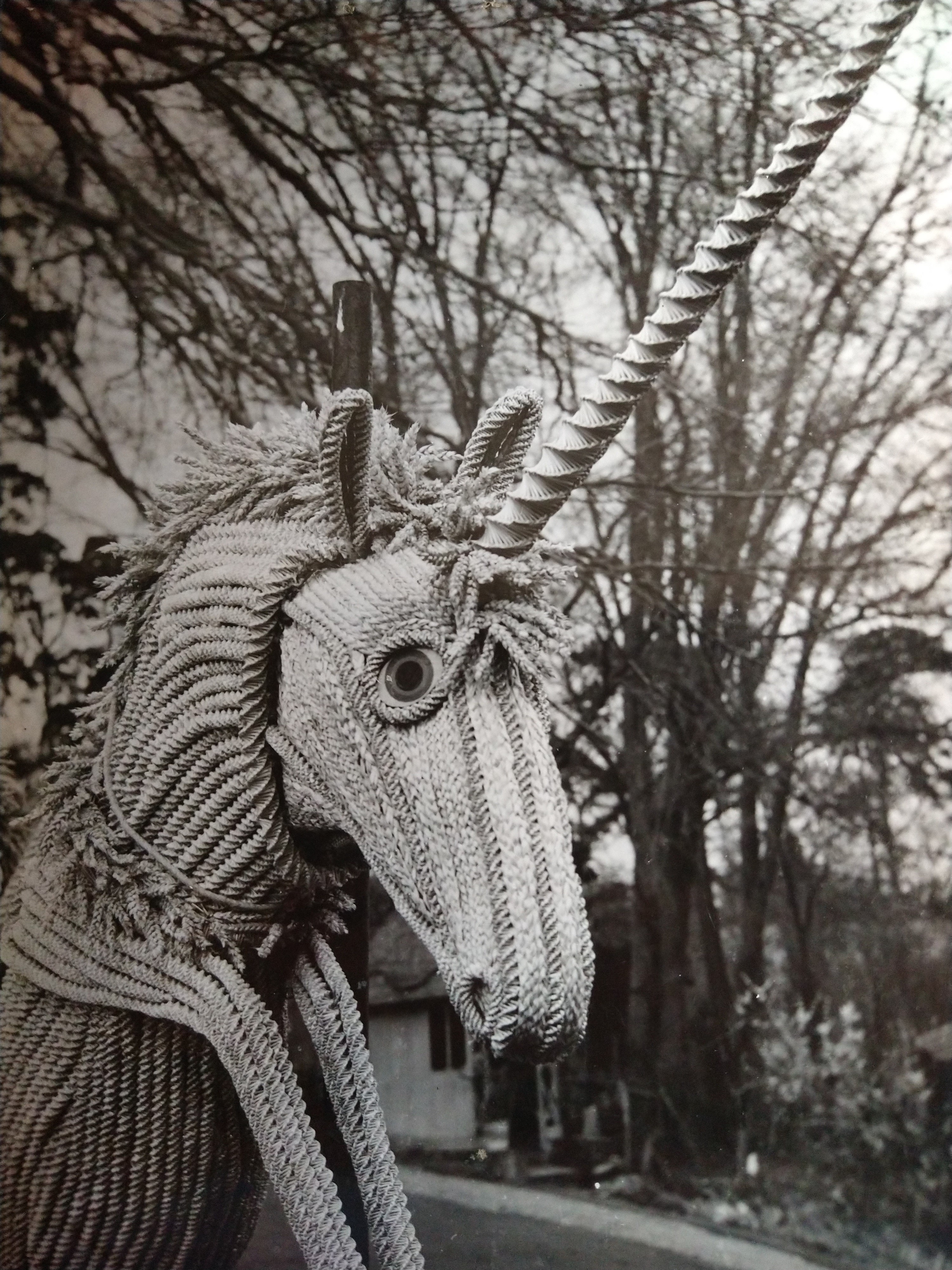
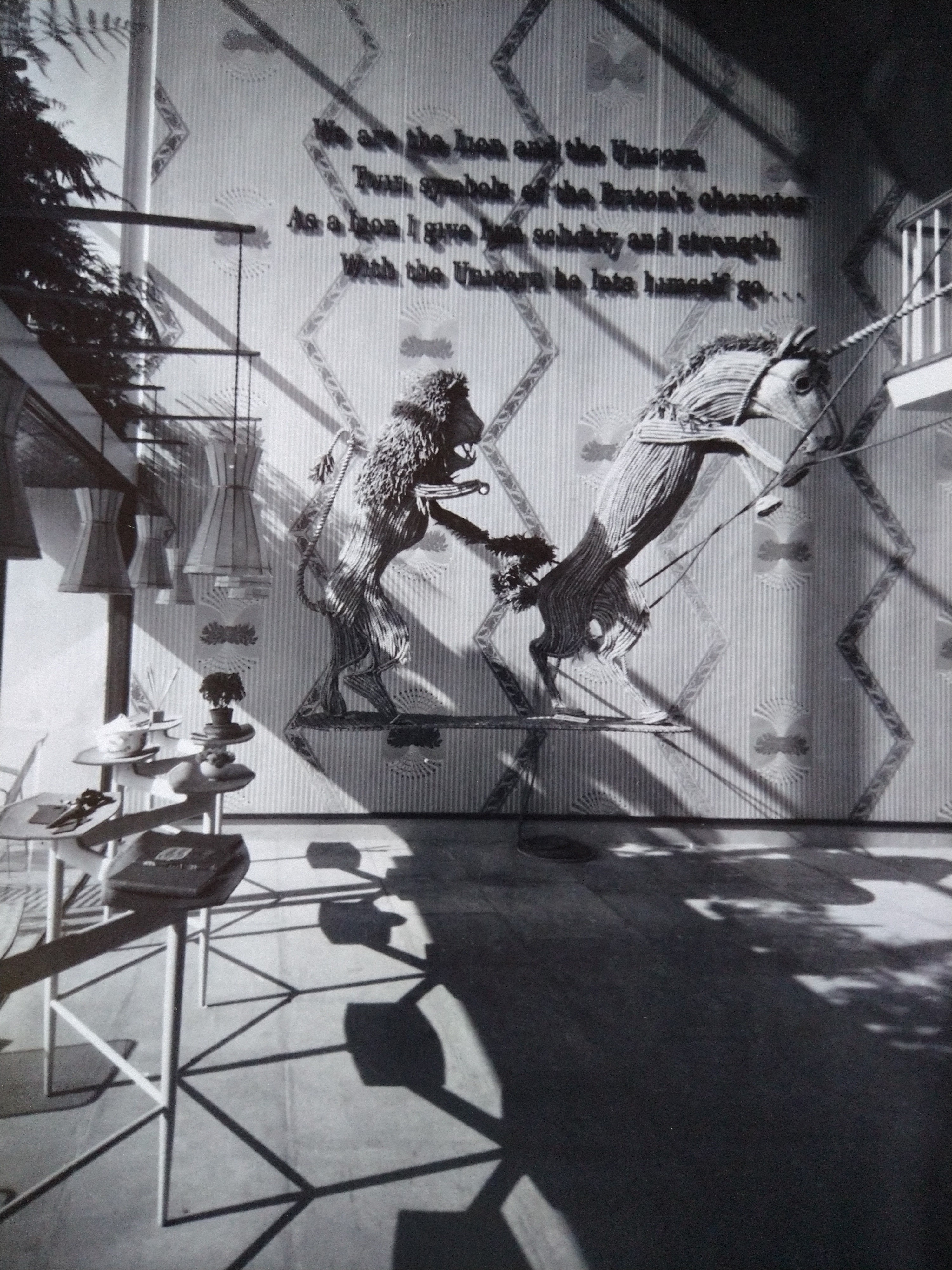
Fred was indeed an extraordinary Corn Dolly maker. He made the giant exhibits of the Lion and Unicorn for the Festival of Britain in London in 1951. They were seven feet tall and took about six months to build. These pieces really brought him to the public eye. At the time Fred was gardening for John Aldridge, who, with Dick Russell and Hugh Casson (later knighted) were to design parts of the South Bank site. How the Lion and Unicorn came about is a little unclear, maybe the name was given to Fred or he was asked to make two models of his choice for an unnamed pavilion.
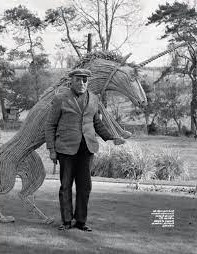
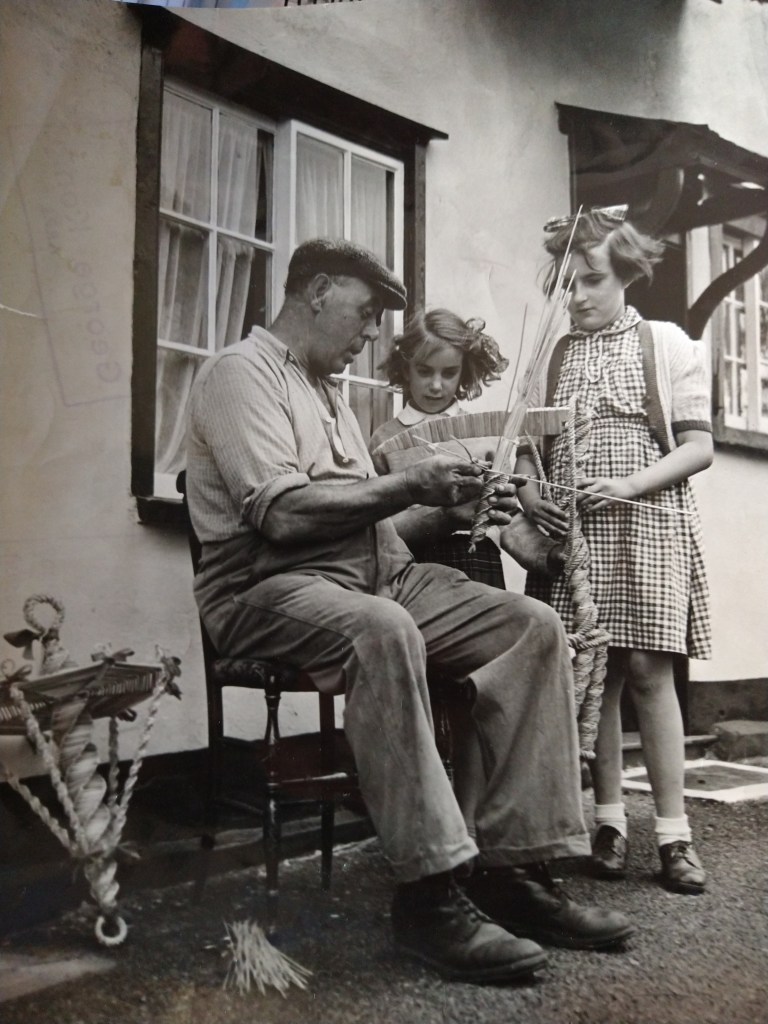
The first photo shows Fred making the Unicorn, the fourth photo is the Lion and Unicorn at the Festival of Britain 1951.
Muriel: At the time of the 1951 exhibition several well-known artists were living in Great Bardfield. Dick Russell, in charge of the Lion and Unicorn Pavilion had the brilliant idea of getting Fred to make for them a lion and unicorn of about six feet or more in height. They reached the ceiling of his cottage and for the detail he had an HP Sauce bottle and looked very carefully at the Royal Coat of Arms under a magnifying glass and got all the details he required. He was a little at a loss with the eyes and turned to John Aldridge and John helped by painting the eyes.
Alec: Was his work checked at intervals by an artist or somebody?
Muriel: Nobody, Fred would not have liked anybody else to have much say about it when he was doing it. I do remember one exciting moment when he came down to work in the garden in a great state because that night a mouse had got up in the head of one of them, and was making merry up there. They had to get the mouse out of the cottage door, which was no mean feet.
During this construction, a young Elizabeth Smith, aged 9 at the time, went with her father to deliver flowers to Mrs Mizen and saw them being built. It is said that Fred knew of a mouse building its’ nest in one of them but he didn’t have the heart to remove it. We know that a mouse’s nest did appear during the Festival of Britain. After the Festival had closed the Lion and Unicorn went to Selfridges in Oxford Street where the mice in the basement finally destroyed them.
Fred with girls.
The publicity that resulted from the Festival led to something of a revival in interest in Straw plaiting, all from Fred’s work. As a result of this publicity, Fenwicks in Bond Street asked Fred to make some corn dollies for their Christmas stock. He worked hard and delivered his stock by hand. On being told that a cheque would be sent in due course, he took up the dollies and went into the street, selling them all to shoppers going about their Christmas shopping within half an hour.
Muriel: One of the friends who used to stay often at the Place was writer and poet Robert Graves and Fred and Robert became great friends when Graves visited.
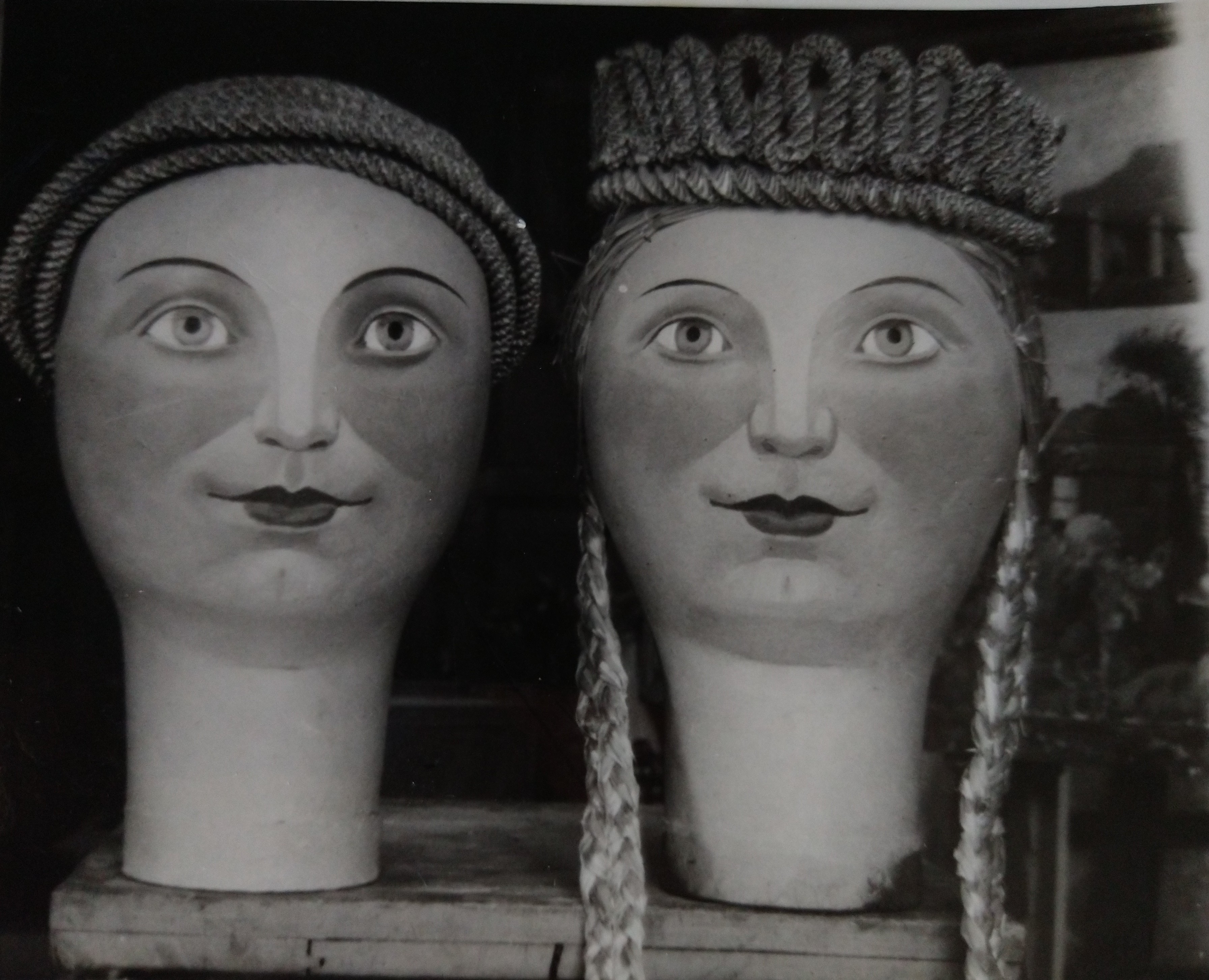
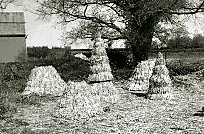
The Malting Maid and Barley Queen heads. The giant straw figures with John Aldridge and Fred Mizen.
Fred’s grandson Philip Mizen has been an invaluable help in this blog and commented: It is my understanding that John Aldridge was responsible for painting the heads of The Malting Maid & The Barley Queen, this would tie in the whole Great Bardfield artists collaborative element.
The ‘collaborative element’ mentioned by Philip concerns the Great Bardfield Summer exhibitions, where art works in the artists own homes led to thousands visiting the remote village during the summer exhibitions of 1954, 1955 and 1958.
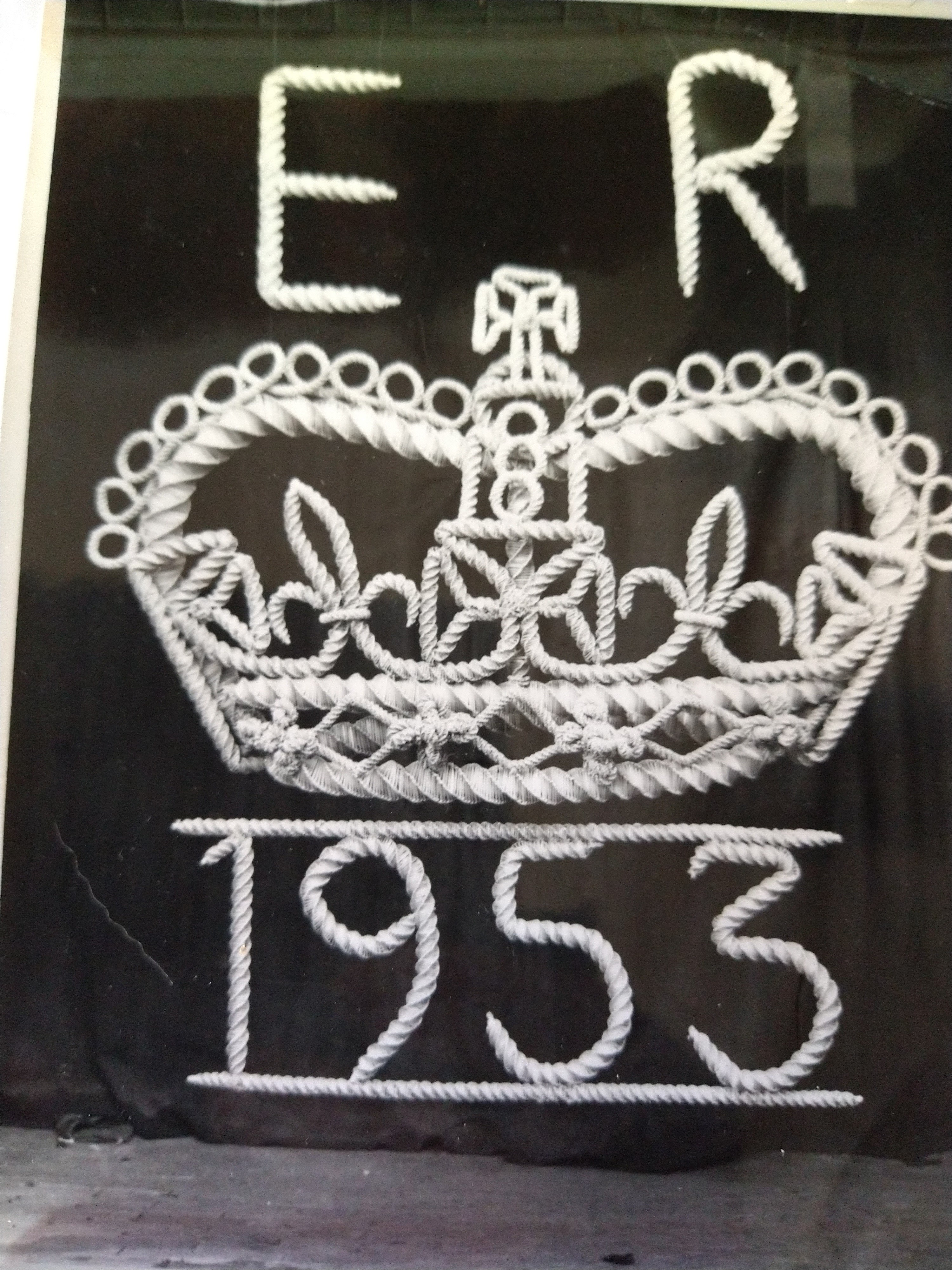
Fred’s display for the 1953 Coronation celebrations. Edward Bawden’s drawing of Fred’s corn dollies.
Fred was also prolific in his original work of thatching and one example of this work can be found a mile or so from Great Bardfield on the Saling Road. It is the old lodge house to the Parkhall Farm Estate. One chap, whose father was estate manager in the early 50s remembers Fred thatching the roof and teaching him, as a lad, to make corn dollies.
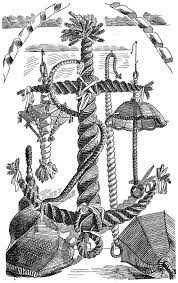
Although a number of Fred’s works are known, only a few remain. Some of these can be seen at the Museum of Rural Life in Berkshire. These include an anchor, some 42inches high, horseshoes, pitch forks, scythes and fire irons. The farm implements are life size. He also made the Barley Queen and the Malting Maid for the Brewery Society to display, these were both 9 feet tall!
Fred Mizen continued making straw/wheat works until his death on 19th October 1961. His legacy is the renewed interest in the craft and since then, many people have taken to teaching and writing about it.
In 1928 Muriel Rose set up in the Little Gallery in Ellis Street, London where many women designers working on their own, or with a partner, benefited from being able to exhibit and sell their work in this way. She became the main sales outlet for the block-printed textiles of Phyllis Barron and Dorothy Larcher, and their assistant, Enid Marx. Silverware and cutlery by Catherine Cockerell, printed papers by Tirzah Garwood and the studio pottery of Katherine Pleydell-Bouverie and Norah Braden.In common with many other exclusive outlets for the crafts, the Little Gallery did not survive the Second World War and closed in 1940.
Alec Coker (1912-1986) was an experienced straw dolly maker and writer. Coker devoted his retirement from 1965 until his death in 1986 to spreading knowledge of and teaching the craft of corn dolly making.
Needing to produce work for an Autumn show in New Bond Street in 1939 Eric Ravilious paid a visit to Wales early in 1938. Ravilious spent several weeks at the Welsh hamlet of Capel-y-Ffin.
In the 1920’s Capel-y-Ffin had been home to two of Britain’s most significant twentieth century artists – Eric Gill and David Jones.
Tirzah commented:’ We arrived in Wales by the late afternoon, the weather was damp, and the mountains strewn with rocks and patches of born dead bracken, the sheep on their sides jutted out, precariously attached to their surface by the force of gravity.’
Tirzah stayed a couple of days before heading back to Castle Hedingham.
In early February Ravilious wrote: ‘It is rather boisterous weather but improving a little. The skies are superb but the hills so massive it is difficult to leave room for them on the paper. Mrs Saunders and all her family are as nice as possible, and they are all so good-looking and so large on the female side – she cooks in the most generous way and I don’t know how to eat these great platefuls of pig’s fry. A pig has been hanging up in the kitchen and today was scientifically cut up like a diagram in a cookery book, and I watched it simply fascinated. You should have seen them burning off the bristles with a flaming bracken, with the pig on a stretcher. It was like a funeral pyre and the smell was amazing.’
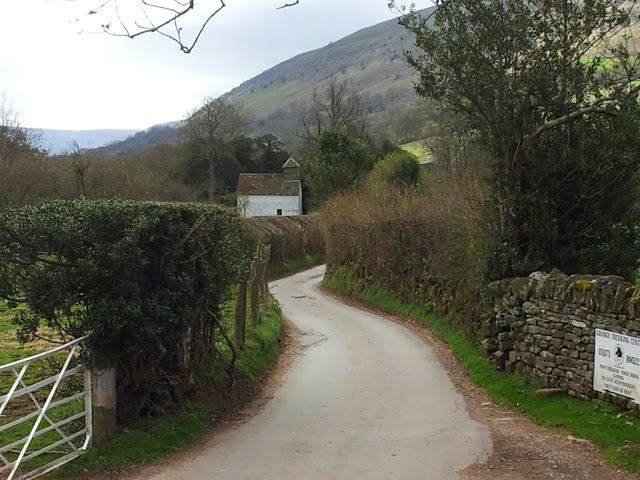
Wet Afternoon. 1938. How it looks today, the chapel of St Mary still prominent.
He was visited by another artist, John Piper, who with his wife Myfanwy took Eric to the pub for a meal before returning to the farm and looking at Piper’s collages of Welsh Chapels.
Llanthony Derelict Cottage, Collage by John Piper.
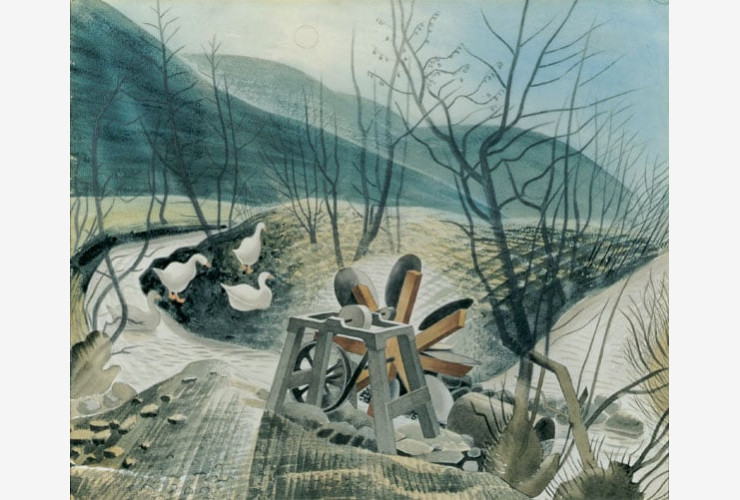
As the weather improved in early March, Ravilious said: ‘I work simply all day, I’m trying to make up for lost time and bad drawings, with much better results. A painting of a water wheel, homemade by the son of the farmer, is now almost finished and looks rather well, and a bit Chinese; also, there are four geese in the picture, and the time is eight in the morning.’
Waterwheel, 1938. Duke of Hereford’s Knob 1938. Corn Stooks and Farmsteads – Hill Farm, Capel-y- Ffin, Wales 1938.
Six weeks passed by and Tirzah returned to pick up Eric. As a thank you to the Saunders family Eric and Tirzah treated them to a trip to the cinema in Abergavenny. They did the journey back to Essex in one day.
The show at Tooth’s Gallery, New Bond Street went on from 11th May to 3rd June 1939 and was a great success. ‘Cliff’s in March’, sold at the show is one of the missing ER paintings possibly in private collections in the UK, Canada, Australia or New Zealand.
Marianne Straub OBE (1909-1994) was one of the leading commercial designers of textiles in Britain in the period from the 1940s to 1960s. She said her overriding aim was: “to design things which people could afford. … To remain a handweaver did not seem satisfactory in this age of mass-production”.
Marianne Straub was born on the 23rd of September 1909 in the village of Amriswil, Switzerland, the second of four daughters of the textile merchant Carl Straub and his wife Cécile Kappeler. She had tuberculosis as a young child and spent over four years in a hospital ward, returning home at the age of eight. For most of this hospitalisation she was immobilised by traction and was dependent upon her hands and imagination for amusement.
Having left hospital and started school another six-month period of inactivity, aged 12 and 13. saw Straub develop an interest in yarns. She requested a narrow strip loom and to plain cloths she added adventurous colour combinations and areas of brocading.
In 1928 Straub studied art at the Kunstgewerbeschule in Zurich, focusing on hand weaving and textiles in the final two years. Her tutor was Heinz Otto Hürlimann, who had studied at the Bauhaus. She then spent six months working as a technician/helper at a mill in her village. She was paid with twelve towels – “worth every penny!”
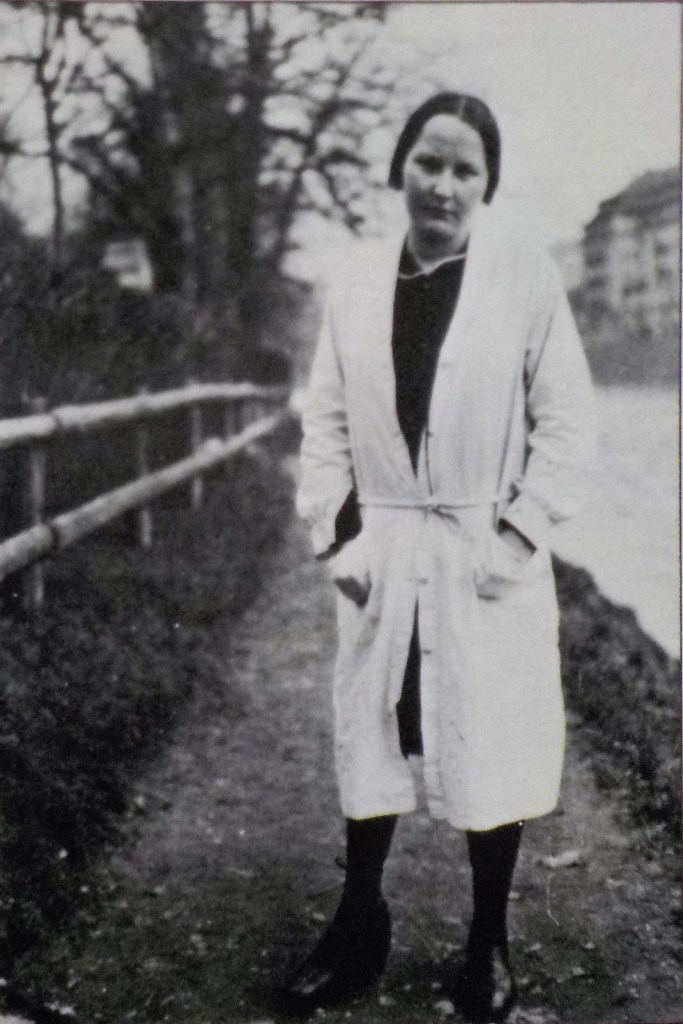
Marianne while an art student in Zurich 1927
She moved to Bradford, arriving in 1932 to undertake a year’s study at Bradford Technical College. Bradford had addressed correspondence to her in Switzerland as a ‘Mr Straub’. One reason for choosing Bradford was that Swiss technical colleges would not accept women students – and at Bradford she was only the third female student. On arriving at Bradford College the staff were surprised to discover that she was a Miss Straub and not a Mr Straub!
After completing her course in one year instead of the usual three years she was invited to work at Ethel Mairet’s Gospels studio at Ditchling where she developed her hand loom techniques. Following this she worked as a consultant designer for the Welsh milling industry, advising 72 mills that were supported by the Rural Industries Bureau between 1934–7 and learning the skills of mass production. In 1937 she joined the firm of Helios, a subsidiary of Barlow & Jones as head designer, becoming managing director in 1947.A move to the Bolton base of Helios gave Straub further opportunity to work in ‘mass production’. During her time in Bolton Straub developed what was to become a life-long friendship with Belgium-born Bolton artist Françoise Taylor.
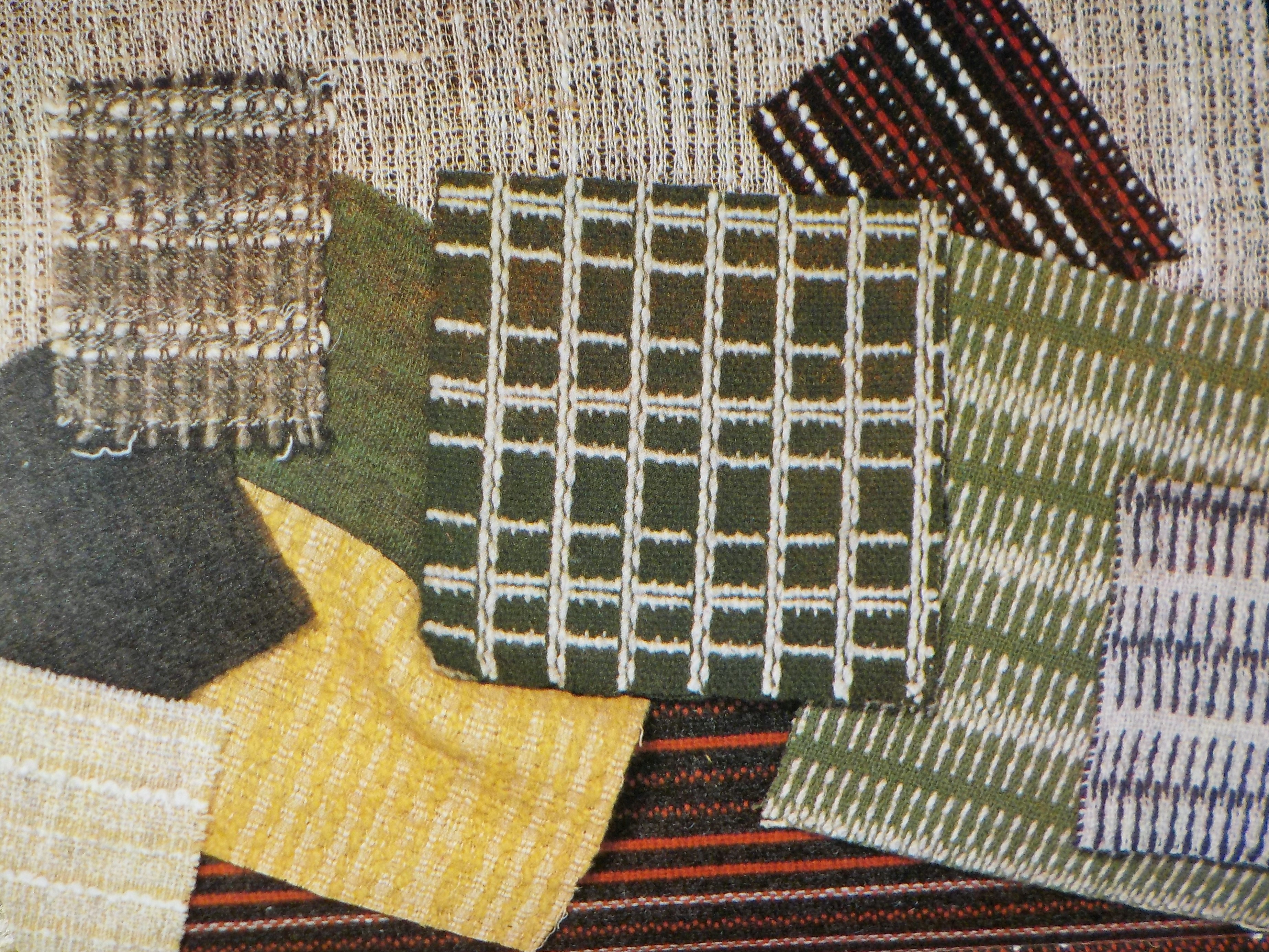
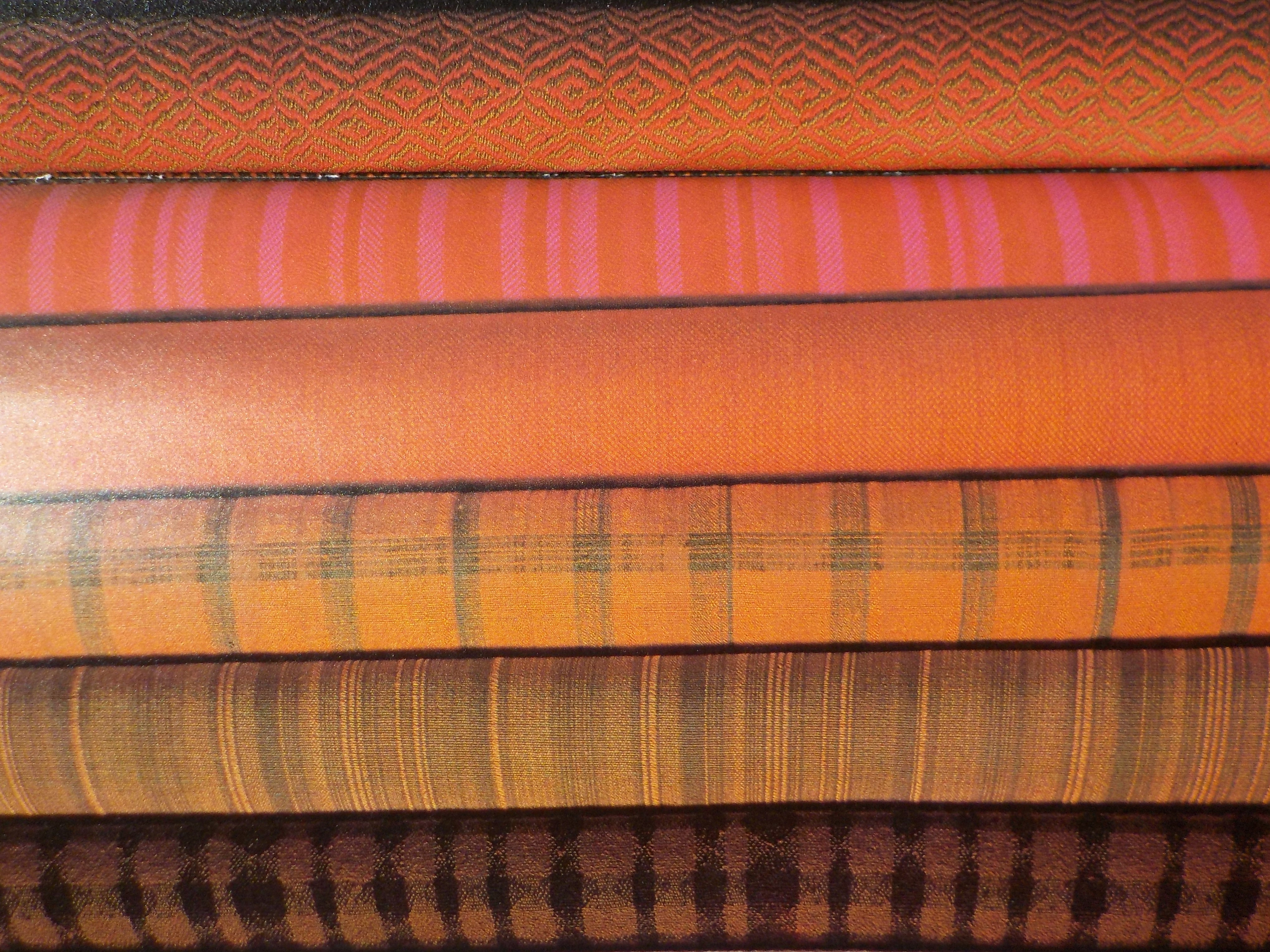
1 A Scarf of undyed Southdown wool woven for Gospels 1933. 2 Welsh tweeds 1945-37. 3 and 4 A selection of Helios fabrics.
In 1950, Straub joined the firm of Warner & Sons in Braintree, Essex, and remained associated with the firm until 1970.
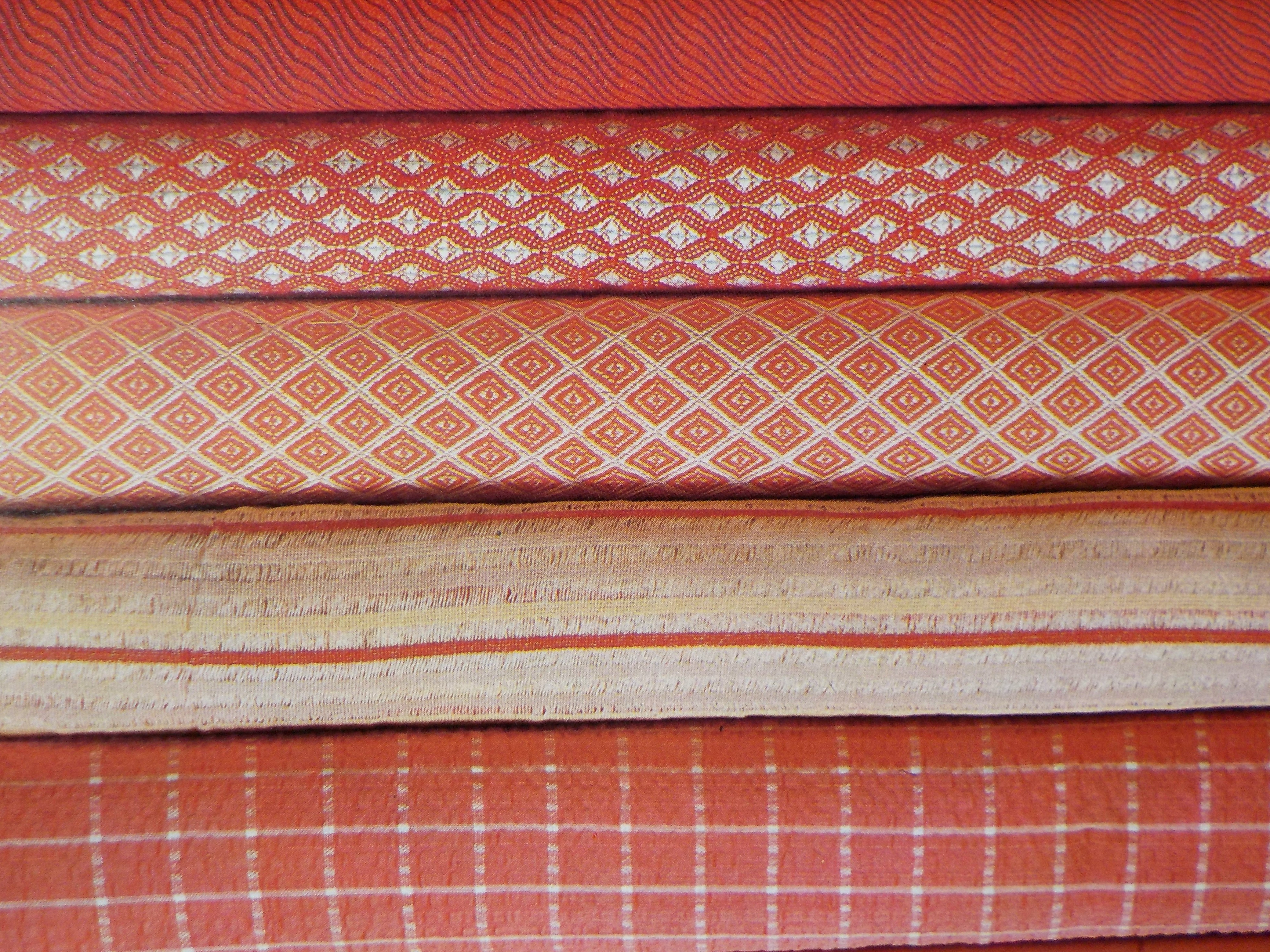
Warner fabrics 1952 to 1970
It is at this point in 1950 that our interest takes us to Great Bardfield. Straub had been introduced to Edward and Charlotte Bawden shortly after her move to Braintree. In 1952 Straub purchased Trinity Cottage in Great Bardfield.
She recalls: ‘I went there a lot through the Festival of Britain….I decided it would be a nice place to live. One day Edward Bawden rang and said “My gardener (Fred Mizen) says the cottage opposite is for sale”, so I drove over and looked at the cottage and decided to buy it.’
Walter Hoyle recalls: ‘I first met Marianne Straub in 1952, she was having tea at the Bawden’s when I called in. I was immediately struck – and that is the right word – by her personality, forceful, pleasant, on friendly first-name terms from the start. I had recently moved into a farm cottage on the outskirts of Great Bardfield and Marianne enquired if I had curtains. When I told her I did not she immediately offered to make curtains for me using her woven materials…..we became good friends’.
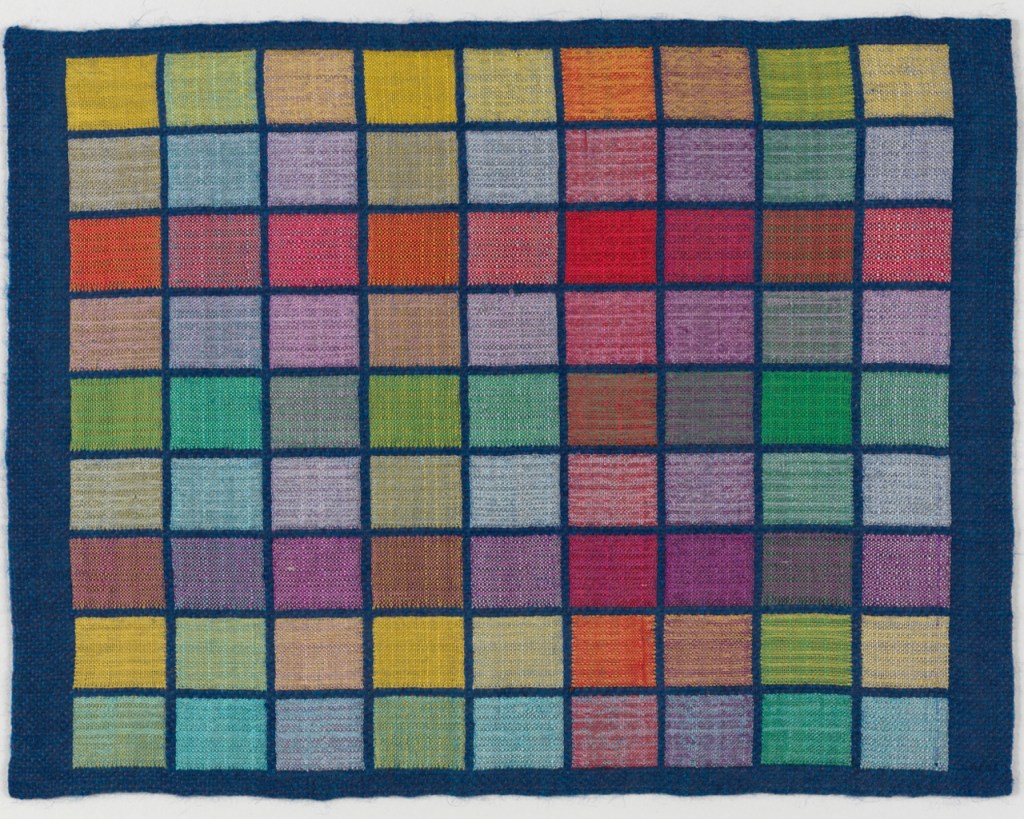
Fabrics pieced together for curtains. Reminds me of the work of Paul Klee.
It was suggested that Marianne should take part in the Great Bardfield Summer Exhibition of 1954, a selection of her fabrics could be displayed in Bawden’s Brick House. When post exhibition, the artists met to work out expenses it was decided that it would be unfair to ask Marianne to contribute because hers was a non-selling exhibition. Marianne was upset by this and insisted on paying her contribution.
The village’s “open house” exhibitions attracted national press attention and thousands visited the remote village to view art in the artists’ own homes during the summer exhibitions of 1954, 1955 and 1958.
‘Reflections’ In the collection of the Fry Gallery
One of Straub’s most famous early designs for Warner was Surrey, a textile that featured in the Festival of Britain in 1951 and was used in the Regatta Restaurant.
Straub continued to work with Warner until 1970, she was also enlisted by Isabel Tisdall to create designs for the newly launched venture Tamesa Fabrics from 1964. Designs from the Tamesa range were to feature on everything from the QE2 to BEA’s Trident aircraft.
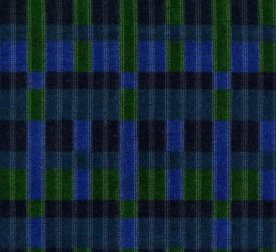
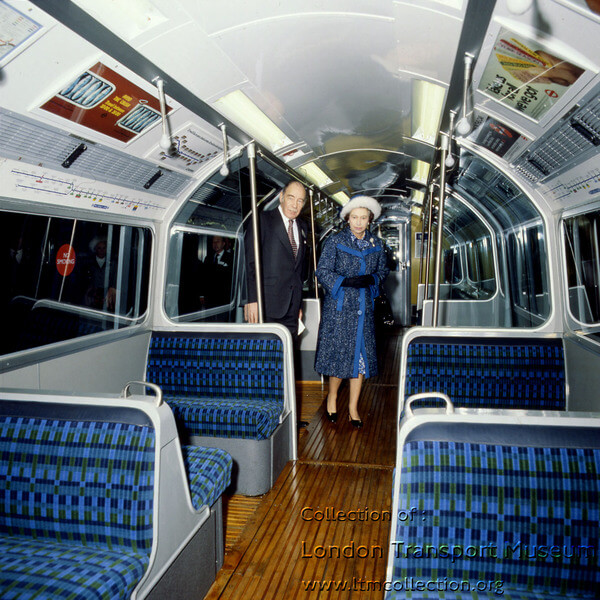
Straub was also among the designers used to create the livery for moquette upholstery on London Transport buses and trains. Her blue/green design (known as Straub) was used on all buses and trains entering service from 1969 to 1978, notably featuring on trains operating along the Piccadilly line extension to Heathrow Airport opened in 1977. The design – and variations of it – also featured in British Rail carriages of the period.
London Underground seat fabric. Top right: ‘Straub’ . London Transport – a moquette fabric entitled Straub, which was named after Marianne and was applied to all new buses and trains entering service between 1969-1978. Bottom right: Straub’ moquette textile in Piccadilly Line carriage opened by Her Majesty the Queen – 16 December 1977.
Straub also became an influential textile teacher, combining work with Warner with teaching at Central School of Art, London from 1956. She also taught at Hornsey College of Art and the Royal College of Art.
On retirement in 1970, she left Great Bardfield and moved to Cambridge. She continued to maintain her interest in cloth and weaving in retirement. In a letter to her biographer Mary Schoeser some three months before her death, Straub described her design process. “Whilst thinking of the new cloth, I think of its weight, its draping qualities, the handle; I see it in colours……The essence of the whole exercise is to place the cloth, in my imagination, into the situation in which it will be used.”
Straub was made a Royal Designer for Industry in 1972. In 1993, she received the Sir Misha Black Medal. She was also a Fellow of the Society of Industrial Artists and Designers (SIAD) and was appointed an OBE for services to textile weaving.
Straub returned to Switzerland in 1992 for the last two years of her life passing away on the 8th November 1994 aged 85.





































































 Artistic Horizons