
7 February 1872 – 17 June 1952.

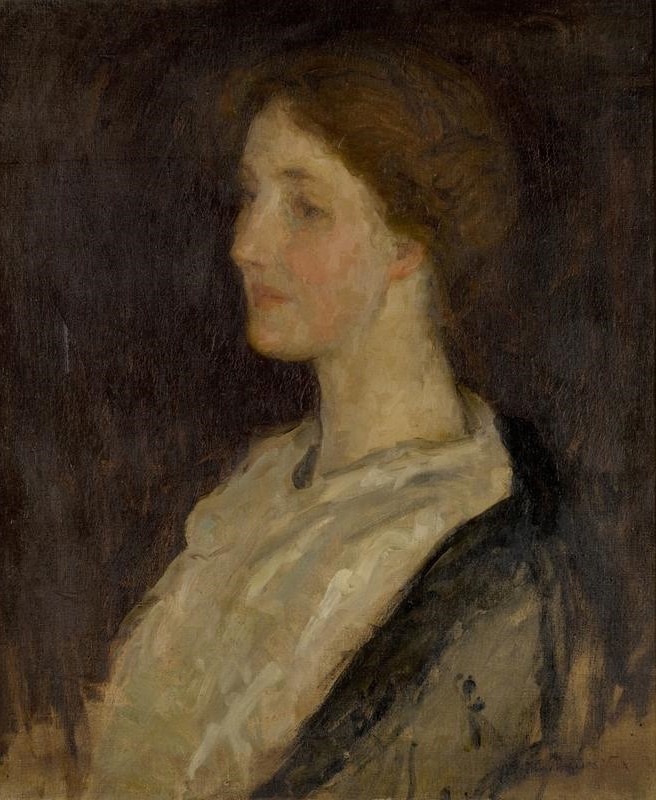
Photo: Ethel Carrick Fox 1912. Portrait of Ethel by Emmanuel Phillips Fox.
Ethel Carrick Fox was an English Impressionist and Post-Impressionist painter. Much of her career was spent in France and in Australia, where she was associated with the movement known as the Heidelberg School.
Ethel Carrick was born in Uxbridge, Middlesex, to Emma (Filmer) Carrick and Albert William Carrick, a wealthy draper. Ethel was the second eldest of ten children living at Brookfield House, Uxbridge. Ethel’s father was affluent enough to employ maids and send his sons to university, but not daughters ! Ethel stayed at home minding her younger siblings educated by a governess at home, emerging at age eighteen to ‘come out’ into the social world in search of a husband.
She trained in London at the Guildhall School of Music and leaning towards art took private lessons with artist Francis Bate, she discovered that she loved painting.
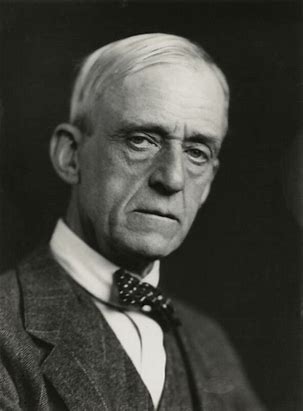
Henry Tonks
As a relatively older mature student in her mid-twenties Ethel enrolled at the Slade School of Fine Art under Henry Tonks (1898-1903). Tonks was a haughty, gruff, confirmed batchelor, tall and gaunt. He could, on a bad day, reduce a student to despair with his biting criticism in front of the entire class. One unfortunate average girl pupil suffered his severe disapproval, glaring at her work he commented: “I only hope you can sew.”
To Ethel, however, the Slade was vibrant and exciting, a chance to fend off the constant pressure to marry.
Carrick began as an Impressionist plein air painter, the Newlyn and St Ives artists were painting out of doors. Ethel attended the Newlyn summer school in Cornwall tutored by Stanhope Forbes. Ethel started to exhibit her work first at the Royal academy in London in 1903, a Pissarro-influenced work. It was at St Ives that Ethel met a shy Australian artist called Emmanuel Phillips Fox who came from a Jewish background. He was nearly 40 and excelled in twilight, romantic landscapes. A romance flourished during those summer days.
Emmanuel returned to London and Carrick also moved in order to be close to him. Exhibiting together at the Felix Art club in 1904.

Emmanuel Phillips Fox: St Ives. 1904.
Their wedding took place at St Peter’s Church, Ealing in May, 1905 attended by 150 guests. Soon they departed to live in Paris, a city where art was greatly valued. Ethel quickly moved to a more Post-Impressionist style featuring blockier compositions and sharper colour contrasts. Some of the works produced around 1911-12 are distinctly Fauvist in their strong colours, high abstraction, and loose handling of the paint. With their lodgings only a fifteen-minute walk from the Luxembourg Gardens for Ethel these gardens became an outdoor studio with an endless supply of free models!
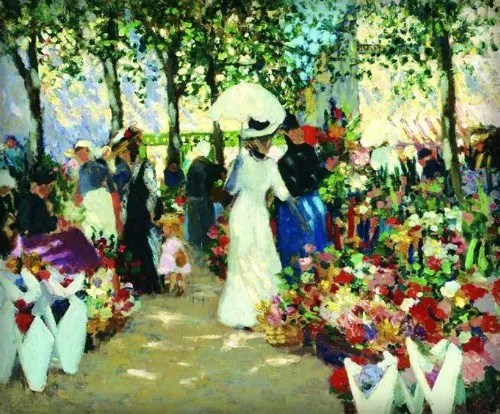
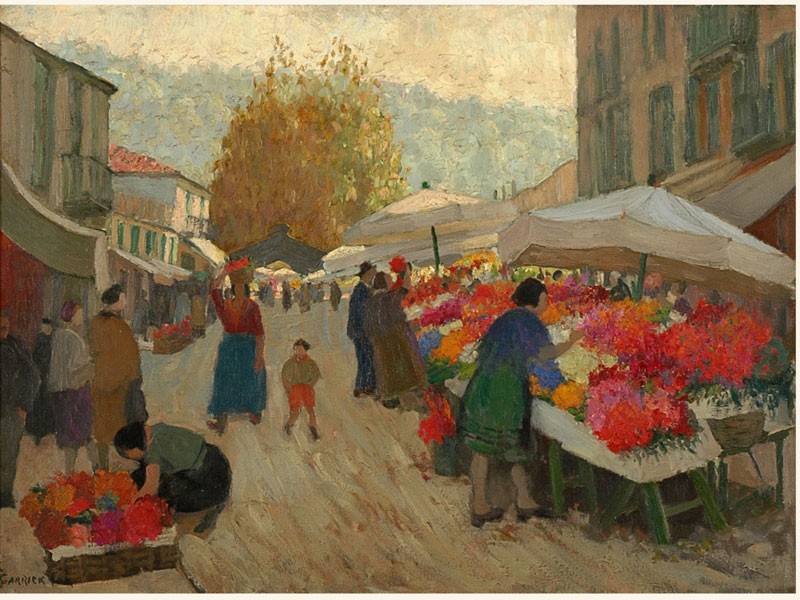
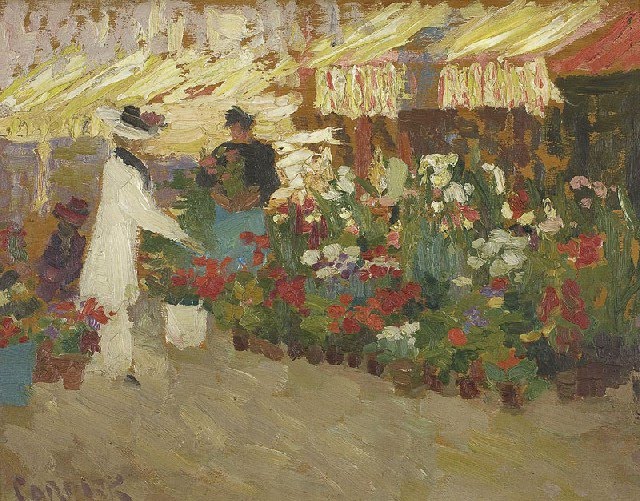

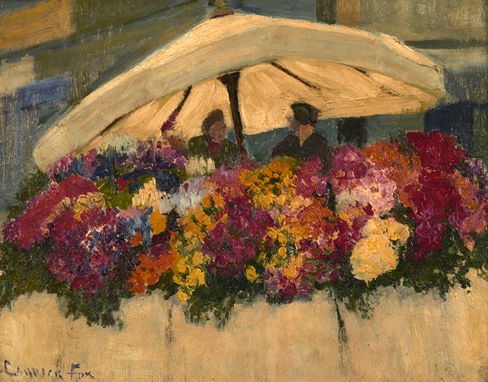
Ethel Carrick Fox: One of her favourite subjects French Flower Markets.
Most afternoons Ida John, wife of Augustus, pushed their youngest of four children around the gardens. In 1907 Ida died following complications of childbirth and this could be one of the reasons why Ethel never started a family.

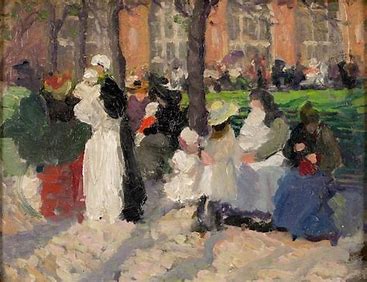
Ethel Carrick Fox: Luxembourg Gardens.
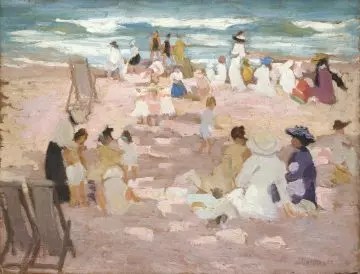

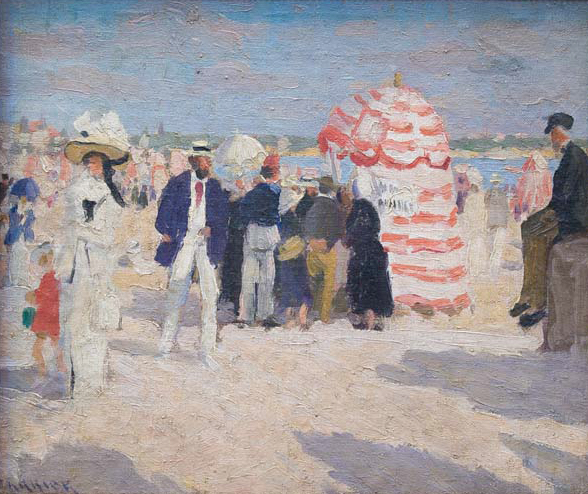
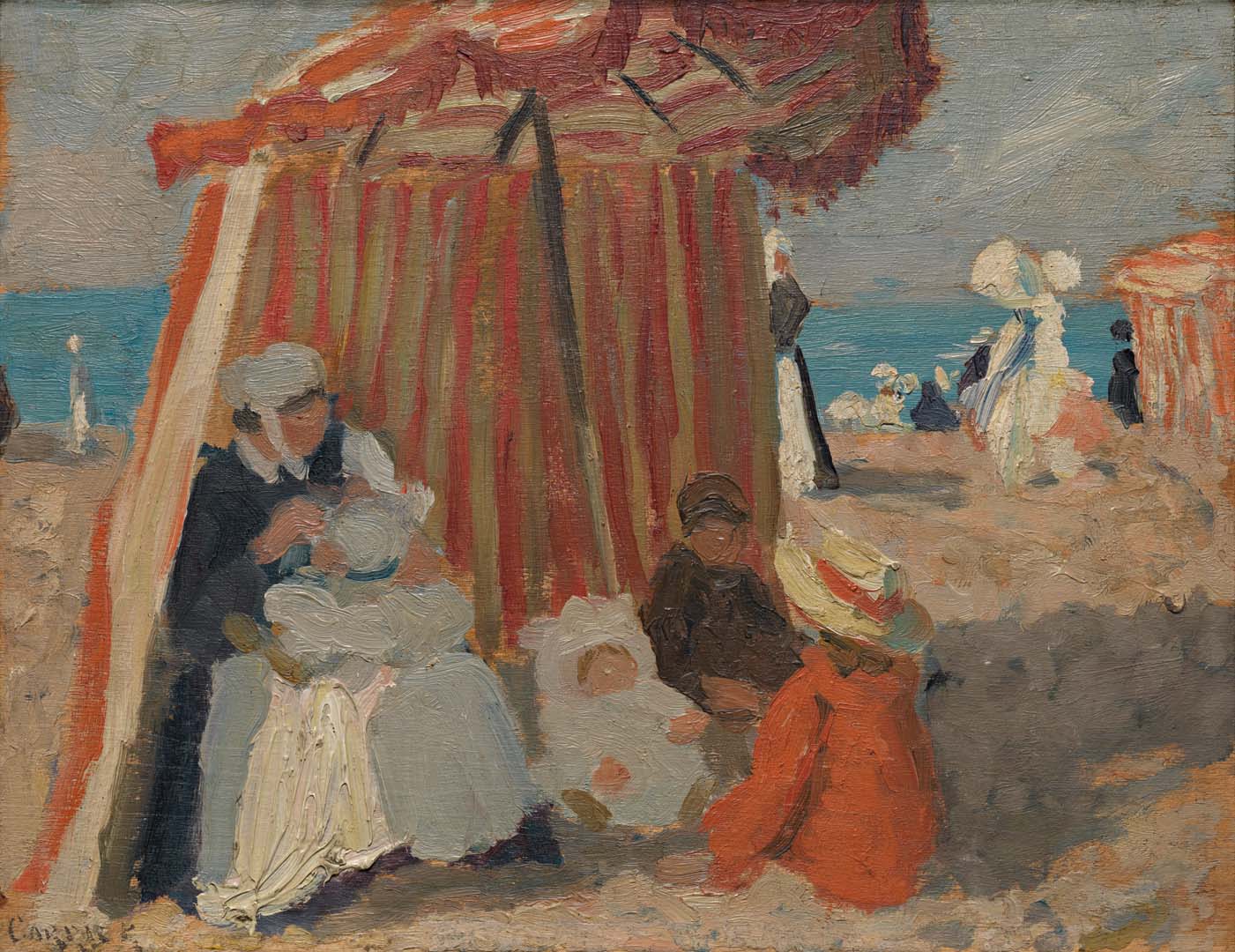
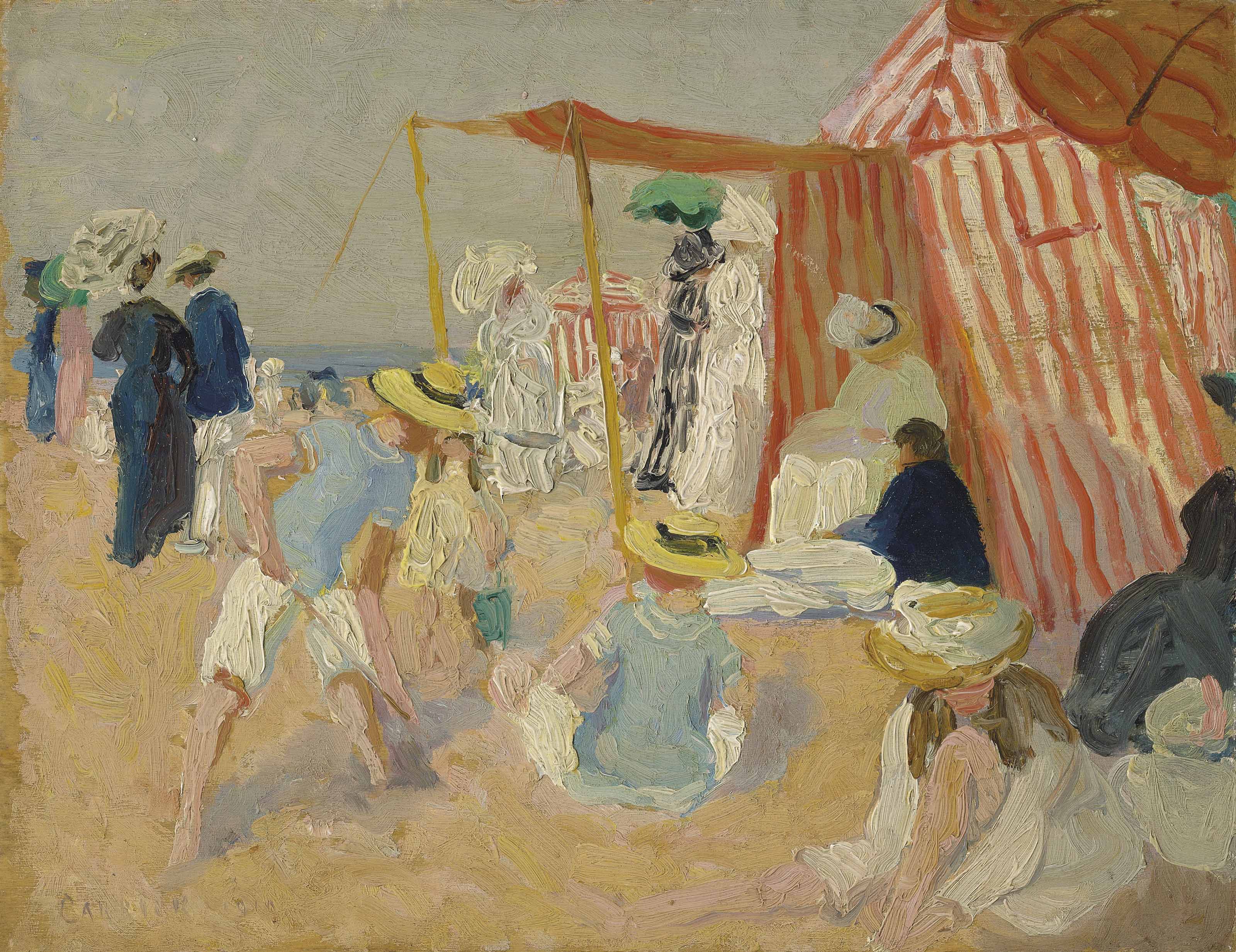
Ethel Carrick Fox: Another favourite subject was On the Beach or Sur La Plage.
The couple enjoyed a delayed honeymoon visiting Venice in 1907.

Ethel Carrick Fox: The Quay at Dinard. 1911.
Ethel travelled widely in Europe, North Africa, and the South Pacific (Tahiti) during this period and made a trip to Australia in 1908. They spent seven months living with Emmanuel’s widowed mother in Malvern a suburb of Melbourne. Ethel’s first one-women show took place in August 1908 at Melbourne’s Bernard Academy. After what was a stressful stay with Emmanuel’s family the couple departed from Sydney on the SS Mongolia on the 29th August 1908.

Ethel Carrick Fox: Manley Beach, Sydney 1913.
Back in Paris Ethel concentrated on her career also playing the role of loyal wife, in Melbourne Emmanuel’s family had constantly pressured her to start a family. In the Paris salon of 2008 Ethel exhibited four bold, colourful works, two of women and children in the Luxembourg Gardens alongside two Australian scenes.
In February 2011 to escape the bitter cold in Paris the couple took a ship from Marseille to Algiers, then travelled around North Africa.

Ethel Carrick Fox: Arabs Bargaining.
In May 1913 the couple returned to Australia for a second visit which was supposed to last for one year. Emmanuel had a solo exhibition in Melbourne in June. Ethel was one of the few women honoured by another solo exhibition which took place in July in Melbourne.
The outbreak of World War I saw the couple in Melbourne, where they organised a charity art exhibition to raise war funds and to support the French Red Cross with a field lorry.

Emmanuel Phillips Fox.
Emmanuel, a heavy smoker, now had health problems and his condition plus the stress of war alongside living with ‘Mannie’s’ family saw Ethel depart for Sydney on her own, no doubt hoping things would improve when the war was over and they could return to Paris. When Emmanuel was diagnosed with lung cancer Ethel returned to Melbourne. He died on the 8th of October 1915.
Following Emmanuel’s death Ethel began two decades of travels that took her through the Middle East, South Asia including India, and Europe. She returned intermittently to Australia to exhibit her work and go out on painting expeditions around the country. In the 1920s, she was recommended by the Académie de la Grande Chaumière in Paris as a private teacher of still life painting, and she counted a number of Australians and Americans in Paris among her students.
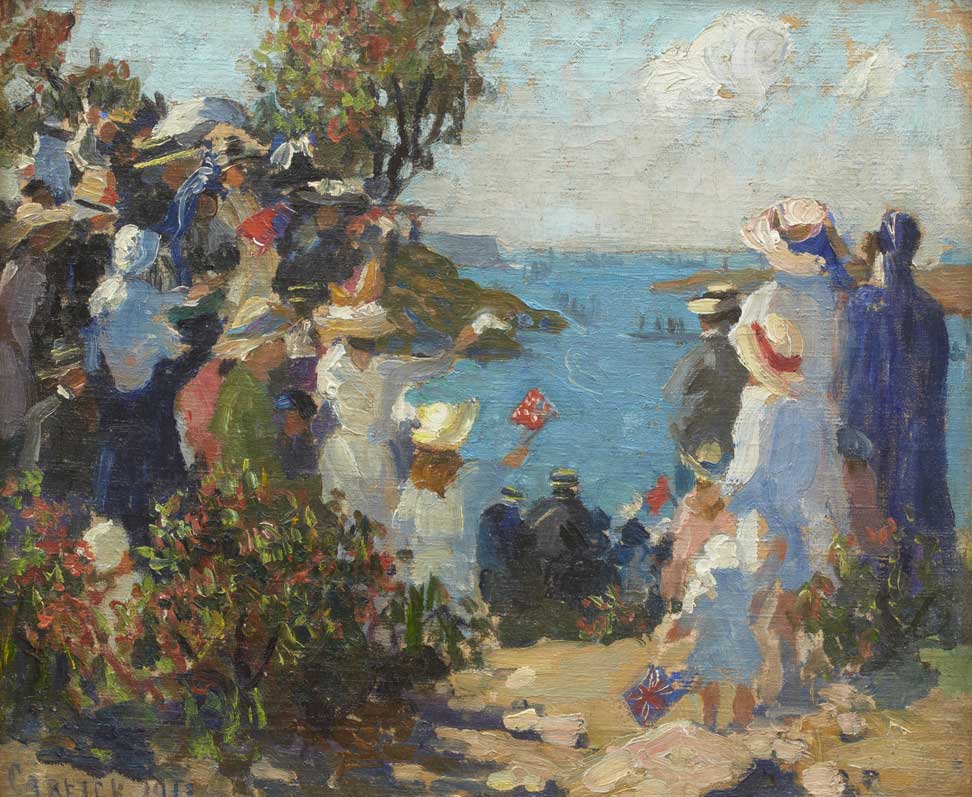

Ethel Carrick Fox: Oil painting showing a group of people on a headland, cheering on a navy ship, afloat in the distance. Watching-the-Fleet-from-the-Domain-1913
Early in 1925 Ethel sailed back to Australia staying in Sydney at The Manor a mansion purchased by the Theosophical Society, which she embraced. A compulsive traveller many travels followed before a seven year stay in Paris, returning to Australia in 1932. In 1934 she organised a joint exhibition of her and Emmanuel’s work in Melbourne at the Atheneum Gallery. Back in Paris in 1938 Ethel with failing eyesight, having been married to a Jew feared for her safety. She managed to board an ocean liner bound for Australia packed with Jewish refugees. Back in Sydney Ethel was welcomed at The Manor where she survived by teaching private pupils.

Ethel Carrick Fox: Afternoon-on-the-Quai-des-Grands-Augustins-Paris 1930.
At the end of the war Ethel returned to Paris in 1946. In 1952 at the age of eighty a frail Ethel made her final trip to Australia, did she wish to end her days in Melbourne? Not long after her arrival Ethel suffered a cerebral haemorrhage, lingering in a coma for two days. Ethel died on the night of 17th June. Two days later she was cremated in a private ceremony attended by few people.
In her lifetime, Carrick’s reputation was eclipsed by her husband’s, in part because she worked tirelessly a good deal of her time promoting his career rather than her own, lobbying Australian collectors and curators to buy his work and arranging exhibitions both while he was alive and posthumously.


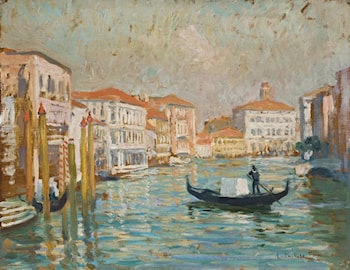
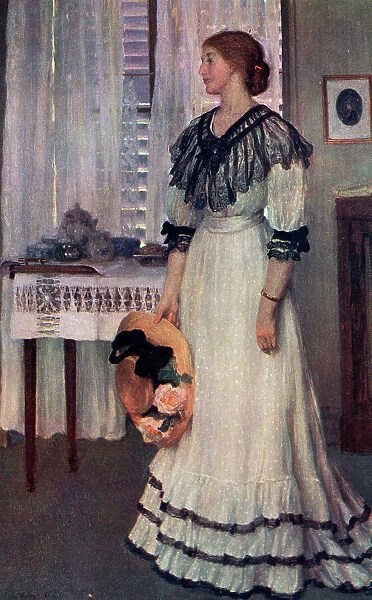
Works by Emmanuel Phillips Fox. The final one is Portrait of a Lady (Ethel).
In recent years, her reputation has been rising, and critics today consider her work more adventurous than that of her husband. In 1996, one of her paintings, Market Under Trees, set an auction record of A$105,500 for works by an Australian woman artist. The work was later resold at $1.464 million.
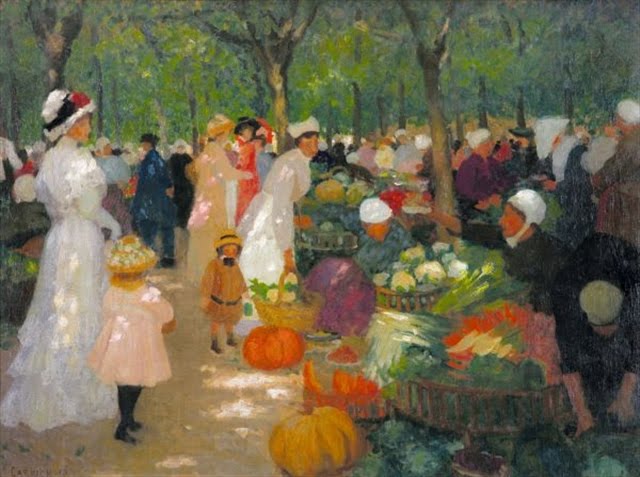
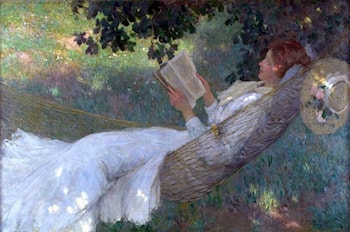
Ethel Carrick Fox: Market Under Trees. Emmanuel Phillips Fox: ‘A Love Story’……..Ethel. 1903.
Most of the information for this blog is taken from ‘Ethel Carrick Fox – Travels and Triumphs of a Post Impressionist.’ Pandanus Press. 1997.
Graham Bennison March 2024.
 Artistic Horizons
Flippin’ ‘eck she was good!!!! Her handling of light and colour is fantastic – the flowers, the awnings! Wow! Great article and superb images.
LikeLike
She was very good ….thanks Dave.
LikeLike
Thank you very much for the introducti
LikeLike