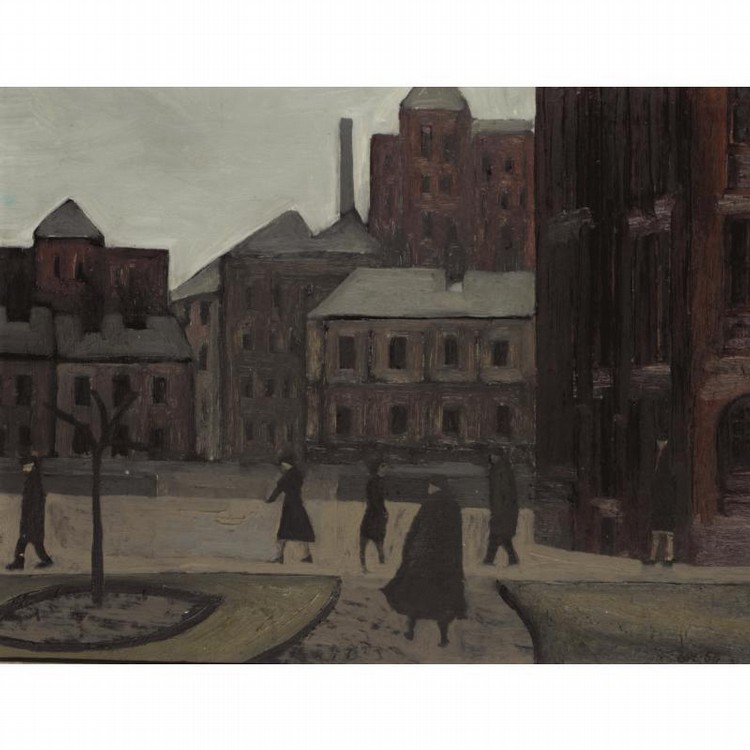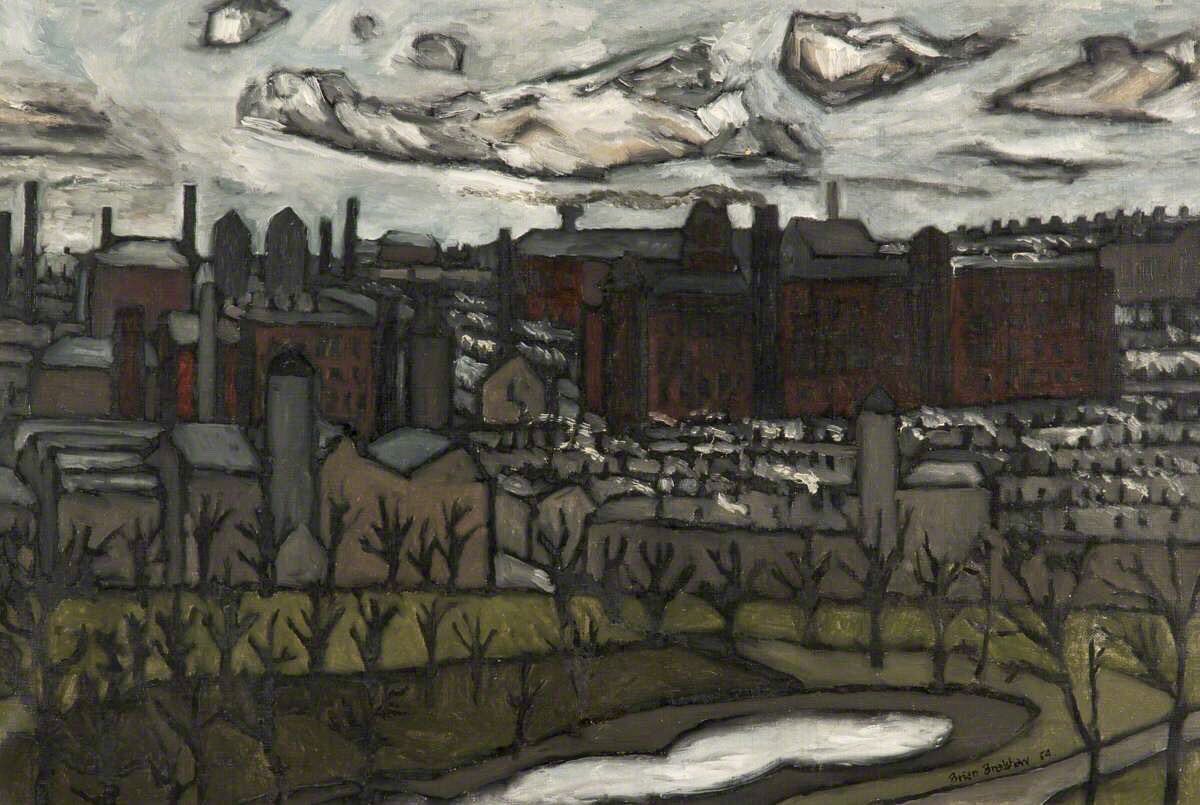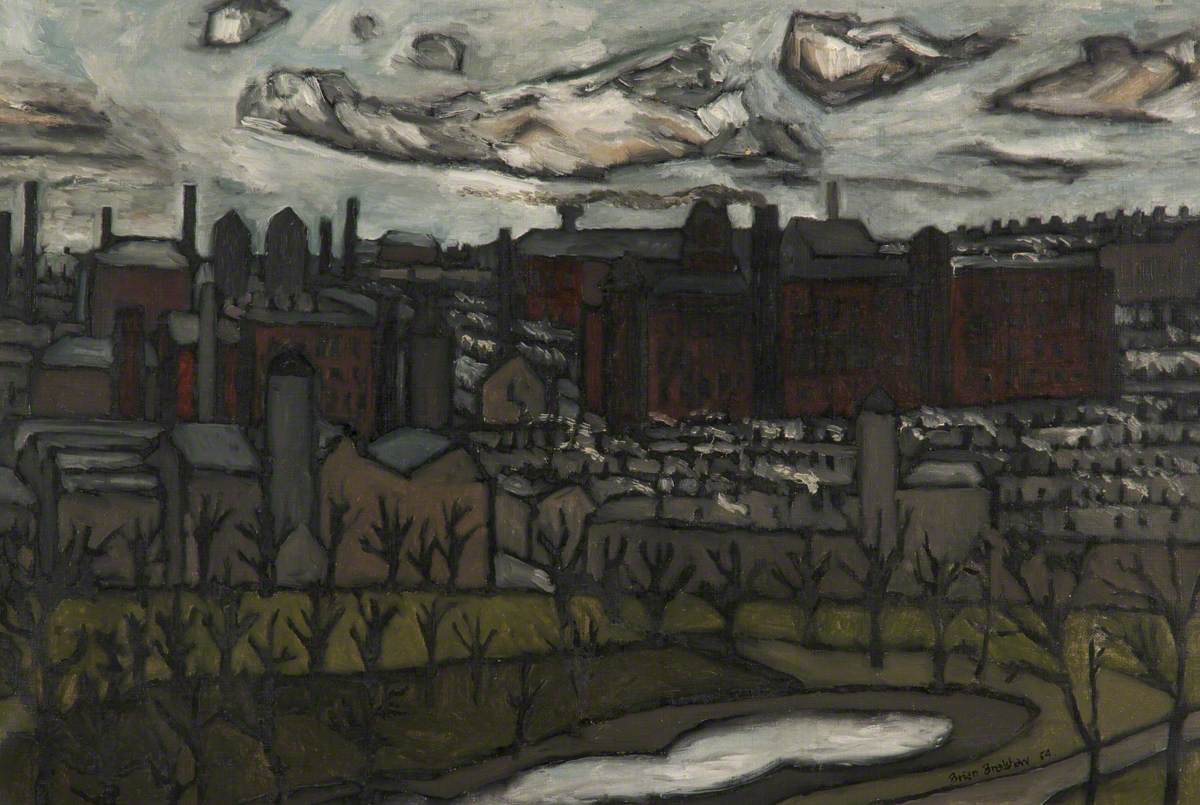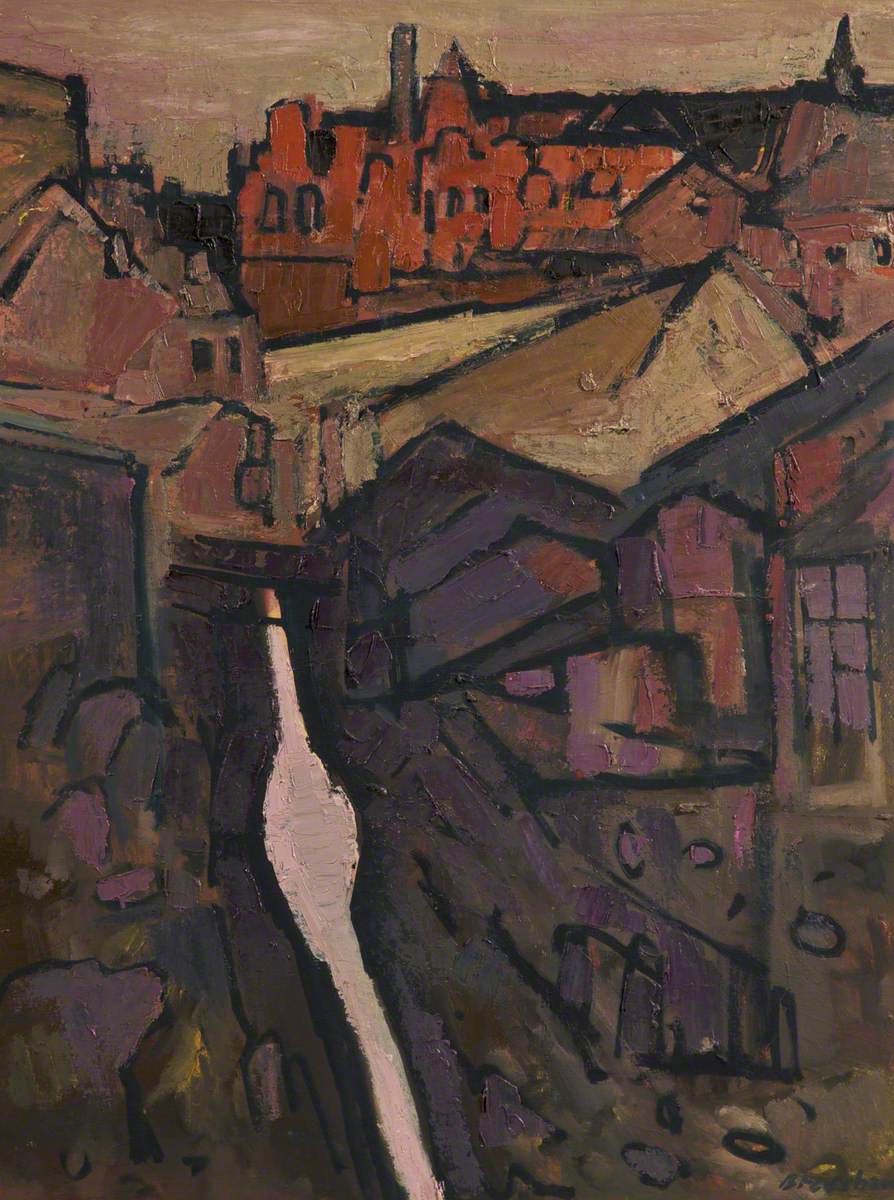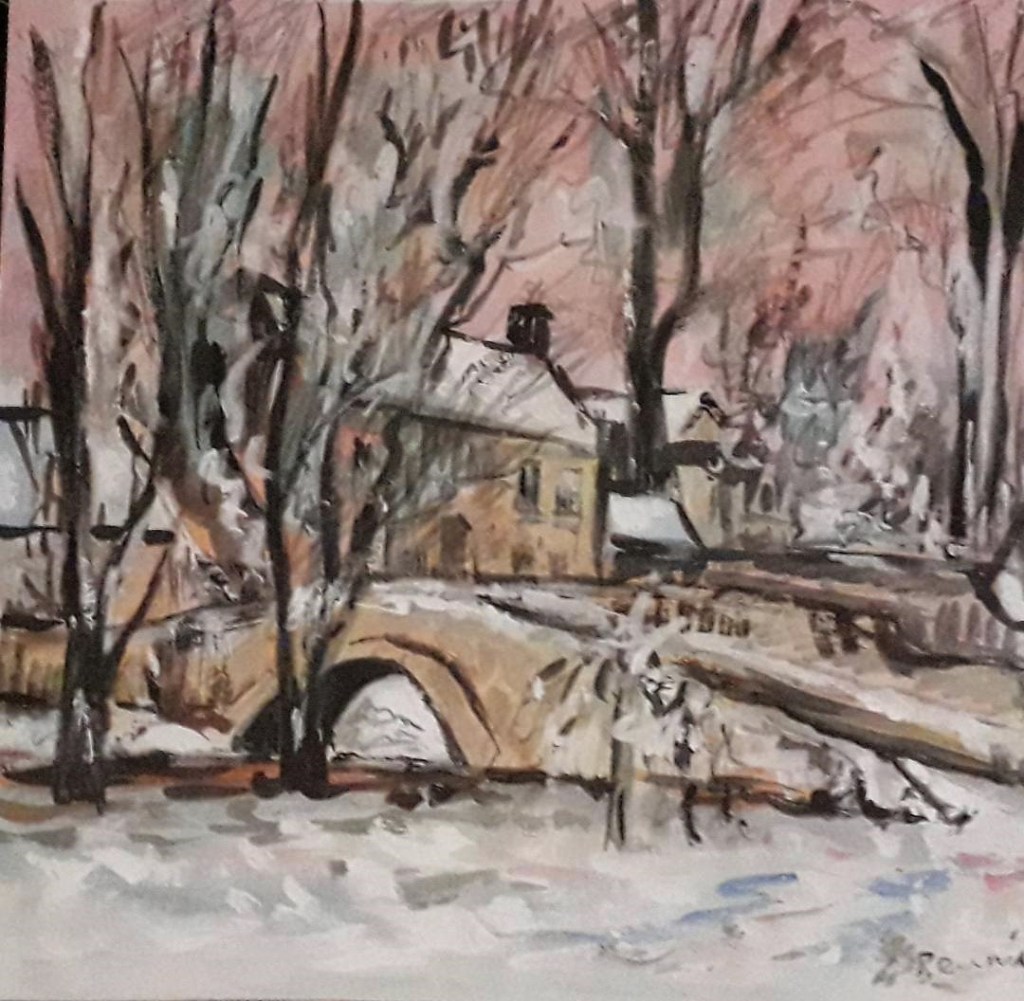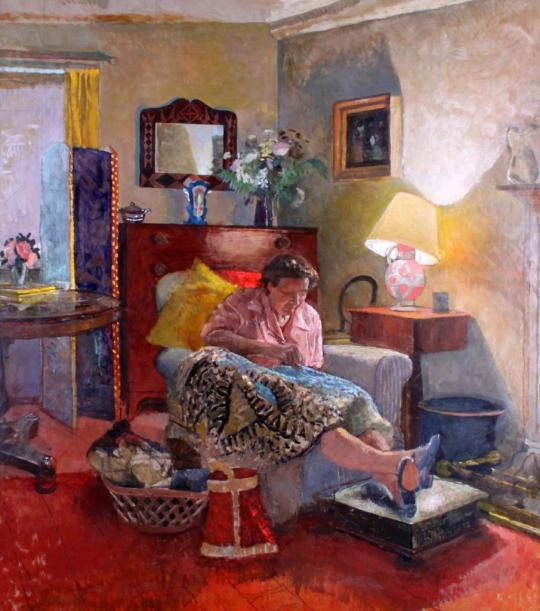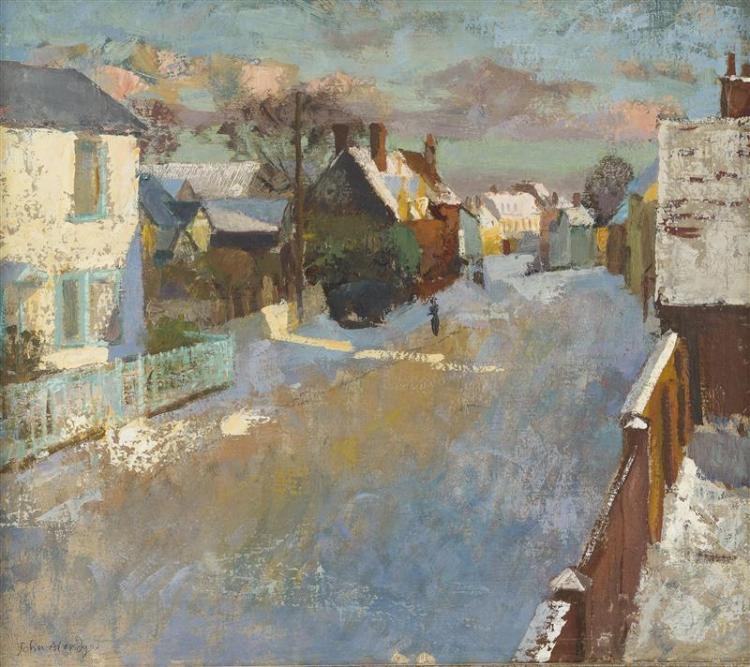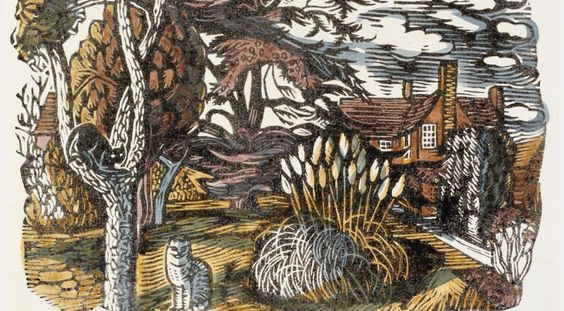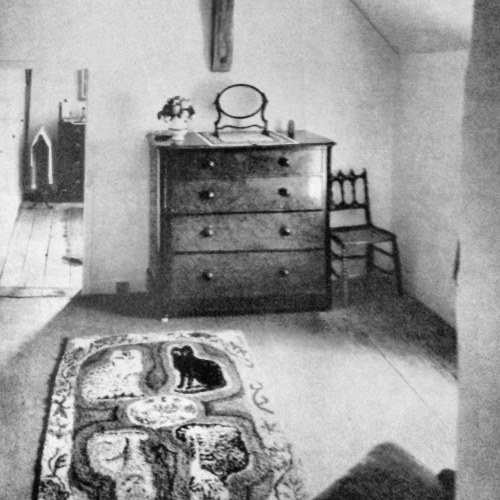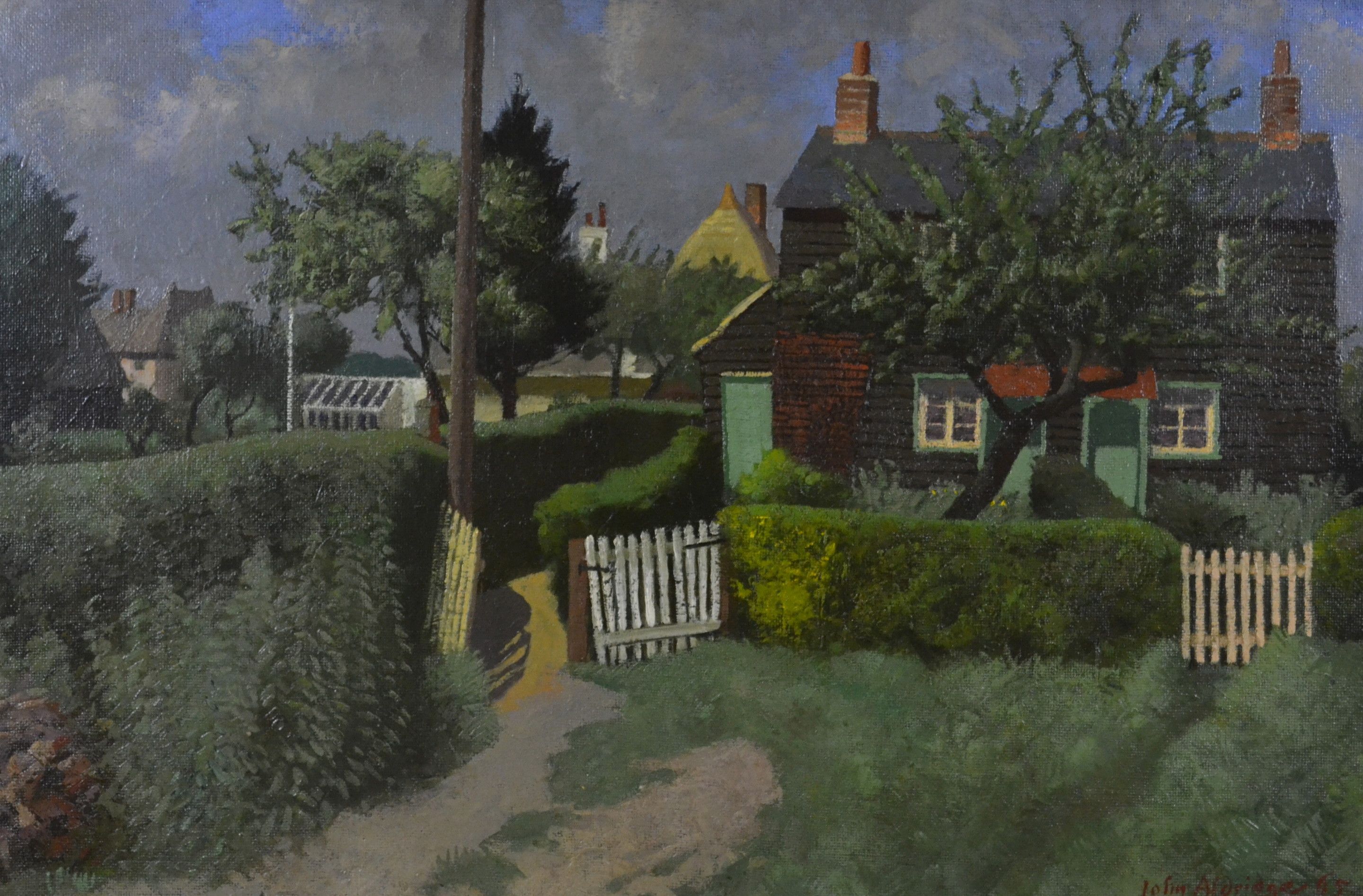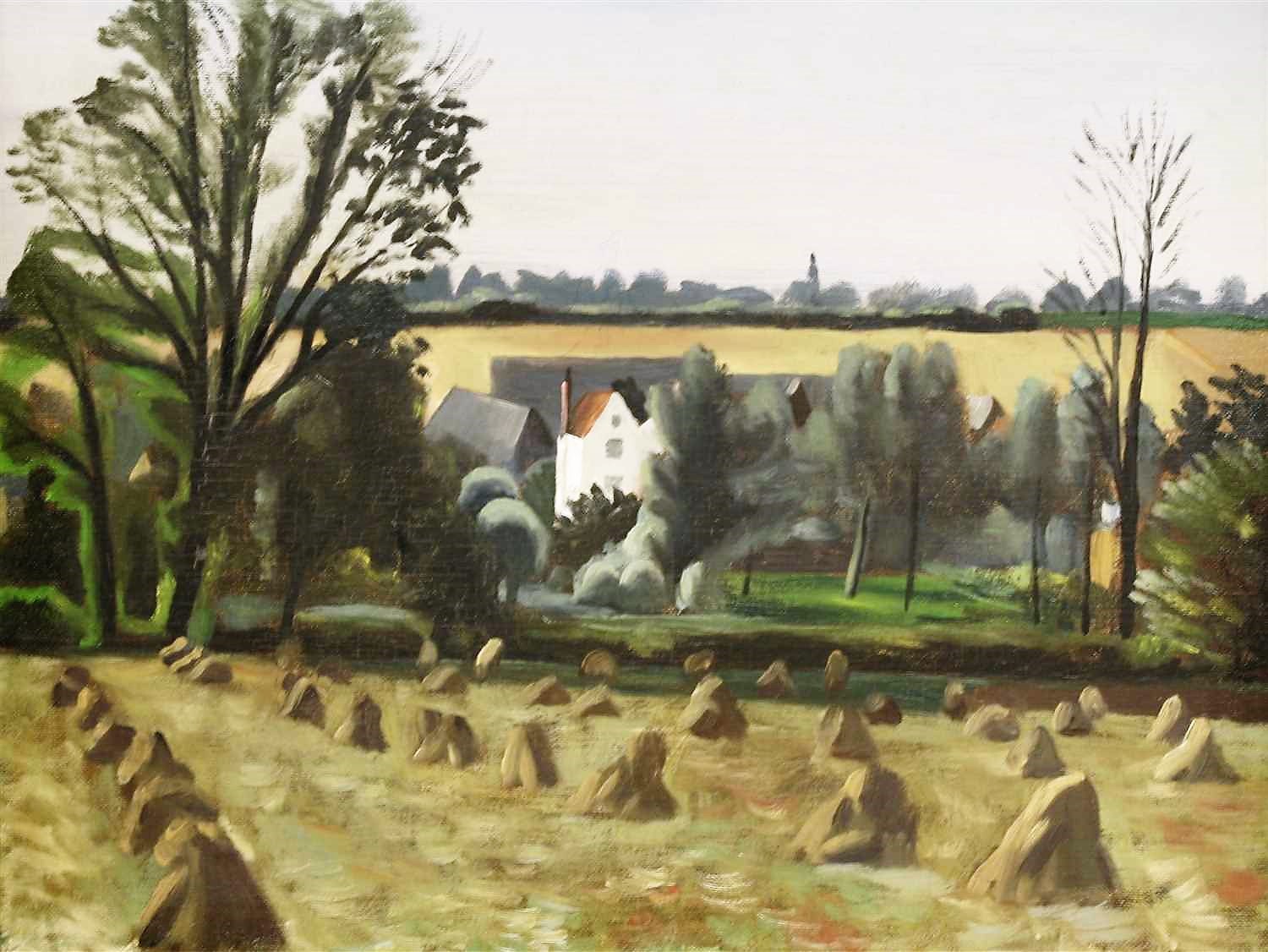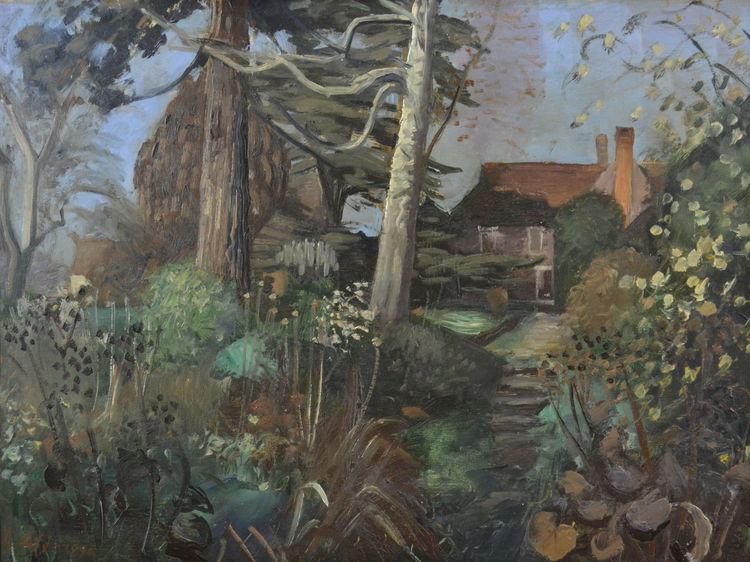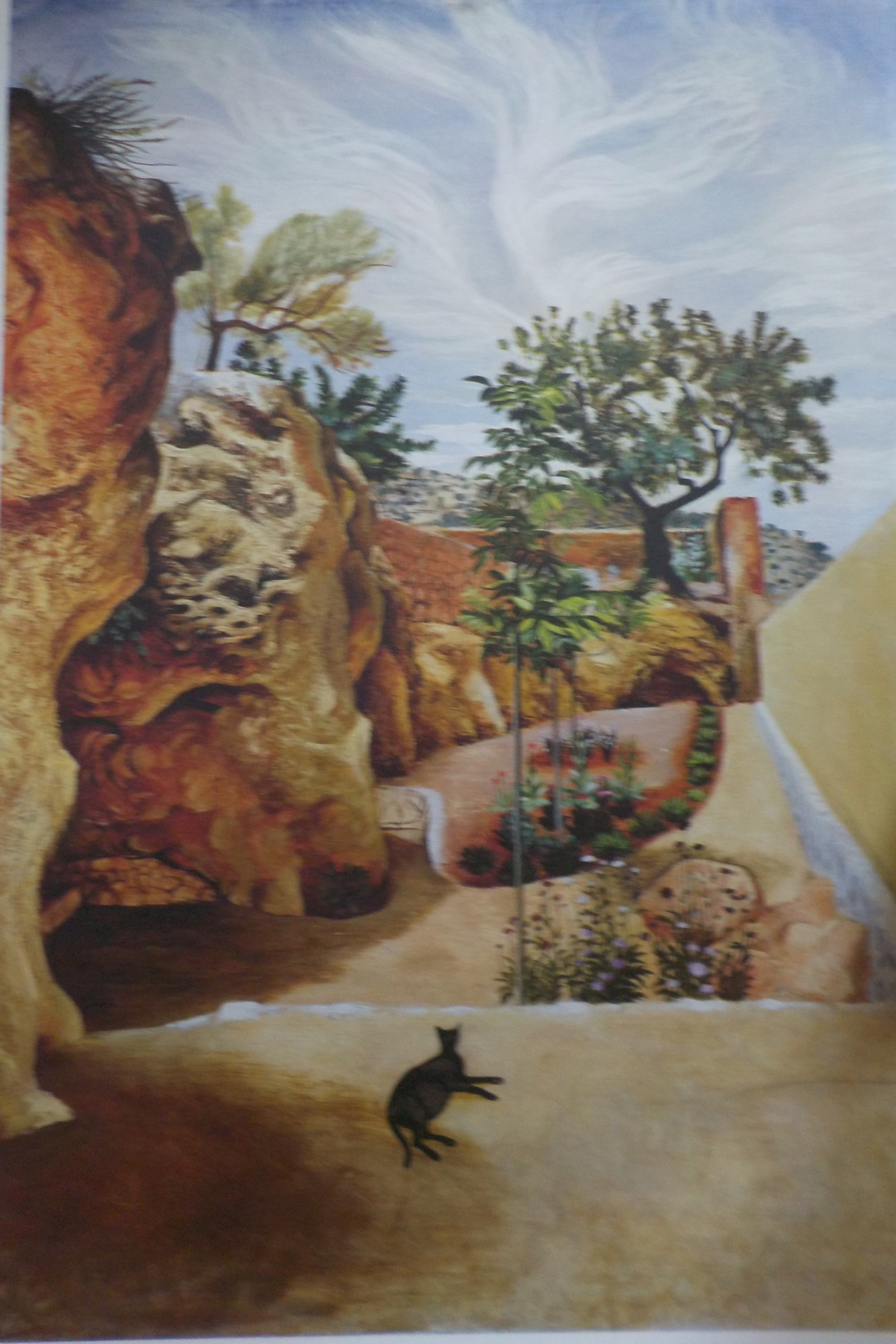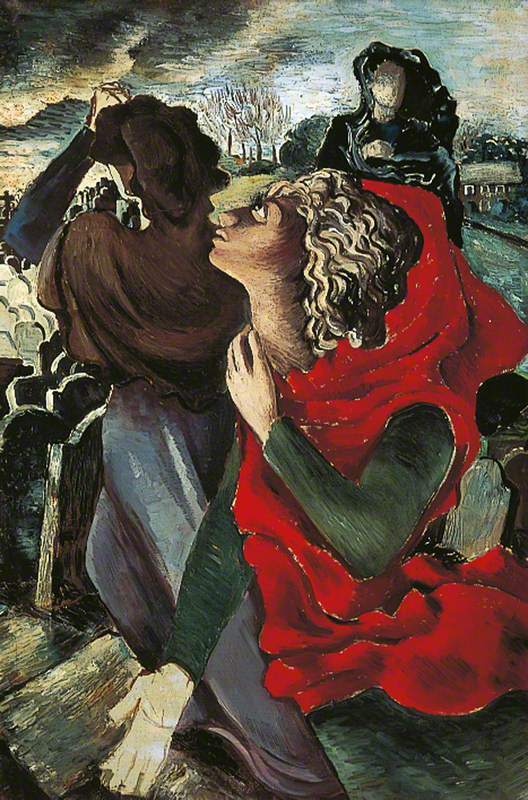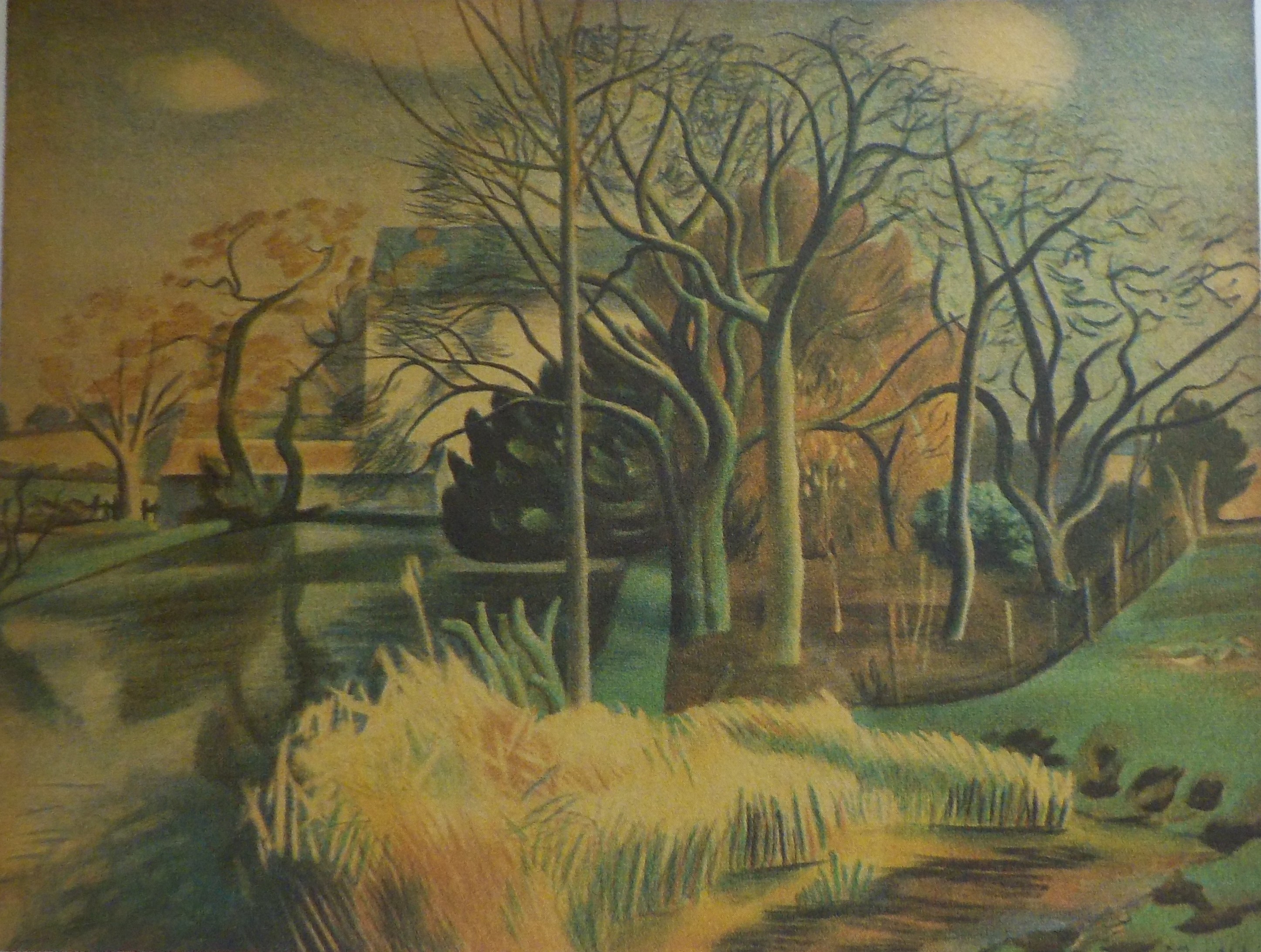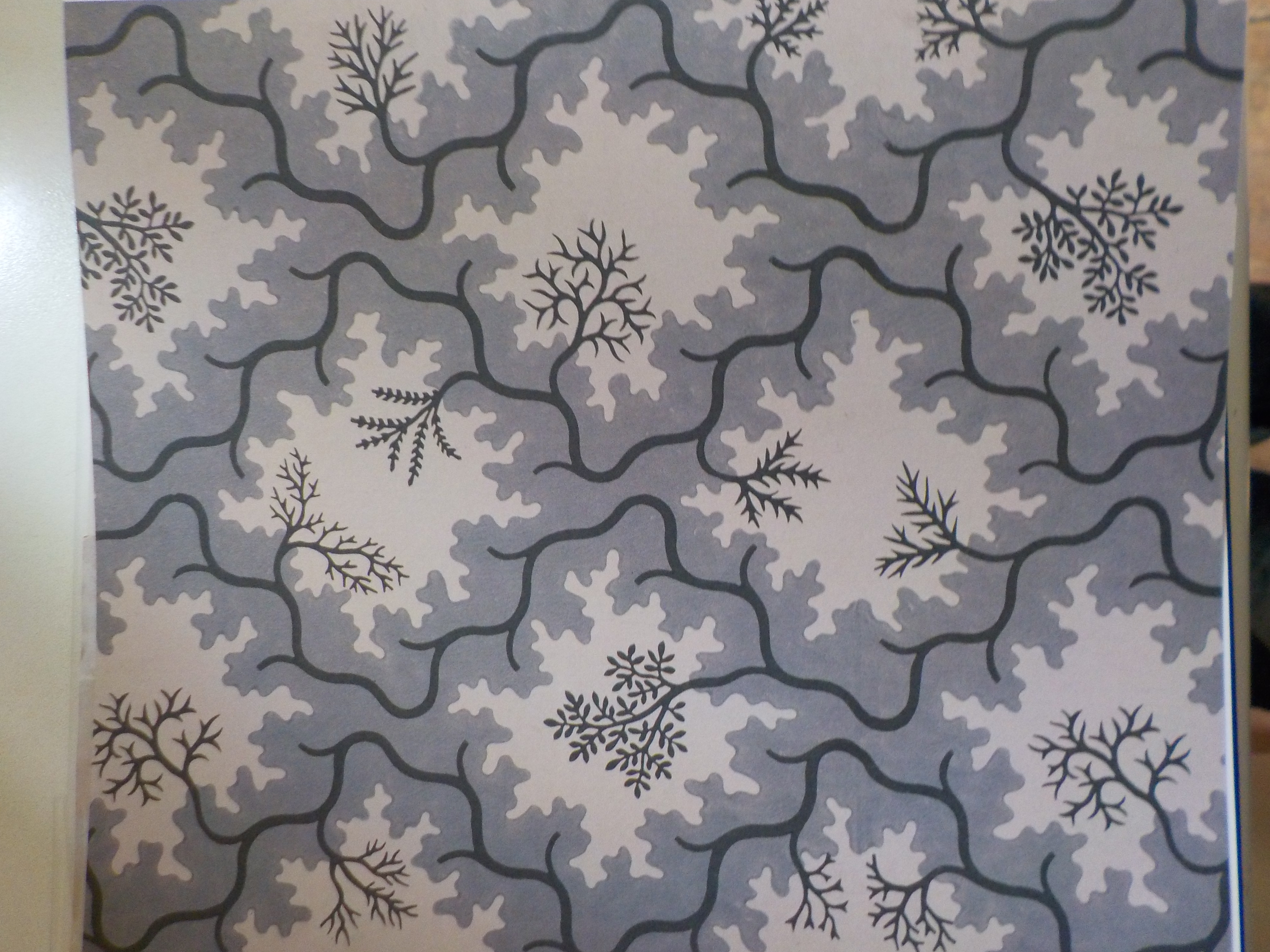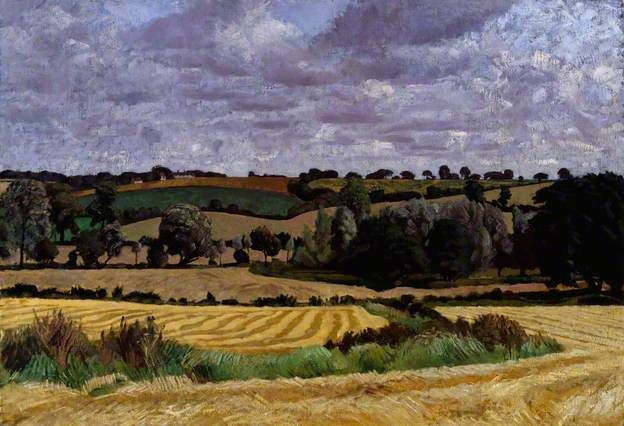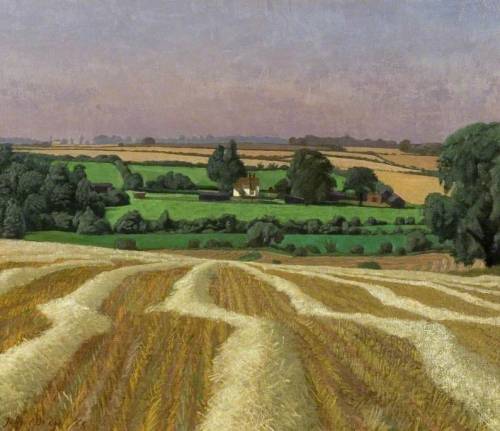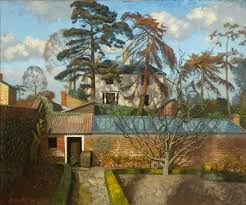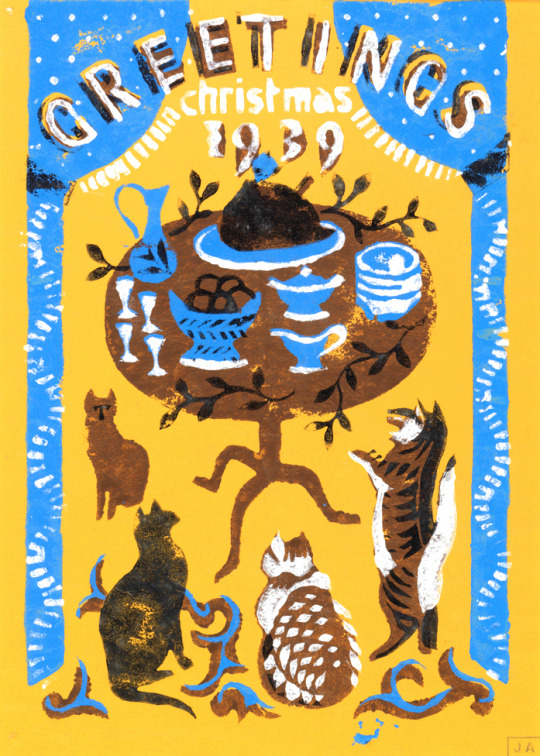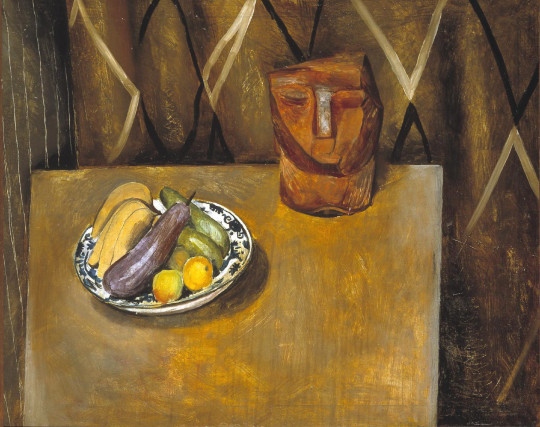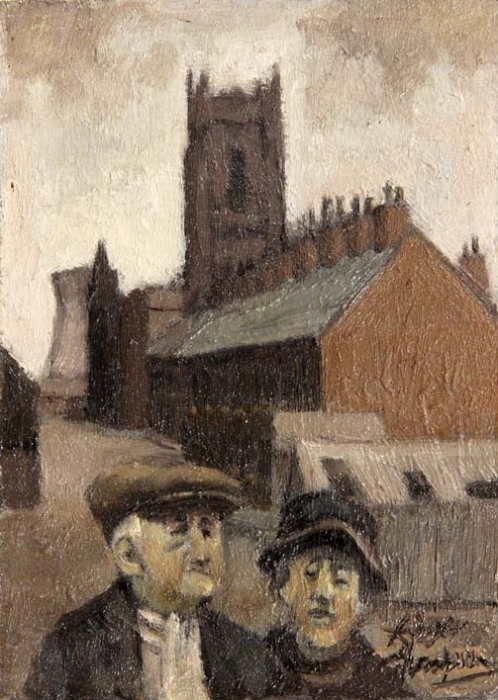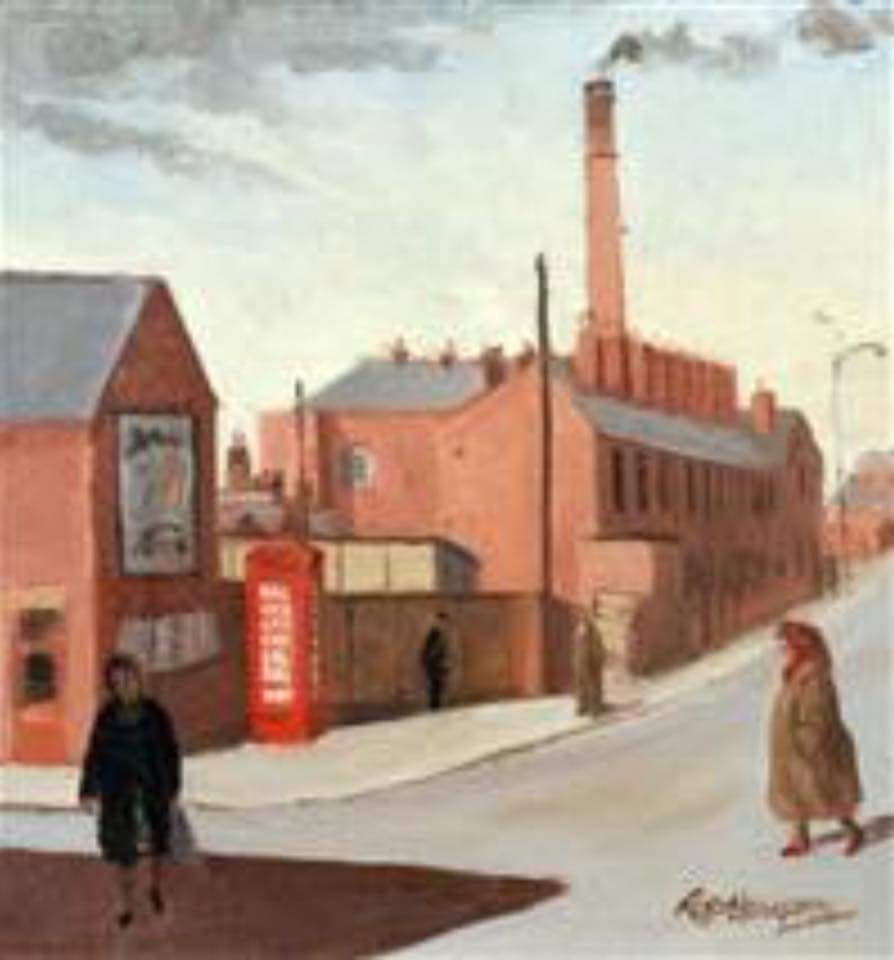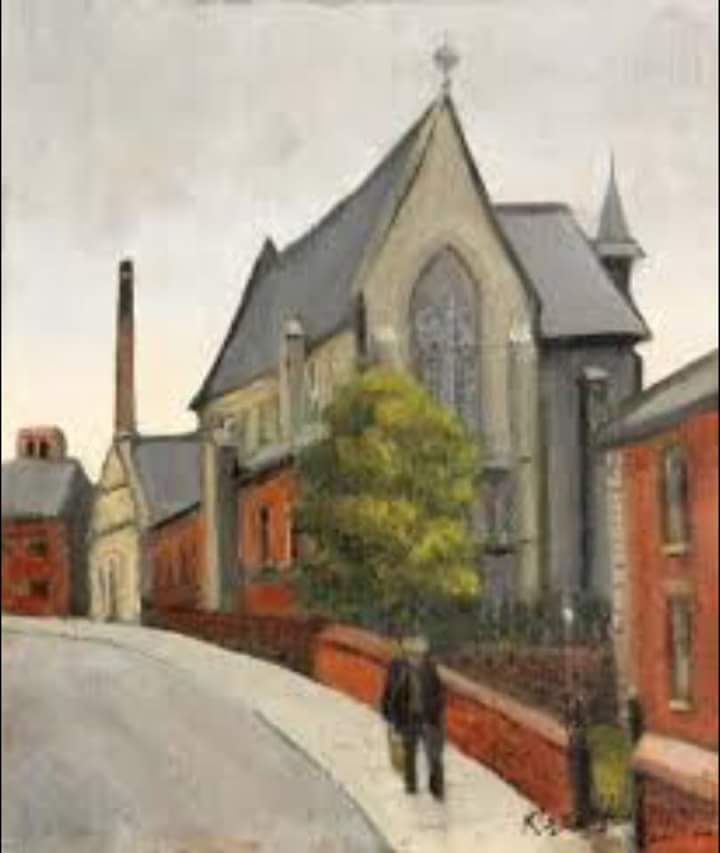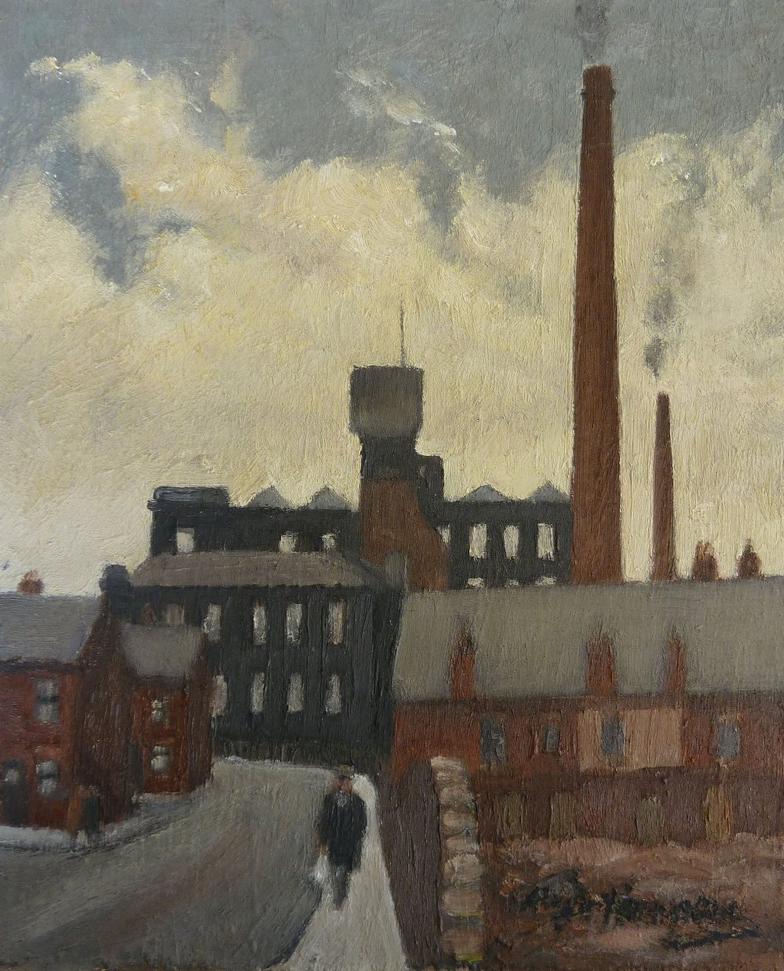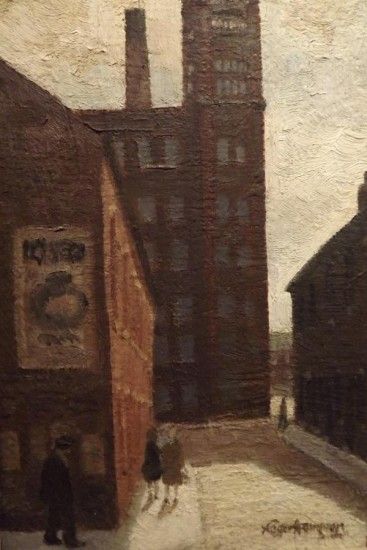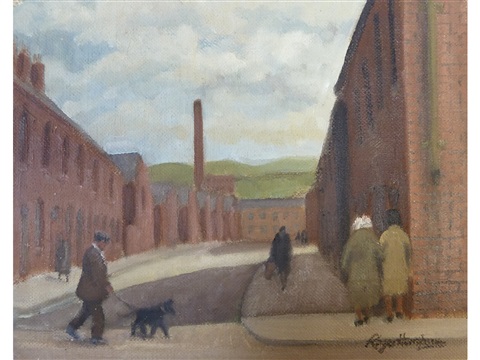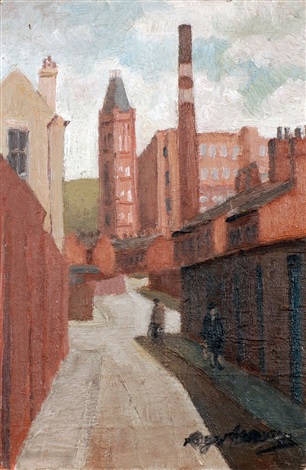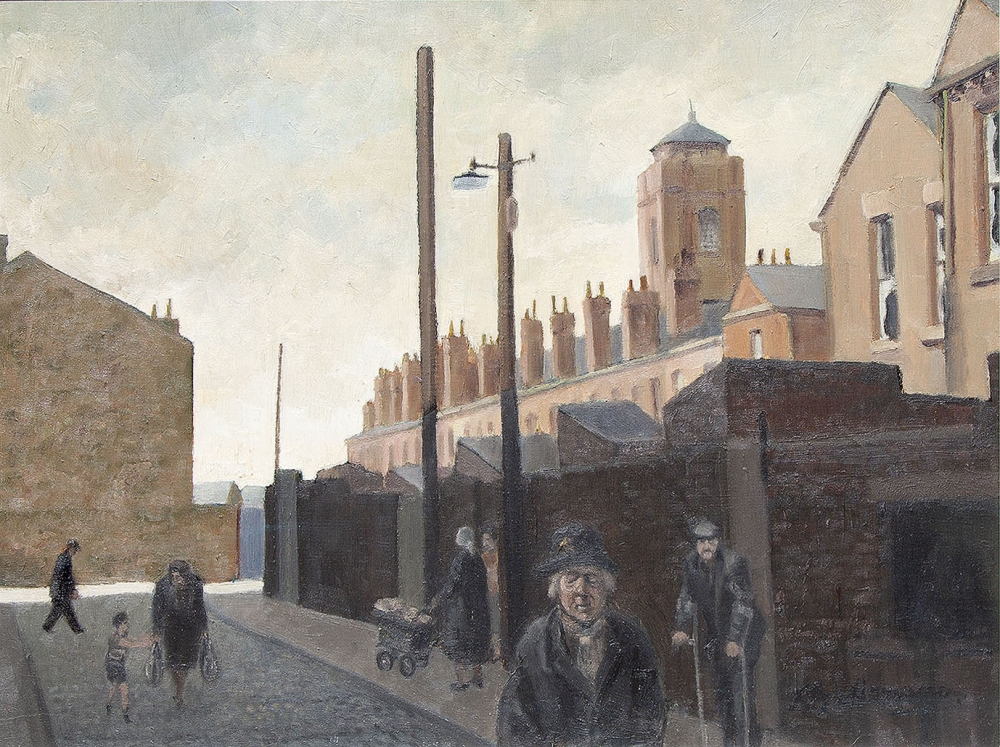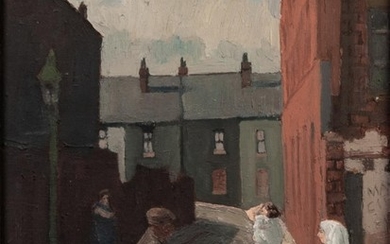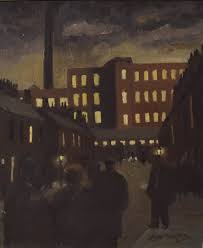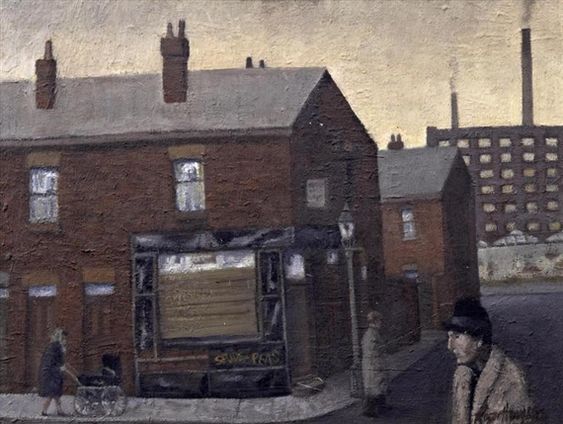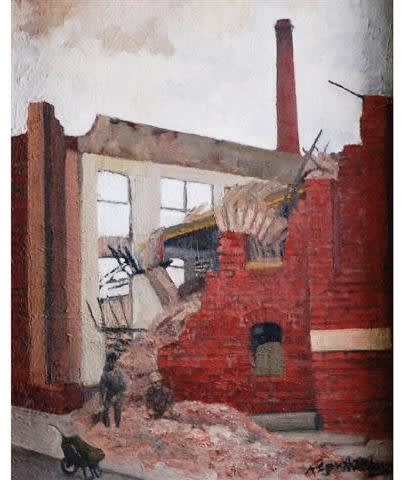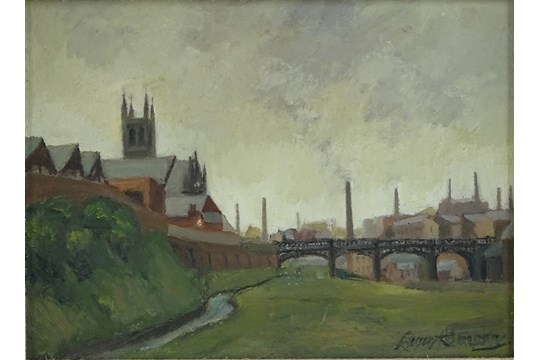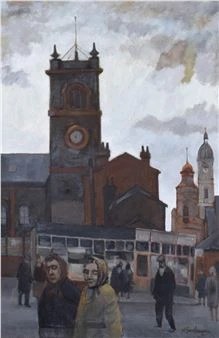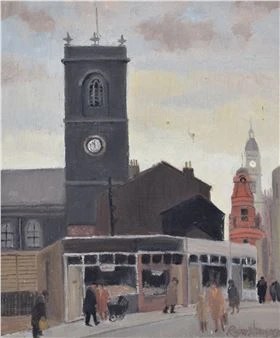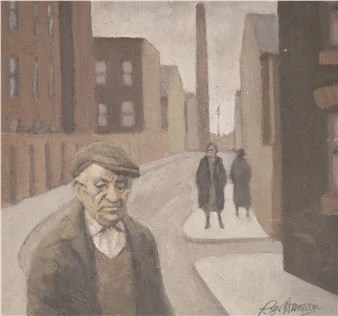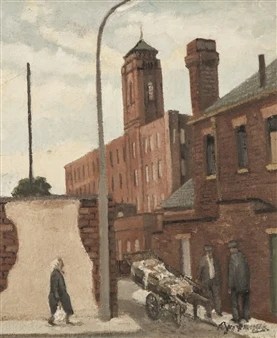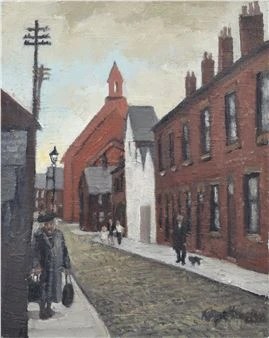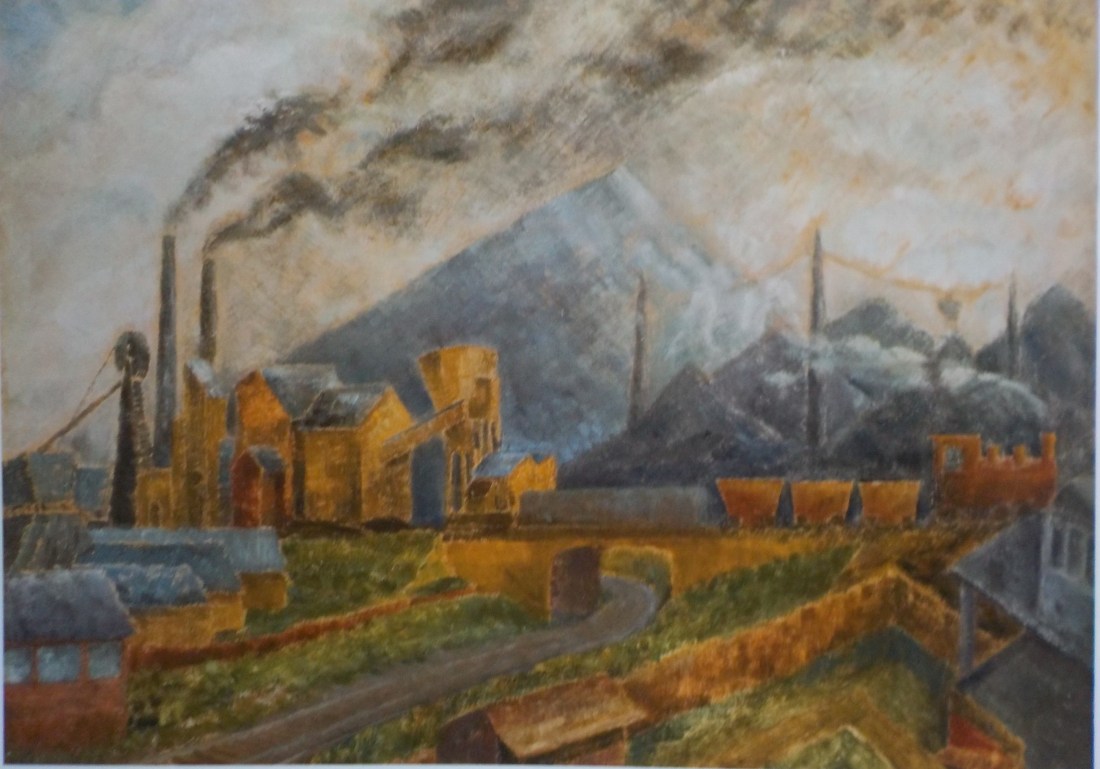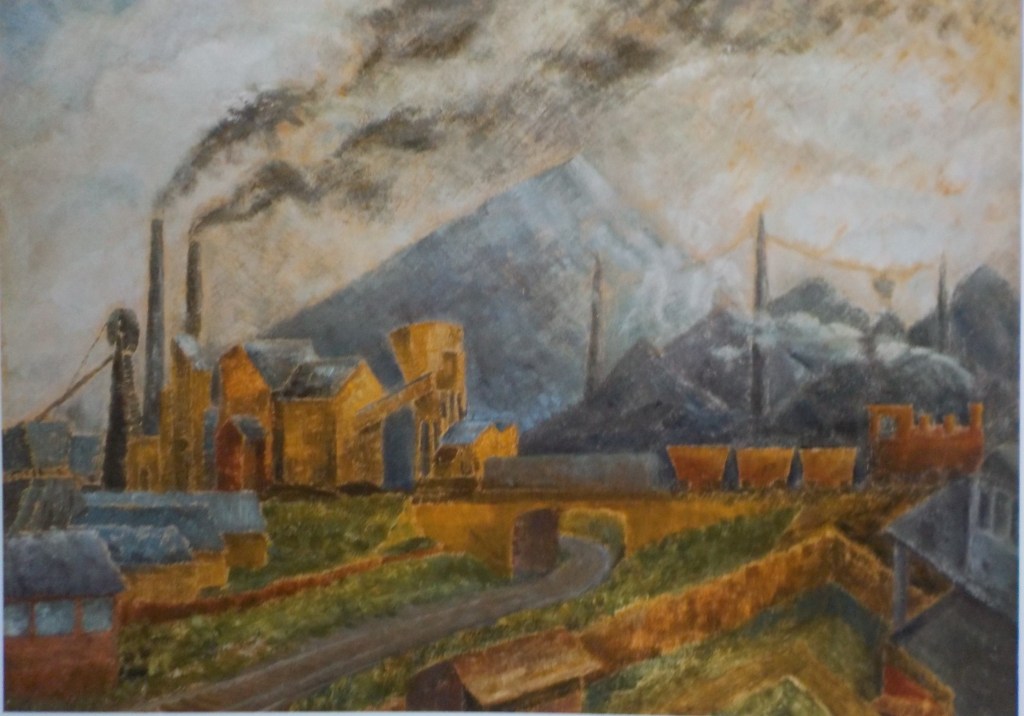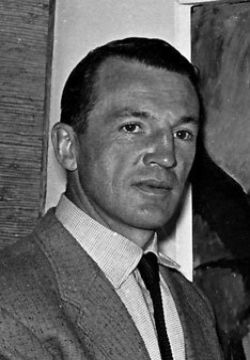
Brian Bradshaw (1923-2016).

Brian Bradshaw

Bolton-born, Bradshaw trained at Bolton School of Art and Manchester Regional College of Art. He served in WWII, and following demobilization, won a scholarship to the Royal College of Art where he enrolled in 1948. In 1951, his final year, he won the Silver Medal for work of special distinction; the Engraving and Architecture prizes; an Associateship (First Class); and was elected Associate of the Royal Society of Painter-Etchers and Engravers (A.R.E). He then won the Prix de Rome and spent two years at the British Academy, before travelling throughout Greece, Spain, France, and Germany.

A young Bradshaw attended Canon Slade Grammar School, this was followed by an interim period before conscription and Bradshaw’s family suggested he enrol for a few months at the Bolton Municipal School of Art under the direction of Principal Mr John R Gauld.  He stayed there for three years and was successful in obtaining the drawing and pictorial design certificate.  He enlisted in the army in 1942.
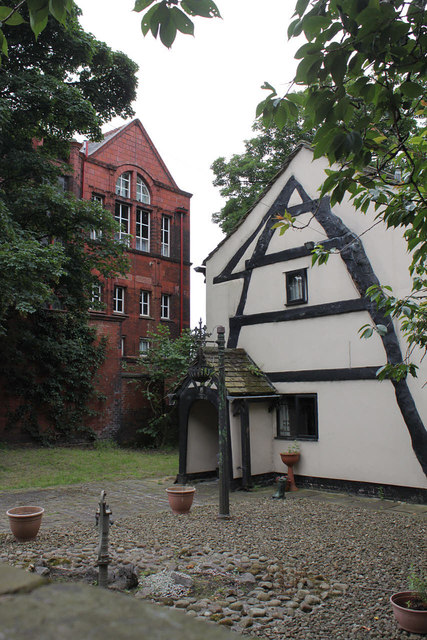
Haulgh Hall

The family home in Bolton was the historic Haulgh Hall, next door to the Hilden Street College of Art.  It is a timber-framed and brick building built in 1597, rendered over, with a stone flagged roof.

Later in life Bradshaw described it as: ‘A linear world of black line on white wall.  The Tudor timbers plot their structure in a decorative skeleton on the stone slabbed roof, and above, sandstone walls.  This rambling mansion rebuilt and modernised in 1602, grounds encroached upon by the industrial age, bounded by road and canal.  A massive door of studded oak and iron; porch in cobbled courtyard; linenfold panels line the private chapel; carved oak beams grip the ceilings and pillar the walls.  In this oasis, I was born and bred.  The green garden paths are lined with large white limestones.’

Returning from service in North Africa Bradshaw returned to Bolton Art school and later took a teaching course in Manchester. He applied to the Royal College of Art to study engraving and succeeded in winning a scholarship for three years entering the College in 1948. He was awarded a first-class associateship at the end of his course.

As a boy Bradshaw was drawn to the nearby moors spending much time on Rivington Pike and Winter Hill. His love of the countryside saw him move in 1953 to a cottage in the Welsh Mountains near Snowdon, where he worked on pictures for an exhibition in Manchester. He painted industrial, moorland and mountain landscapes in England and Wales, as well as seascapes. He won numerous awards from the British and Welsh Art Councils, and in 1953 had his first solo exhibition at Salford City Art Gallery, which was followed by one-man exhibitions in the U.K, U.S.A., South Africa, Australia and Zimbabwe, including four retrospectives.
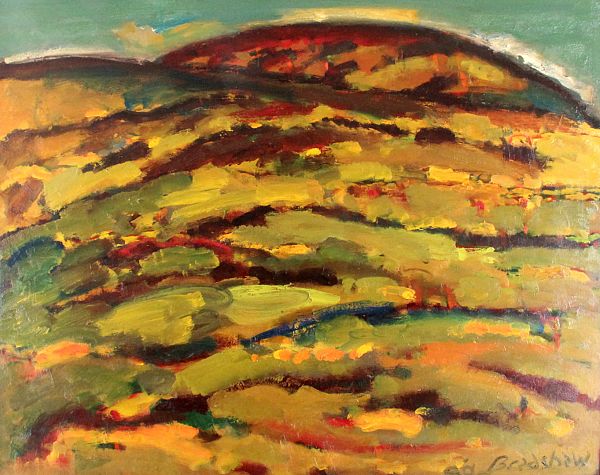
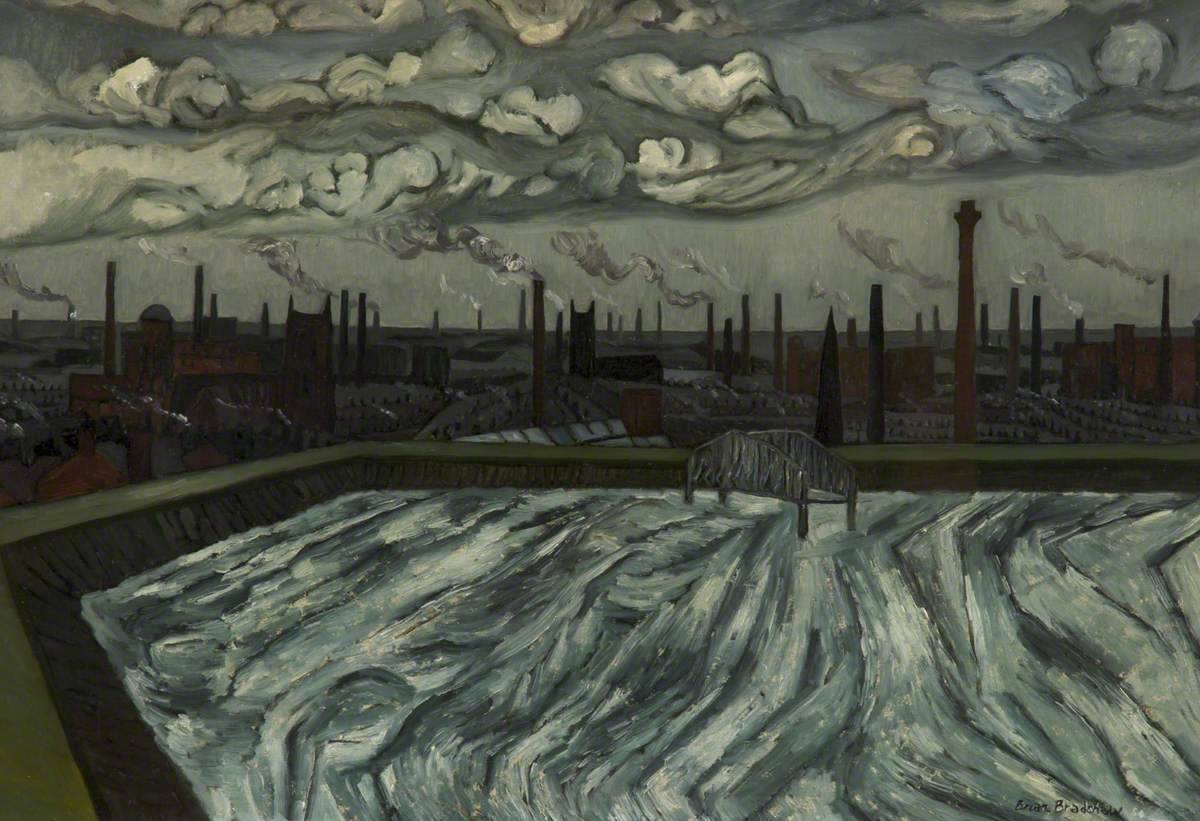
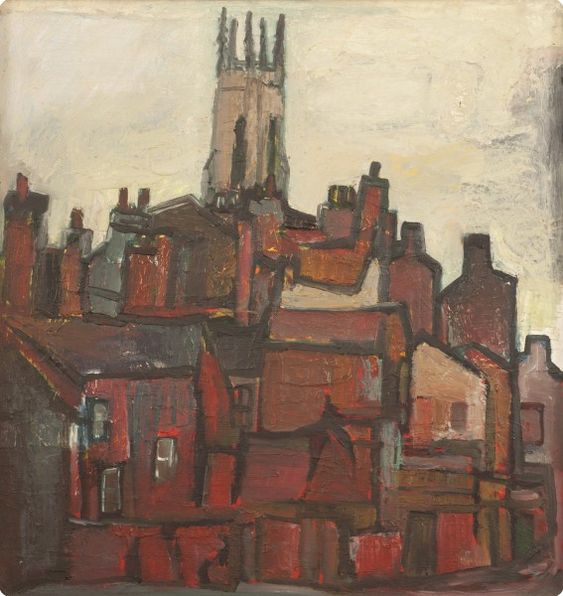
Top left: Bolton Moors. Three other paintings of Bolton.

Bradshaw added to his CV by securing the job of art critic for the Bolton Evening News. Bradshaw wrote to Editor frank Singleton: “you know you have a good paper but your art reviews are bloody awful!”

Chairman of the newspaper company Marcus Tillotson commissioned Bradshaw to paint two paintings one of which was an impression of Victoria Square as it was in 1956.
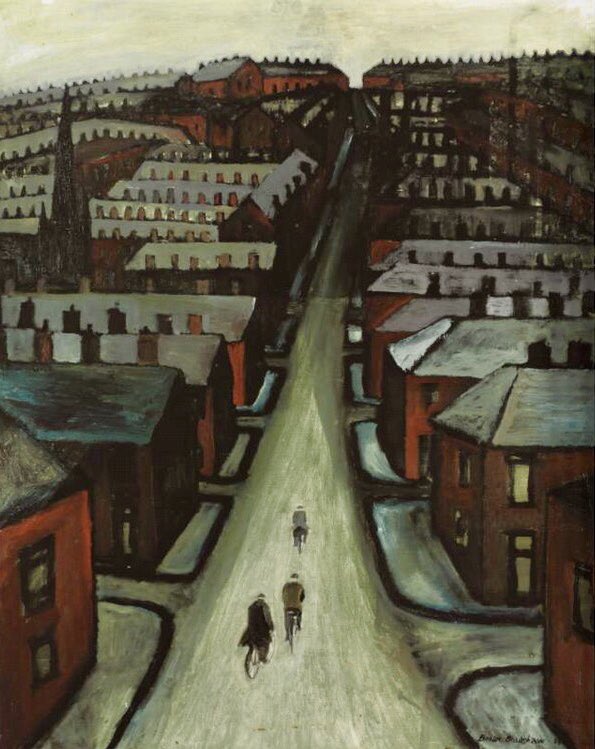
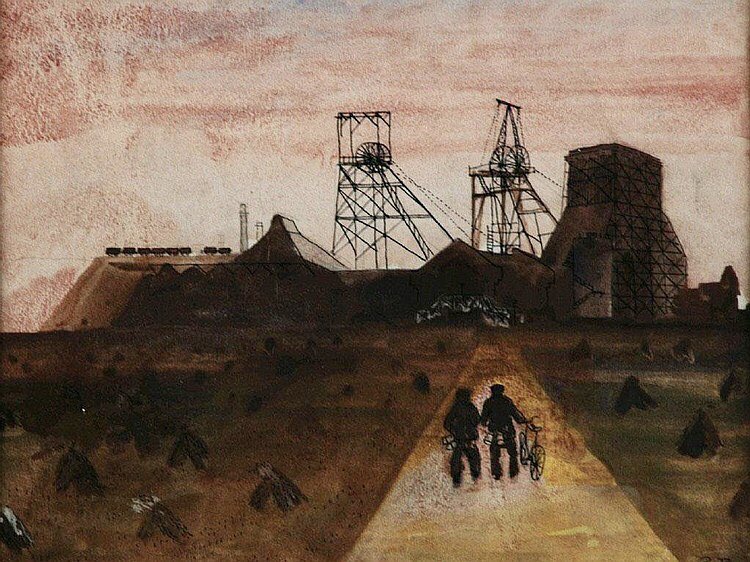
The Long Road. Top right: The Pit. Middle Right: Queens Park, Bolton. Bottom Right: Reflection (Rose Hill, Bolton).

After serving as Vice Chairman of the British Parliamentary Committee on Art Education (1955-1960), Bradshaw was in 1960 invited to take the Chair of Fine Arts at Rhodes University in Grahamstown, South Africa. In 1964, he formed the Grahamstown Group, which exhibited at their own gallery and at venues throughout South Africa and Rhodesia. Many of his former students are now well-known South African artists, lecturers, professors, and gallery directors. In 1978, he resigned from Rhodes University and as Director of the National Galleries of Rhodesia, and returned to England, although he continued to exhibit his work in both the north of England and South Africa and travel between the two.
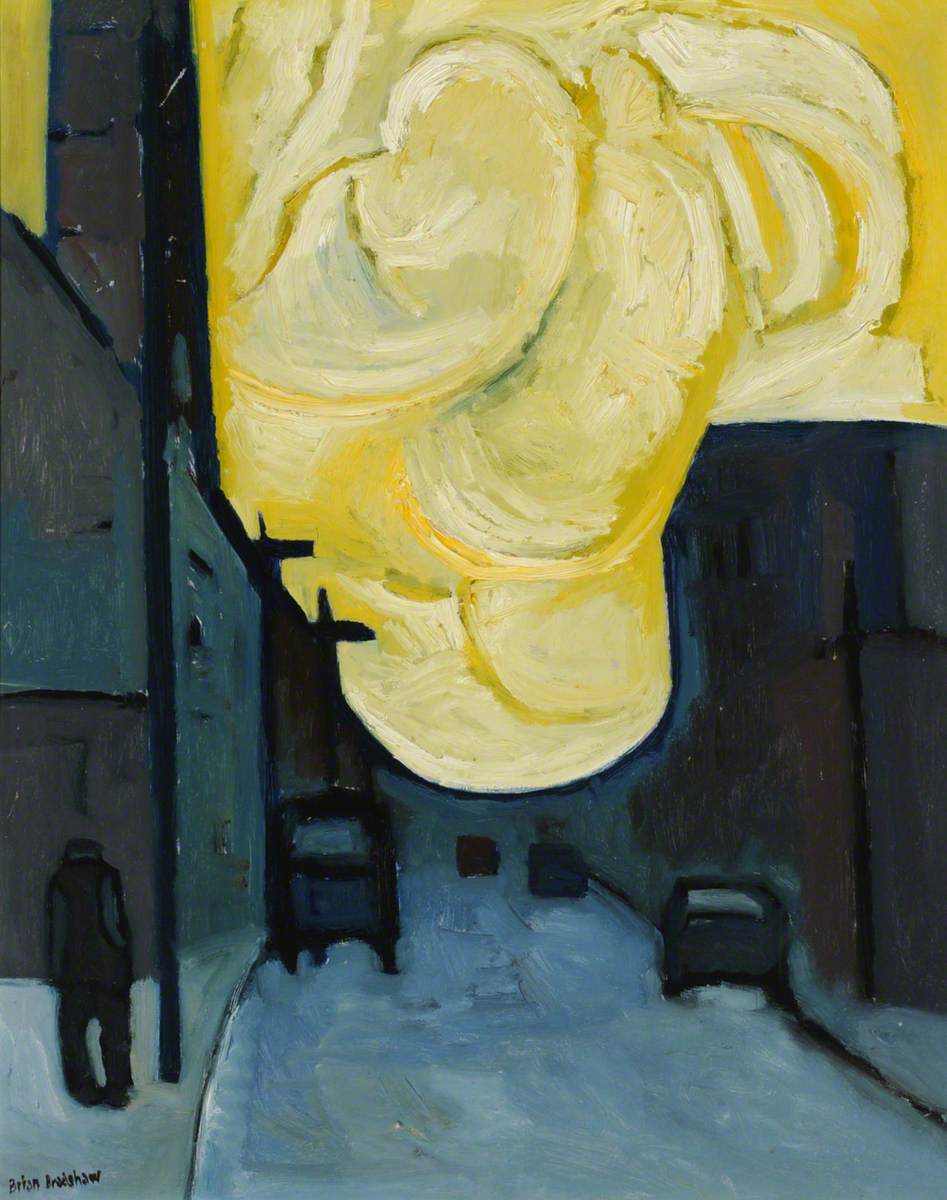
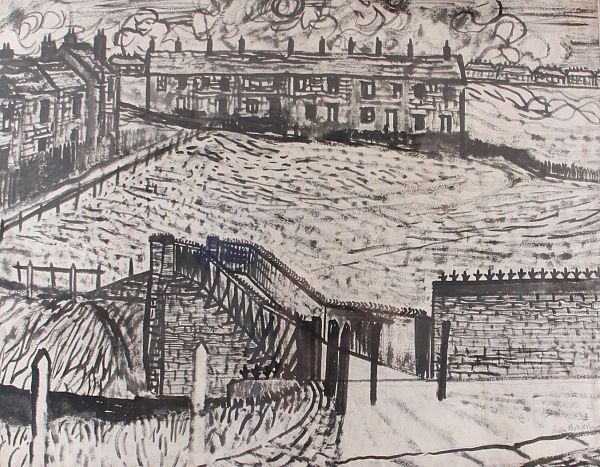
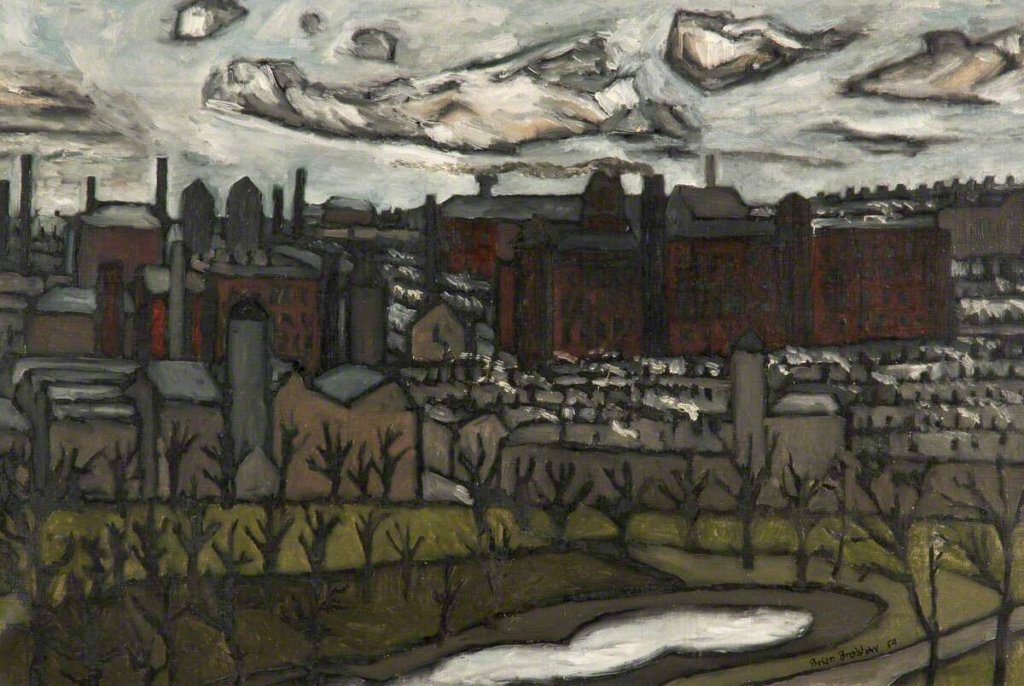
Tonge Moor. Ink Drawing. The Croal. Trinity Church.

Just before he died aged 93 in November 2016 Bradshaw was made aware that the Arts Council of South Africa were honouring him with a permanent foundation for his work to be held and exhibited in Pretoria.

Thank go to Rosemary Hogge who supplied the bulk of information here in her dissertation studying at Rhodes University, South Africa, 1976.
Graham Bennison https://www.facebook.com/BennisonArtist

Some of the artists that visited Ceres

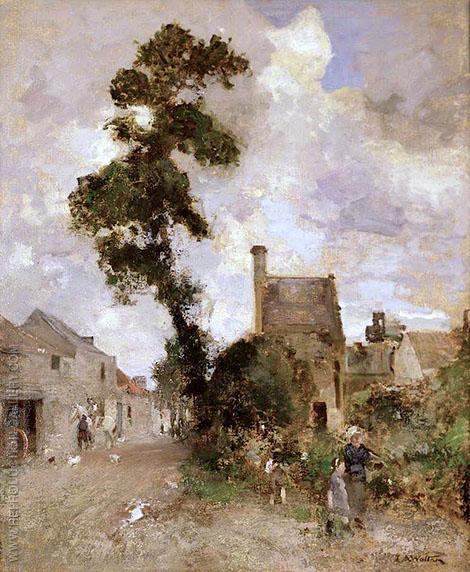
Edward Arthur Walton 1860-1922.  Walton was born at Glanderston House, Barrhead, Renfrewshire on the 18th March 1922, into an exceptionally talented family.  He was a Scottish painter of landscapes and portraits studying art in Düsseldorf before attending Glasgow School of Art School where he met Sir James Guthrie.

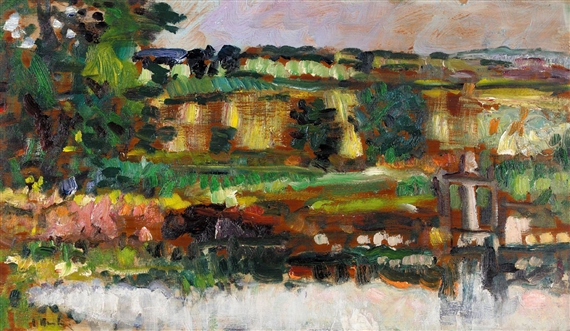
Edward Arthur Walton. Back Wynd, Ceres. The Uplands of Ceres.

Walton was a close friend of artist Joseph Crawhall – Walton’s brother Richard having married Judith Crawhall in 1878. Walton and Guthrie lived in Glasgow until 1894 becoming became part of the Glasgow School or Glasgow Boys, all of whom were great admirers of James McNeill Whistler. Their favourite painting haunts were in the Trossachs and at Crowland in Lincolnshire. In 1883 Walton joined Guthrie, who had taken a house in the Berwickshire village of Cockburnspath. Carrying out portrait commissions became Walton’s main source of income. In the 1880s and 1890s he painted murals in the main building of the Glasgow International Exhibition of 1888 and other buildings in the city.

Walton was in London from 1894 until 1904, living in Cheyne Walk in Chelsea, a neighbour of Whistler and John Lavery. While in London, Walton often painted in Suffolk, spending summers at the Old Vicarage in Wenhaston. Here he painted pastoral scenes in oil and watercolour, the latter often on buff paper with creative interplay between paper and paint.

Walton married the artist Helen Law (née Henderson) after becoming engaged on 29th November 1889. Helen gave up her painting career in order to tend to their family.

Walton died at 7 Belford Park in Edinburgh and is buried in Dean Cemetery in Edinburgh, near the north-east corner of the northern Victorian section.

William Miller Frazer 1864-1961. Frazer was born at Scone, Perthshire. He was a landscape painter highly influenced by his many visits to Algeria, Holland, Italy and Norway. He was fond of the Norfolk Broads, the Fens and the lowlands of Scotland and Fife in particular. He was a founder member of the Scottish Society of Artists of which he was president in 1908. He was one of the best loved artists of his day and spent most of his time at his house in Findhorn. He died in Edinburgh.

Ceres Kirk. Ceres, Fife.

Robert Dickie Cairns 1866-1944.  Cairns an artist, teacher and founder member of the Dumfries & Galloway Art Society. He was also Art Master at Dumfries Academy, 1889-1927, he exhibited only rarely.

When Scotland’s police forces were looking for one emblem to represent them all, they turned to Dumfries. Dumfries chief constable William Black approached Dumfries Academy art master Robert Dickie Cairns to produce a suitable logo. Cairns designed the badge carrying the Semper Vigilo – Always Alert – motto.

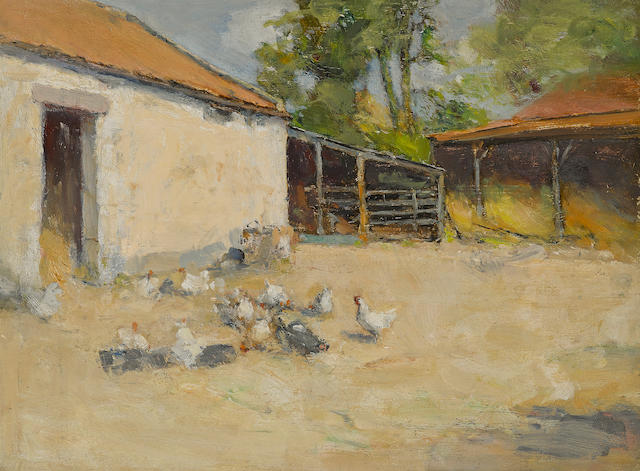
Ceres, the Glebe. Hens outside a barn, Ceres.

John Guthrie Spence Smith 1880=1951. Smith was born on 14th February 1880 the fourth and youngest son of Perth Linen Draper Joseph Smith and his wife Grace Farquharson. Contracting Scarlet Fever in infancy caused Smith to lose his hearing and his speech. He was known to his friends as ‘Dummy Smith’.

By 1906 he was attending the RSA Life Drawing Classes in Edinburgh. Most of  his work was executed in Perthshire, Angus, Fife and the Lothians.

Having settled in Edinburgh by 1909 Smith was a co-founder and member of the so-called Edinburgh Group which centred round Eric Robertson and his wife Cecile Walton. He spent some of his later yeas in the house of his friend William Mervyn Glass.

John died at his home in Edinburgh on 22nd October 1951.

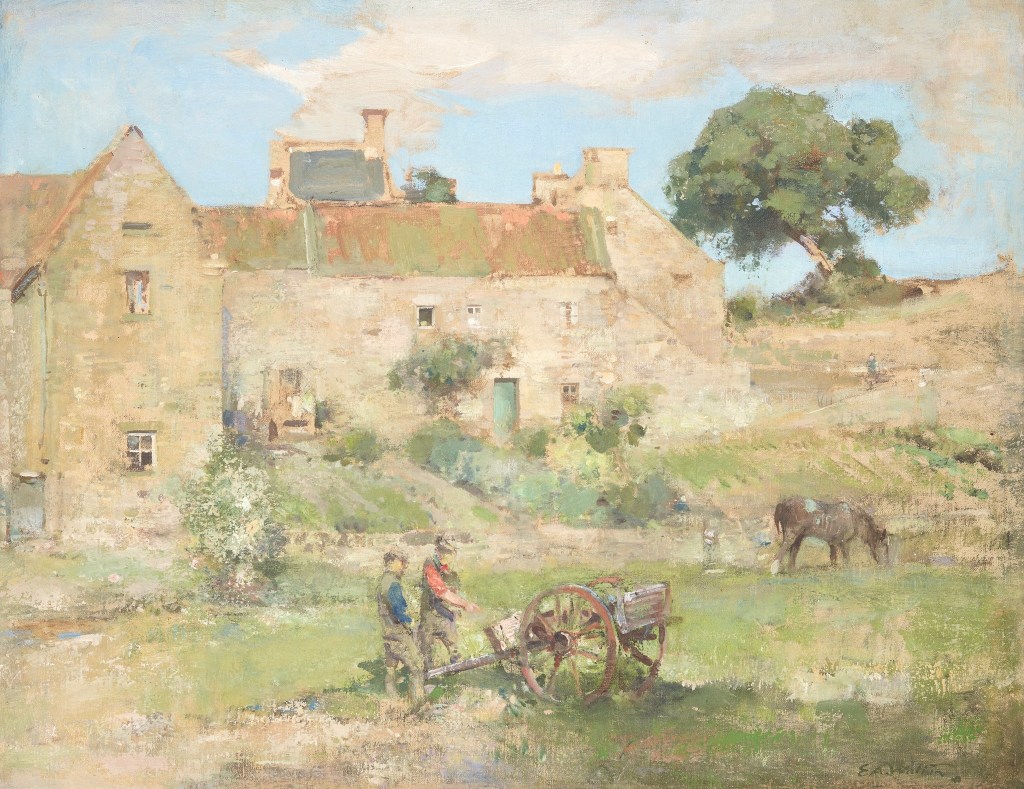
John Guthrie Spence Smith Below: Farm Cottages, Ceres. Top Right: A quiet Corner of Ceres. The other two, right. The Mill House, Ceres. Bridgend, Ceres.

The posting of this blog has brought forth this painting from a friend. Could this painting be by John Guthrie Spence Smith ? AS in Dickie Cairns painting you can see the old building behind the kirk (a brewery ?). Any info most welcome.

William Mervyn Glass 1885-1965.  Glass was born in Aberdeenshire in 1885.  He studied at Gray’s School of Art in Aberdeen and at the Royal Scottish Academy Life School in Edinburgh.  He also studied in Paris and Italy. In 1913 he moved to Edinburgh before serving in the War.

A painter of coastal scenes, seascapes and landscapes, he was particularly fond of painting Iona, where he would paint alongside Maclauchlane Milne, Cadell and Peploe.

Glass refused to teach and committed his time to painting: ‘The thing that gets me is that nine-tenths of the painters in Scotland have to beg for their bread and butter. In their spare time and during holidays they squeeze in enough time to do some real painting’.

Ceres, by William Mervyn Glass
William Mervyn Glass, ‘Fife Cornfields’.

George Leslie Hunter 1877-1931.  Hunter was a prolific painter of Ceres and his works are too numerous to mention here.  Below the link to an earlier blog re Hunter, Meldrum and Ceres.  Click on the link below.

https://httpartistichorizons.org/2018/07/25/back-latch-cottage-ceres-george-leslie-hunter-and-william-meldrum/

Hunter would arm himself with small boards when walking around Ceres executing many quick painted sketches.

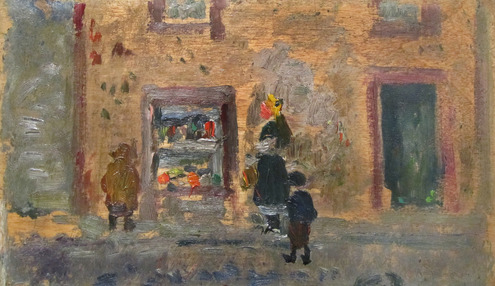
Ceres at harvest time was a recurring theme for Hunter. The shop, Ceres in Main Street is a seldom seen work.

Just a sample of some of Hunters better known works below.

Latch Cottage. Old Mill, Ceres. The Mill, Ceres (landscape painted on the reverse). Mill Buildings, Ceres. The Mill Dam. Ceres Kirk.

Here’s the commercials. There are four Ceres works presently in my Etsy Shop, the latest is a lino-cut The Glebe, Ceres. For locals it’s easier and cheaper to buy direct – 07731904559.

https://www.etsy.com/your/shops/BennisonArtist/tools/listings?ref=seller-platform-mcnav

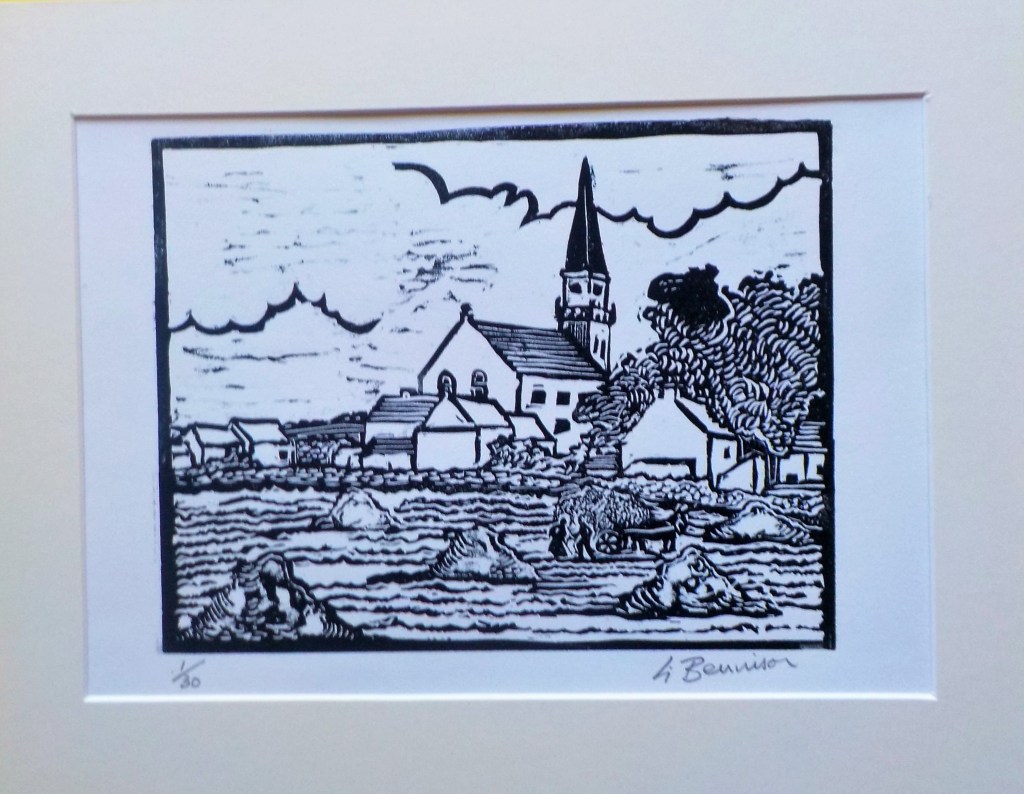
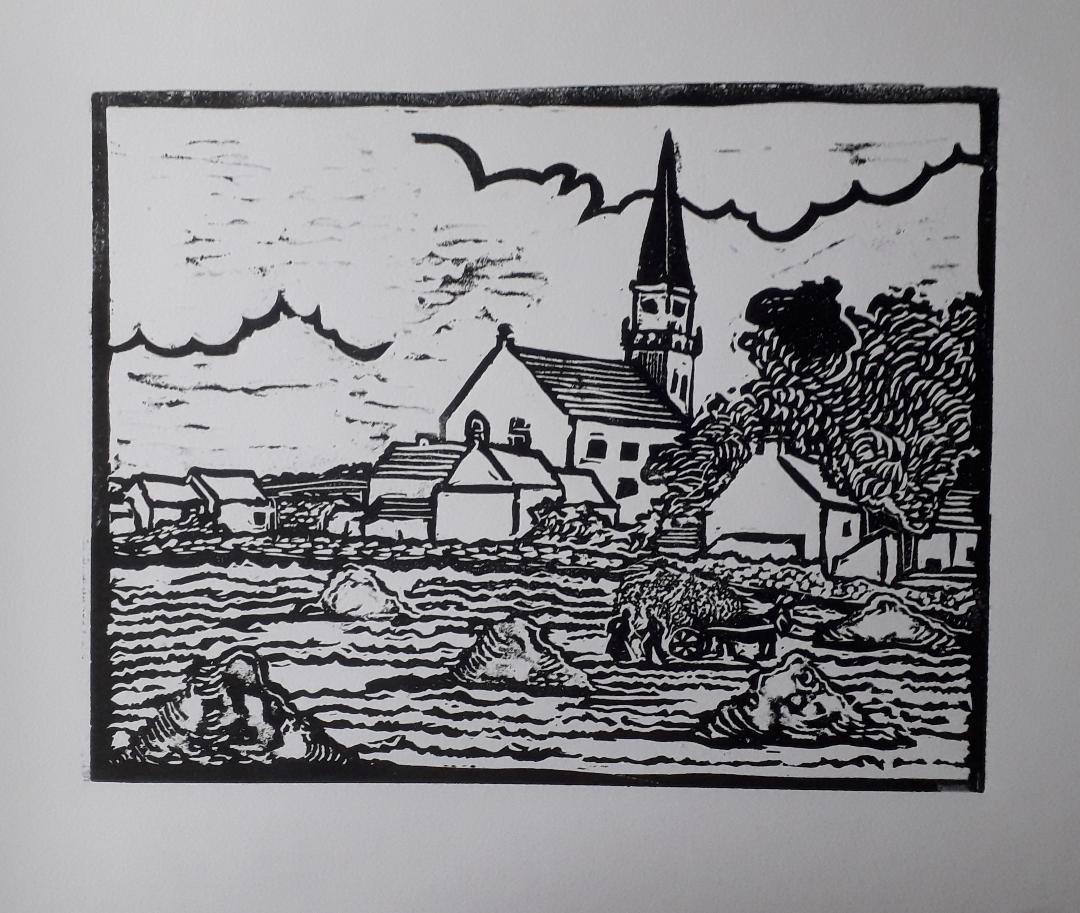
Lino-cut- The Glebe, Ceres, inspired by Robert Dickie Cairns painting. An edition of 30 signed and numbered £25 in mount.

For Sale. These reproductions of Hunter’s ‘Ceres Kirk’ and Walton’s ‘Back Wynd, Ceres’ from the originals were produced by Fife Museum/Art Services. They are 12 x 10 ins. printed on high quality gloss photo paper. Would look lovely framed. £20 each.

Graham Bennison 01334-656844 07731904559 https://www.facebook.com/BennisonArtist

Christopher Wood

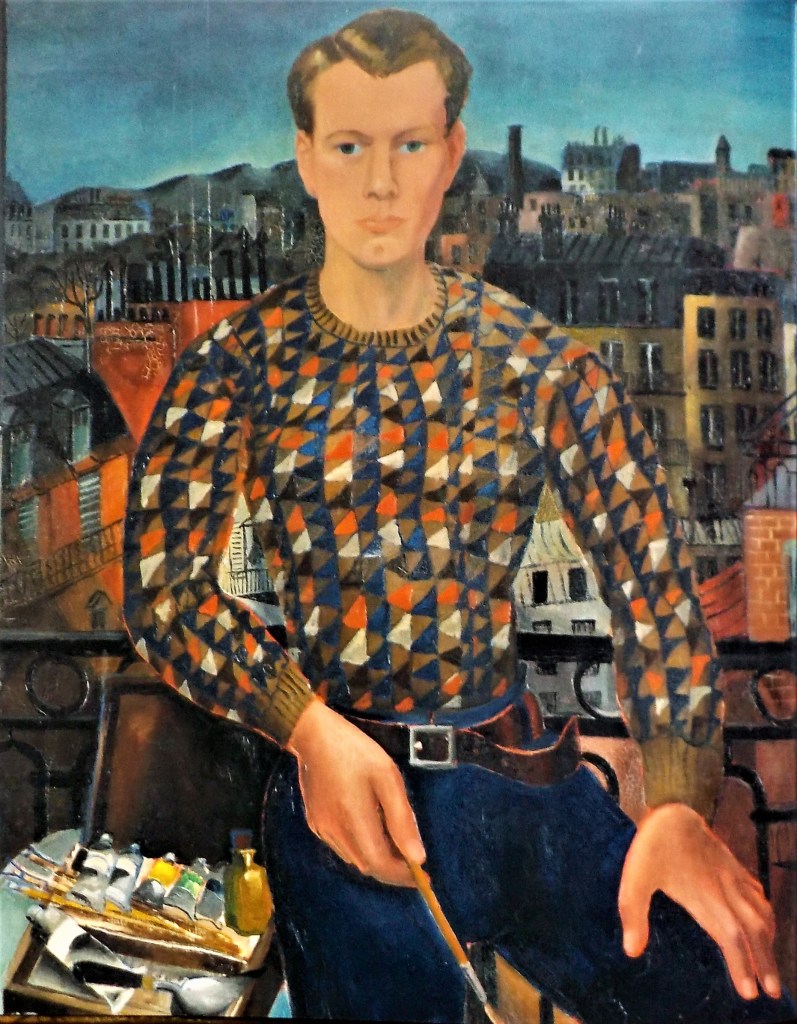
Christopher Wood, Self Portrait 1927.

Christopher Wood 1901-1930. Having left my old smoke-filled industrial town of Bolton in September 1965 I arrived at Trent Park College, North London. I thought I had landed on a completely different planet ! My inmates at Ludgrove Hall of Residence would by enlarge seldom surface from their beds on a Saturday morning before 12 noon. As for me…….filled with an air of exploration, I would board the tube train at Cockfosters and traverse the Piccadilly Line to Leicester Square. Here, the world of Mayfair art galleries overwhelmed me with excitement and inspiration.

On Saturday 13th November 1965 I visited the Redfern Gallery in Cork Street, Mayfair. Yes the date is easily memorable as I kept a diary of my gallery visits. That day I was introduced to the art of Christopher Wood.

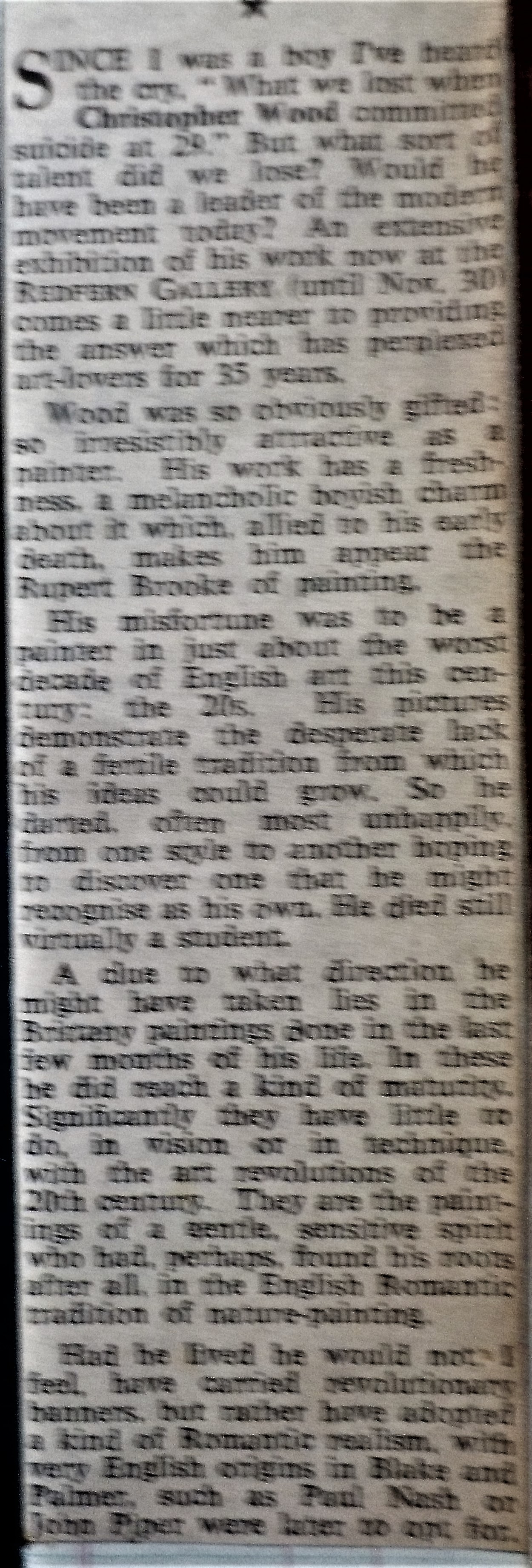
My diary visit to the Redfern. Redfern, invitation to the opening of the exhibition (no I wasn’t invited !). Newspaper review of the exhibition, sorry it’s not easy to read.

Christopher Wood was born in Knowsley to Doctor Lucius and Clare Wood, Dr Wood was a doctor on the Knowsley Estate. He was educated at Freshfield Preparatory School, Formby before spending a term at Marlborough College, Wiltshire. A one-term sojourn at Malvern College, studying medicine, followed in 1918 before a transfer to Liverpool University studying architecture. He left Liverpool within his first year !

At Liverpool University, Wood met Augustus John who encouraged him to be a painter. In 1920 Wood took a job with a fruit importation company, here he met art collector Alphonse Kahn who invited him to Paris, initially living with Kahn on the Bois de Boulogne.

In the 1920s his father was running a general practice in Broad Chalke, Wiltshire, and Wood painted a series of canvases there including Cottage in BroadchalkeAnemones in a Window, Broadchalke, and The Red Cottage, Broadchalke.

Cottage in Broadchalke and The Red Cottage, Broadchalke.

J.A. Gandarillas by Christopher Wood 1926.

Wood was bisexual. In the early summer of 1921, Wood met José Antonio Gandarillas Huici, a Chilean diplomat. Gandarillas was a married homosexual fourteen years older than Wood, their relationship lasted through Wood’s life.

In 1922 Wood and Gandarillas travelled extensively in Europe and North Africa. Returning to Paris Wood moved into Gandarilla’s house at 60 La Montaigne although he kept his studio on the Rue des Sant Peres.

 In 1922, less than a year after arriving in the French capital, he explained in a letter to his mother that most modern artists strove to interpret their subjects as though ‘through the eyes of the smallest child who sees nothing except that which would strike them as being the most important’. The published letters of Van Gogh also had a huge impact, in particular the comparison he made between the solitary struggle of the artist and the hard-worn existence of rural peasants, who he felt were closer to nature and therefore less morally corrupt. Reflecting on the purity of Van Gogh’s ideas, Wood commented to his mother  ‘He must have had such a beautiful mind, so broad nothing petty could have entered his head, otherwise he could never have painted.’  

In 1923 the two embarked on a motor tour of Scotland. Wood also visited an exhibition in London including works by Paul Nash, Matthew Smith and Walter Sickert, Wood regularly sees Augustus John. In 1925 Wood spent some time with Picasso who gave him advice on drawing. Returning to London, Wood begins creating designs for the Ballet Russes’s first English-themed ballet.

In 1926 Wood embarks on his first heterosexual affair with Jeanne Bourgoint, who poses for nude studies and portraits.

Christopher Wood ‘Jeanne Bourgoint’ – Woman With Fox’.  1929

In August 1926 Wood makes his first trip to Cornwall travelling with Gandarillas, first to the Scilly Isles then on to St Ives in the September. He meets Ben and Winifred Nicholson.

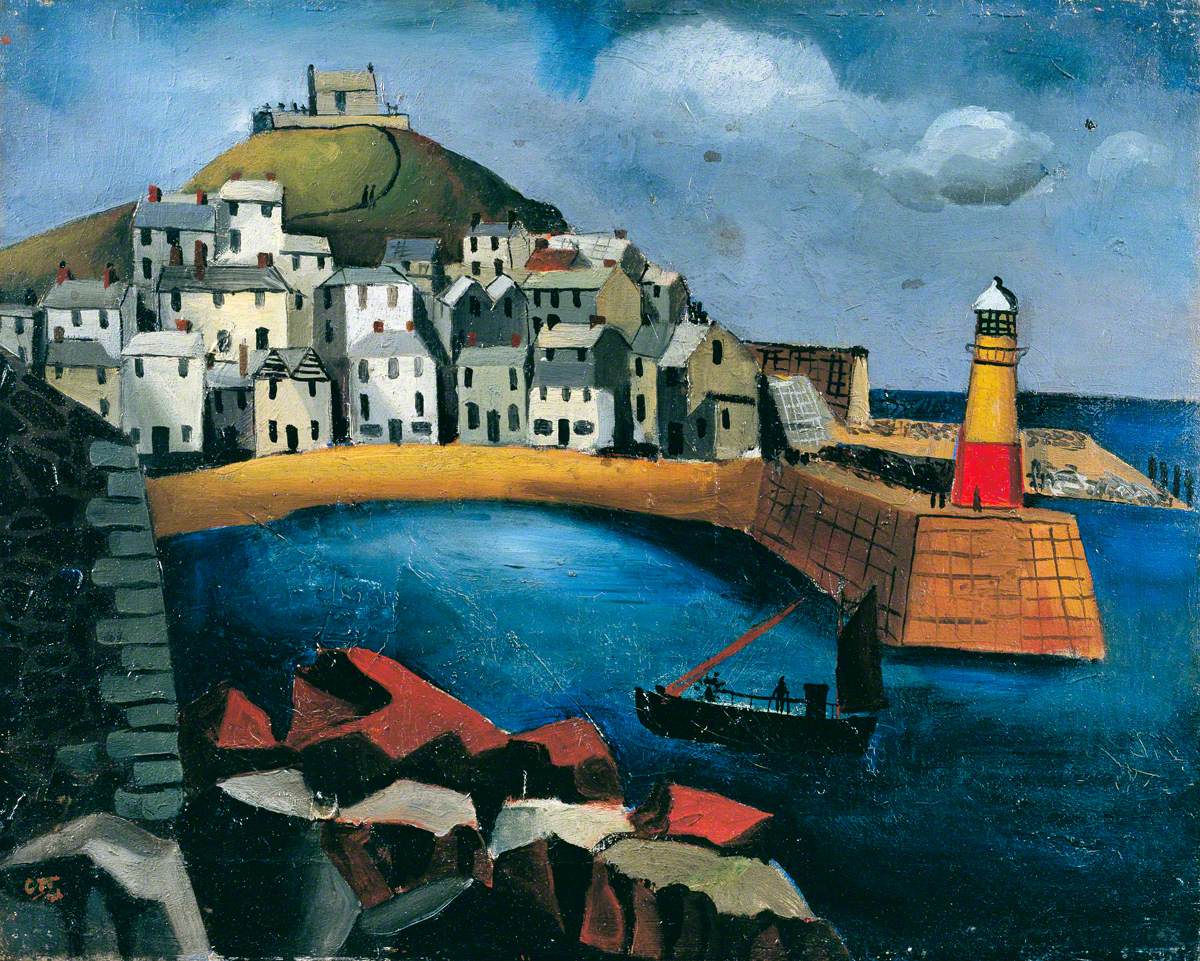
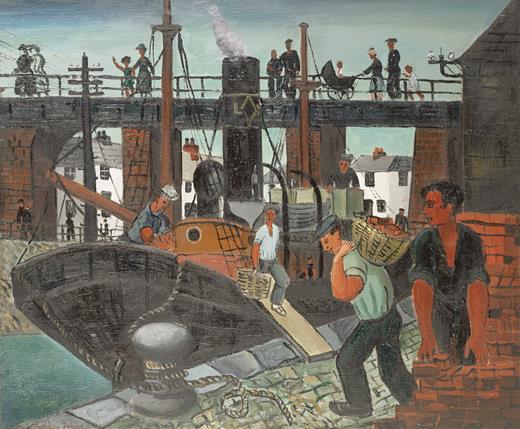
China Dogs.       The Harbour.     Loading Boat St Ives.    All 1926.

A growing relationship between Wood and the Nicholson’s saw them sharing exhibitions and subsequently painting together in Cumberland and Cornwall in 1928.  The Nicholson’s had acquired a stone house named Bankshead in Cumbria in 1923.  Wood arrived at Bankshead in the spring of 1928.  Suitably inspired Wood wrote “I am absolutely on the verge of the real thing after what I learnt and saw at Bankshead”.

Like Nicholson, Wood admired Alfred Wallis whom they met on a trip to St Ives, and whose primitivism influenced Woods’ stylistic development. He painted coastal scenes, and his finest works are considered to be those painted in Brittany in 1929 and during his second trip to Brittany in 1930 when he painted fewer marine pictures and more churches. He claimed that his “mother’s people were Cornish and that he got his love of the sea and for boats from his Cornish ancestry”.

By 1930, painting frenetically in preparation for his Wertheim exhibition in London, Wood became psychotic and began carrying a revolver. On 21 August he travelled to meet his mother and sister for lunch at ‘The County Hotel’ in Salisbury and to show them a selection of his latest paintings. After saying goodbye he jumped under a train at Salisbury railway station, although in deference to his mother’s wishes it was reported as an accident.

Christopher Wood is buried in the churchyard of All Saints Church in Broad Chalke. His gravestone was carved by fellow artist and sculptor Eric Gill.

By 1930, painting frenetically in preparation for his Wertheim exhibition in London, Wood became psychotic and began carrying a revolver. On 21 August he travelled to meet hismother and sister for lunch at ‘The County Hotel’ in Salisbury and to show them a selection of his latest paintings. After saying goodbye he jumped under a train at Salisbury railway station, although in deference to his mother’s wishes it was reported as an accident.

Christopher Wood is buried in the churchyard of All Saints Church in Broad Chalke. His gravestone was carved by fellow artist and sculptor Eric Gill.

https://artuk.org/discover/artists/wood-Chchristopher-19011930

https://www.nationalgalleries.org/art-and-artists/artists/christopher-wood

https://artuk.org/discover/artworks/search/actor:wood-christopher-19011930/page/5

https://www.meisterdrucke.uk/artist/Christopher-Wood.html

https://artuk.org/discover/artworks/search/actor:wood-christopher-19011930/page/5

Graham Bennison, November 2020.

Martin Truefitt-Baker

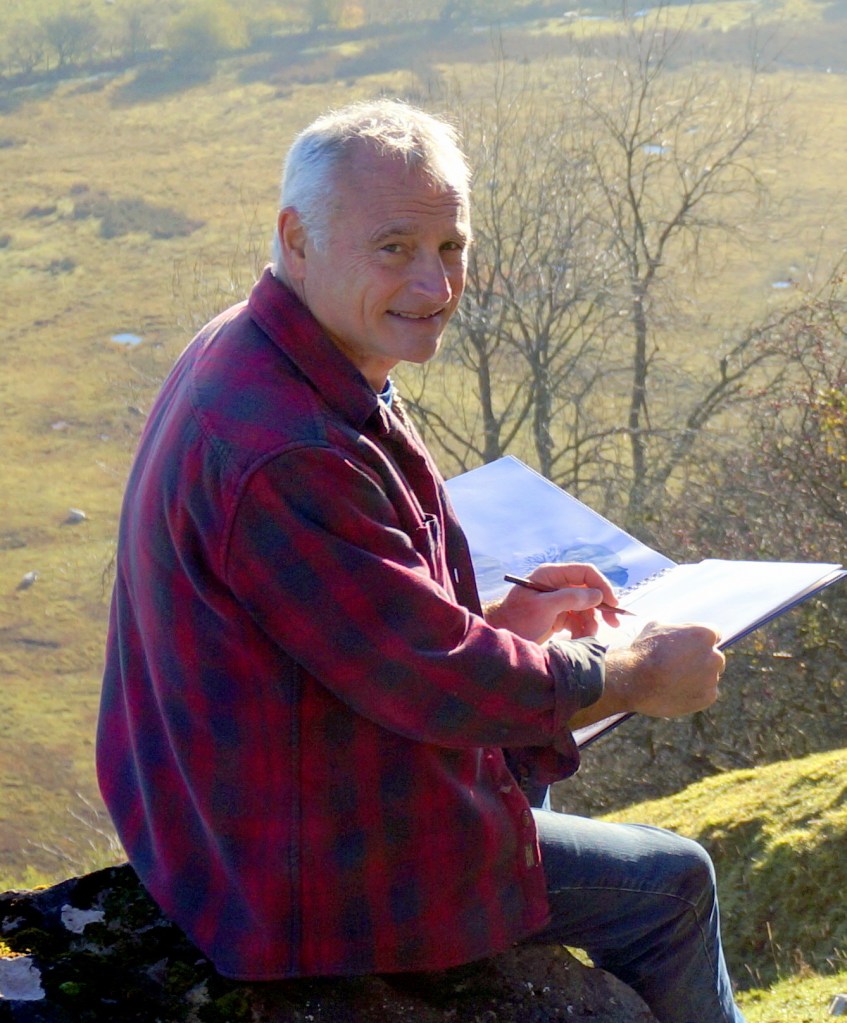
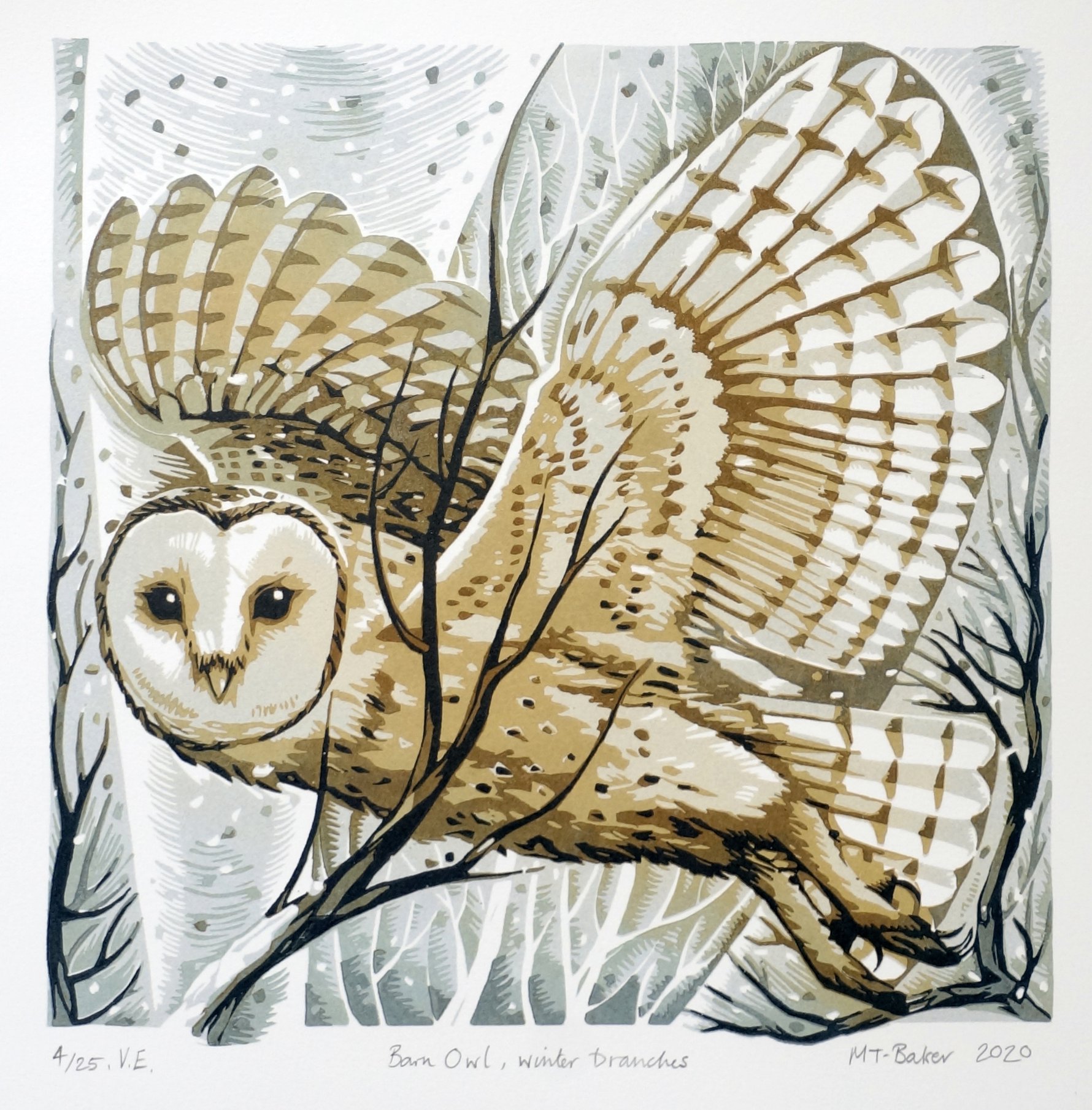
Martin Truefitt-Baker is an artist of outstanding talent creating works of pure technical brilliance in his studio in the Brecon Beacons, Wales.

Originally from East London, Martin moved to Wales over 40 years ago. He lives in an old stone cottage near Llangattock, Powys. A former art teacher in a Valleys secondary school, Martin has started concentrating on his own work in the last few years.

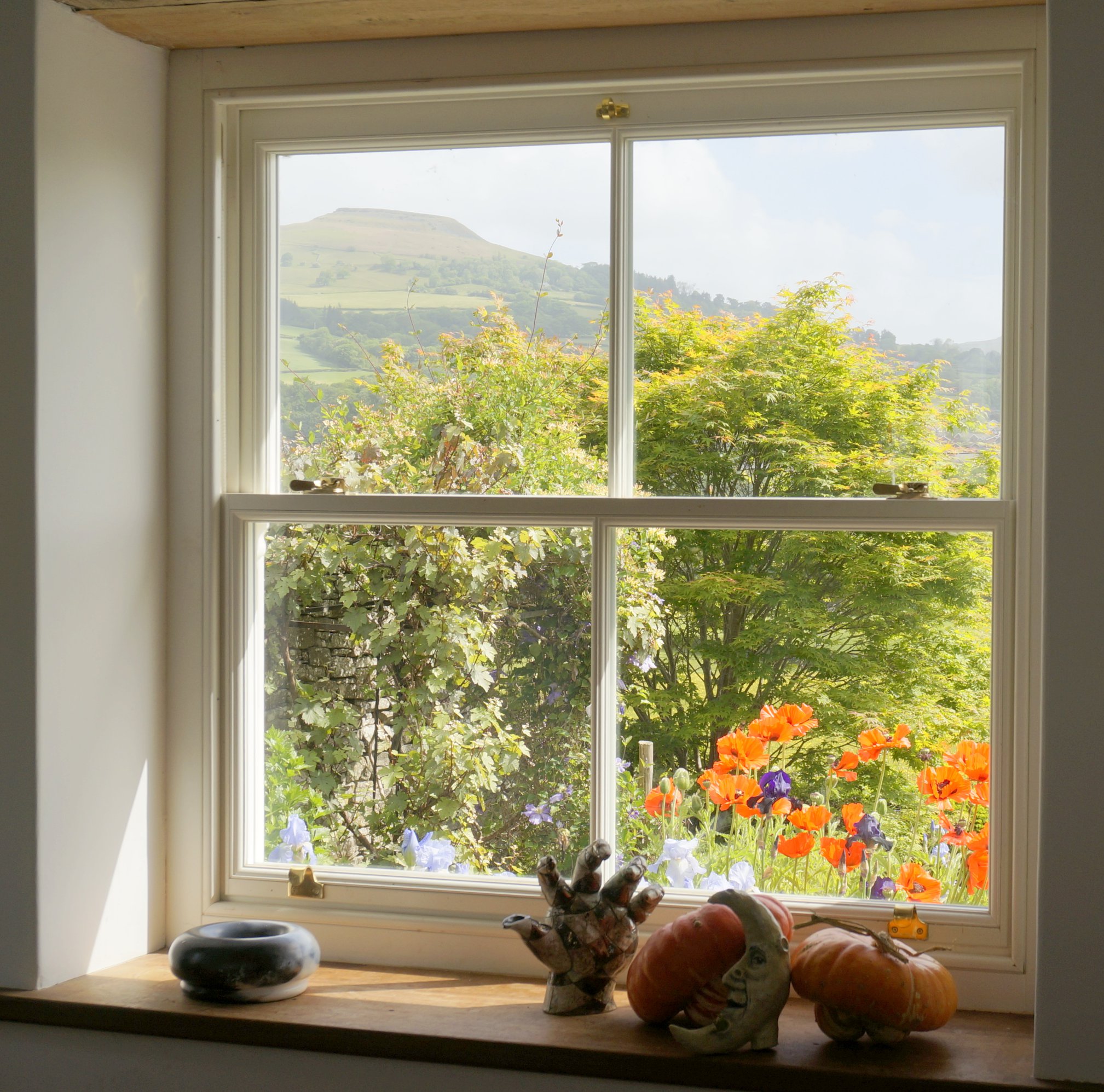
Martin’s cottage studio. Hard not to be inspired by such beautiful surroundings.

Martin was born in 1959 in Dagenham but moved to Wales over 40 years ago. He attended school at Parsloes Manor Comprehensive, Dagenham. His interest in art as a child was only slight but gained momentum in secondary school.

He took his Art exam early not wanting to concentrate on any other A levels…Zoology, Chemistry, General Studies, Economics. He thought at the time he might have ended up following a Natural Sciences career. With little or no pathways into art and design in North London, his fairly good ‘A’ level grades offered the opportunity to go to University or as he was told: “the Civil Service ”!

So Martin entered Aberystwyth University studying there from 1978-81. His course was a Visual Art BA (hons.) – a joint honours of art history and practical work.  

Matin recalls:” The course was a bit of a problem…it turned out I was quite illiterate. I really struggled, my tutors despaired. I remember tutors David Tinker, Moira Vorticelli and Alistair Crawford. My final dissertation was on Edward Bawden. I was lucky to be invited to meet him in Saffron Walden, to see his studio and how he worked and we corresponded for a while. This cemented a lifelong interest in printmaking and that particular early mid-century group – Ravilious, Ardizzone, the Nash brothers etc. “

 “I worked as a graphic artist/illustrator which was a bit of a non-event really. I started with a couple of books for The Welsh books council (in Welsh!) and a couple of pamphlets for a union on Health and Safety. It didn’t really click in the same way; I was maybe a bit naïve. I got into the Association of Illustrators annual exhibition (sponsored by Derwent pencils and Benson and Hedges in those days!). It was at a time when if you didn’t have an agent you couldn’t get much work. The London colleges had direct lines into the industry.

Some examples of Martin’s early graphic illustrative art

I actually worked as a dustman for most of the time. In the early 80s, you would start really early. Run round the streets collecting the bins (heavy metal bins full of ashes in those days as well) to be finished by 12 if you were lucky. Then art work in the afternoon.”

Martin next completed a post graduate teaching qualification and started teaching at a comprehensive school in the valleys in 1983.

Martin reminisces: ” I worked with some great staff and pupils and through some trying times. I became a Head of Department. It was always a very creative department with a very wide range of skills, from painting/drawing to welding to ceramics to fabric printing. My own energy and creativity became channelled towards the betterment of the school and its pupils, earning a wage and paying a mortgage etc. We had some fantastic art projects and school productions.

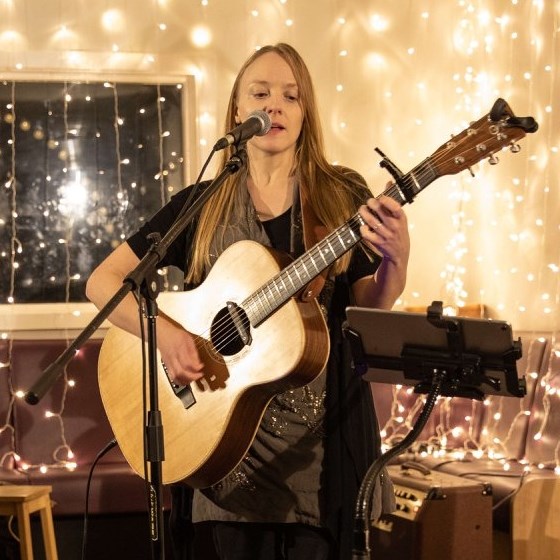
The influence a dedicated teacher can have on their pupils can be life lasting, Amy Goddard, herself a gifted musician, song-writer and artist recalls:” I was part of a group of friends we called “the art mob” who spent lunch hours in the art department so whether Martin Baker was my timetabled art teacher or not I always saw a lot of him. It was a fun and friendly environment and we’d often be involved in painting scenery for the latest musical or play. In the classroom he was a relaxed and fun teacher to be around but if he did need to shout at an unruly class his London accent would make an appearance and the room would come to order in a split second.

Sat at his school desk, Martin wearing a mask that Amy made.

“Martin encouraged me with my art and knew that I really wanted to do well in the subject. He could be a hard task master at times though. My GCSE mock was “B grade stuff,” so I did it again, and again, as he knew I would, until I got my A*. When it came to my A level exam he brought a chair in from home for me to use in my still life, and apparently hosted a dinner party with one garden chair because it was missing. I always remember that near the end of the painting he pointed to a section of it and said “See that? A real artist painted that !” I could have burst with pride and I got the results he’d helped me to work hard for. When I left school I stayed in touch and visited occasionally, helping again with scenery, he remained a friend and even came to my wedding with his wife, Ann. He also drew the portrait of me that is on the cover of my Secret Garden album. The work he’s producing since he retired is wonderful and so inspiring. I’ve recently got back into painting myself and he’s given me lots of encouragement. He’s been an incredibly important person in my life, not least because of the haven he and the art department provided in a scarily large and hostile school.”

Martin’s former pupil Amy Goddard. Amy’s painting ‘The Chair’.

Winding down his teaching career the school had more resources and relatively more funds than when Martin started teaching than when he finished. The subject he felt was, however,  becoming ‘side-lined’, despite often having the best results in the school.

“When we lost our 6th form, the restructuring gave me a chance to leave. So I left teaching! It has taken a few years to ‘find my own voice’. It is only in the last couple of years that ideas and techniques have come together. I feel I have a lot of technical knowledge, skills, but what I do with it in the way of style and subject matter has been developing.”

So for Martin a career as a full-time artist beckoned working from his studio, an extension of the cottage where he lives just outside of Crickhowell on the Llangattock side of the river. The studio looks out across the fields towards the Usk and the Crug. There are also views of the Monmouthshire and Brecon Canal and Craig y Cilau, an old limestone quarry and the lovely valley below it.

Describing his current work and approach Martin states:” I have spent years involved in Art and Design and education but it is only in the last few years that I have returned to concentrating on producing my own work.

In painting local landscape I try to get a bit beyond the simple depiction of a perceived surface reality. I’m not really a plein air painter. I sometimes start a composition in situ but nearly always finish in the studio. I tend to find the poetry in what I see, when it is to some extent distilled through memory. Form colour and shape can then be pushed to hopefully make something that expresses more than surface reality.  I’m a keen photographer and sketcher and these can also form the starting point of compositions.”

Just a sample of the many paintings Martin has been producing inspired by his surroundings.

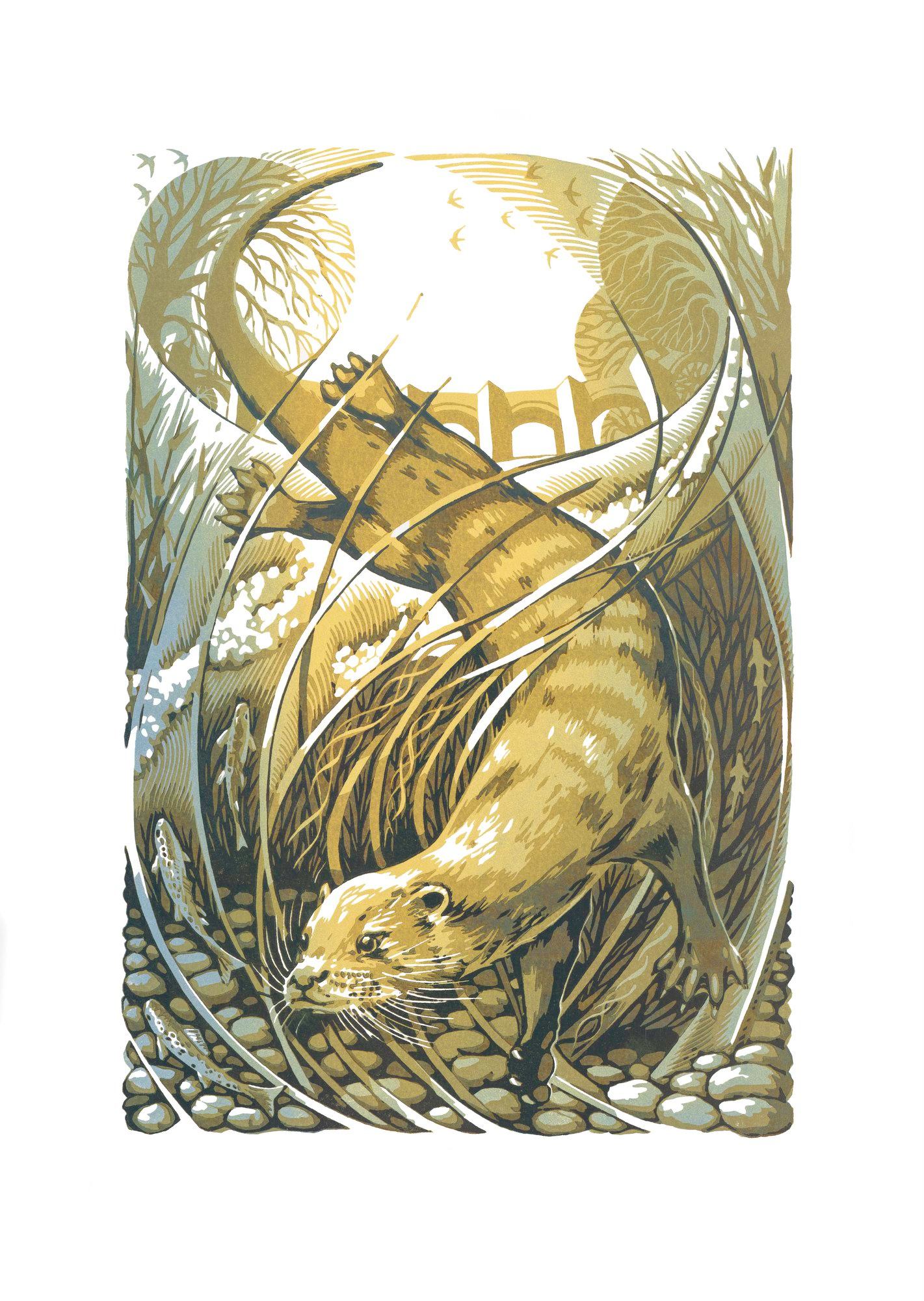
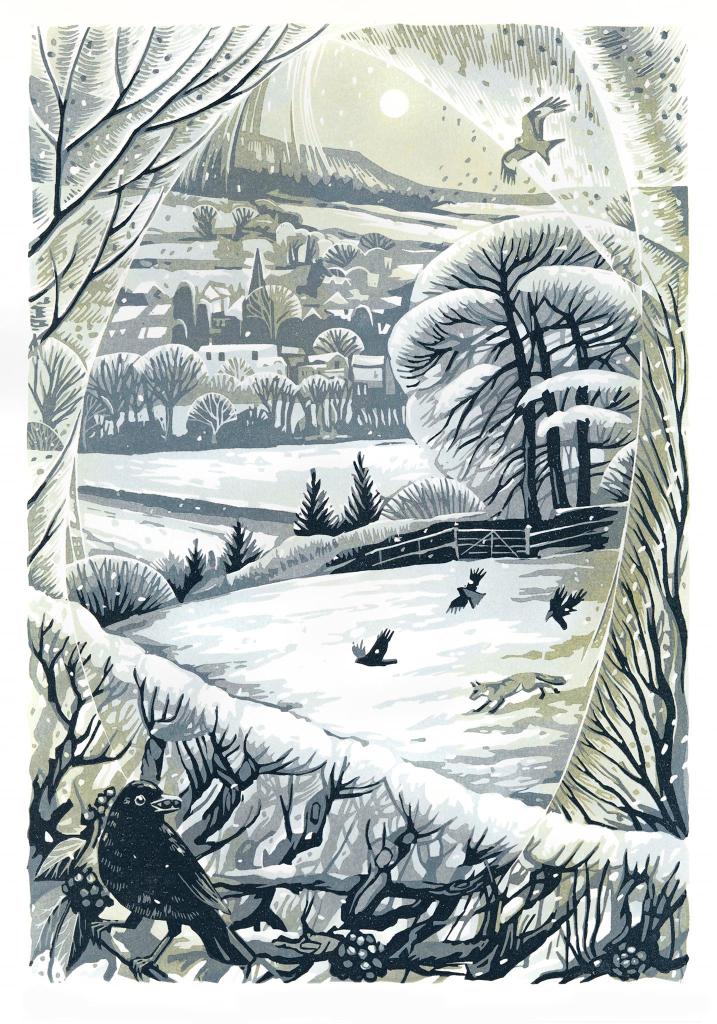
“My current linocuts are mainly of Welsh wildlife in the local landscape. I’m not a great stalker/twitcher and observer of wildlife but I do see quite a bit during walks and wandering. I wouldn’t try to portray anything I haven’t seen but I have used photographs from friends who live locally, who are much better at observing and photographing than me. I imagine I am THE animal in THAT place.

Knowledge of anatomy and animal behaviour are useful to make a convincing portrayal of wildlife in its environment. Recently the wonderful local landscape, wildlife and the changing seasons have become increasingly important in my work. I am often out with my camera and sketch book looking for inspiration and images that try to express the spirit and beauty in the changing light, landscape and wildlife.”

A selection of Martin’s truly stunning lino-cut prints. This writer too produces lino-cuts but I have to say Martin’s work displays outstanding technical brilliance.

Martin’s art heroes include Blake, Turner (Constable), Palmer, Millais, Bawden, Ravilious, Nash and Ceri Richards. He states:” There’s a bit of a common thread, the development of the importance of landscape in British Art to some extent. The MAGIC! The spiritual. A painting of a tree on a hillside is enough in itself. It is beautiful and yet it can also stand for so much else.”

Martin’s art website is …. https://www.truefitt-baker.co.uk/ do visit it to view more of his fabulous art. I am also including a link to Amy Goddard’s wonderful music…. https://www.amygoddardmusic.co.uk/

Please support a new Facebook page, one of Martin’s art heroes, Eric Ravilious.

https://www.facebook.com/groups/488249232182567

Graham Bennison, November 2020. https://www.facebook.com/BennisonArtist
Ceres Art Work

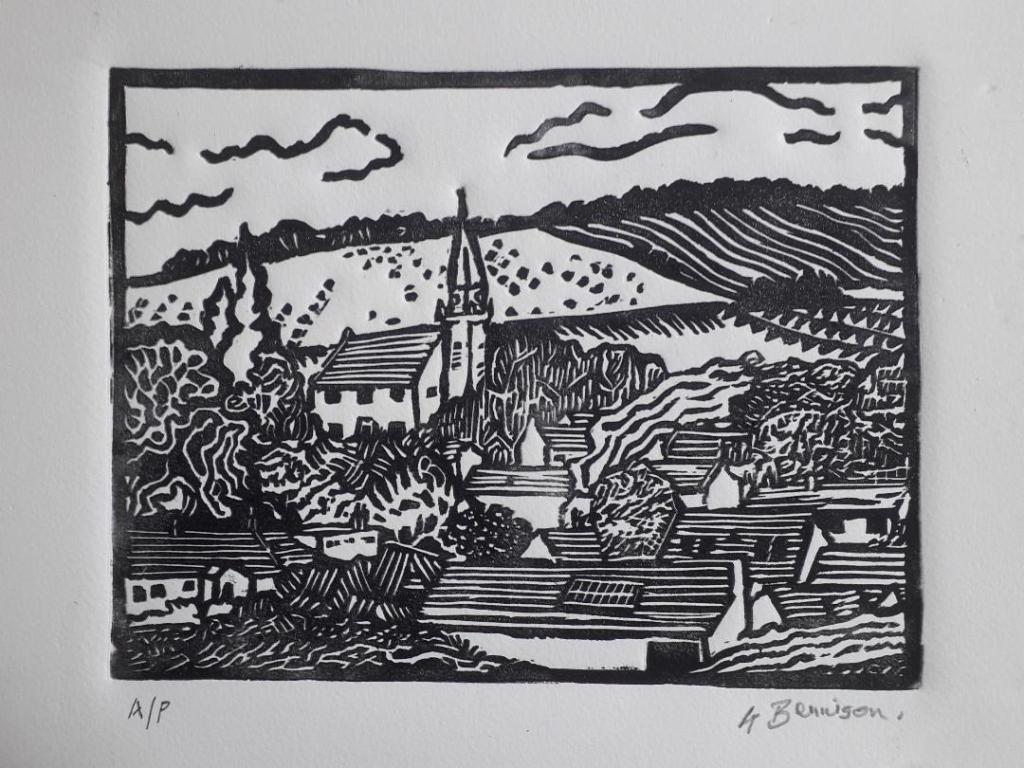
Lino-cut. ‘Ceres.’ Signed and editioned – 50. B/W. Printed on Somerset Velvet Paper. 8 x 6 ins. £20. In mount £23.

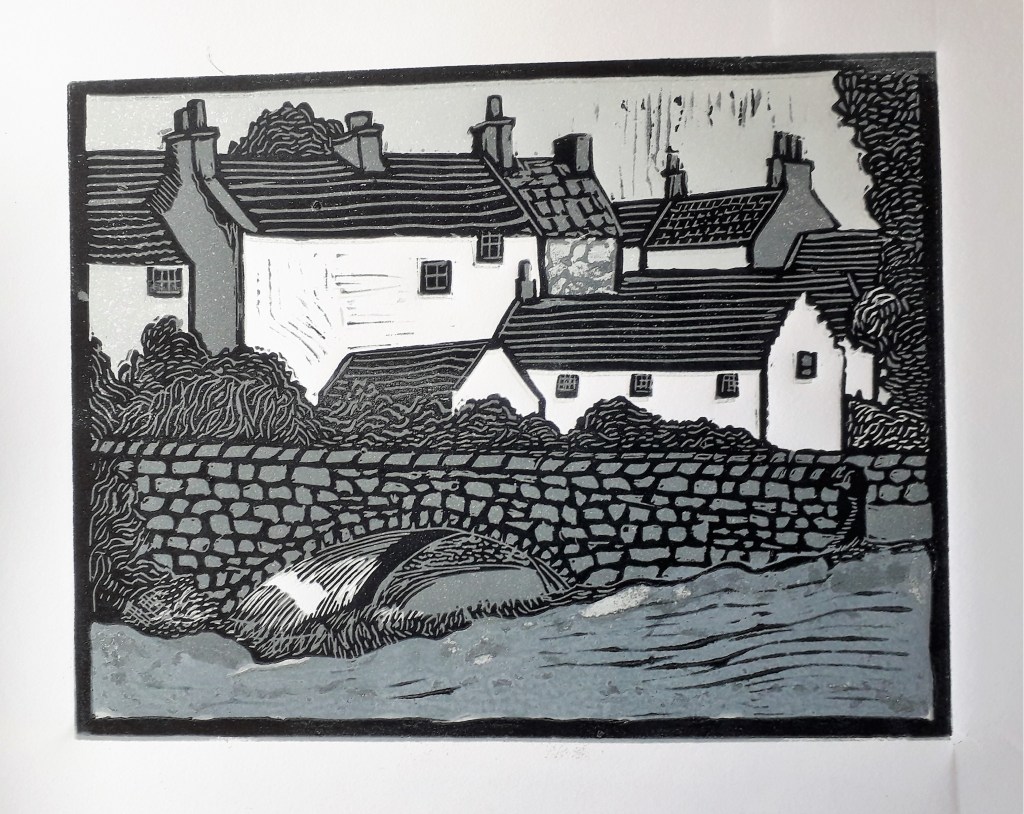
Lino-cut. ‘Ceres. the Glebe’. Signed and editioned – 30. One edition is blue/black, the other edition is black. Printed on Somerset Velvet paper. 9 x 7ins. £17. In mount £20.

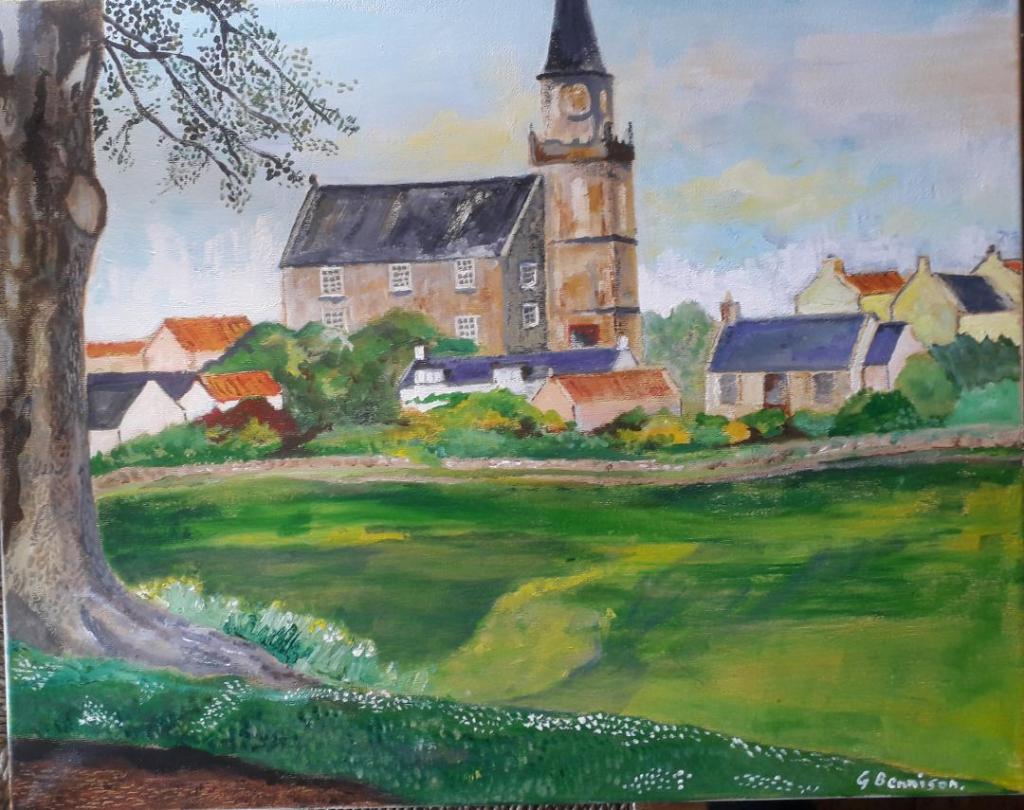
‘Ceres from the Green’. A 4-layer reduction lino in a limited edition of 16, signed and numbered 1/16 to 16/16. 9 ins x 7ins. A reduction lino means that successive layers are carved from the block. It took a whole week to produce this art. £25 plus p & p if required. Feel free to message with any queries. OFFER £20 to Ceres residents plus p & p if required

Original hand-crafted lino-cut carved from the block. ‘Ceres’ b/w. Open edition. 7 ins x 9 ins. £12 plus p and p if desired.

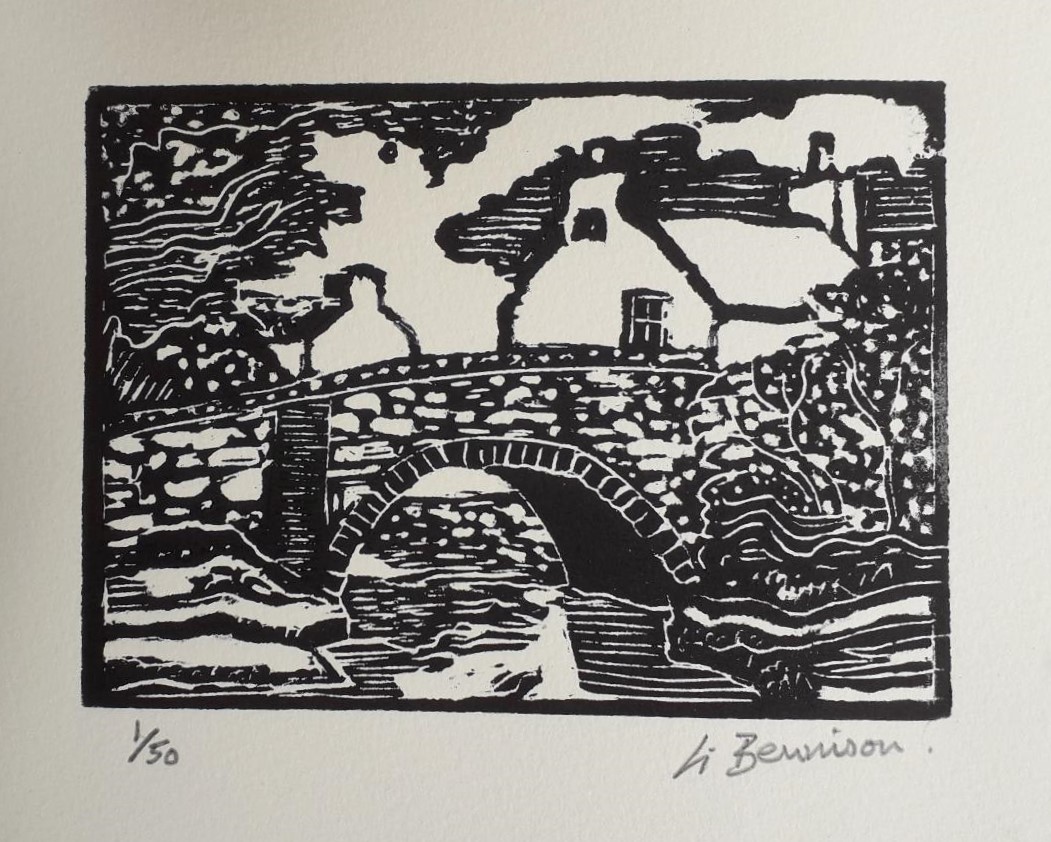
Bishop’s Brig, Ceres from the side seldom seen. The black and white and colour version both will be available for £12. The b/w is a signed edition of 50. 4 ins x 5.5 ins.
Wood blocks were the earliest form of printing when the Chinese carved their letters into wood around 300 AD. Europe was a little bit behind in establishing printing and illustration as opposed to manuscripts carefully scribed by monks.
I’d forgotten just how hard carving into a wooden block is….it’s hard believe me. The block will. however, last forever just about, you could easily print off Rembrandt’s wood-blocks now.
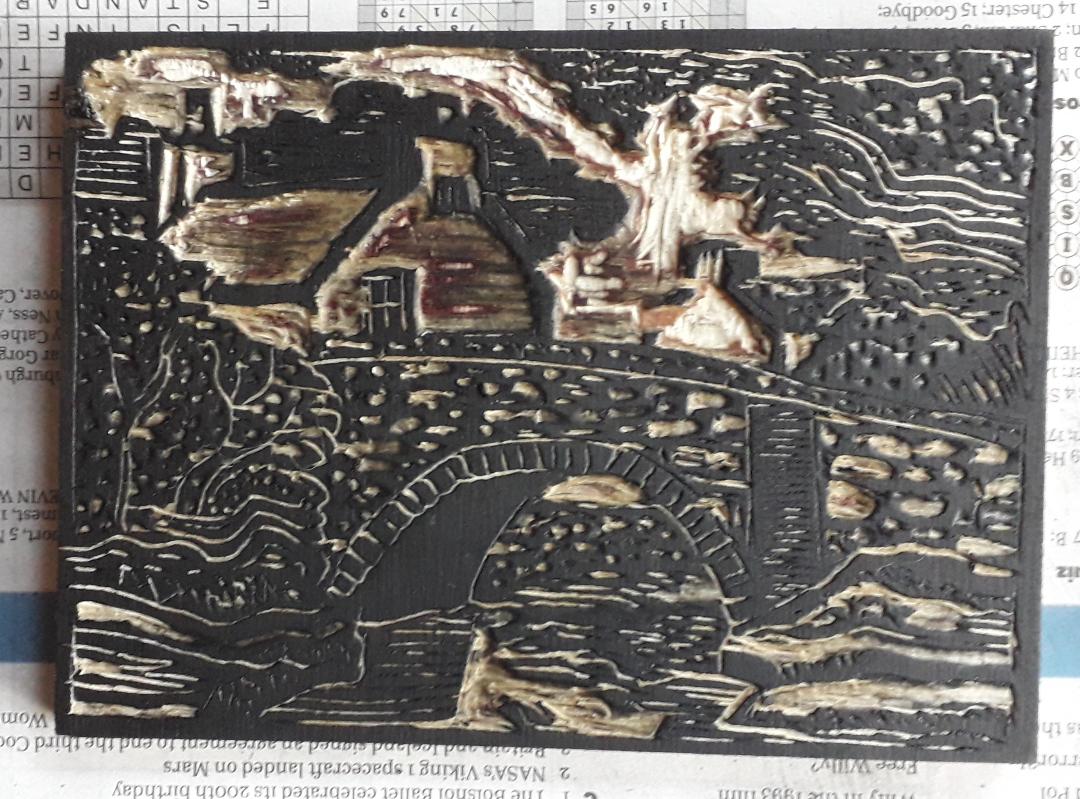
The third pic is the block being carved, the fourth pic is the block inked up.

This painted sketch was completed back in 1998 or so but has proved popular with folk from Ceres as a print on A4 water-colour printing paper at £7.

This oil painting, owned now by a Ceres resident, is available as a print on A4 quality paper. £10.

Ceres Bishops Brig – the original water-colour. This was the painting that was made into a gift card in the year 2000, 250 copies sold out having been available at the Pottery and the long missed Mill-house Coffee Shop. Prints available £7.

Many thanks to all who supported the Ceres from Pilgrims Way lino-cut, an edition of 30 now sold out. Mind I kept 1/30.

Graham Bennison 01334-656844 07731904559. https://www.facebook.com/BennisonArtist bennyelmwood@yahoo.co.uk

Diana Mabel Low, born 3rd February 1911. Died 20th May 1975.

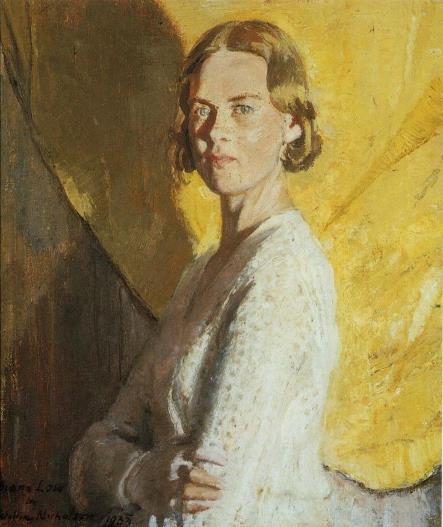
Portrait of Diana Low, 1933 by William Nicholson

Painter and textile designer born in London, Diana was the daughter of a surgeon with a practice in Harley Street.

Cheltenham Ladies College. Diana Low attended the College from September 1924 – July 1929. Diana was very involved in swimming during her time at Cheltenham. She was in Roderic Boarding House: RH Swimming Captain, 1927 – 1929 2nd in House, 1928 – 1929 College swimming team, When she left College she also presented a swimming trophy to Roderic House and this is inscribed ‘Presented by Margaret and Diana Low’ in 1929: it was only taken out of commission when Roderic House closed down in 1985.

Lino-cut by Diana Low (aged 16) for the college Magazine. Sir William Nicolson by Diana Low.  1932.Wolverhampton Art Gallery.

Diana Low, a student painter, was heavily influenced by William Nicholson. They had a short affair as recalled later by her brother in law. 

Her parents “were great friends with Sir William Nicholson, really great friends, to the extent that their young and very pretty daughter was told nothing was better for her than to go and have lessons in painting from William … who was an extremely sexy man … immediately fell in love with Di, and when she was seventeen, maybe he was sixty-four … bewitched Di and they started an affair… The parents never knew, and went on loving William Nicholson and loving their daughter.”

During their affair they painted each other. William’s arresting portrait of Diana shines. It is an immensely attractive painting of a strong minded young artist.

The Misses Margaret and Diana Low by Sir William Nicholson 1926.

Brick House, Great Bardfield

Whilst at Cheltenham Diana was a prize pupil of teacher Charlotte Epton and also Gwyneth Lloyd Thomas. Charlotte married artist Edward Bawden in 1932 and his parents bought the couple Brick House which became a centre for many artists.

In 1933 Diana Low was introduced to Brick House, now also the home to Eric and Tirzah Ravilious. 22-year old Diana was invited for a six day stay by Charlotte along with another Cheltenham colleague Gwyneth Lloyd Thomas, an English don at Girton College, Cambridge. Gwyneth had kept in touch with Diana while she was studying at the Slade and also in Paris.

Tirzah recorded Diana’s arrival in her autobiography: ‘she was very attractive in a feline sort of way and she had a lovely figure and fair skin. She was full of energy and dived beautifully, but perhaps her chief charm was her naturalness and she dressed more beautifully than any other woman I have ever met. Eric fell in love with her at once and it seemed quite natural after what Charlotte had said (about Diana being a “naughty girl”) that she should take him off in her car for a days painting.

Over the next six months Eric continued to see Diana in London.

On a mild Friday in January 1934 another visitor to Brick House was Peggy Angus, a former student along with Bawden and Ravilious at the Royal College of Art. The Saturday afternoon was also warm for mid-winter but misty. An exuberant  Peggy tore her clothes off and plunged into the cold waters of the River Pant, Eric and Diana followed suit while a disapproving Tirzah stayed on the bank.

At the end of the weekend visit Peggy invited the whole household to visit her at Furlongs her cottage hidden away in the South Down near Lewes.

Peggy Angus – Self Portrait

Following the weekend Eric Ravilious commenced an affair with Diana but she soon pulled out of the relationship.

Peggy Angus’ cottage became a centre for visiting artists and writers and Eric Ravilious made his first of many visits in February 1934.  This led to a further affair with artist Helen Binyon. Later in the round-a-bout of relationships Tirzah was in a relationship with Great Bardfield artist John Aldridge and Helen with John Nash.

In the summer of 1934 Diana came to stay at Furlongs but distanced herself from the affair. Indeed, despite her father’s hostility to the match, she married Clissold Tuely a young architect in November of that year setting up house at 11 Queens Mansions, Brook Green, Hammersmith. Her sister’s husband Humphrey Spender recollected that Diana’s father refused to speak to them for many years.

The affair between Eric and Diana surfaced briefly over the following two years. In March 1936 Eric went to stay at the Tuely’s Underhill Farm, Wittersham.

Diana Low – fabric designs

In her autobiography Tirzah describes the turn of events: ‘Diana came and slept in his bed, saying that her husband wouldn’t mind.  Next morning Eric observed that he obviously did mind, so he left for Eastbourne where I was staying. I wrote a calming letter to them and finally (Clissold)  became more reasonable about the matter and this relationship was a good thing because it is always nice to have someone love you and be truthful in criticising your pictures.’

The relationship, however, continued for the next few months. In 1939 just before war broke out Diana, pregnant with her second child, drove over from Rye with her daughter Jane to Furlongs.  The party there enjoyed claret before Diana drove back to Underhill.

The outbreak of war saw Ravilious commissioned as a war artist. In April 1941 Tirzah gave birth to Anne their third child. Eric wrote to Diana—‘It is a girl. Isn’t that nice.’

Diana later wrote to Eric asking him to become ‘a sort of unofficial godfather …a kindly influence to baby Jane.’

Whilst stationed at Dover Eric managed a visit to Underhill Farm, Wittersham when Diana had returned from Wiltshire where Clissold and her sister’s brother-in-law Stephen Spender were temporarily living.

In September 1942 Ravilious aged 39 posted in Iceland, was tragically part of a four-man air rescue mission sent to locate a lost plane. Neither of the two planes returned.

‘Geraniums & Carnations, Wittersham’   – Eric Ravilious.

In December 1941  Diana had written to Eric and Tirzah:     ’We both pine for Essex after the war.’  Diana and Clissold would stay at Underhill Farm for the next three decades moving eventually in 1965 a few miles away to Stone-in-Oxney where she died in 1975.

In all the talk of affairs and infidelity it is also important to note that between Ravilious, Helen Binyon and Diana Low there was mutual support and stimulation for their artistic talents.

Sadly Margaret Low (Lolly) died in 1945 having developed Hodgkin’s disease and died on Christmas Day. In 1937 Margaret married Humphrey Spender whom he had met at the Architectural Academy and who had an architectural practice. Humphrey Spender is famed for his work for the Mass Observation movement, taking pictures of daily life in working class communities. His most famous photographs are of the ‘Work Town Study’ (Bolton) taken in a period between 1937 and 1940.

Margaret’s brother-in-law was the poet/writer Stephen Spender and many consider his finest poem to be “Elegy for Margaret”.

Poor girl, inhabitant of a strange land

Where death stares through your gaze,

As though a distant moon

Shone through midsummer days

With the skull-like glitter of night:

Poor child, you wear your

summer dress

And your shoes striped with gold

As the earth wears a variegated cover

Of grass and flowers

Covering caverns of destruction over

Where hollow deaths are told.

I look into your sunk eyes,

Shafts of wells to both our hearts,

Which cannot take part in the lies

Of acting these gay parts.

Under our lips, our minds

Become one with the weeping

Of the mortality

Which through sleep is unsleeping.

Of what use is my weeping?

It does not carry a

surgeon’s knife

To cut the wrongly

multiplying cells

At the root of your life.

It can only prove

That extremes of love

Stretch beyond the flesh

to hideous bone

Howling in hyena dark alone.

Oh, but my grief is thought,

a dream,

Tomorrow’s gale will

sweep away.

It does not wake every day

To the facts which are and

do not only seem:

The granite facts around

your bed,

Poverty-stricken hopeless

ugliness

Of the fact that you will soon

be dead.

Over her final years Diana took to oil painting and a number of her paintings are now in the collection of the Rye Art Gallery.

Flowers in a Blue and White Jug. A Road Near the Sea. Portrait of the artist William Warden Conversation at the Tea Centre. Sunderland Bowl with Flowers.

‘Across the Fields’ ‘Donkeys on a Beach’ Still Life with Brown Jug (Towner Eastbourne).

And finally……the painting that started this whole wee project :- ‘Ploughed Field’….which I bought in 2018.

Graham Bennison 2018. Revised 27th October 2020. https://www.facebook.com/BennisonArtist

Michael Rothenstein – 1908–1993

Michael Rothenstein was a brilliant printmaker and excellent painter, one of the central figures in the renaissance in British print-making that took place just after the Second World War and through the 50’s and 60’s.

Rothenstein was born in 1908 at Hampstead the son of the celebrated William Rothenstein who was to become Principal of the Royal College of Art.

Rothenstein’ s childhood was spent at a farmhouse at Far Oakridge in the Cotswolds where he was home-schooled. His father created a studio here and filled the house with paintings, drawings and sculpture.

Cotswolds ‘House and Cart’ Pen and ink with watercolour 1939

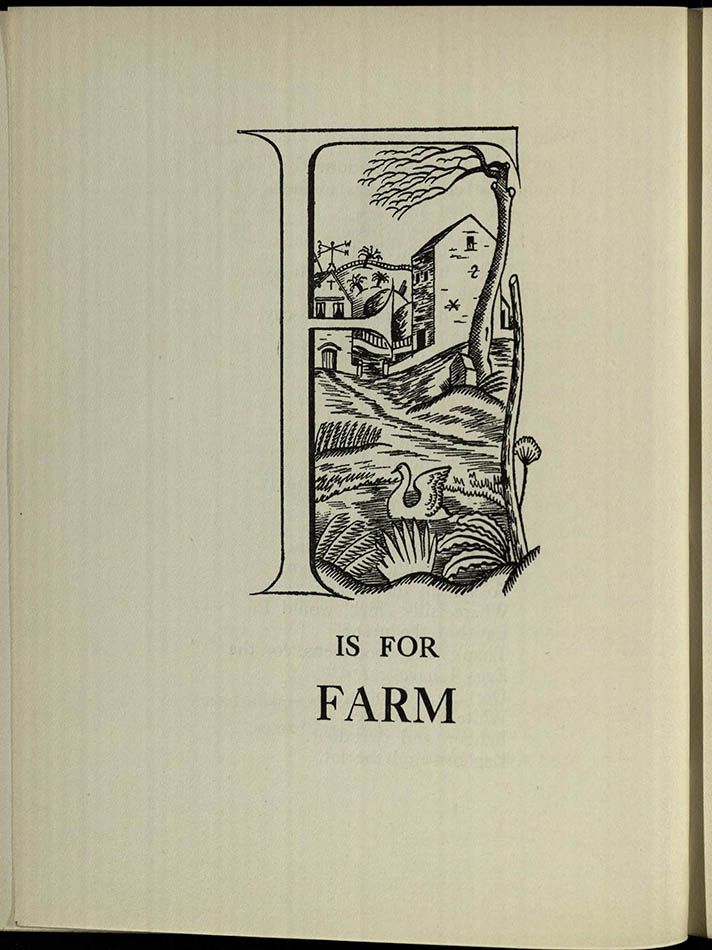
Rothenstein was only sixteen when he made the drawings later used for the Country Child’s Alphabet by Eleanor Farjeon published in 1924. There were 26 poems by Farjeon, one for each letter of the alphabet, with 26 full page drawings by the young Rothenstein.

In 1923 Rothenstein entered Chelsea Polytechnic where he met fellow artists Edward Burra and Barnett Freeman – https://httpartistichorizons.org/2020/07/02/barnett-freedman-1901-1958/.

Between 1924 and 1927 Rothenstein studied part-time at the Central School of Arts and crafts. A rare glandular illness laid Rothenstein low for sixteen years and he only began to recover after being treated by Dr Rau head of the Berlin Institute of Glandular research.

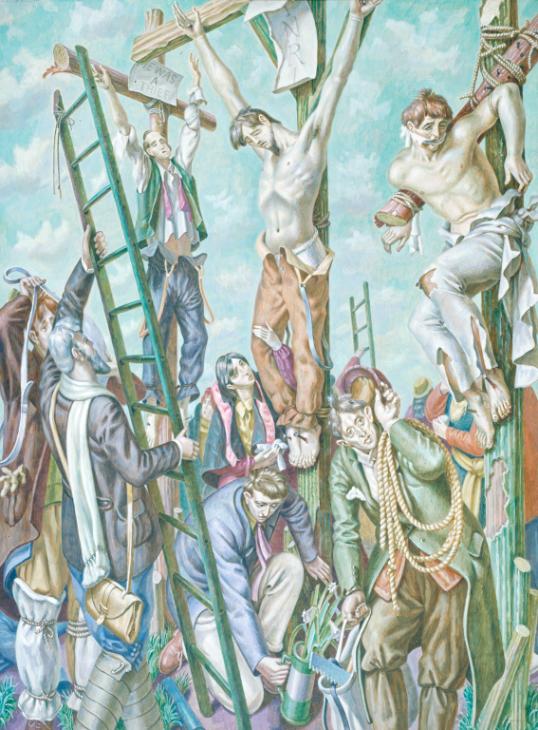
The Crucifixion 1937 Michael Rothenstein 1908-1993 Tate.
This figure painting was exhibited at Rothenstein’s first one-person show at the Matthiesen Gallery in 1938. It was one of several Biblical scenes in modern dress painted at that time, perhaps under the influence of Stanley Spencer.

In 1936 during his recovery he married Duffy Fitzgerald and spending the summer months back in the Cotswolds began to draw and paint with confidence. His first one-man show came at the Warren Gallery, London in 1931. Another one-man show came in 1938 at the Matthiesen Gallery in London followed by a one-man show at the Redfern Gallery in 1942.

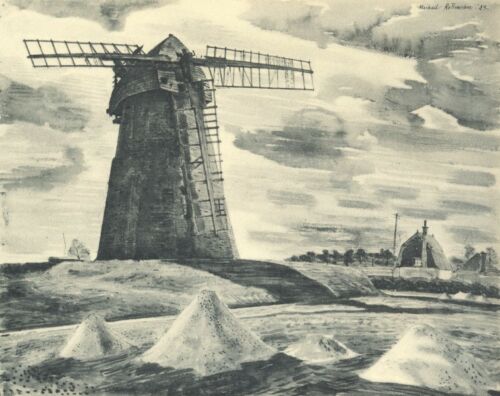
Great Bardfield Gibraltar Mill

In 1941 he and Duffy made the significant move to Great Bardfield having seen an advert that John Aldridge was letting out chapel cottage in the grounds of Place House. Rothenstein had been too ill to serve in the forces but had been employed by the ‘Recording Britain’ scheme established to feature old churches buildings, parks, landscape, etc.

Rothenstein and Duffy eventually settled at Ethel House. Close neighbour Edward Bawden encouraged Rothenstein to try lino-cutting, buy a press and set up a print studio at Ethel House.

Eric Ravilious and Tirzah lived close by at Shalford https://httpartistichorizons.org/2020/07/20/tirzah-garwood-11th-april-1908-27th-march-1951/ Many paintings and drawings followed but in the early 1950’s Rothenstein was drawn to lino-cutting before going on to Paris in 1957 to study etching.

Paintings Ethel House and Ethel House Garden by Kenneth Rowntree. In 1947 Rothenstein illustrated The Vision of England Series – Sussex. 1 The White Hart Hotel, Lewes. 2 Berwick Church near Alfriston. 3 Brighton Pavilion.

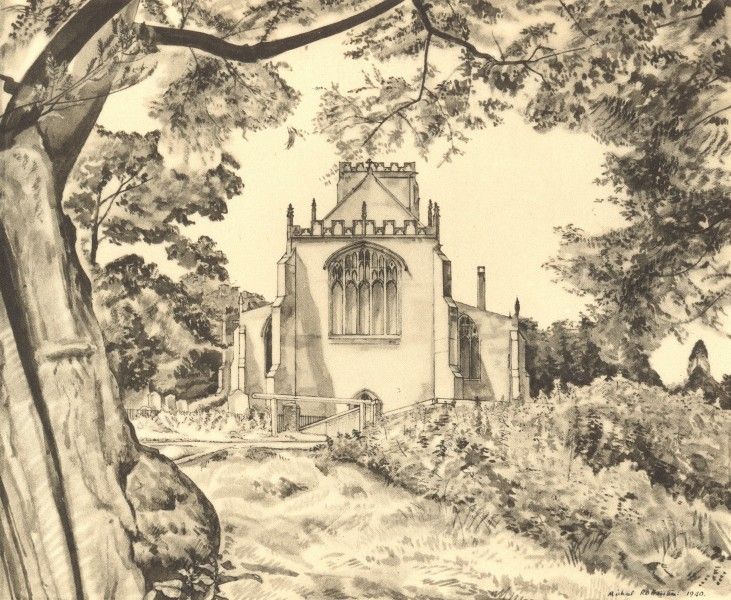
Drawings of Yorkshire. 1 Coxwold, Old Tannery. 2 Norby -Sunny Terrace. 3 Pits Farm, Newburgh. 4 St Mary the Virgin’s.

By the end of 1955 Michael Rothenstein’s marriage to Duffy was dissolved, and she left Great Bardfield. In 1958 Rothenstein married Diana Arnold-Forster. Not long after the 1958 Great Bardfield summer exhibition the couple moved to the nearby village of Stisted, Essex purchasing an Elizabethan farmhouse. Rothenstein began to experiment with construction boxes producing a remarkable array of work throughout the 60’s and 70’s.

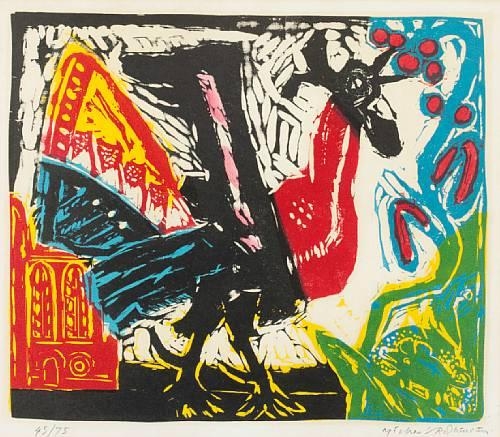
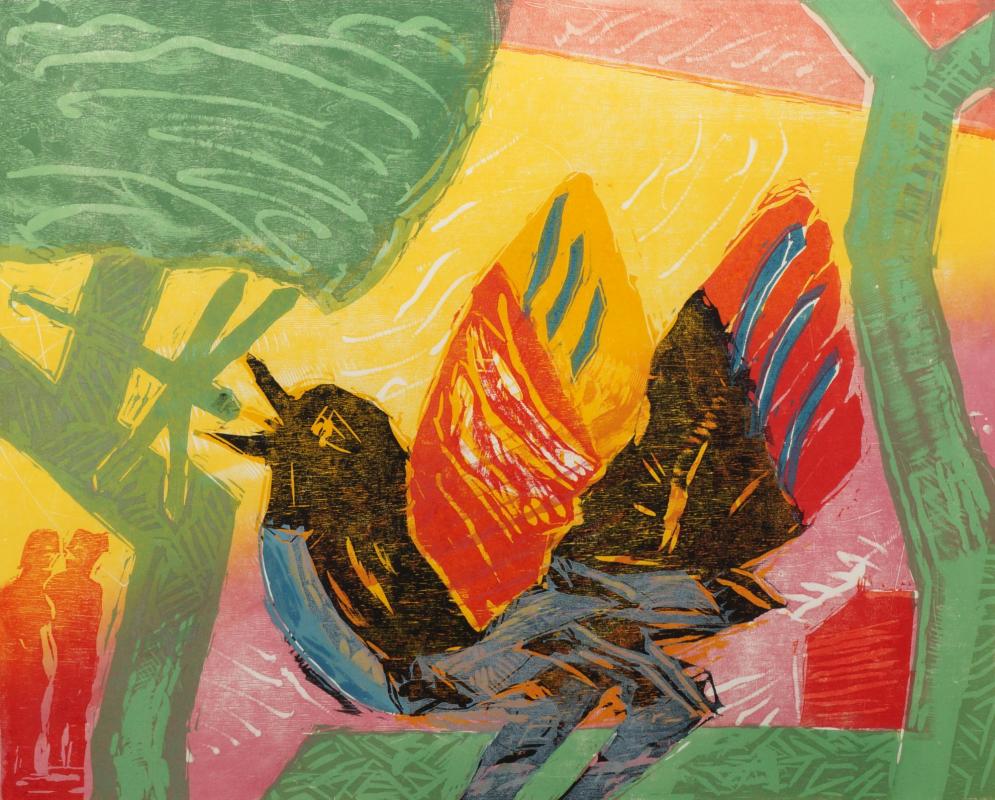
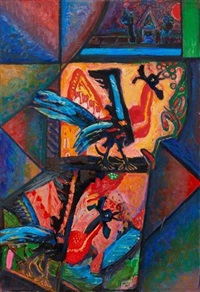
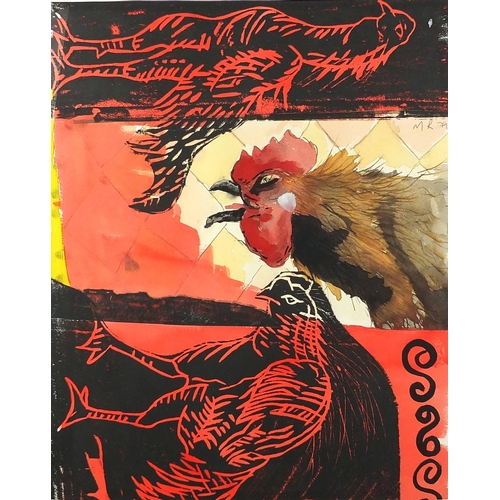
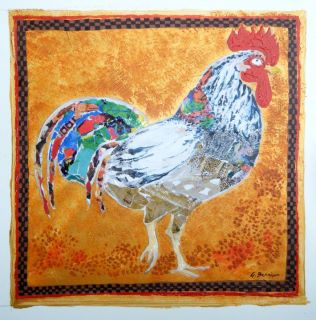
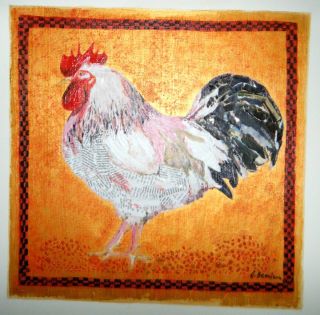
I feel a great affinity with Rothenstein having produced lino-cuts and paintings of my pet hens. Here above, a selection of lino’s and wood-cuts by Rothenstein.

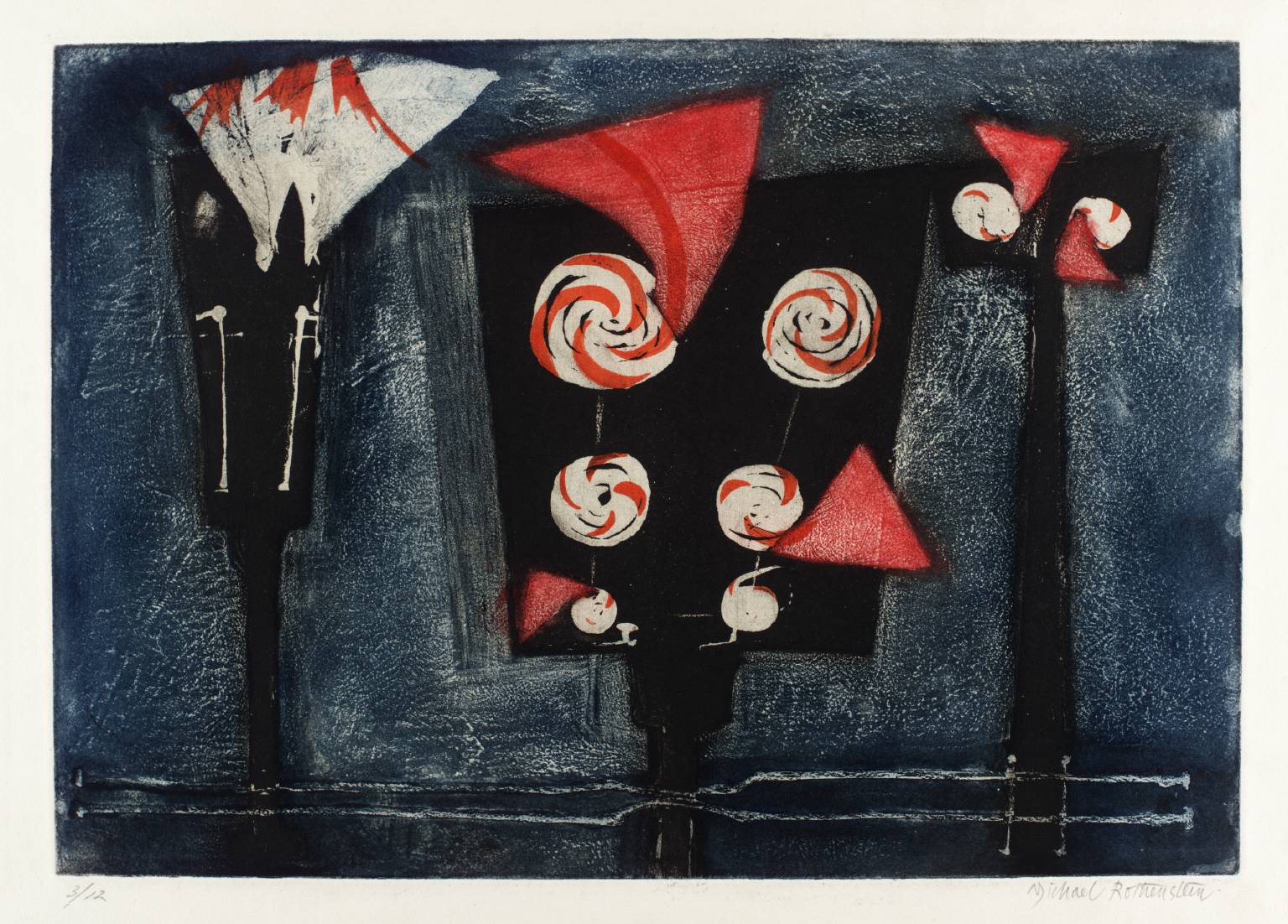
A final selection of work. 1 Traction engine & trailer 1942. 2 Timber felling. Lithograph 1946. 3 Catherine Wheels . Etching 1963. 4 Untitled (Purple, Red and Green). Lino-cut wood montage. 1959. 5 Loco. Woodcut. 1986. 6 Paint-box 2 construction 1969/70. 7 Cockerel Relief 1988.

A prolific artist leaving behind an incredible array of drawings, paintings, prints and constructions.

Rothenstein died aged 85 on the 6th July 1993.

Graham Bennison 19th October 2020. https://www.facebook.com/BennisonArtist

Not quite in the same league as Rothenstein. Note to self…must try harder !!

Note. The Vision of England series published by Paul Elek between 1946 and 1950.

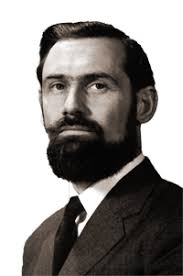
John Aldridge (1905-1983)

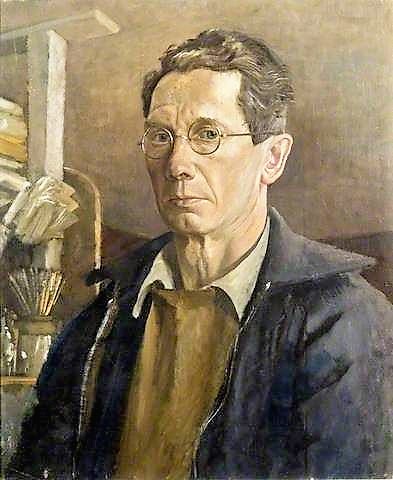
Self Portrait. (c) Fry Art Gallery; Supplied by The Public Catalogue Foundation

Following their bicycle rides around the Essex countryside in 1930 Eric Ravilious and Edward Bawden commenced renting half of Brick House, Great Bardfield in June 1931, Edward Bawden’s parents subsequently buying the house for them in 1932 for £500.

John Aldridge arrived in Great Bardfield in 1933 moving into Place House along with his partner Lucie Brown (nee Saunders) a rug and fabric designer and artist friend the bi-sexual Basil Taylor, plus cats!

Aldridge was born in 1905 in Woolwich the son of a well-heeled Royal Artillery Officer. John’s father was John Barttelot Aldridge DSO (1871-1909), he married Margaret Jessie Goddard and had 3 children, Robert, George and John. John’s mother was firstly married to Lt-Col Horace Lloyd, DSO with one daughter Diana later Diana Elizabeth Mancroft – Lady Mancroft, wife of Stormont Mancroft, the 2nd Baron Mancroft. Diana was therefore half sister to John and his brothers. Diana had three children ….Victoria married Prince Frederick Nicholas of Prussia. Miranda, Countess of Stockton married Peter Sellers 1970-74.

John with his half sister Diana (Lady Mancroft) and brother Bob 8th May 1951.

He was educated at Uppingham Public School, Rutland and read “classics” at Corpus Christi College Oxford where he was also good at games, particularly rugby.  He received no formal art training; after graduating from Oxford University in 1928, he settled in London with excursions to Paris, Germany, Italy, Tenerife and Majorca.  His first exhibition in London was the Seven and Five Society Exhibition in 1931 following an invitation from friend Ben Nicholson.  His social circle in London included poets Ruthven Todd, John Betjeman and life-long friend Robert Graves.

Tirzah Ravilious (Garwood) recalled: “The new people at Place House were also becoming interested (in the local political meetings), at least John Aldridge was: but I remember stopping with Basil Taylor outside a left-wing poster on the front of Brick House and his asking confidentially, ‘What do you think of Communists?’ and me replying, ‘I don’t like them, they’re so ugly: and feeling that we agreed, like guilty conspirators, we said no more.’

Both Lucie (a divorcee) and Aldridge were very devoted to cats and amongst the cats moving in with them was a homeless tabby called Smith. Another cat, a half Siamese black female called Trippet had constant families. 

Lucie Aldridge by John Aldridge

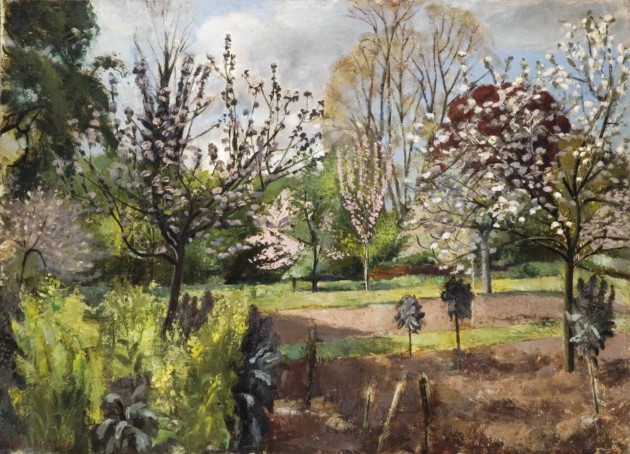
Place House was an Elizabethan house dating from 1564 on the outskirts of the village. It had an odd little attic up irregular steps and its own chapel. Central heating and a bath were installed, and Aldridge and Lucie commenced mending and painting the house. The large garden had run wild and Aldridge, like Bawden, was a keen gardener and set to work creating the beautiful garden featured in many of his paintings.

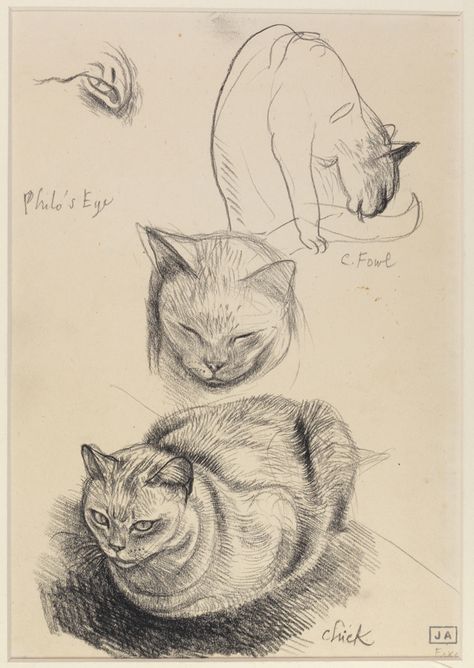
Images: Cats, Fry Gallery Collection. Lucie weaving a rug. Place House to the Right. Place House and Cat. Cat rug designed by John woven by Lucie.

Aldridge started to paint in oils scenes of Great Bardfield, unlike Bawden and Ravilious he had little interest in commercial art. Aldridge was not at all interested in Bawden’ and Ravilious’s pictures saying he couldn’t tell the difference between them!

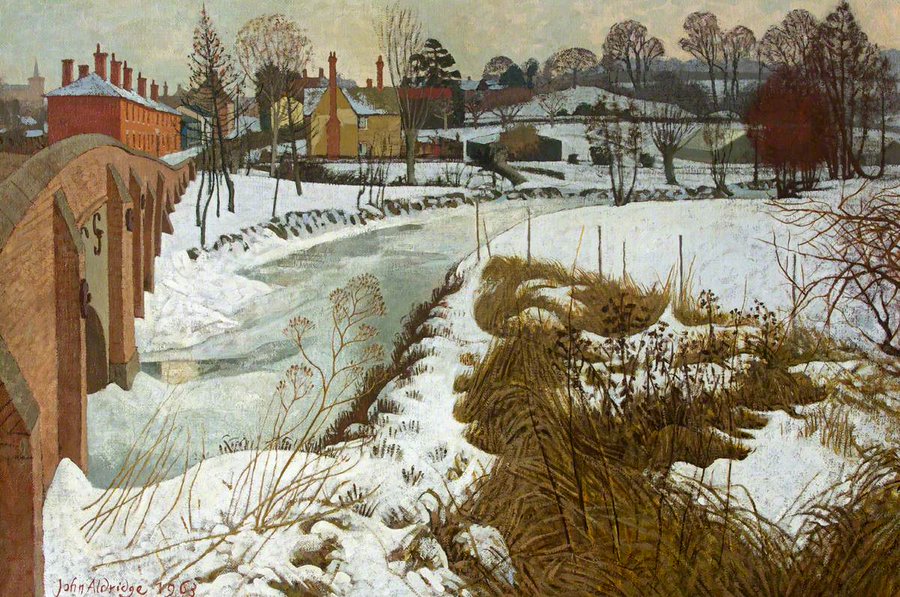
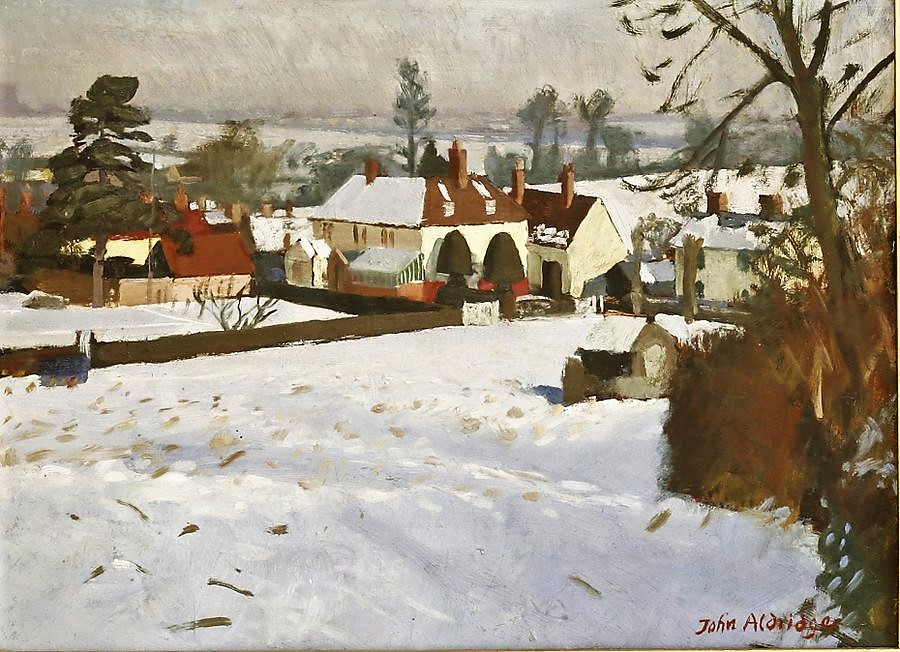
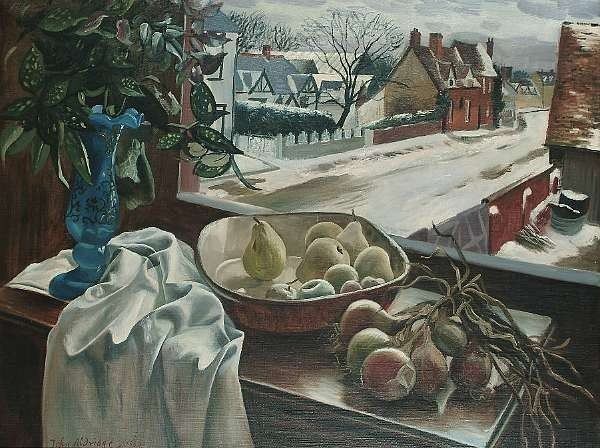
Two paintings of Great Bardfield

While Aldridge derived inspiration from his locality he was also successful with his excursions into Italian subjects having a love of Rome and classical architecture in particular.

Aldridge once wrote: ‘A painter, like a poet, selects subject matter because it seems vital to him’.

Betjeman wrote: ‘His painting is consistent, impervious to fashion and cheerfully representational. He belongs to the English tradition of local pastoral artists. He likes painting upturned earth, ploughed fields and mild landscapes. He is also the gardener’s artist’.

Homes and gardens. Final photo is ‘Mallorca’ 1936.

Aldridge and Bawden were happiest when painting or gardening, swapping plants and seedlings. The two collaborated in 1938-39 on a series of high-quality wallpaper designs that became known as “Bardfield Papers”. Unfortunately, the war came along and terminated the whole enterprise.

Meanwhile Eric and Tirzah Ravilious moved to nearby Castle Hedingham setting up home in Bank House, the move exacerbated the complications appearing in their marriage. Tirzah soon returned to Bardfield as Eric hadn’t made any arrangements for a pregnant Tirzah traveling to Braintree Hospital from Hedingham.  While Eric dashed off to London to see lover Helen Binyon, Charlotte and Tirzah played cards but the morning after Tirzah felt the first pains of childbirth. Charlotte went to Place House to summon John and Lucie and she was driven to the cottage hospital. John Ravilious duly arrived, and Eric cycled over to Braintree to see them while John and Lucie also visited along with Tirzah’s mother who came all the way from Eastbourne.

Back at Bank House the Ravilious’s and Bawden’s socialised with John and Lucie along with Basil Taylor. Taylor had been a larger than life figure back at the Royal College of Art in the 1920’s along with his mistresses. Taylor developed a liking for drinking neat spirits and being devoid of work was getting into debt with people in Great Bardfield.  He stopped living at Place House and moved to a nearby village living with two sisters. That Christmas of 1935 Charlotte rang Tirzah to say not to send presents to Place House, an awful thing had happened, Basil had committed suicide with an exhaust from a car. Taylor had quarrelled with John and Lucie and Tirzah later revealed a confidence to Aldridge that Basil had been in love with him.

Basil Taylor; The Bronte Sisters; Leeds Museums and Galleries

Tirzah’s feelings for John Aldridge also grew and after Ravilious had stated that he should go and live with Helen Binyon she told him that she was in love with Aldridge. An affair between Tirzah and Aldridge slowly developed gathering pace in 1938 when Ravilious resurrected his affair with Dianna Low. Tirzah and John’s affair stopped suddenly in 1939 when Aldridge stated ‘it was having an effect on his relationship with Lucie’.

Back to his art Aldridge exhibited at the prestigious Venice Biennale in 1934, after which his international reputation began to rise. His painting ‘Deyd, the Valley’ painted in 1933 was hung at the British Pavilion at the Venice Biennale along with works by Nicholson, Barbara Hepworth and Henry Moore. Unlike his contemporaries Aldridge made only limited forays into printmaking, his 1938 lithograph ‘Mill in Essex’ one of a handful of fine prints.

He married Lucie in 1940 when he signed up to join the war effort attached to the British Intelligence Corps as an officer interpreting aerial photographs. He served in Italy and in North Africa and met up in Florence with Bawden who had been appointed as a war artist.

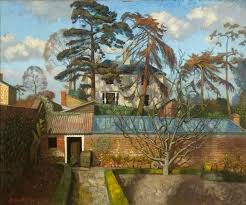
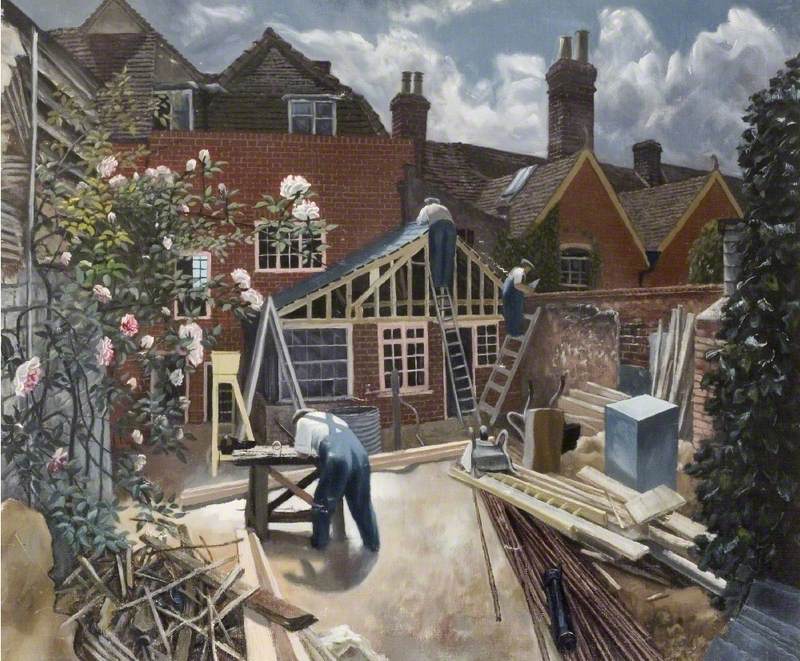
Aldridge, John Arthur Malcolm; Builders at Work, Brick House, Great Bardfield 1946; Fry Art Gallery.

After the War, Aldridge painted the builders repairing a bomb-damaged Brick House. It was likely that the trellised building Eric and Tirzah gave to the Bawden’s was blown up at the same time.

In 1949 he became assistant at the Slade School and was made an Associate of The Royal Academy in 1954 and a full Academician two years later. Starting in 1949, Aldridge taught at the Slade School for Fine Arts of University College London, under the realist painter Sir William Coldstream.

Aldridge was at the forefront of the Great Bardfield open house exhibitions which became a huge success with people coming in their thousands to view new work for sale and to have a look round the very innovatively decorated homes of the artist. In 1955, Aldridge told a London Observer reporter that “people seem to prefer this domestic informality to galleries”. The novelty of viewing modernist art works in the artists own homes led to thousands visiting the remote village during the summer exhibitions of 1954, 1955 and 1958.

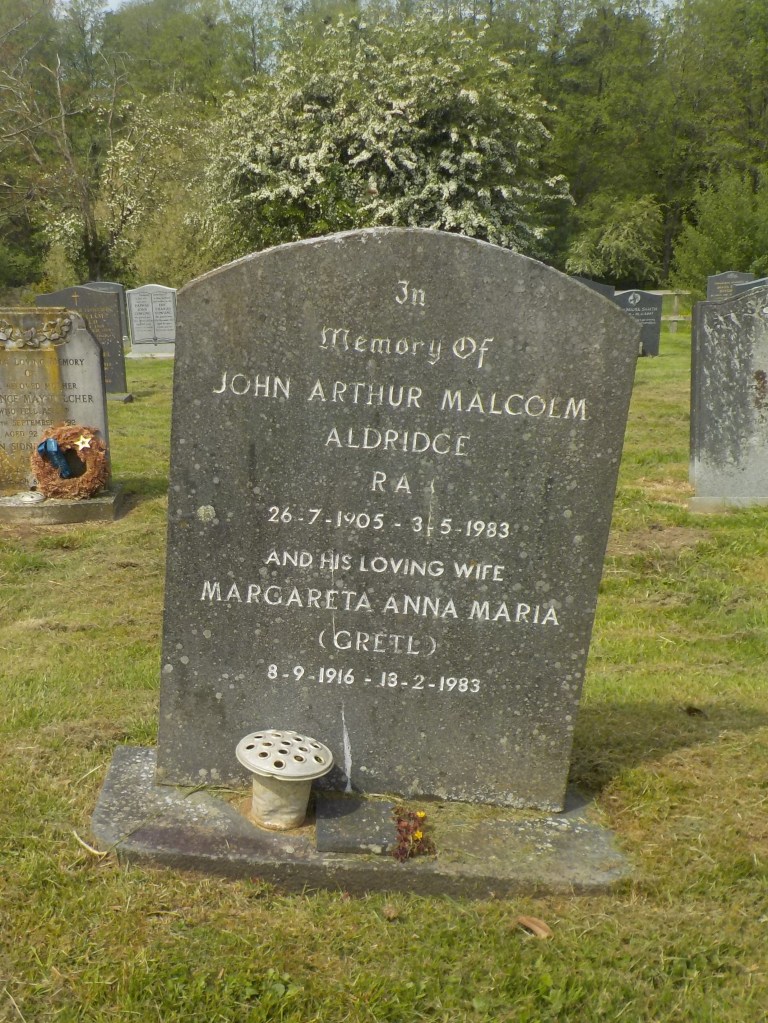
Aldridge divorced Lucie in 1970, marrying Norwegian Gretl Cameron, the widow of his poet friend Norman Cameron. In 1980, on Aldridge’s 75th birthday, London’s New Grafton Gallery held a retrospective of his work.

Thanks to the notoriety of the Artists, the draw to the village continues to this day, a testament to the love of the artists.  Aldridge was the one artist to stay living in the village for 50 years until he passed away in 1983, his wife Gretl having died a few months earlier.

In recent years, the value of Aldridge’s work, especially his oil paintings, has increased enormously as this previously underrated artist receives the attention he deserves.

Lucie Aldridge’s autobiography (once lost now found) published 16th August 2021.

The John Aldridge Facebook page can be found here… https://www.facebook.com/JohnAldridgeArtist

Great Bardfield Open House Art Exhibitions

Link to excellent YouTube https://youtu.be/am7gUcZbI8k

Graham Bennison https://www.facebook.com/BennisonArtist
Roger Hampson 1925-1996

Hampson was born in Union Street, Tyldesley on the 25th March 1925. He moved to Johnson Street when he was three, the street where he lived for the next forty years. He attended Leigh Grammar School and served in the Royal Navy during World War II, mostly on convoy but also taking part in the D-Day landings.  After the war he attended Manchester School of Art before becoming a teacher.

Throughout his career, Hampson was drawn to painting the people he met on the streets of northern towns. From his childhood bedroom window, shared with his two older brothers, Hampson could see the nearby collieries and the imposing bulk of Caleb Wright’s No. 6 Mill on Shuttle Street. He remembered Johnson Street as “…an exciting place to live in those days for the road was always busy with horse-drawn carts rattling to and from the goods yard.”

He studied at Manchester College of Art from 1946-1951 before taking a job as an art teacher at Bolton Technical School. His teaching career encompassed Hereford School of Art (1953-4) and Bolton College of Art and Design appointed Vice-Principal in 1961. He left Tyldesley in 1967 to live in Bolton becoming Principal following the retirement of John Nicholson.

I am going to concentrate here on his paintings of Bolton, specifically his work undertaken in the Halliwell/Chorley Old Road area where I lived.

1 I was brought up in Halliwell and as an infant I attended All Souls Church, Astley Street. All Souls’ is a brick masterpiece dating from 1880-81. 2 As a toddler I lived in Arnold St which ran parallel with Elgin St, pictured in this painting. On home leave from college in London during the 60’s I worked at Edge’s Dolly Blue Factory behind the houses here. 3 St Thomas’ Church, Eskrick St. built in 1874–75. 4 Alexandra mill, Wolfenden St. Halliwell.

Three paintings depicting the Falcon Mill, Handel St. Halliwell a Cotton spinning mill built in1903. Of interest is this article…….https://www.theboltonnews.co.uk/news/10726198.former-falcon-mill-now-home-to-artists/

The Union Mill, Vernon Street was a cotton spinning mill was built in 1875 and 1880. The third painting is tiled ‘The Tryst, Vernon Street’. Vernon Street was on my No.1 bus route going into Bolton town centre and returning home, although at times I caught the No.24/25 Halliwell bus.

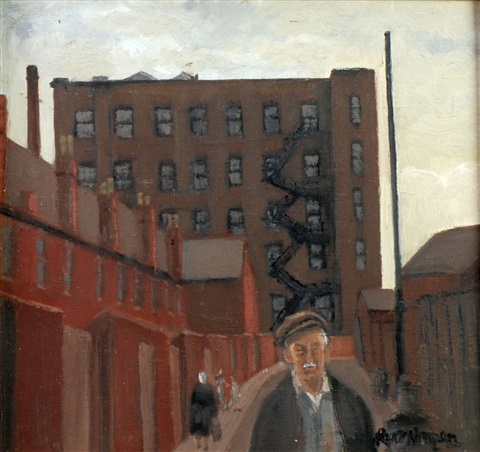
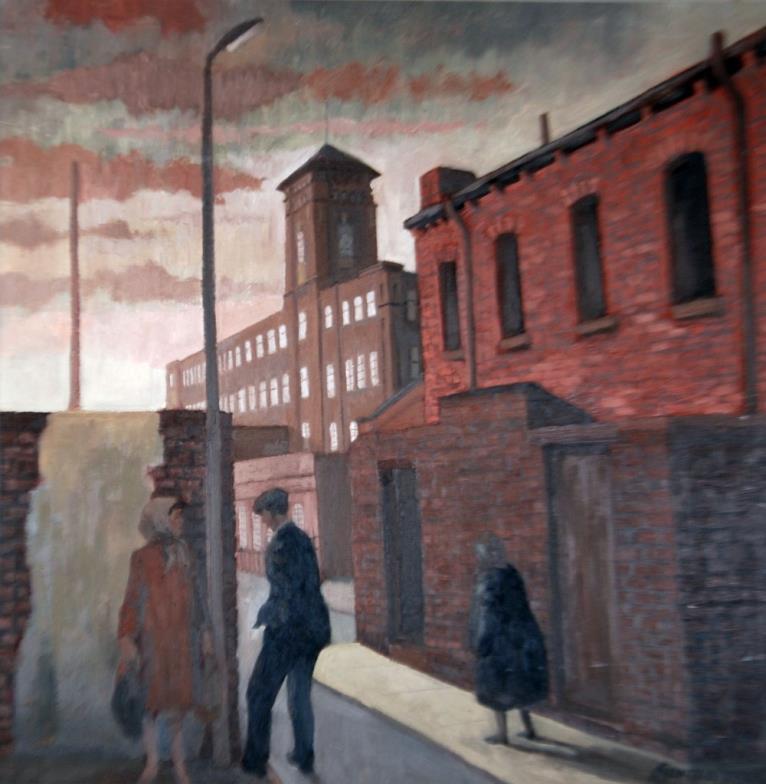
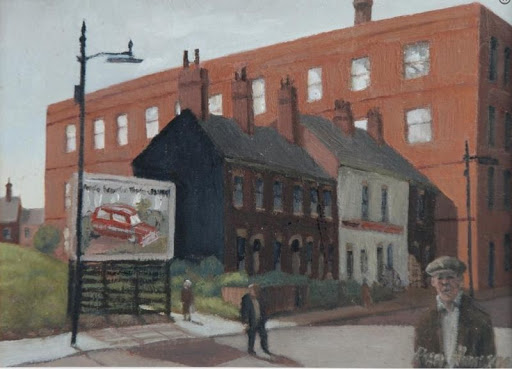
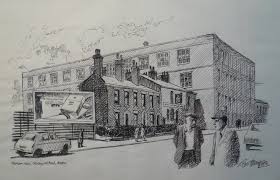
1 left: Haslam Mill, Chorley Old Road. 2 Ink drawing of Haslam Mill. 3 right. Nelson Mill, Gaskell St. 4 left. Bilbao Street. 5 left. Milo St. 6 left. St Luke Street. 7 Demolition of Musgrave Mill, Chorley Old Road. Another home area I knew well joining the 58th Chorley Old Rd. Scout group in 1957 and also attending Youth Club at the ‘Congie’.

Croal Valley by Roger Hampson. Not my home area but so well known after gaining a scholarship to Bolton School of Art, Hilden Street in 1959.

Hampson left Bolton in 1978 to become Principal of Loughborough College of Art and Design retiring in 1987.

Two versions of St George’s Church Bolton. Bottom left: Marsh Fold Lane. Centre: Mossfield Mill. Bottom right: Meanley Street.

Hampson died in 1996 aged 71 having suffered from leukaemia.

Hampson left behind an incredible legacy of work – paintings, lino-cuts, mono-prints and drawings many focussing on the mining community of Tyldesley. 

Graham Bennison 4th October 2020. https://www.facebook.com/BennisonArtist

The Pitmen Artists of Ashington

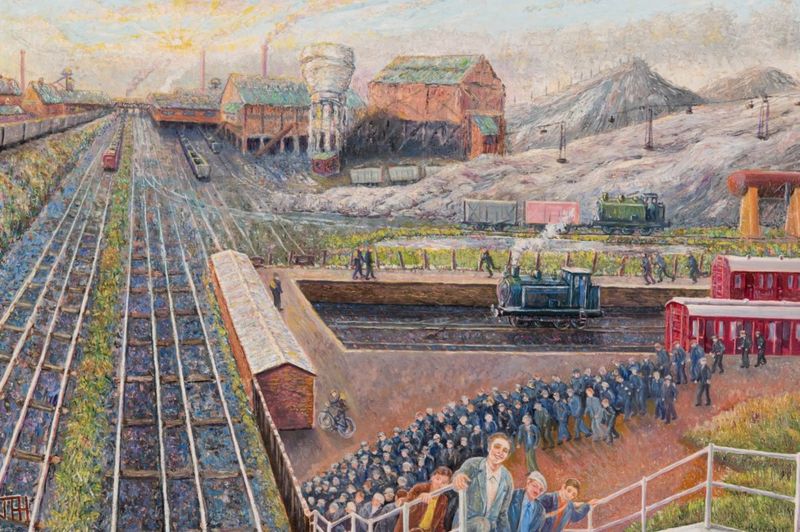
Harry Wilson, Ashington Colliery 1936. Oil on paper.

In 1934 a small adult class at the mining village of Ashington in Northumberland was studying evolution at a Workers Educational Association class.

The men declared an interest in studying something different and so Robert Lyon (1894-1978) of Durham University, whose mottos were “learn through doing” and “paint what you know”, was dispatched to run an art appreciation class.

Harry Wilson, a member of the group stated: “We felt we were at a dead end, so we started on Art.”

Lyon started by showing slides of Michelangelo’s work but after a few sticky sessions changed direction, the members experimenting with art techniques, initially lino-cutting.

In 1935 the members visited London, many for the first time, to see the British Museum, National Gallery and Tate and in 1936 the class named itself the Ashington Group and held its first exhibition at Armstrong College in Newcastle upon Tyne. The members paintings gradually centred on their daily lives recording their surroundings.

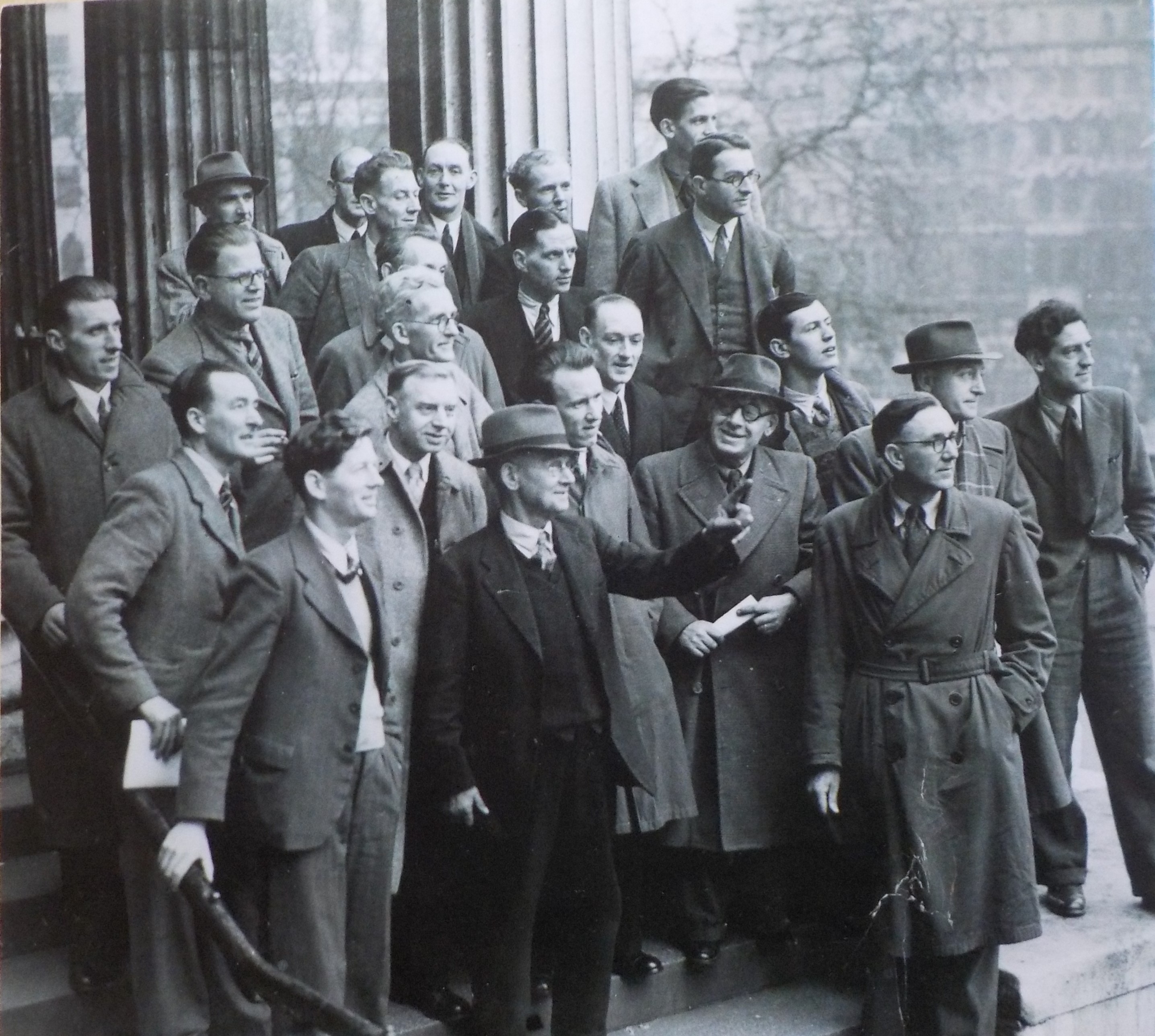
1 The Ashington group at work 1938. 2 The group visit the National Gallery, London in 1948.

Meanwhile in Bolton Tom Harrisson was leading his mass observation project ‘Worktown’, one aim of which was to bring art to working men and women. Harrisson visited Lyon, sensing that the Ashington Group was well placed to establish a north-eastern division of Mass Observation. In September 1938, Harrisson, and artist Julian Trevelyan stayed for a week in Ashington with the leader of the group, George Brown, a painter and joiner. As well as meeting many members of the group, they were taken down a coal mine to see the reality of life at the coal face.

A further exhibition, ‘Unprofessional Painting’, was mounted a few weeks later under the aegis of Harrisson, Trevelyan and photographer Humphrey Spender in an educational centre in Gateshead. Harrisson’s public school staff caused offence in Ashington by staying with families and not offering rent. They left beer which the temperate Independent Labour party artists did not touch.

Having had little formal training himself, Trevelyan was fascinated by these self-taught painters, believing strongly that anyone could be an artist. In 1939, shortly after resigning from the London Surrealist Group, he organised an exhibition of their work at the Peckham Health Centre.

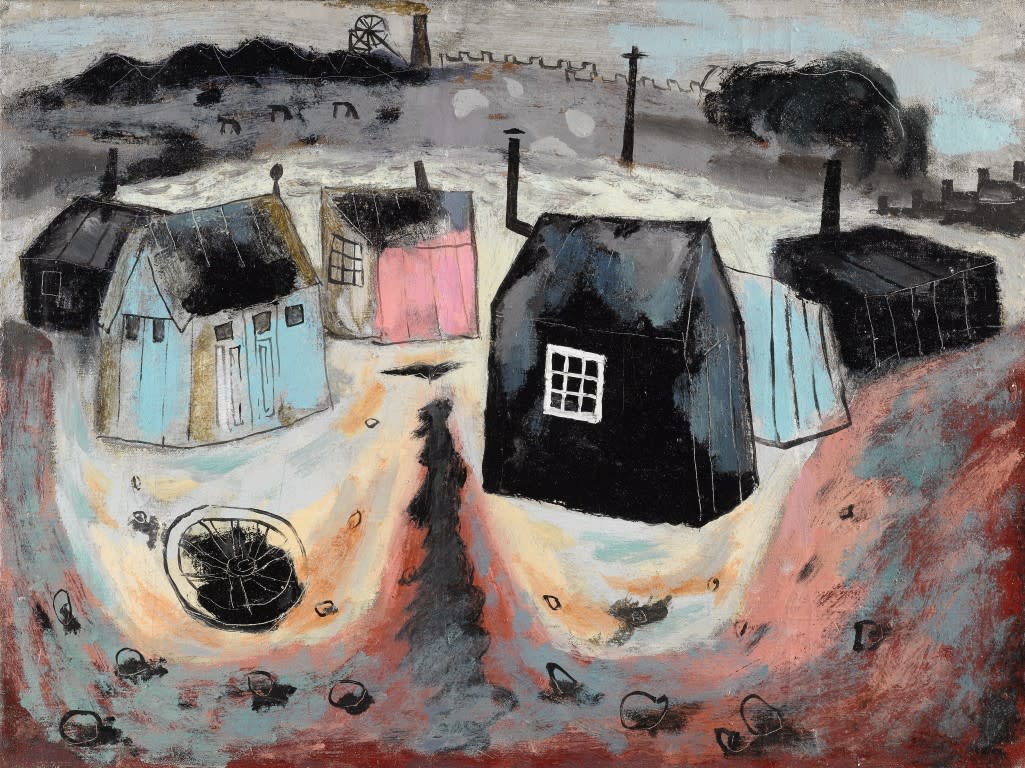
Julian Trevelyan. ‘Sheds’ 1939. The Miners 1943. Photos by Humphrey Spender. 1 A man cultivates leeks on an allotment in Ashington, Behind him huts for racing pigeons and the colliery are visible. 2 Huts for racing pigeons by allotments in Ashington. Humphrey Spender took the photograph during Mass Observation’s trip to meet the Pitmen Painters. © Bolton Council.  From the Collection of Bolton Library and Museum Services

The exhibitions were a great success but then war came, and Lyon departed to become Principal of Edinburgh College of Art, the group having to carry on as best it could. In 1943 the group shifted a hut from Longhorsley to Ashington and met weekly trying sculpture and dabbling in abstraction, but they ultimately remained loyal to painting simply what they knew best – Ashington!
1 Olive Kilbourn ‘Ashington Colliery’. 2 Harry Wilson ‘The Committee Meeting’. 3 Leslie Brownrigg ‘The Miner’.

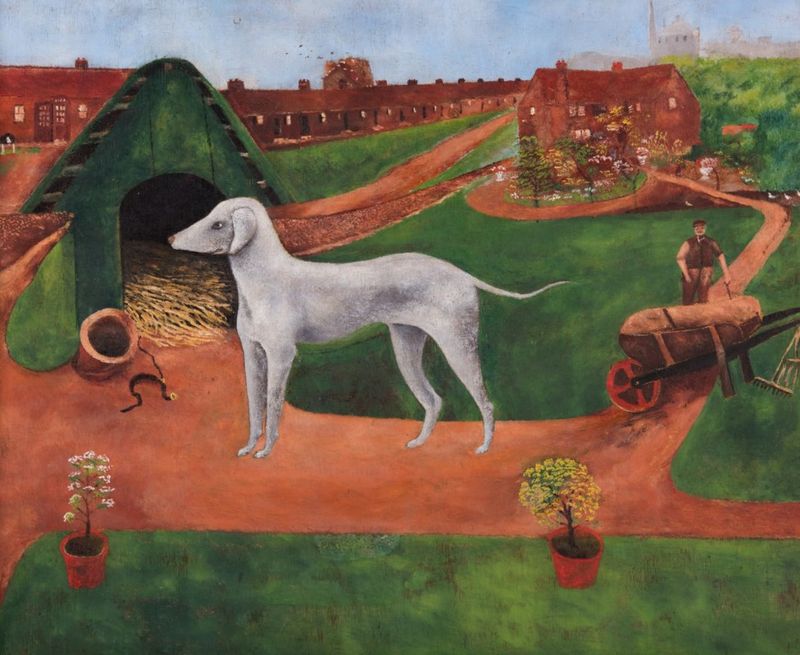
William Scott’s 1936 painting ‘The Bedlington Terrier’

View from a Bridge
Jack Harrison’s ‘View from a Bridge’
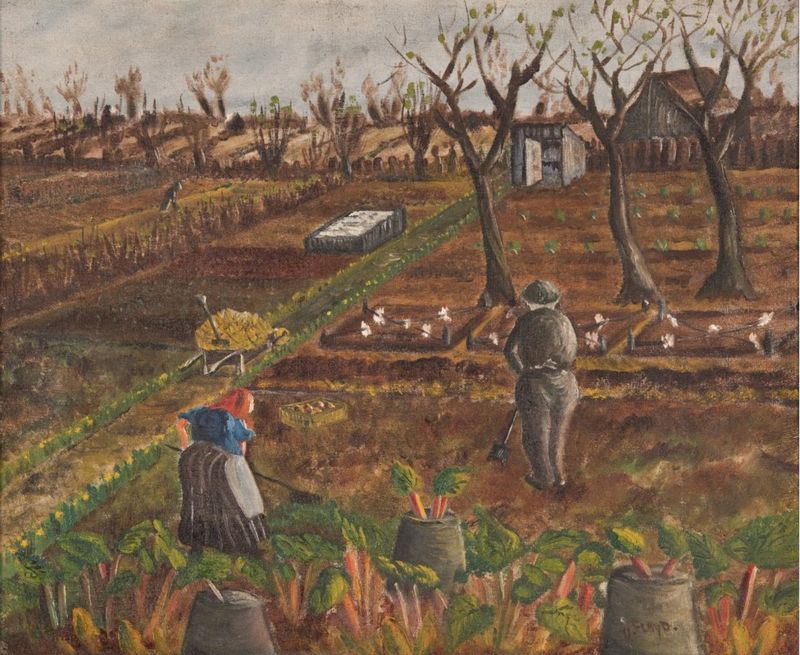
The Allotment
Jimmy Floyd’s ‘The Allotment’

New members came along in the late 40’s, the group continued to exhibit, the proceeds from sales going to provide art materials and the upkeep of the hut. The paintings that were regarded as the best were kept at the hut in the permanent collection.

In 1975 the group was rediscovered and popularised by William Feaver, who recorded their history. The Permanent Collection toured China, Germany and the Netherlands in 1980. The Ashington Colliery shut in 1988, four years after the miners’ strike came to an end.

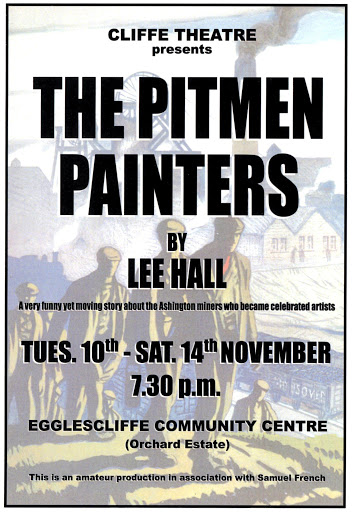
Feaver’s book – Pitmen Painters: The Ashington Group 1934-1984, was adapted into a play by Lee Hall best known for writing the 2000 film Billy Elliot.  After premiering in Newcastle in 2007 the production transferred to the National Theatre in London and opened on Broadway in September 2010. It won the 2008 Evening Standard Award for Best Play.

In 2007 after long negotiations and extra fund-raising of £40,000, the permanent collection found a permanent home at the Woodhorn Colliery Museum complex.

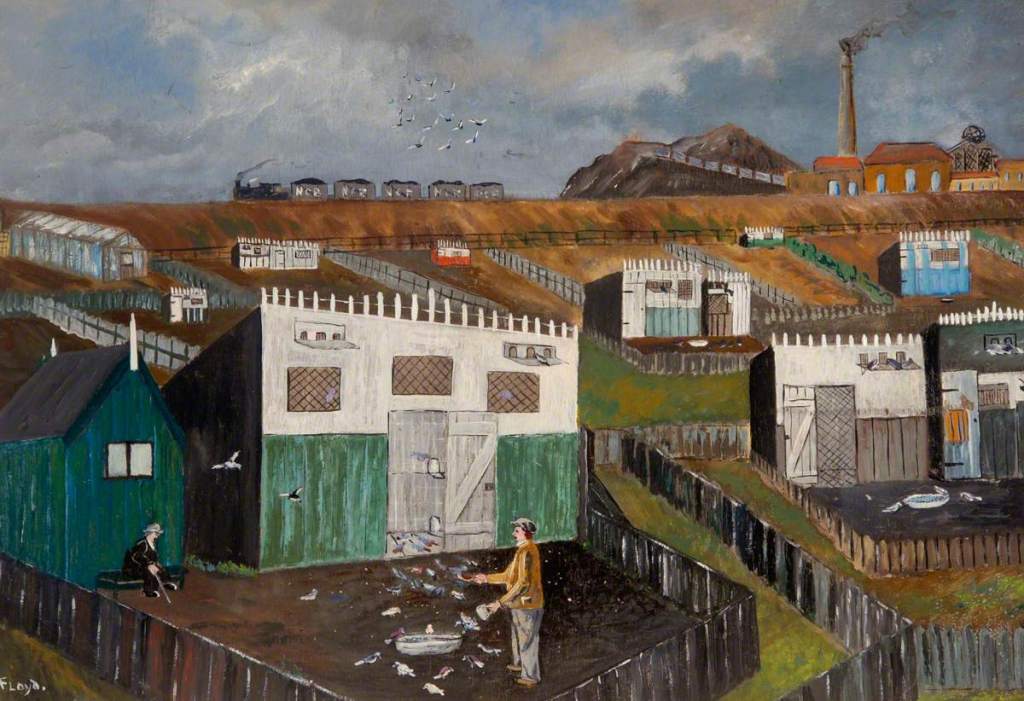
Floyd, Jimmy; Pigeon Crees; Woodhorn Museum & Northumberland Archives.

Graham Bennison, September 2020.

https://en.wikipedia.org/wiki/Ashington_Group

Graham Bennison https://www.facebook.com/BennisonArtist